You’ll see older leaves turn pale green, then yellow, starting at the tips and spreading evenly—this is your first clue of nitrogen deficiency. As it worsens, yellowing moves inward, stems grow thin and weak, and plant growth slows noticeably. Lower leaves may dry out and drop early, while crops like cotton show red leaves and wheat develops pink stems. Since nitrogen moves to new growth, older leaves suffer first—understanding this helps you act fast and protect your plants’ health.
TLDR
- Older leaves turn uniformly yellow, starting from tips and margins in a V-shaped pattern.
- Pale green discoloration spreads across entire leaves, not limited to veins or interveinal areas.
- Yellowing progresses from older to younger leaves due to nitrogen’s high mobility in plants.
- Stunted growth and shortened internodes appear early alongside leaf color changes.
- In some crops, pinkish stems, white leaf tips, or reddish hues develop as distinctive early signs.
Yellowing Older Leaves: First Sign of Nitrogen Deficiency
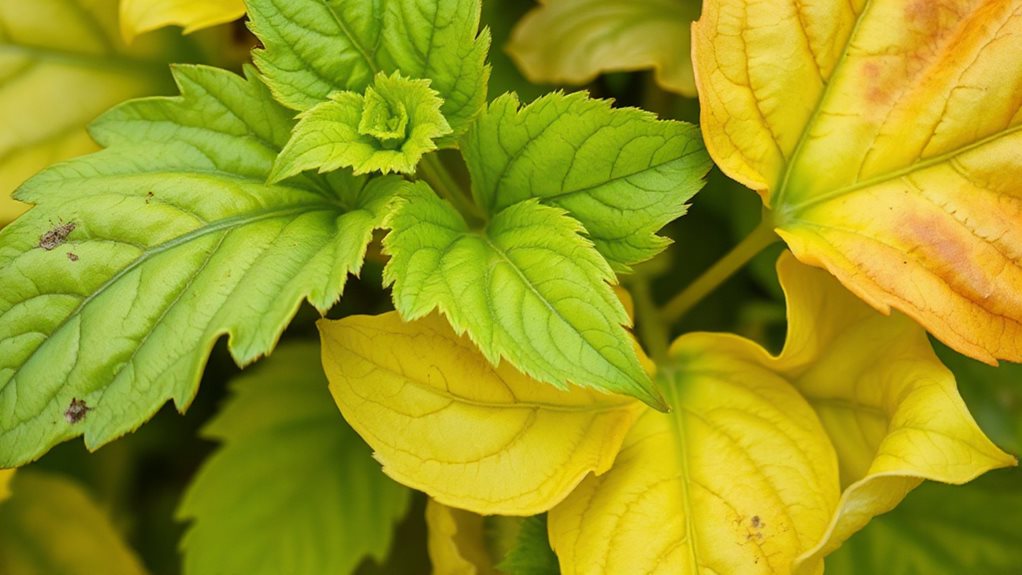
Often, the first clear sign of nitrogen deficiency you’ll notice is a uniform yellowing that starts in the older leaves of the plant.
This even chlorosis spreads across the entire leaf surface, not just between veins, and begins on lower, mature foliage before moving upward.
You’ll see it in broadleaf plants and conifers alike, where older needles turn yellowish and cluster tightly—key clues this isn’t magnesium or iron deficiency.
For greenhouse tomato growers, low nitrogen can lead to stunted growth and reduced yields if not addressed promptly.
From Pale Green to Yellow: Tracking Chlorosis Progression
You’ll first notice nitrogen deficiency as a pale green tint in older leaves, signaling the plant is moving nitrogen to support new growth.
As the shortage continues, that pale color deepens into a uniform yellow, often starting at the tips and spreading inward across the leaf surface.
This progression from pale green to yellow marks the early stages of chlorosis and shows the deficiency is worsening without intervention.
Plants may also show yellowing first in older leaves as nitrogen is mobilized to new growth.
Pale Green Foliage Emerges
As nitrogen levels begin to decline within the plant, you’ll notice the lower, mature leaves shifting from their healthy dark green to a distinct pale green—this subtle lightening is the first visible sign of chlorosis and signals that chlorophyll production is already slowing.
Since nitrogen is mobile, the plant pulls it from older leaves to support new growth, making this early discoloration a reliable cue to act before damage spreads.
Yellowing Spreads From Tips
Starting at the outer edges of the oldest leaves, yellowing creeps in from the tips and along the margins, forming a distinct V-shaped pattern that signals advancing nitrogen deficiency.
You’ll notice this progression as pale green areas deepen into clear yellow, spreading inward. Margins discolor first, and as the deficiency worsens, the yellowing extends fully across lower leaves, moving steadily upward through the plant.
Stunted Growth and Weak Stems in Nitrogen-Deficient Crops
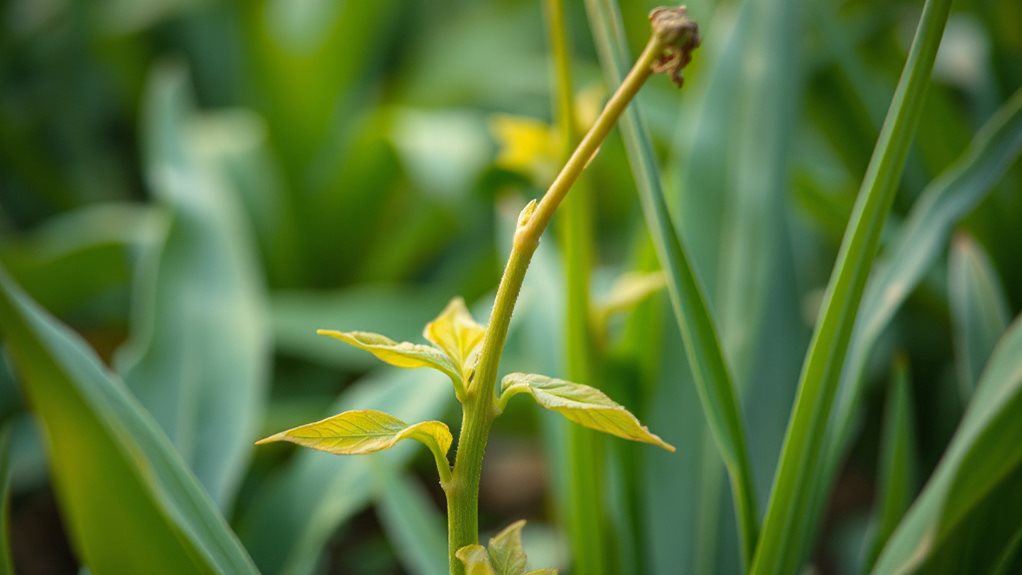
You’ll notice your plants aren’t growing as they should when nitrogen runs low, with shoot extension slowing early due to reduced cell division and elongation.
Stems turn thin and spindly, lacking the structural strength to support healthy growth, while internode lengths shorten noticeably.
This stunted development weakens the entire plant, making it more vulnerable to stress, pests, and lodging, especially in taller crops.
Overwatering can worsen these symptoms by causing root oxygen deprivation and reducing nutrient uptake.
Stunted Plant Development
When nitrogen runs low, your plants won’t just slow down—they’ll visibly shrink, with growth stalling as the entire system scrambles to survive. You’ll notice pale, yellowish-green foliage, thin spindly stems, and reduced leaf expansion, especially in younger growth.
Shoot development weakens while roots take priority, leading to stunted, bushy plants with poor branching, delayed maturity, and lower yields across crops.
Shortened Internode Length
Notice how your plants begin to hunch inward, their stems compressing between nodes as nitrogen deficiency takes hold—this shortening of internodes is a clear sign that growth is being compromised.
You’ll see compact, bushy shapes develop, especially in older growth, because reduced protein synthesis and hormonal shifts limit stem extension while roots take priority, weakening overall structure.
Weak Spindly Stems
Stunted growth and weak, spindly stems emerge as nitrogen levels drop, revealing a plant struggling to sustain basic structural development.
You’ll notice thin, pale stems with poor strength, prone to lodging and breakage, especially in grains and vegetables.
Reduced protein synthesis weakens cell walls, while impaired nutrient transport limits vascular development, leaving your crops vulnerable to stress, wind damage, and reduced yields.
Early Leaf Drop: When Lower Leaves Dry Prematurely
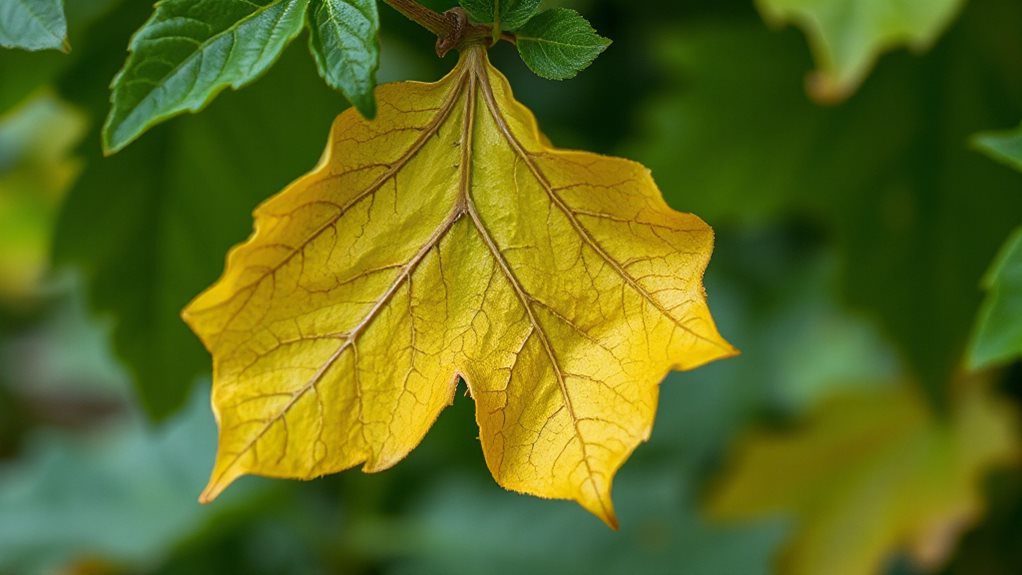
Often, you’ll notice that nitrogen deficiency starts subtly, with older leaves turning a pale green before rapidly fading to light yellow, especially near the base of the plant.
As the shortage worsens, they turn bleached or brown, dry out, and drop early. You’ll see this first in lower foliage since nitrogen moves upward, weakening older leaves first. Adequate nitrogen levels are essential because nitrogen promotes green leaf growth.
Fewer Flowers, Smaller Yields: Reproductive Impacts
As lower leaves yellow and drop early due to nitrogen scarcity, your plant’s struggles don’t stop there—its reproductive performance begins to suffer just as markedly.
You’ll notice fewer flowers, delayed flowering, and smaller fruits, since nitrogen deficiency limits energy for blooming and weakens cell development.
Seed yields drop, grain filling falters, and overall quality declines, leaving your crops vulnerable to stress and reducing harvest success.
Applying timely nitrogen-rich treatments like liquid concentrates can restore vigor within days and improve reproductive outcomes with repeated applications every 4–6 weeks liquid concentrates.
Red Leaves in Cotton and Pink Stems in Wheat: Crop-Specific Clues
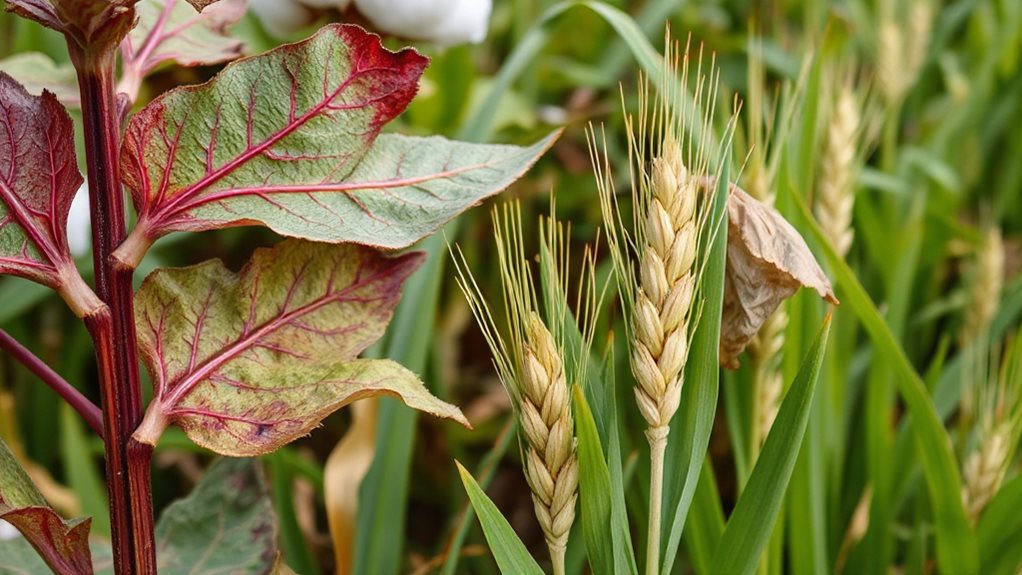
Reddish leaves on your cotton plants and pinkish stems in your wheat stand aren’t just oddities—they’re clear warning signs of nitrogen deficiency, each revealing specific stress patterns tied to these crops’ unique physiology.
You’ll notice older cotton leaves yellowing first, then turning red as anthocyanin builds up, while wheat stems develop light-pink hues and white leaf tips, helping you identify and address nitrogen needs early.
Why Older Leaves Yellow First: The Science Behind Nitrogen Mobility
You’ve seen the red leaves in cotton and pink stems in wheat—telltale signs that something’s off with your crop’s nutrition—but now it’s time to understand why nitrogen deficiency starts where it does: in the older leaves.
Your plant pulls nitrogen from mature leaves, sending it to new growth because nitrogen’s highly mobile. This smart move keeps young tissue thriving, but older leaves yellow as nutrients shift upward, signaling it’s time to act. Basil is particularly sensitive to low nitrogen and will show yellowing leaves early in the season, especially when grown in poor soil.
Final Note
You’ll notice nitrogen deficiency first in older leaves turning yellow, since nitrogen moves to new growth. As chlorosis spreads, plants show stunted growth, weak stems, and early leaf drop, reducing yield potential. Some crops, like cotton or wheat, reveal red or pink hints. Recognizing these signs early helps you act fast—applying balanced fertilizer or adjusting soil pH improves uptake. Monitoring plant health regularly guarantees stronger growth and better harvests, so don’t overlook subtle changes in color or vigor.

Nathan McPhail is a garden and home DIY expert who writes practical, easy-to-follow advice for homeowners and gardeners. Through Yardique, he shares hands-on tips covering gardening, lawn care, landscaping, home improvement, repairs, tools, and outdoor living. His focus is on helping readers solve everyday household and yard problems with straightforward guidance, useful techniques, and practical solutions.