You’ll want at least 8 inches of soil for healthy root growth, but aim for 12 to 24 inches to grow more vegetables successfully. Shallow-rooted plants like lettuce do well at 6–8 inches, while peppers and cucumbers need 12–18 inches. Tomatoes and carrots thrive with 18 or more inches. Add 2 extra inches to account for settling, especially on hard surfaces where drainage matters. Deeper soil holds moisture better, reducing how often you water. You’ll gain flexibility and better yields the more depth you provide—there’s more to take into account when matching beds to your favorite crops.
TLDR
- Most vegetables need at least 8–12 inches of soil for healthy root growth and moisture retention.
- Shallow-rooted crops like lettuce thrive in 6–8 inch beds, while deeper beds prevent waterlogging.
- Medium-rooted plants such as peppers require 12–18 inches, with 24 inches ideal for large varieties.
- Deep beds (18–24 inches) support root crops like carrots and improve drought resilience and yields.
- Add 2 extra inches to account for soil settling, and use mulch to reduce evaporation and watering needs.
How Deep Should a Raised Garden Bed Be?
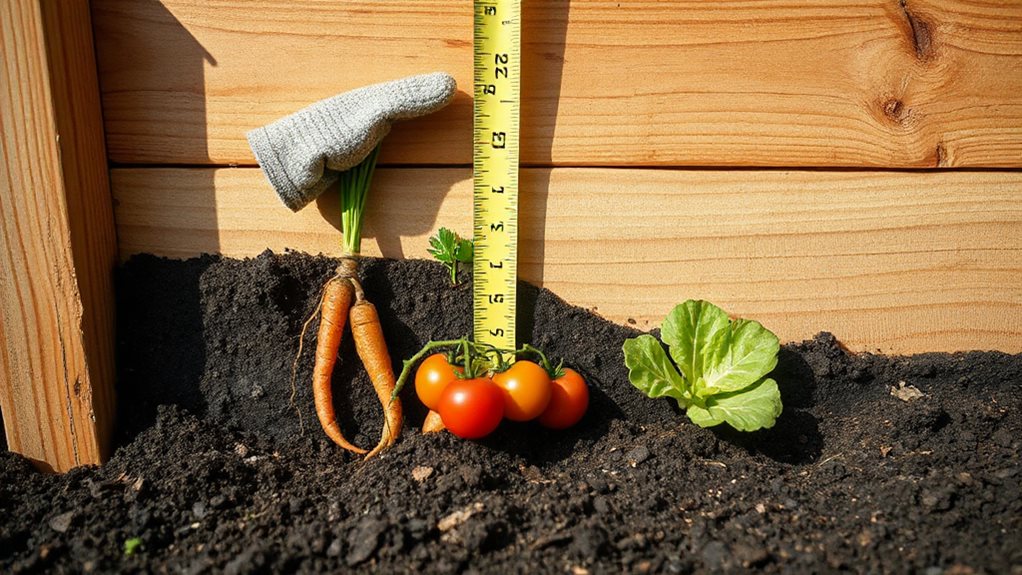
When planning your raised garden bed, start by considering how deep it needs to be to support healthy root development, since most plants thrive with at least 8 inches of soil depth.
Aim for 12 inches to accommodate a wider variety of vegetables and secure better moisture retention, especially on patios or compacted soil.
Deeper beds, like 18–24 inches, are ideal for root crops and improved yields, giving you more flexibility for future planting.
Be sure to add about 2 inches extra to account for soil compaction after watering.
How Deep for Shallow-Rooted Plants Like Lettuce and Herbs?
You’ll want at least six inches of depth for shallow-rooted plants like lettuce and herbs, since anything shallower—like four inches—won’t hold enough soil for healthy growth.
This depth gives you sufficient soil volume to support root development while still offering excellent drainage, which keeps delicate roots from sitting in water.
Most of these plants, including spinach, arugula, and common herbs, actually thrive in 6 to 12 inches of well-aerated soil, making them ideal for low raised beds or containers.
Warm-season plants generally need deeper beds and more time to establish, so plan accordingly and consider soil temperature for successful planting soil temperature.
Minimum Depth Requirements
Though some gardeners assume deeper soil is always better, shallow-rooted plants like lettuce and herbs actually thrive with far less depth than commonly thought.
You’ll find that just 6 inches of soil provides enough room for healthy root development, nutrient access, and strong growth. This depth works well in containers or raised beds, and while 8–12 inches is ideal, 6 inches is the practical minimum you can rely on for success.
Ideal Soil Volume
A 6-inch soil depth meets the minimum needs for growing shallow-rooted crops like lettuce, spinach, radishes, and most herbs, but aiming for 6 to 12 inches gives you better results with more room for root expansion and moisture retention.
Deeper soil holds water longer, reduces stress during hot spells, and supports stronger growth. You’ll enjoy healthier plants when you provide extra volume, even if roots don’t go deep—giving them space to thrive makes all the difference.
Drainage For Shallow Roots
When growing shallow-rooted plants like lettuce and herbs, proper drainage starts with the right bed depth—6 to 12 inches is ideal, with at least 8 inches recommended to maintain healthy root systems after soil settles.
This depth prevents waterlogging, supports airflow, and mimics the light, aerated topsoil these plants prefer, ensuring strong growth without soggy roots.
Best Raised Bed Depth for Beans, Peppers, and Cucumbers
You’ll want to make certain your raised bed is deep enough to support strong root development, especially since beans thrive with 24–30 inches of soil and benefit from well-draining conditions that promote nitrogen fixation.
Peppers, while more forgiving, still perform best in 12–36 inches of soil depending on the variety, with consistent moisture and nutrient access being key during fruiting.
For cucumbers, aim for at least 18–24 inches of depth to accommodate their spreading roots and sustain vigorous vine growth and fruit production.
Soil temperature affects root activity and seedling establishment, so aim for appropriate soil temperature when planting.
Beans: Optimal Depth Range
While most vegetables demand substantial soil depth, beans generally thrive with less, making them a practical choice for moderately deep raised beds.
You’ll want at least 8 inches, though 12–18 inches guarantees ample room, especially for pole and lima varieties.
Bush beans tolerate 6 inches if watered carefully.
With roots mostly in the top 6 inches, well-aerated soil in 8–12 inch beds supports healthy growth.
Peppers: Root Space Needs
Peppers thrive when given adequate room to develop their wide, fibrous root systems, making proper raised bed depth a key factor in successful cultivation.
Aim for at least 12 inches of depth, though 18–24 inches is ideal, especially for larger varieties like bell peppers. Provide well-draining, organic-rich soil, space plants 18–24 inches apart, and plant at the same depth as their original container to support strong, healthy growth.
Cucumbers: Ideal Soil Depth
When growing cucumbers in raised beds, providing ample soil depth is essential for supporting their extensive root systems, which can reach 1 to 5 feet under ideal conditions.
Aim for 18 inches of depth to guarantee strong growth and proper drainage, though 12 inches is the minimum. Deeper beds, up to 24 inches, enhance root development, especially when combined with loose, well-aerated soil.
How Deep Should a Raised Bed Be for Tomatoes and Carrots?
A minimum of 12 inches of soil depth is essential for growing healthy tomatoes and carrots in raised beds, giving both crops room to develop strong root systems and access the nutrients and moisture they need.
While 18 inches is ideal—especially for deep-rooted indeterminate tomatoes and longer carrot varieties like Nantes—12 inches works well for most. Make certain loose, well-drained soil to prevent deformities and support sturdy growth, particularly if your native soil is poor. Strawberries also do well in shallow beds and are propagated from runners, which can help fill beds and improve productivity.
Add 2 Extra Inches for Soil Settling and Compaction
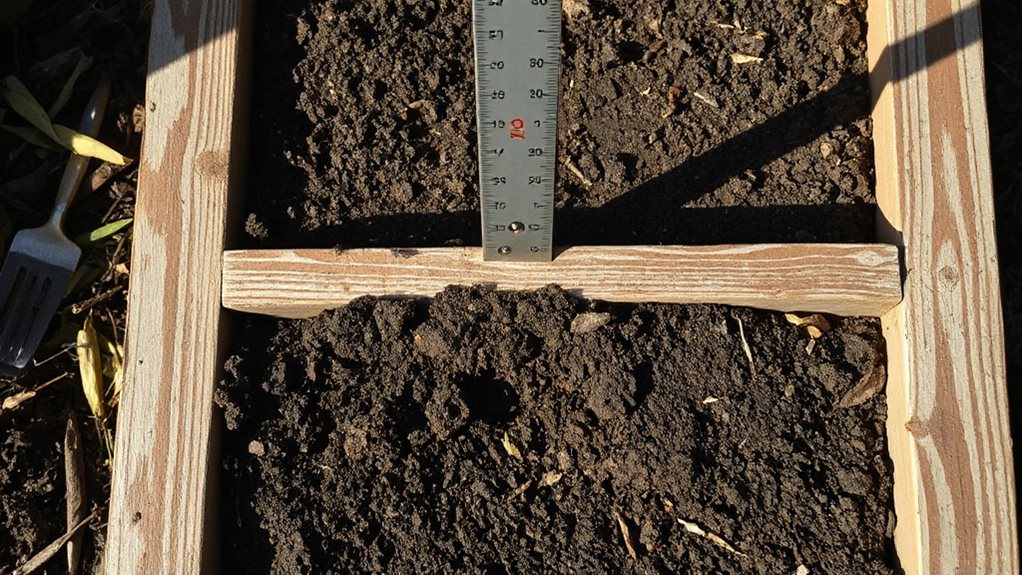
You’ve chosen the right depth for your tomatoes and carrots, but don’t stop there—account for soil settling by adding 2 extra inches when filling your raised bed.
Moisten the soil after filling to speed up settling, then top up if needed.
High-quality soil, layered properly, guarantees roots stay deep and healthy, while proper overfilling prevents compaction from reducing usable depth over time.
Consider testing the soil’s pH and nutrient levels before planting to match amendments to your crop’s needs and avoid guesswork with pH and nutrients.
Why Good Drainage Needs at Least 6–12 Inches of Depth
Though drainage might seem like a secondary concern when building your raised bed, skimping on depth can undermine even the most carefully chosen soil mix.
You need at least 6–12 inches to prevent waterlogging, support root oxygen, and guarantee proper drainage—especially in clay soils.
This depth range balances moisture control and root health, helping your plants thrive without drowning or drying out too quickly.
Watering at soil temperatures above 40°F is more effective and helps protect roots in cooler weather.
Make Raised Beds Deeper on Concrete or Paved Surfaces
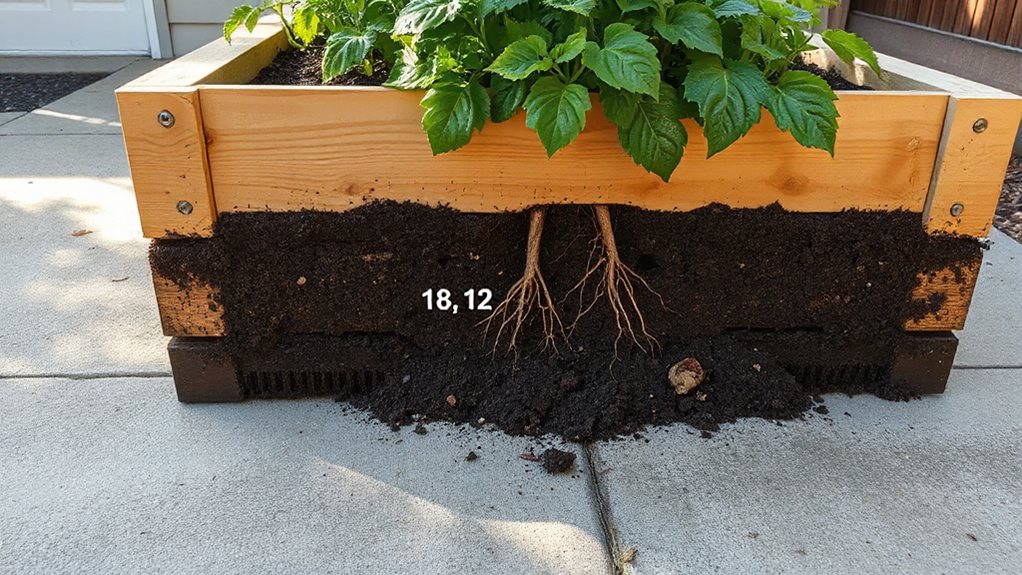
When building raised beds on concrete or paved surfaces, going deeper isn’t just helpful—it’s essential for healthy root development and long-term plant success. Aim for at least 12 inches, but 18–24 inches is ideal, especially for deep-rooted crops like tomatoes and carrots.
Deeper beds improve drainage, prevent water pooling, and mimic natural soil conditions, giving your plants room to thrive while protecting the underlying surface from moisture damage.
How Soil Depth Reduces Watering Frequency
Maximizing soil depth in your raised garden bed does more than support sturdy root systems—it markedly reduces how often you need to water.
When water reaches 6–8 inches, it soaks into the root zone, cutting evaporation. Deeper soil holds more moisture, especially with organic matter and mulch, letting you water just 1–3 times weekly instead of daily, saving time and effort.
Minimum Depth vs. Root Depth: Matching Plants to Bed Size
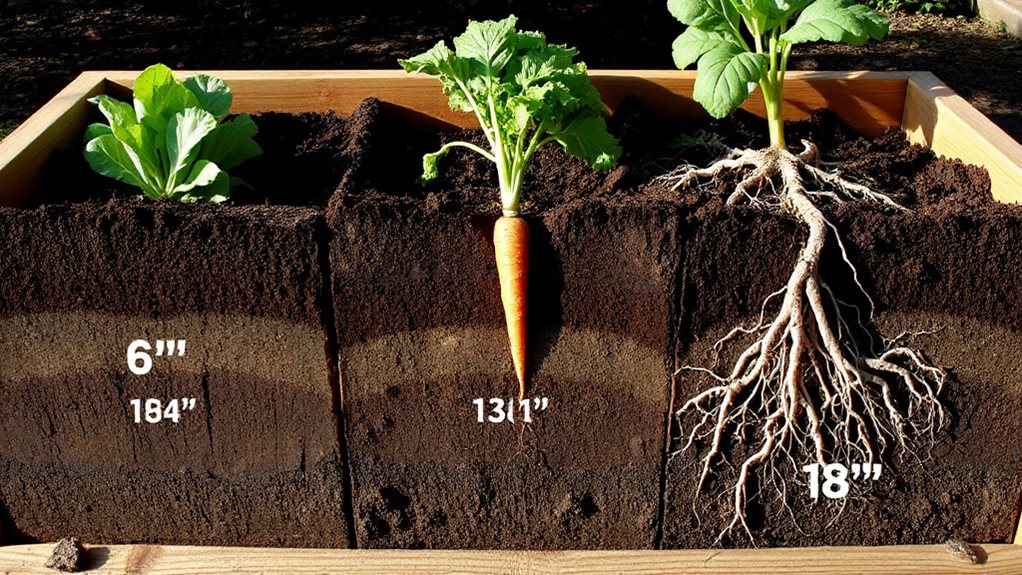
Getting the depth right means matching your plants’ root needs to your bed size—skip this step, and even the most carefully tended garden may struggle.
For shallow-rooted crops like lettuce, herbs, or strawberries, 6–8 inches suffices. Medium-rooted plants such as peppers or broccoli need 18 inches. Deep-rooted favorites like tomatoes or carrots thrive best with 24 inches or more.
Final Note
You’ll get the best results when you match your raised bed depth to your plants’ root needs. Shallow beds work for herbs and lettuce, but tomatoes and carrots need at least 12 inches. Add 2 extra inches for settling, especially on hard surfaces where drainage matters. Deeper soil holds moisture longer, reducing watering frequency. Aim for 6–12 inches minimum to guarantee healthy roots and good drainage, giving your garden a strong, productive foundation.

Nathan McPhail is a garden and home DIY expert who writes practical, easy-to-follow advice for homeowners and gardeners. Through Yardique, he shares hands-on tips covering gardening, lawn care, landscaping, home improvement, repairs, tools, and outdoor living. His focus is on helping readers solve everyday household and yard problems with straightforward guidance, useful techniques, and practical solutions.