Choose liquid fertilizer when you need fast, even feeding—especially for quick fixes, young plants, or sandy soils. It absorbs rapidly through leaves or roots, supplying nutrients within hours. Use granular fertilizer for long-term nutrition, particularly in clay or loam soils, since it releases slowly and reduces application frequency. Liquids suit small areas or foliar lift; granulars are more cost-effective for large lawns. Each has strengths—your garden’s needs, soil, and timing decide the best choice, and understanding their differences sharpens your results.
TLDR
- Liquid fertilizers offer fast nutrient uptake through leaves or roots, ideal for quick fixes and foliar feeding.
- Granular fertilizers provide slow, steady nutrient release, making them cost-effective for long-term use.
- Use liquids for seedlings, sandy soils, or rapid deficiency correction; granulars suit clay/loam soils and sustained feeding.
- Liquids require more frequent application and careful storage; granulars last longer when stored dry and sealed.
- Choose based on garden size, plant stage, soil type, and whether immediate or extended feeding is needed.
Liquid Vs Granular Fertilizer: What’s The Difference?
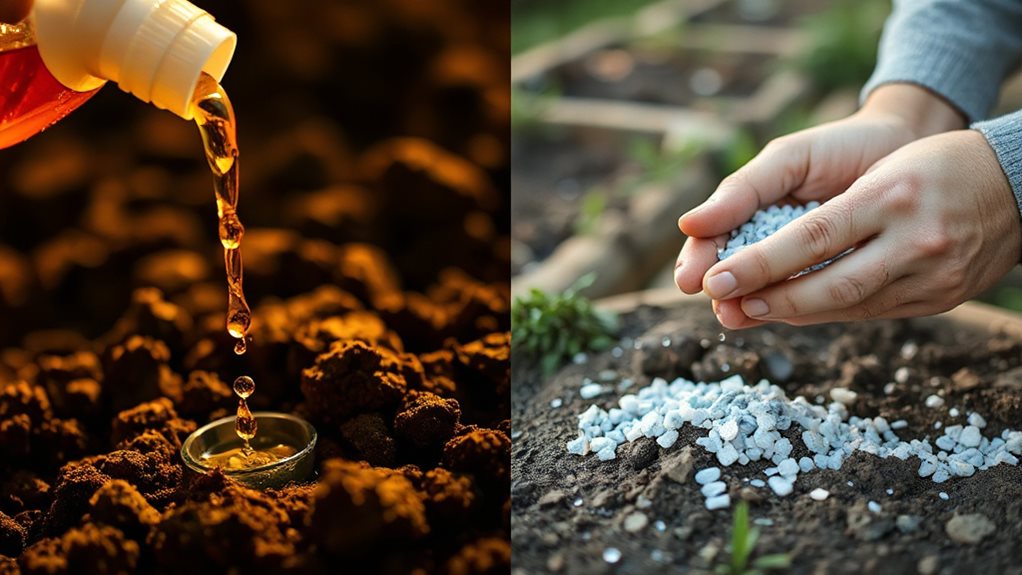
When it comes to feeding your crops or garden, choosing between liquid and granular fertilizers boils down to how each delivers nutrients and fits your management goals.
Liquids offer immediate uptake through leaves or roots with even distribution and lower salt risk, while granulars release slowly, require water to dissolve, and can vary in nutrient placement. Many liquid concentrates also include hose-end or attached sprayers for quick, even application and fast results with repeat treatments as needed hose-end sprayer.
Both supply essential N-P-K, but your application method and timing needs will guide the best fit.
Farmers may see improved yields with products designed for enhanced nutrient availability, such as those that reduce phosphorus fixation, leading to rapid, early growth.
Which Fertilizer Feeds Plants Faster?
Liquid fertilizers get to work almost immediately, putting nutrients directly into the hands of your plants when speed matters most.
You’ll see results fast—most absorption finishes within 24 hours through roots or leaves.
Unlike granular, which waits for microbes and moisture to break it down, liquid delivers dissolved nutrients quickly, efficiently, and uniformly, making it your best choice for rapid feeding and immediate plant response.
Coconut coir chips also improve root oxygenation and moisture retention, making them a useful soil amendment to pair with quick liquid feeds.
When To Use Liquid Fertilizer For Fast Results
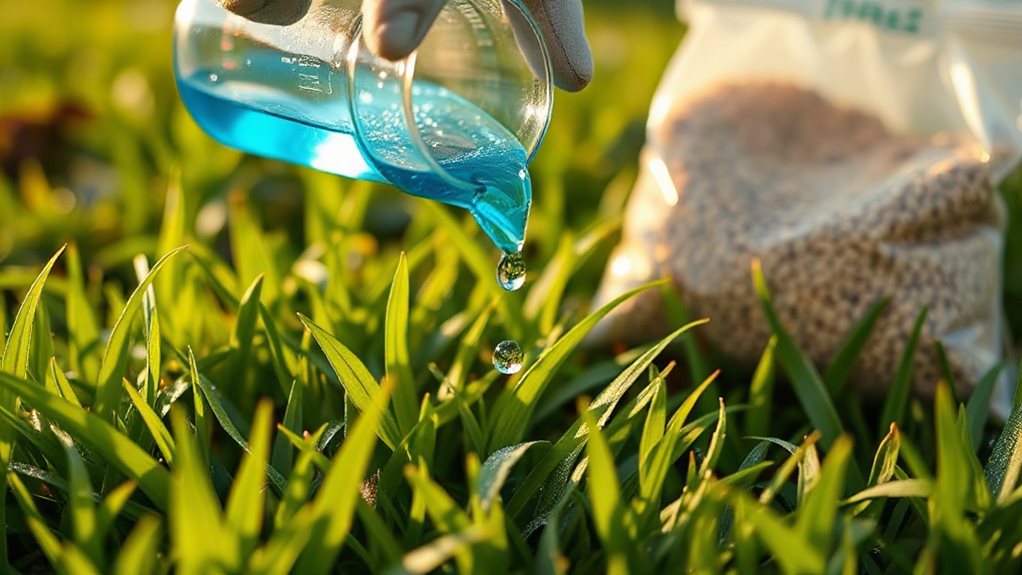
Tap into liquid fertilizer when your plants need a swift nutrient lift, especially if they’re showing signs of deficiency or struggling to gain momentum.
You’ll see greener leaves and stronger growth within days, thanks to fast root or foliar absorption.
Use it early in the season, during flowering, or after lawn stress—you get quick, even results without waiting, making it ideal for time-sensitive care.
Newly planted grass seed and seedlings also need consistent moisture and should not be allowed to dry out for more than 12 hours to ensure successful establishment.
When Granular Fertilizer Beats Liquid For Long-Term Feeding
Feeding your lawn or garden with long-term resilience in mind means choosing a fertilizer that works steadily over time, and granular fertilizer delivers just that.
You’ll appreciate its slow-release formula, which feeds plants consistently for weeks or months, reduces reapplication frequency, minimizes burn risk, supports soil health, and saves you money—all while being easy to apply evenly with simple tools you likely already own.
Peat moss can also be used alongside granular fertilizer to improve moisture retention and soil quality, helping nutrients from the granules stay available to plants longer.
Do Leaves Or Roots Absorb Fertilizer Better?
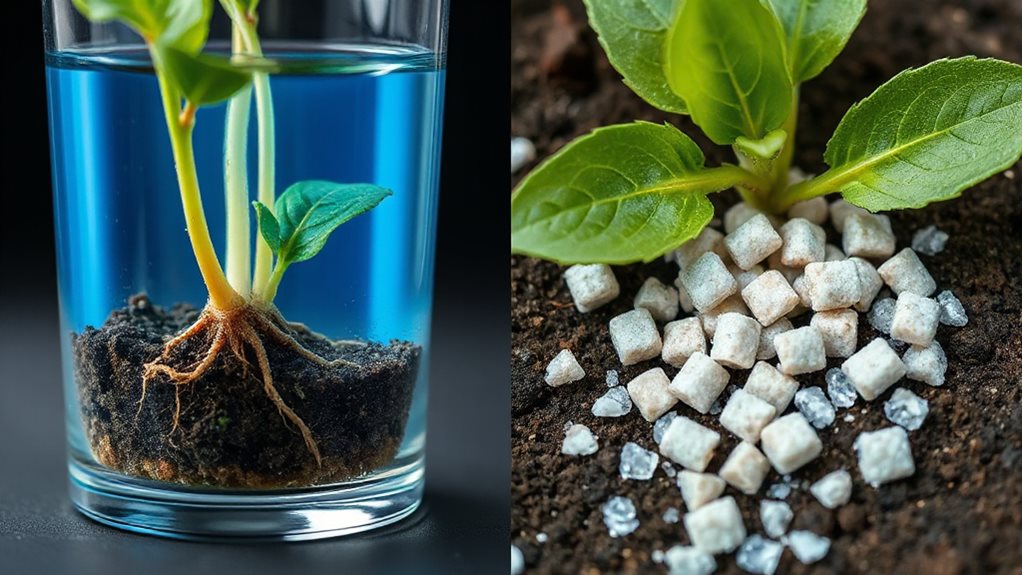
You can feed your plants through both leaves and roots, but each method has distinct advantages depending on your goals. Foliar feeding delivers nutrients quickly, with leaves absorbing up to 90% of applied micronutrients like iron and zinc, bypassing soil issues like pH imbalances or compaction.
While roots remain the primary pathway for most nutrient uptake, especially for long-term growth, foliar sprays offer a faster, more efficient fix when plants need an immediate uplift. Laboratory-based soil testing can guide which method and nutrients to prioritize, especially when you need detailed nutrient analysis for tailored recommendations.
Foliar Feeding Benefits
While roots remain the primary pathway for nutrient uptake, your plants can absorb certain fertilizers through their leaves—often much faster than through the soil.
You’ll see quick results with urea, ammonium, potassium, and magnesium, absorbed within 12 hours.
Foliar feeding works best at dusk or early evening, using fine sprays that penetrate micropores, enhancing plant metabolism efficiently when applied correctly.
Root Uptake Efficiency
Maximizing nutrient absorption starts with understanding how your plant’s roots—far more than its leaves—drive efficient fertilizer uptake.
You rely on root length, surface area, and volume to capture phosphorus, while fine roots enhance nitrogen uptake.
Root loss can increase efficiency, especially in topsoil where phosphorus concentrates.
Optimizing root health and fertilizer placement guarantees your crops absorb nutrients effectively, making root-driven uptake essential for strong, productive growth.
Absorption Speed Comparison
Tap into your crop’s immediate nutrient needs by recognizing how quickly liquid fertilizers deliver compared to granular forms—especially when absorption speed is critical.
You’ll see results in 24–72 hours with foliar feeding, as leaves absorb nano-sized nutrients through stomata.
Liquids also reach roots instantly, while granulars dissolve slowly, delaying uptake.
You’re better off with liquids when time and efficiency matter.
How To Apply Liquid And Granular Fertilizer
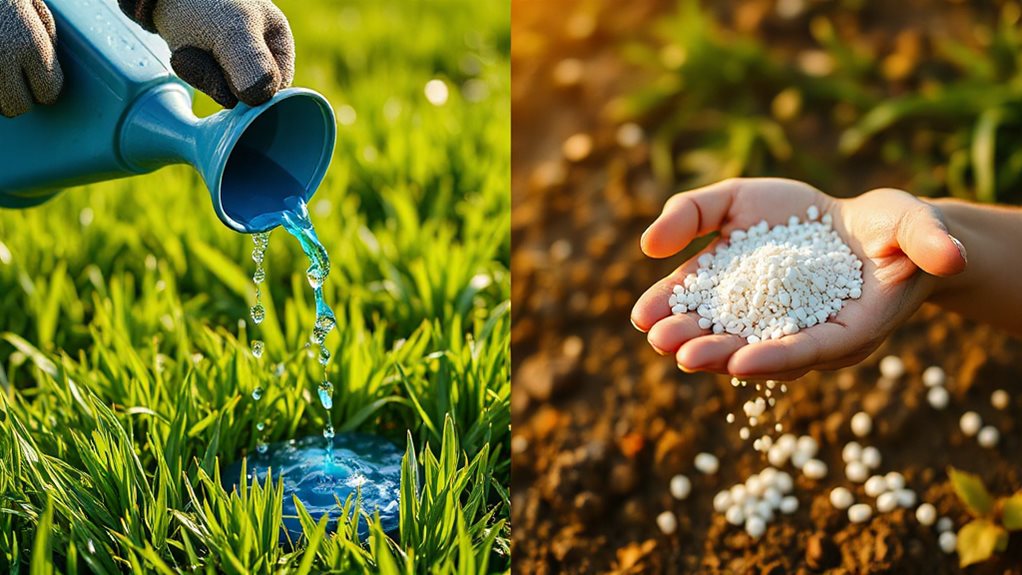
Apply liquid and granular fertilizers correctly to get the most out of your feeding program and keep your plants healthy.
Use liquid fertilizers as a soil drench, foliar spray, or through drip systems, always diluting as directed and avoiding leaf burn.
For granular types, broadcast evenly or band near roots, incorporating into the soil to enhance availability and reduce waste, ensuring your plants get steady, efficient nutrition.
Is Liquid Or Granular Fertilizer Cheaper Long-Term?
When it comes to long-term value, cost isn’t just about the price tag—it’s about how far your investment stretches over time. You’ll save with granular fertilizer because it lasts longer, needs fewer applications, and stores well.
Though liquids work well for small areas, granular’s slow release, lower bulk cost, and shelf stability make it more economical over seasons, especially on larger plots where efficiency and reduced labor add up.
How Long Do They Last In Storage?
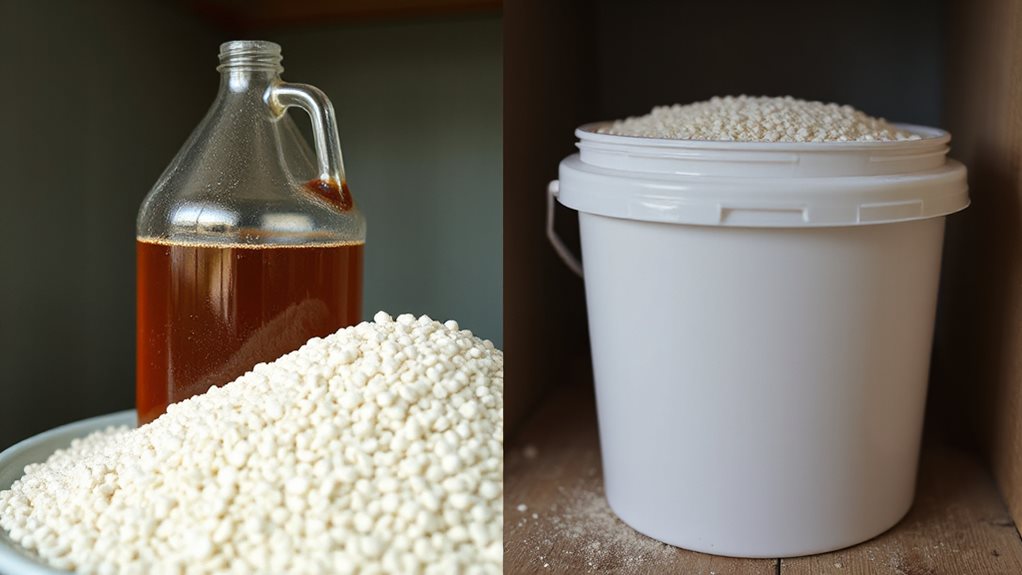
You can expect granular fertilizer to last several years—or even indefinitely—when stored properly in a cool, dry place away from moisture, thanks to its stable, low-moisture composition.
Liquid fertilizer, on the other hand, typically lasts five to ten years unopened but degrades faster once exposed to air, with effectiveness dropping noticeably after a year.
Both types rely heavily on storage conditions, so keep them sealed, out of direct sunlight, and in stable temperatures to maximize their shelf life.
Shelf Life Comparison
Storing fertilizer properly can make a big difference in how long it stays effective, especially when comparing liquid and granular types.
You’ll find granular fertilizer lasts several years or more, often with no expiration, as long as it stays dry and sealed.
Liquid fertilizer, while stable unopened for up to 10 years, degrades faster once opened or diluted, typically lasting only 1–2 years.
Storage Conditions Matter
Proper storage conditions directly influence how long both liquid and granular fertilizers remain effective, building on their inherent shelf life differences.
Keep liquids between 50°F–80°F to prevent separation, and store granulars in dry, low-humidity areas to avoid caking.
Use pallets, sealed containers, and proper spacing to protect quality.
Avoid extreme temperatures, moisture, and direct contact with ground or flammables, ensuring both types stay safe and effective for your farming needs.
Longevity Of Granular Vs Liquid
While both granular and liquid fertilizers can maintain their effectiveness over time, their longevity in storage depends heavily on formulation and environmental conditions.
You’ll find granular lasts indefinitely when kept dry, resisting degradation for years without clumping or potency loss.
Liquids, though stable for 5–10 years unopened, degrade faster once exposed to air, temperature shifts, or moisture, requiring more careful handling and earlier use.
Granular Vs Liquid: Key Trade-Offs Compared
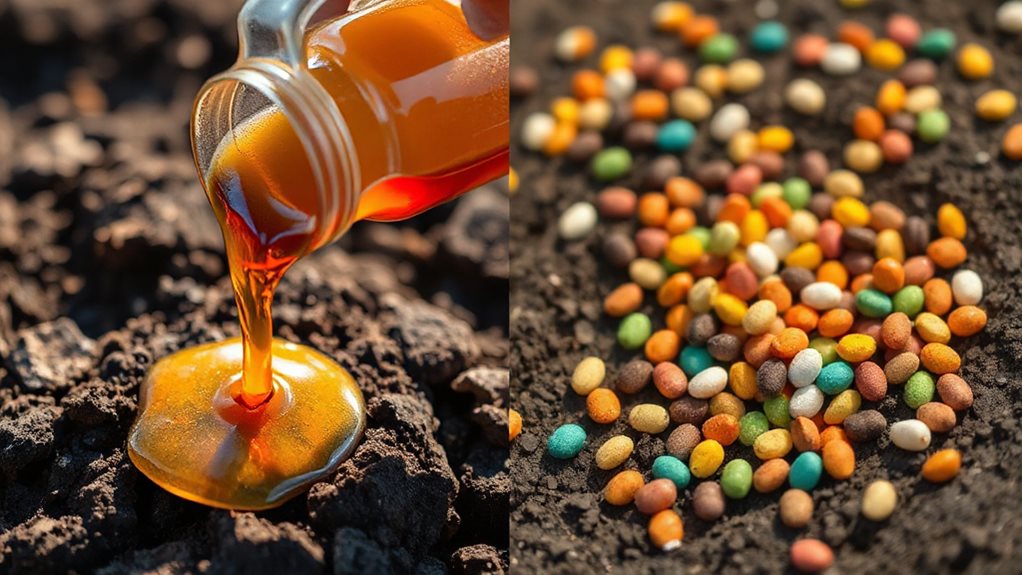
When you’re deciding between granular and liquid fertilizers, one of the first trade-offs you’ll encounter is how quickly plants can access the nutrients. Liquids offer fast absorption and even distribution with lower salt risks, ideal for starters and foliar feeding, yet require more applications.
Granulars last longer and cost less but need moisture to activate, pose higher salt risks, and provide uneven nutrient placement, affecting uptake efficiency.
Which Fertilizer Should You Use: Based On Your Garden?
Your garden’s soil type plays a key role in choosing between liquid and granular fertilizers, since sandy soils leach nutrients quickly while clay holds them longer.
You’ll also want to ponder your plants’ growth stage—liquid feeds are great for fast enhancements during active growth, while granular options support long-term development.
And don’t overlook garden size: small plots and containers benefit from precise, quick-absorbing liquids, whereas large lawns often need the cost-effective, slow-release power of granules.
Soil Type Matters
Because your soil type directly influences how nutrients move and remain available to plants, choosing between liquid and granular fertilizer isn’t one-size-fits-all—it depends on the physical and chemical properties of your garden bed.
You’ll get better results with liquids in sandy or poor soils, where fast absorption and even distribution matter, while granulars work well in clay and loam, offering slow release and stability.
Plant Growth Stage
Soil type sets the stage for nutrient availability, but what your plants need changes dramatically as they grow—meaning the best fertilizer choice depends just as much on their life cycle as it does on your garden’s texture and structure.
Use liquid fertilizers early for quick nitrogen uptake in seedlings and rapid vegetative growth, then switch to granular, slow-release formulas rich in phosphorus and potassium once flowering begins, ensuring steady nutrition through fruiting and maturity without overstimulating growth.
Garden Size Considerations
When managing a small garden under 500 square feet, precision matters—nutrient needs are modest, but overapplication can easily lead to salt buildup or excessive foliage at the expense of fruiting.
You’ll find granular fertilizers easier to measure in small amounts, while liquids offer quick uptake.
For larger plots, broadcast granular forms evenly with a spreader, scaling rates per 1,000 sq ft.
Final Note
You’ll choose liquid fertilizer when you need quick nutrient delivery, especially during peak growing seasons or to correct deficiencies fast. Granular fertilizer, on the other hand, works better for long-term feeding, slowly releasing nutrients and reducing application frequency. While liquid forms act faster, granular options often prove more cost-effective and stable over time. Consider your garden’s needs, timing, and maintenance preferences—each type has strengths, so using both strategically delivers the best results.

Nathan McPhail is a garden and home DIY expert who writes practical, easy-to-follow advice for homeowners and gardeners. Through Yardique, he shares hands-on tips covering gardening, lawn care, landscaping, home improvement, repairs, tools, and outdoor living. His focus is on helping readers solve everyday household and yard problems with straightforward guidance, useful techniques, and practical solutions.