You can’t legally block your own driveway, even temporarily, because the curb cut and adjacent areas are part of the public right-of-way. Local ordinances usually prohibit any obstruction that hinders emergency access or pedestrian traffic. You risk fines, towing, or increased penalties if it’s a repeated issue or blocks disabled spaces. While you control access, legal easements or shared use agreements may limit your rights—knowing the rules helps you avoid violations and protect your property. There’s more to weigh when managing driveway access fairly and lawfully.
TLDR
- Blocking your own driveway may be illegal if it obstructs public right-of-way or curb access, even partially.
- Local ordinances often prohibit any obstruction, including temporary or partial blockages, to ensure emergency vehicle access.
- You can face fines or towing for blocking your driveway, regardless of ownership, if it impedes public space.
- Exceptions exist only in specific cases, like shared ownership without safety risks, such as in parts of New Jersey.
- Physical deterrents like signs or bollards are legal solutions to prevent others from blocking your driveway.
Can You Legally Block Your Own Driveway?
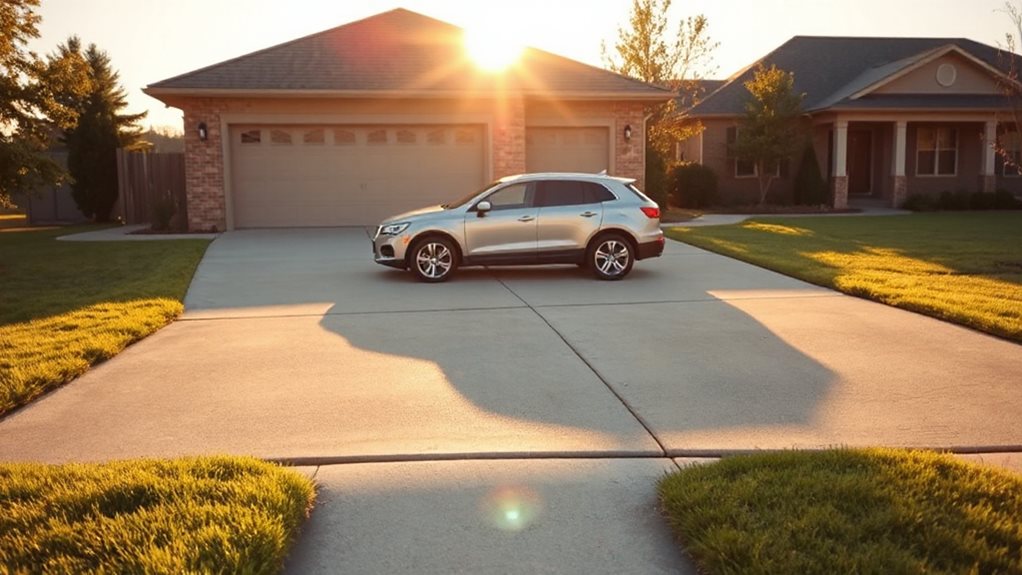
While your driveway may be private property, you can’t always park or leave a vehicle blocking the entrance without breaking the law.
You’re responsible for not obstructing the public right-of-way, even at your own home.
Local ordinances often prohibit blocking the curb cut or sidewalk access, and doing so can lead to fines or towing—keeping that space clear guarantees safety, access, and community flow.
Property owners have the exclusive right to use their driveway, but this does not extend to obstructing access for themselves or others.
Neighbors who habitually store multiple vehicles on the street can create parking conflicts that affect everyone in the neighborhood.
Is It Illegal to Partially Block a Driveway?
Even if you only park partway across your own driveway, you might still run into legal trouble depending on local rules.
Municipalities often ban any obstruction, partial or full, to guarantee emergency access and traffic flow.
HOAs typically enforce strict no-block policies, and New Jersey’s exception only applies if you own both the vehicle and driveway, with no impact on public safety or traffic.
CLR Septic System Treatment is safe for septic tanks and contains live microbial bacteria that help degrade organic waste.
What Happens If You Block a Driveway?
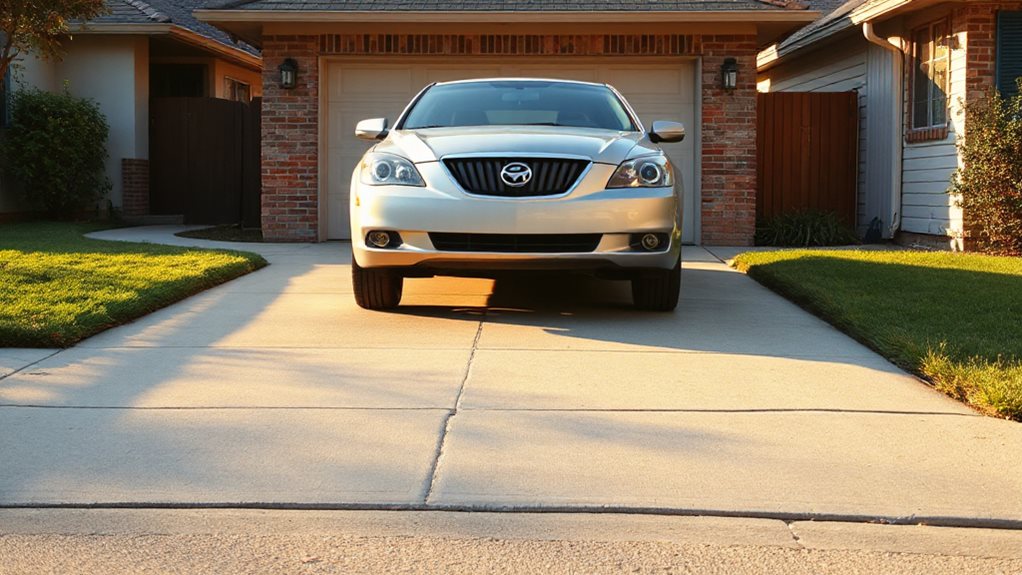
If you park in a way that blocks a driveway, you’re not just inconveniencing the property owner—you’re likely breaking the law.
You could face fines, towing, and even criminal charges for repeated offenses.
Authorities may ticket your vehicle before towing it, and you’ll pay impound fees.
Blocking disabled spaces raises penalties.
Always check local rules, since even brief stops can result in citations.
Many homeowners use security cameras and other measures to document and deter driveway misuse.
Can Homeowners Control Access to Their Driveway?
You can take charge of who uses your driveway, but your control isn’t absolute—especially if legal easements are in place.
You must honor recorded rights like shared driveways or prescriptive access, even after selling.
While you can restrict general trespassers, you can’t block neighbors with valid easements.
Clear agreements and documentation help maintain harmony and prevent disputes over access and maintenance responsibilities.
If an easement or local ordinance creates obligations, contact local authorities to understand enforcement options.
How to Stop Cars From Blocking Your Driveway
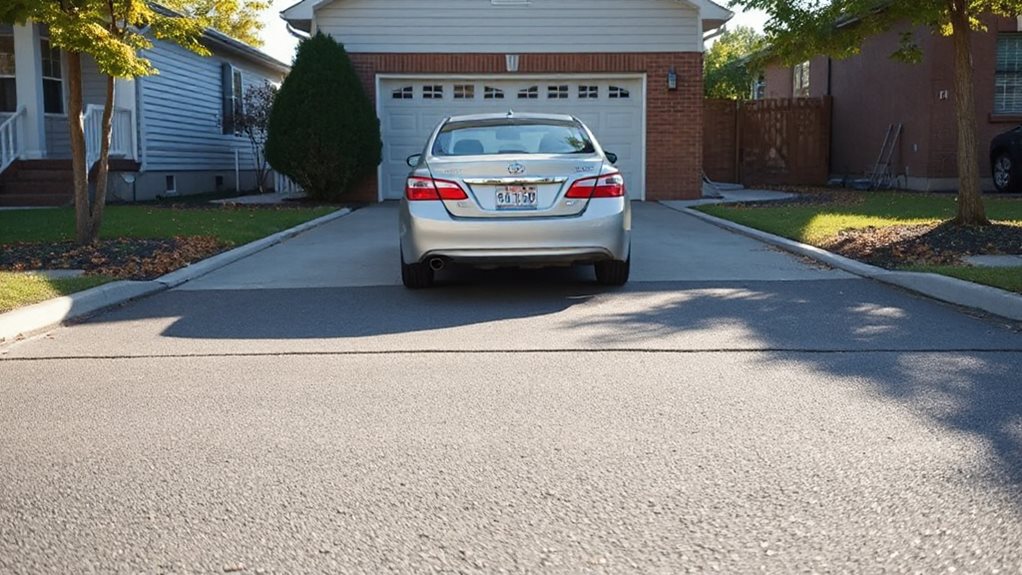
Taking action to protect your driveway starts with clear, visible measures that discourage unauthorized parking.
Install “No Parking” signs or custom labels like “Visitor Parking Only” to assert control. Use bollards, gates, or chains for physical deterrence, ensuring compliance with local laws. Paint curb lines and deploy security cameras. Report persistent violators via 311 or non-emergency police, documenting all incidents thoroughly. Begin by having friendly conversations with neighbors about parking needs and seek mutual solutions, keeping a record of repeated problems for enforcement and documentation.
Final Note
You can legally block your own driveway since it’s your private property, but partial obstruction may still draw fines if it hampers traffic or violates local ordinances. Always check municipal codes, as rules vary by location. If others block your driveway, you can take steps like installing signage or barriers. Ultimately, understanding your rights helps you manage access effectively while staying compliant with the law.

Nathan McPhail is a garden and home DIY expert who writes practical, easy-to-follow advice for homeowners and gardeners. Through Yardique, he shares hands-on tips covering gardening, lawn care, landscaping, home improvement, repairs, tools, and outdoor living. His focus is on helping readers solve everyday household and yard problems with straightforward guidance, useful techniques, and practical solutions.