You enhance vegetable yields up to 54% by intercropping with cowpeas, which fix nitrogen, improve soil health, and attract 50% more pollinators. Pairing cowpeas with squash, watermelon, or okra increases land efficiency—LER reaches 1.53—and cuts pest pressure by 32%. Synchronized flowering and strategic planting enhance pollination, while legume residues improve water retention and suppress weeds. These systems lift farm income over 30% and stabilize harvests in tough weather, offering a proven edge in sustainable production—there’s more to how this works in practice.
TLDR
- Intercropping vegetables with cowpea can boost yields by up to 161%, as seen with squash and watermelon.
- Cowpea enhances nitrogen availability and attracts pollinators, improving growth and fruit set in paired vegetables.
- Synchronizing flowering times between cowpea and vegetables increases pollinator visits and crop productivity.
- Pairing cowpea with okra, squash, or watermelon suppresses weeds and optimizes land use efficiency (LER up to 1.53).
- Intercropping increases farm income by 30% or more through higher yields, diversification, and reduced pest pressure.
Why Intercropping Vegetables Boosts Yields Up to 54

Imagine your garden buzzing with bees and yielding noticeably more produce—intercropping vegetables can make this a reality. Research shows that intercropping cowpeas with vegetables like watermelon, squash, and okra can lead to significant yield increases, with watermelon yields rising by up to 54%. Soil pH is important for many crops, so maintaining an appropriate soil acidity can help support healthy plant growth.
Cowpea + Vegetables: Proven Pairings for Higher Harvests
You’ll see real gains when you pair cowpeas with okra, squash, or watermelon—these combinations enhance yields by improving nitrogen availability and attracting more pollinators.
By adjusting planting times, you can sync flowering periods and maximize benefits like the 54% higher watermelon yields seen in intercropped plots.
With strong pest resistance and efficient nodulation, varieties like Whippoorwill and Pinkeye Purple Hull help you build healthier, more productive gardens.
Cowpea And Okra Synergy
When paired strategically, cowpea and okra create a synergistic intercropping system that enhances yields, optimizes resource use, and supports ecological balance on the farm.
You gain 7% higher okra yields while enjoying dual harvests, improved pollination, and better weed suppression.
With complementary growth habits and synchronized flowering, this pairing maximizes land, light, and nutrients—offering you stable, profitable, and sustainable production without sacrificing crop performance.
Cowpea With Squash Benefits
A well-designed intercropping system using cowpea and squash releases significant gains in yield, soil health, and ecological resilience. You increase squash production by up to 161% when pairing it with cowpea, especially Whippoorwill or Pinkeye Purple Hull.
Synchronized flowering draws more pollinators, while nitrogen fixation enriches soil. Together, they suppress pests, weeds, and enhance climate adaptability—giving you reliable, sustainable harvests season after season.
Cowpea Plus Watermelon Gains
Pairing cowpea with watermelon releases substantial gains in yield and soil health, making it a smart choice for diversified vegetable production.
You’ll see watermelon yields jump by 54% while boosting cowpea forage to 0.35 t/ha in alternate rows. Synchronize flowering with adjusted planting dates, use top varieties like Whippoorwill, and position cowpea on the edges to maximize benefits, improve nitrogen, and attract more pollinators.
Grow More on Less Land: LER Up to 1.53 in Intercropping
Land efficiency takes center stage in intercropping systems, where the land equivalent ratio (LER) reveals just how much more productive multicrop designs can be compared to growing crops alone.
You achieve LERs up to 1.53 by pairing cereals with legumes, thanks to nitrogen sharing and root complementarity.
With LER above 1, you need less land for the same yield, making your farming more efficient and sustainable.
Commercial options like Neem oil provide organic-approved pest control compatible with many intercropping systems.
Attract 50% More Pollinators With Diverse Crop Mixes
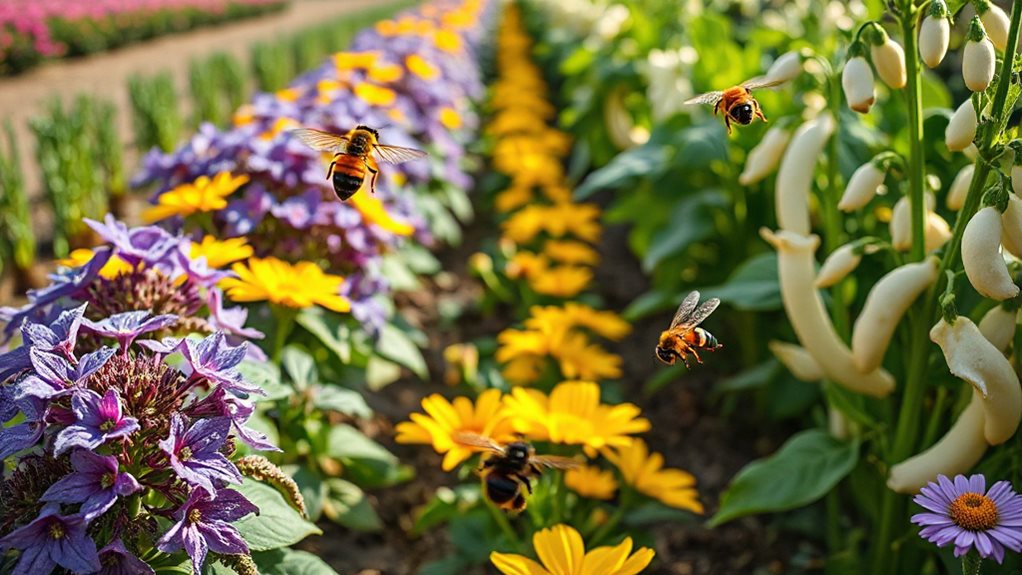
You’ll see up to 50% more pollinators in your intercropped vegetable plots, especially when pairing crops like watermelon or hemp with cowpea.
Synchronized flowering between cowpea and vegetables enhances pollinator activity by offering continuous access to nectar and pollen, reducing foraging time and increasing visit frequency.
This enhanced floral resource availability not only supports diverse pollinators but also contributes directly to higher yields in crops like watermelon and squash.
Additionally, incorporating a cover crop such as winter rye can improve soil health and weed suppression while fitting into intercropping rotations.
Enhanced Pollinator Activity
When you intercrop vegetables with cowpea, you’re not just growing more plants—you’re building a more lively, functional ecosystem that draws in pollinators at rates monocultures simply can’t match.
You’ll see 50% more bees and beneficial insects, especially in watermelon or hemp pairings, thanks to abundant nectar and pollen.
This uplift enhances pollination, increases yields by up to 64%, and supports balanced, resilient arthropod communities—all without synthetic inputs.
Synchronized Flowering Benefits
Often, the key to unsealing a thriving pollinator community lies in precise timing—specifically, aligning the flowering periods of intercropped vegetables and cowpeas through strategic planting schedules. You can attract 50% more pollinators by synchronizing blooms, creating abundant, diverse foraging sites.
Coordinated flowering enhances okra, squash, and watermelon yields—up to 54%—while extended bloom windows from dual cowpea varieties guarantee continuous pollinator activity and improved crop success.
Reduce Pests and Disease by 32% With Intercropping
While intercropping won’t eliminate every pest or disease threat, it markedly reduces their impact—by up to 32% on average—through ecological mechanisms that disrupt pathogen cycles and suppress pest populations.
You enhance soil health and microclimate conditions, which limit nematodes and diseases, especially when pairing legumes with grains or oilseeds.
Reduced fertilization and higher planting densities increase effectiveness, giving you smarter, more resilient pest and disease control.
Lab-tested soil nutrient analysis can further optimize intercropping performance by identifying specific nutrient deficiencies to address.
Boost Soil Nitrogen and Water With Legume Partners
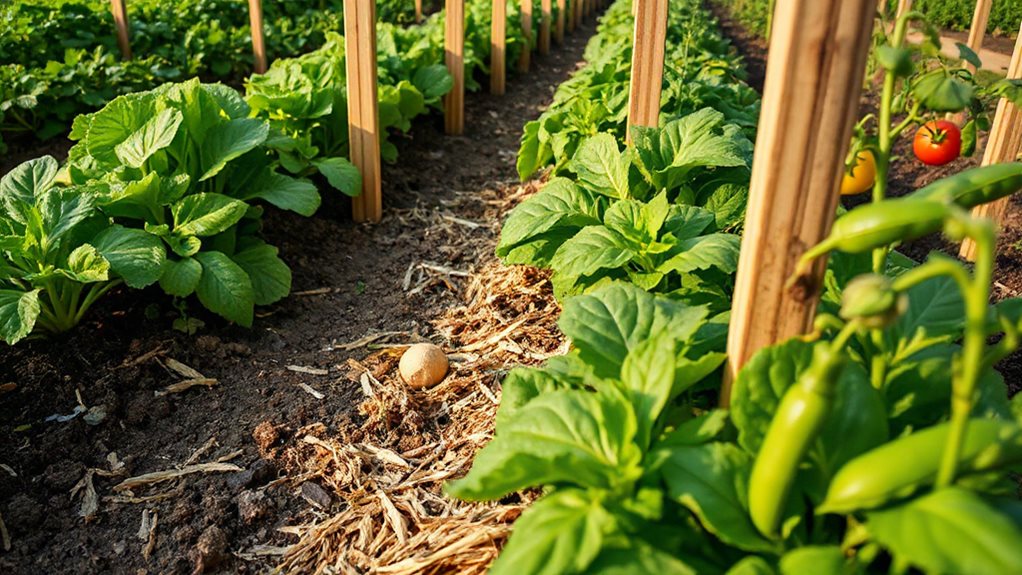
Utilizing the natural power of legumes in your intercropping system gives you a proven edge in enhancing soil nitrogen and improving water efficiency.
You amplify nitrogen fixation by 13–15% when pairing soybeans with wheat, even in fertile soils.
Legume-cereal mixes increase soil organic carbon, optimize resource use, and sustain yields, letting you grow more on less land while naturally fortifying the soil for future seasons.
Including legume residues can also improve soil moisture retention and provide additional organic carbon to support microbial activity.
Earn 30%+ More From High-Value Intercropping Sales
Raise your bottom line by intercropping high-value vegetables with complementary crops, and watch your farm income climb by 30% or more. You gain up to 54% higher yields, like with cowpea and watermelon, while enhancing sales—wheat/bean intercrops earn £720/ha versus £463–516 for monocrops.
Diversify with cabbage or spinach in maize rows to increase income, reduce risks, and improve market resilience.
Stabilize Yields in Extreme Weather With Intercropping

When unpredictable weather threatens your harvest, intercropping gives you a powerful edge by spreading risk across multiple crops.
You strengthen your agroecosystem, improve soil water retention, and maintain yields during droughts or floods. Diverse root systems enhance resource use, while mixed plantings reduce pest outbreaks and enhance resilience, ensuring more stable, reliable harvests season after season.
Final Note
You raise yields and save space when you intercrop vegetables, with land equivalent ratios reaching 1.53. Pairing cowpeas with veggies enhances soil nitrogen and improves water retention, while reducing pests by 32%. Diverse mixes attract 50% more pollinators and stabilize harvests during extreme weather. You also increase profits by over 30% through high-value crop combinations, making intercropping a smart, science-backed strategy for resilient, productive farming on limited land.

Nathan McPhail is a garden and home DIY expert who writes practical, easy-to-follow advice for homeowners and gardeners. Through Yardique, he shares hands-on tips covering gardening, lawn care, landscaping, home improvement, repairs, tools, and outdoor living. His focus is on helping readers solve everyday household and yard problems with straightforward guidance, useful techniques, and practical solutions.