Lay bird netting directly on the grass and secure it with landscape pins, then overlay 19‑gauge chicken wire or hardware cloth on a PVC frame, anchoring everything with 4‑inch staples to eliminate gaps where raccoons can squeeze. Apply imidacloprid or chlorantraniliprole in early summer to kill grubs that attract them, and spray beneficial nematodes later for eco‑friendly control. Install motion‑activated sprinklers around the perimeter, keep the lawn moist through regular irrigation, and use cayenne or citrus oil repellents to deter foraging. These steps form a durable barrier, reduce food sources, and create an uncomfortable environment, and the next sections reveal even more effective tactics.
TLDR
- Install tightly‑fitted bird netting or chicken wire over vulnerable grass areas, securing edges with landscape pins, staples, and PVC frames to eliminate gaps.
- Use motion‑activated sprinklers around the perimeter to deliver brief water bursts when raccoons approach, startling them and discouraging digging.
- Apply grub‑control treatments (e.g., imidacloprid, chlorantraniliprole, or beneficial nematodes) in spring and summer to remove food sources that attract raccoons.
- Keep the lawn consistently moist through irrigation, which hardens soil and reduces grub visibility, making digging more difficult.
- Spray natural repellents such as cayenne pepper, citrus oil, or predator urine around yard edges to create an unappealing scent barrier.
Set Up a Simple Barrier to Stop Raccoon Digging
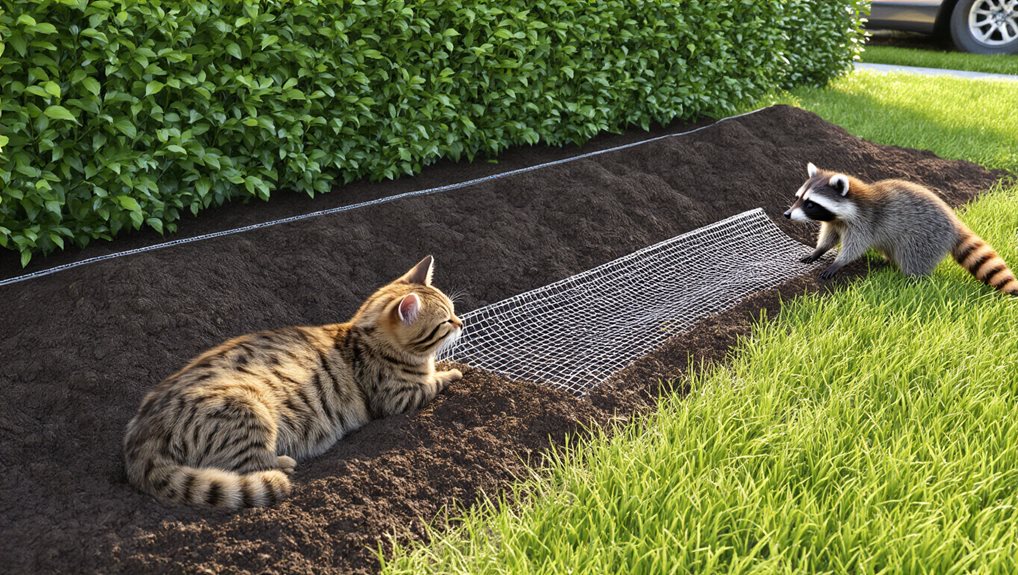
How can you stop raccoons from turning your lawn into a digging site? Lay poultry wire directly on the grass, securing it with landscape pins, and roll bird netting over larger patches, attaching it to wooden dowels or PVC for easy mowing removal.
Install chicken wire with clips in sod areas; repeated failures make raccoons abandon covered zones.
Regularly inspect and reseal gaps to maintain effectiveness. Grubs beneath turf attract wildlife during approaching winter, so removing them reduces the incentive for raccoons to dig.
Select Netting, Wire, and Frame to Block Raccoon Digging
When you choose the right combination of netting, wire, and frame, you can create a barrier that stops raccoons from digging while still allowing water and sunlight to reach your lawn.
Use bird netting rolled over turf, secure it with landscape pins, then overlay 19‑gauge chicken wire or hardware cloth on a PVC pipe frame, anchoring everything with 4‑inch staples and earth staples for lasting protection. The barrier should be installed with minimal gaps at the edges to prevent raccoons from squeezing through. durable installation
Apply Grub‑Control Treatments to Reduce Raccoon Food Sources
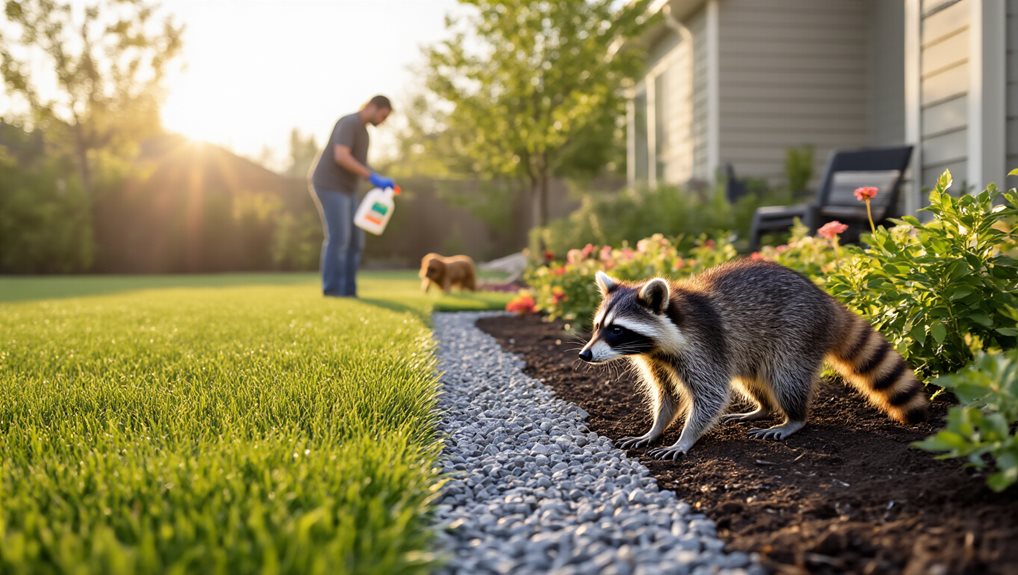
A well‑timed grub‑control program can dramatically cut the food that draws raccoons into your yard, because most of their digging is driven by the search for beetle larvae. Apply imidacloprid or thiamethoxam in June‑July, watering with half an inch, or use chlorantraniliprole early spring for 65‑80% reduction. Beneficial nematodes sprayed late summer add eco‑friendly protection, keeping the soil less inviting for raccoons. The effectiveness of these treatments depends on proper soil moisture and following product directions to ensure target species are affected without harming beneficial insects. watering guidelines
Add Motion‑Activated Sprinklers to Scare Raccoons
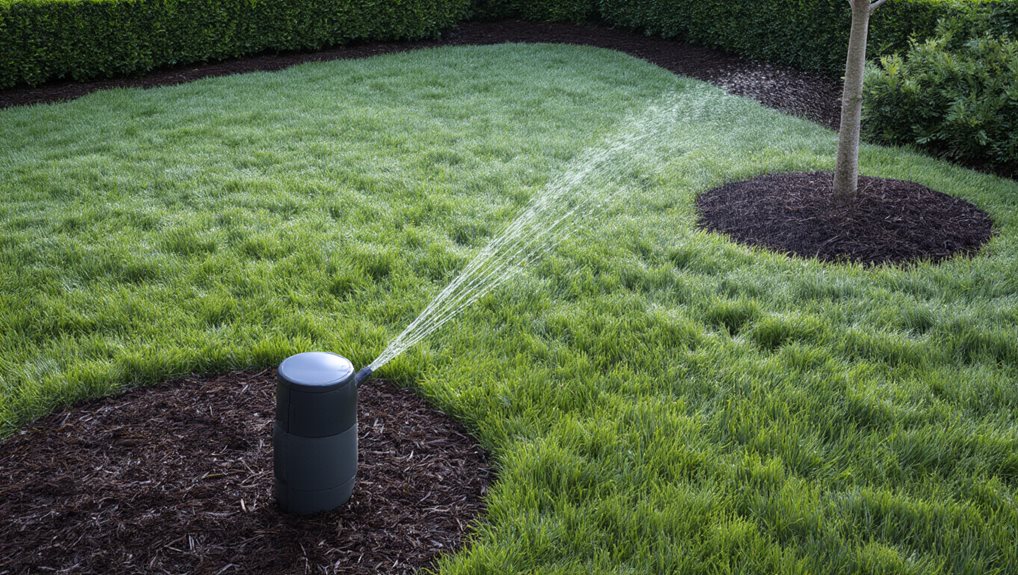
Motion‑activated sprinklers deter raccoons by detecting movement within roughly 30 feet and releasing a brief, three‑second burst of water that startles the animal without causing harm.
Waterproofing strategies from budget basement guidance can help protect outdoor areas and foundations from moisture intrusion that can attract wildlife, including raccoons. moisture management helps reduce attractants around the yard by preventing damp, sheltered spots where pests might nest or seek refuge. You’ll install units at perimeter points, adjust sensitivity, and choose spray distances that match your yard layout, creating a chemical‑free, low‑cost barrier that quickly teaches raccoons to avoid the area, especially when combined with basic exclusion measures.
Keep Lawn Moist & Use Repellents Against Raccoons
Why keep your lawn moist and use repellents? Wet soil hardens, making digging labor‑intensive, while regular irrigation reduces grub visibility and discourages nocturnal foragers.
Apply cayenne or citrus oil sprays around perimeters, and consider predator urine for added scent deterrence.
Combine moisture management with grub treatments, especially nematodes in late summer, to remove food sources and create an environment that feels uninviting to raccoons.
Final Note
By combining a sturdy barrier, targeted grub‑control, motion‑activated sprinklers, and proper lawn moisture, you’ll effectively deter raccoons from digging while preserving your garden’s health. Each method works synergistically: the barrier blocks access, the treatments reduce food appeal, the sprinklers provide a non‑lethal scare, and moisture management discourages burrowing. Implementing these steps consistently will minimize damage, keep raccoons at bay, and maintain a tidy, resilient yard.

Nathan McPhail is a garden and home DIY expert who writes practical, easy-to-follow advice for homeowners and gardeners. Through Yardique, he shares hands-on tips covering gardening, lawn care, landscaping, home improvement, repairs, tools, and outdoor living. His focus is on helping readers solve everyday household and yard problems with straightforward guidance, useful techniques, and practical solutions.