
You can stop the mud by first loosening compacted soil with core aeration, which creates 2‑4‑inch holes for air, water, and roots to move, then lay mud‑control grids to spread foot traffic load and prevent new compaction. Fix grading issues by recontouring low spots to a 1‑5 % slope using a laser level, and install surface swales or perforated‑pipe drainage to channel runoff away from saturated areas. Finally, add a quick‑dry top layer like crushed stone or sand to improve infiltration, and you’ll see faster drying and fewer mud patches as you continue learning more.
TLDR
- Aerate the lawn to 2‑4 inches depth to break compaction, improve infiltration, and increase root depth.
- Install surface‑drainage solutions like swales or perforated‑pipe trenches with a 1‑5 % slope to redirect runoff away from low spots.
- Regrade and contour the lawn using a laser level to achieve a minimum 2 % (ideally 5 %) slope toward drainage areas.
- Place mud‑control grids or stepping stones on high‑traffic zones to distribute load and prevent further soil compaction.
- Use geotextile‑lined subsurface drainage (HDPE perforated pipe with gravel) and backfill with coarse material to lower the water table and keep soil dry.
What’s Making Your Yard Muddy? Soil Compaction & Poor Grading?
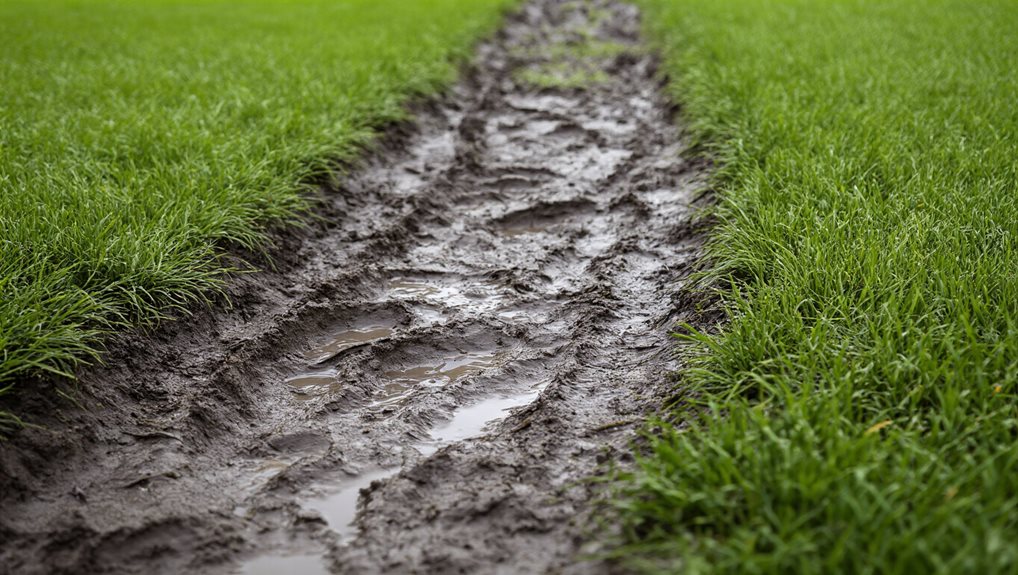
Why does your yard stay soggy even after the rain stops? You’re likely dealing with compacted soil and poor grading, which together trap water on the surface. Compaction squeezes pores, limiting infiltration and oxygen, while uneven grading directs runoff into low spots, creating persistent puddles. Recognizing hard, dense soil, slow drainage, and thin grass helps you target these issues, restoring a healthier, drier lawn. Frequent foot traffic can also contribute to soil compaction.
How Runoff From Gutters & Foot Traffic Worsens Mud Spots?
Your yard’s compaction and grading problems become even more pronounced when water from gutters and foot traffic converge on the same spots. Overflowing downspouts dump concentrated runoff onto already saturated soil, eroding topsoil, creating pits, and leaving nutrients behind, while each step you take compacts the wet earth, turning soggy patches into permanent mud pits. This combined pressure deepens channels, spreads slime, and invites mold, making the area harder to dry and recover.
Fix Soil Compaction With Aeration & Mud‑Control Grids
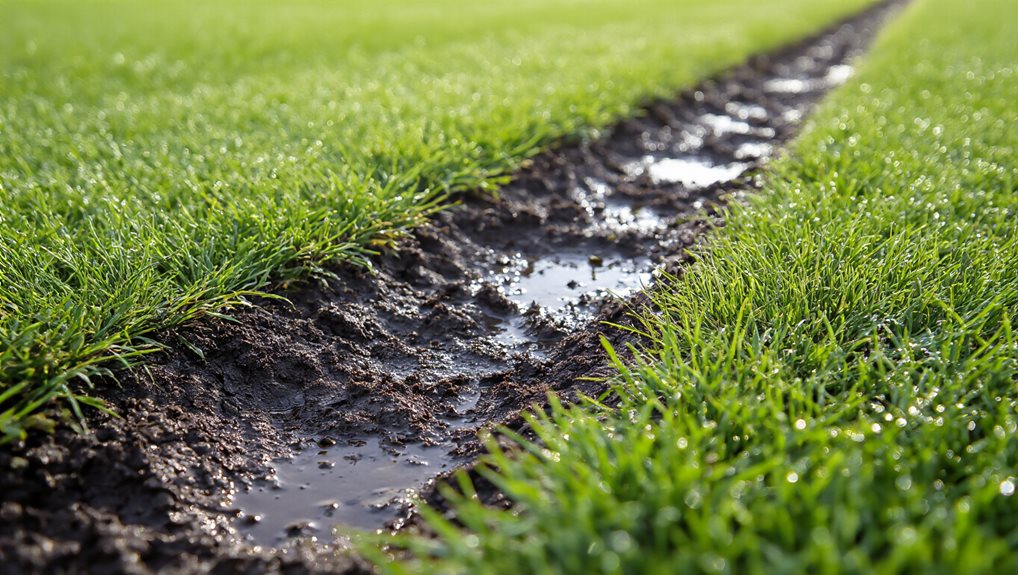
Ever wonder how a simple aeration routine can turn a soggy, compacted lawn into a resilient, well‑draining surface? By removing soil plugs 2‑4 inches deep, creating air channels that boost oxygen, water infiltration by up to 50 %, and root depth, while interlocking mud‑control grids distribute foot traffic weight, prevent compaction, and let grass fill cells, ensuring lasting drainage and healthier turf. Soil aeration benefits
Choose the Right Drainage Method for Muddy Yard Fixes
You can start by installing perforated pipe swales, which channel water through a gently sloped trench and let it disperse into the surrounding soil, reducing surface pooling.
Pairing this with a graded surface recontouring will direct runoff away from problem spots, creating a smoother, drier lawn.
Together, these methods give you a reliable, low‑maintenance solution that balances engineered drainage with natural terrain.
Additionally, choosing the right irrigation management and incorporating mulched or vegetated swales can enhance filtration and evaporation, further stabilizing the yard. perforated pipe swales
Perforated Pipe Swales
A perforated‑pipe swale blends a shallow, grassy channel with a network of slotted drainage pipes, creating a low‑maintenance, curbless solution that channels excess water away from lawns and foundations.
You dig a sloped trench, line it with geotextile, lay ¾‑inch gravel, then place perforated pipe beneath a compost‑rich soil cap.
Water follows the path of least resistance, flowing by gravity to a safe discharge point, keeping your yard dry and your neighbors feeling part of a well‑drained community.
Graded Surface Recontouring
Instead of relying solely on a perforated‑pipe swale, many homeowners find that reshaping the lawn’s surface itself often resolves persistent puddles more directly. You’ll assess slopes, locate low spots, and calculate a 1 % gradient using laser levels; then, using a skid‑steer or grader, add or remove topsoil, compact the new surface, and finish with sod or seed. This recontouring directs water away from foundations, eliminates standing mud, and integrates seamlessly with existing landscaping.
Install Subsurface Drainage (Perforated Pipes, Swales, or Grids)
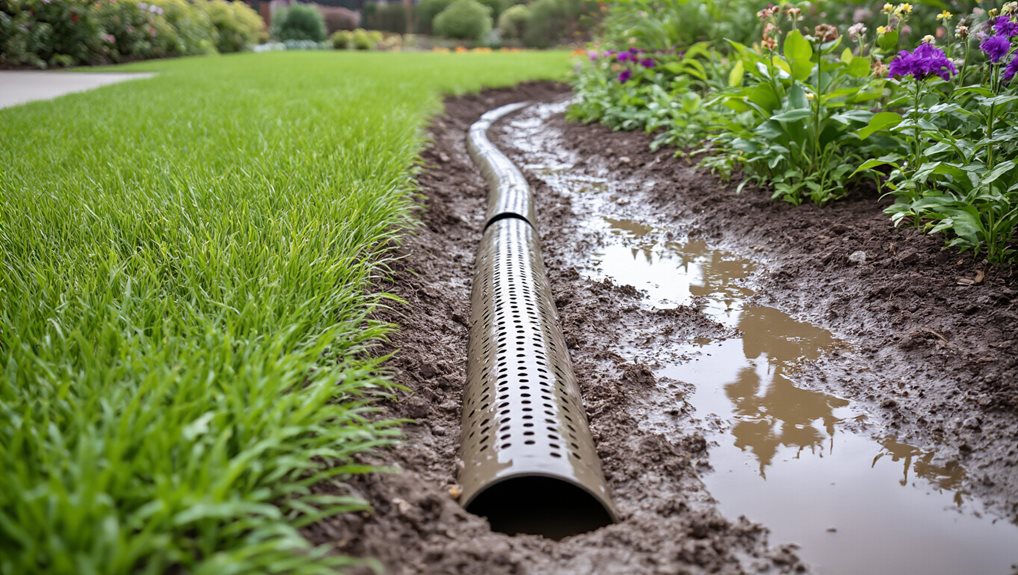
Ever wondered why water pools in low spots even after a heavy rain? Install subsurface drainage by digging a 1%‑sloped trench, laying double‑wall HDPE perforated pipe with holes down, and covering it with washed gravel and filter fabric before backfilling with topsoil. Connect tees for branches, anchor with stakes, and consider grassy swales or concrete‑grid channels to guide excess flow and keep your lawn dry.
Regrade Your Landscape to Create Proper Slope & Flow
After installing subsurface drainage, the next step is to reshape the terrain so water naturally moves away from the house. You’ll evaluate flow, mark high and low spots, then use stakes and string lines to confirm a minimum 2 % slope—ideally 5 %—dropping two inches per ten feet.
Remove or add topsoil, compact the new grade, and verify drainage channels guide runoff toward swales or ditches. Protect vulnerable areas by installing sturdy fencing at least 26 inches tall and burying it 10 inches deep to prevent burrowing, as you plan long-term garden security against rabbits protecting gardens and maintain a tidy landscape to reduce hiding spots.
Add Quick‑Dry Surface Treatments to Stop Mud Build‑Up
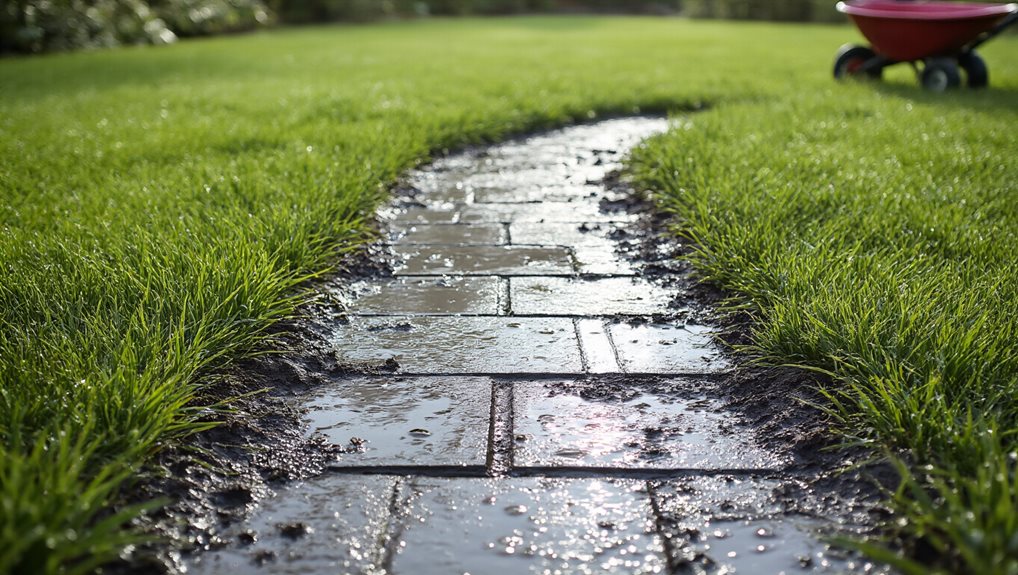
You can lay dry gravel paths across the most soggy sections, letting water filter through the stones while providing a firm walking surface.
If you need an even faster fix, a fast‑setting soil stabilizer creates a hard‑cured layer that resists mud formation in just a few hours.
Adding permeable matting layers on top of existing soil gives instant traction and drainage, turning puddles into usable ground without major excavation.
In raised garden beds, monitor drainage and incorporate organic matter to prevent compaction and maintain soil life, which also helps keep muddy areas from re-appearing after rain. Organic matter
Dry Gravel Paths
A quick‑dry surface treatment for dry gravel paths starts with a polyurethane‑based binder such as Gravel‑Lok, which you apply in a 1‑to‑10 ratio of adhesive to stone by volume, then let dry overnight before adding a second coat for added strength.
After curing, sweep the area, rinse with a hose, and repeat the process annually to maintain firm, mud‑free walkways that invite community confidence.
Fast‑Setting Soil Stabilizer
Ever wondered why some lawn spots stay soggy despite regular aeration? A fast‑setting soil stabilizer like Sup‑R‑Soil penetrates compacted soil, breaks up particles, and adds microbes that enhance nutrient uptake, so you spread a 50/50 topsoil‑sand mix, rake to a quarter‑inch layer, and overseed.
The result is quicker drying, stronger roots, and lasting mud prevention.
Permeable Matting Layers
Permeable matting layers provide a quick‑dry surface that stops mud from building up while still letting grass grow through the structure. You’ll choose PaveCore grids for high‑traffic zones, BaseCore™ geocells for reinforcement, or MudStop™ HG mesh for delicate lawns; each offers 90‑95% water reduction, UV‑resistant HDPE durability, and easy interlocking installation, letting you maintain a cohesive, thriving yard.
Maintain & Inspect Your System to Prevent Future Muddy Areas
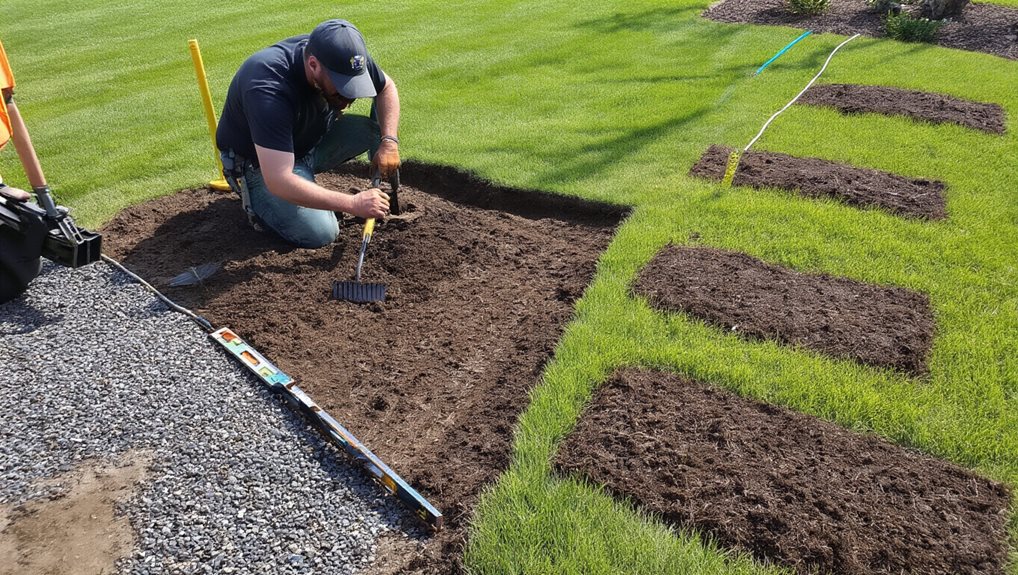
How often do you check your drainage system for early signs of trouble? Conduct routine visual inspections during rain, flush drains with a hose, and clear gutters twice yearly, more often if trees surround your home.
Install grates, map drain locations, log maintenance dates, and schedule professional assessments to spot capacity issues, ensuring water flows freely and preventing future muddy patches.
Final Note
By addressing compaction, grading, and drainage together, you’ll eliminate persistent mud and keep your lawn usable year‑round. Aerate the soil, install appropriate subsurface drainage or mud‑control grids, and regrade to create a gentle slope that directs water away from high‑traffic zones. Apply quick‑dry surface treatments for immediate relief, then schedule regular inspections to catch emerging problems early. Consistent maintenance ensures the fixes remain effective, preserving a dry, healthy yard without costly repairs.

Nathan McPhail is a garden and home DIY expert who writes practical, easy-to-follow advice for homeowners and gardeners. Through Yardique, he shares hands-on tips covering gardening, lawn care, landscaping, home improvement, repairs, tools, and outdoor living. His focus is on helping readers solve everyday household and yard problems with straightforward guidance, useful techniques, and practical solutions.