
First, probe the soil six‑to‑eight inches deep; if the probe slides easily, moisture is adequate, but resistance means it’s still wet or compacted. Rake away branches, leaves, and silt‑laden clippings, then aerate the compacted zones and break surface crusts before the soil dries. Install French drains, swales, or dry wells to redirect lingering water, and regrade the yard with a 6‑inch‑over‑10‑feet slope away from foundations. After the soil is loose, spread compost, apply starter fertilizer, overseed bare spots, and keep the area moist for two weeks. Finally, maintain the lawn by removing debris promptly, avoiding traffic on wet ground, and monitoring drainage; the next steps will show you how to keep the grass healthy year‑round.
TLDR
- Test soil moisture with a probe; if it slides easily, moisture is adequate, otherwise adjust watering or drainage.
- Remove debris, silt, and compacted soil, then aerate the affected areas to restore air and water flow.
- Identify low spots where water pools and install French drains, swales, or dry wells to improve drainage.
- Amend the soil with compost and starter fertilizer, then overseed bare patches, keeping the soil moist for two weeks.
- Maintain the restored lawn by promptly clearing debris, avoiding foot traffic on wet soil, and monitoring drainage regularly.
Assess Flood‑Damaged Lawn Damage
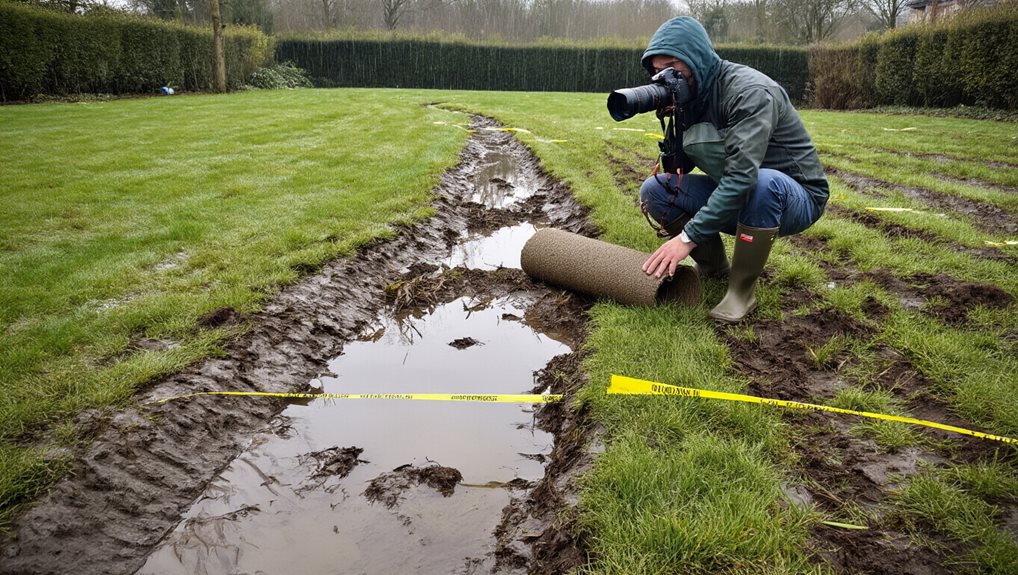
How can you quickly determine whether your lawn’s damage stems from excess moisture or poor drainage? Insert a soil probe six to eight inches deep; if it slides easily, moisture is adequate, but resistance signals dryness and excess softness indicates overwatering.
Dig a six‑inch test hole, feel texture, and note if soil clings (wet) or crumbles (dry). Observe discoloration, wilting, and species tolerance to pinpoint stress sources. Soil compaction can also exacerbate drainage problems, leading to water pooling and root suffocation.
Clear Debris, Silt, and Compacted Soil
After confirming whether the lawn’s distress comes from excess moisture or poor drainage, the next step is to clear the debris, silt, and compacted soil that often accompany heavy rain. Rake away branches, leaves, and trash, bundle limbs for curbside pickup, and use a bagging mower to collect silt‑laden clippings for compost. Aerate compacted zones, break surface crusts with a rake, and limit foot traffic until the soil dries, ensuring a healthier turf foundation.
Improve Drainage for Flood‑Prone Lawns
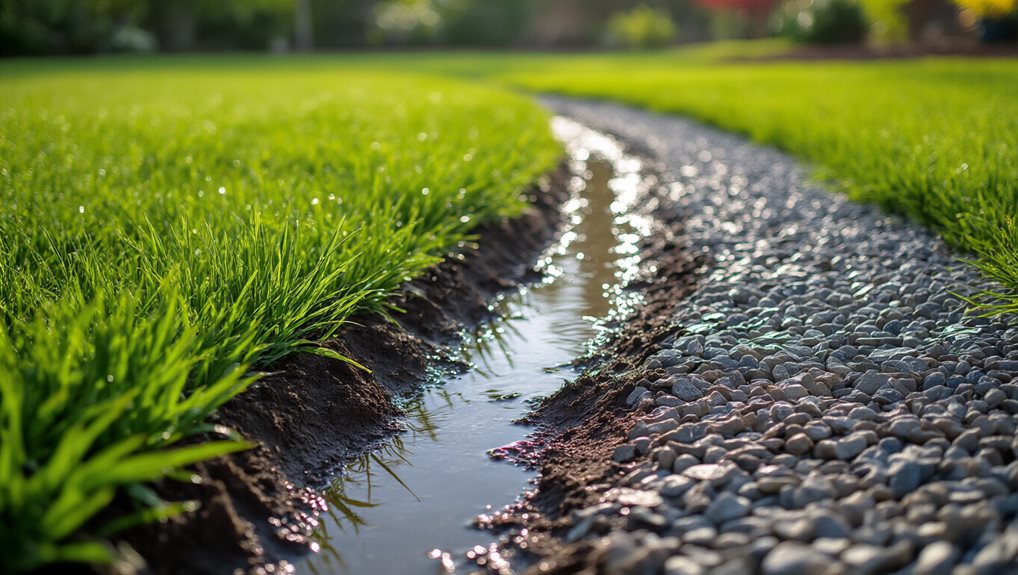
Where does excess water linger after a storm, and how can you redirect it before it damages your lawn? Install French drains in low spots, using perforated pipe, gravel or EZFlow’s Poly‑Rock for faster, higher‑capacity flow, and channel water to a safe discharge point.
Add surface grates on patios, swales with deep‑rooted plants, or dry wells to capture runoff, and regrade the yard to a 6‑inch‑over‑10‑feet slope, ensuring water moves away from foundations and stays out of your grass.
Aerate, Amend Soil, and Overseed
When heavy rain leaves your lawn soggy and compacted, aerating, amending the soil, and overseeding become essential steps to restore its health and resilience. Core aerate after silt removal, then spread a thin layer of compost and starter fertilizer to balance pH and replenish nutrients. Overseed bare spots in early fall, press seeds gently, and keep soil moist for two weeks to promote strong root development. Proper aeration improves oxygen flow and root growth, which helps the lawn recover more quickly from saturation and compaction. Core Aeration helps relieve compaction and restore air, water, and nutrient flow.
Maintain the Restored Lawn and Prevent Future Flooding
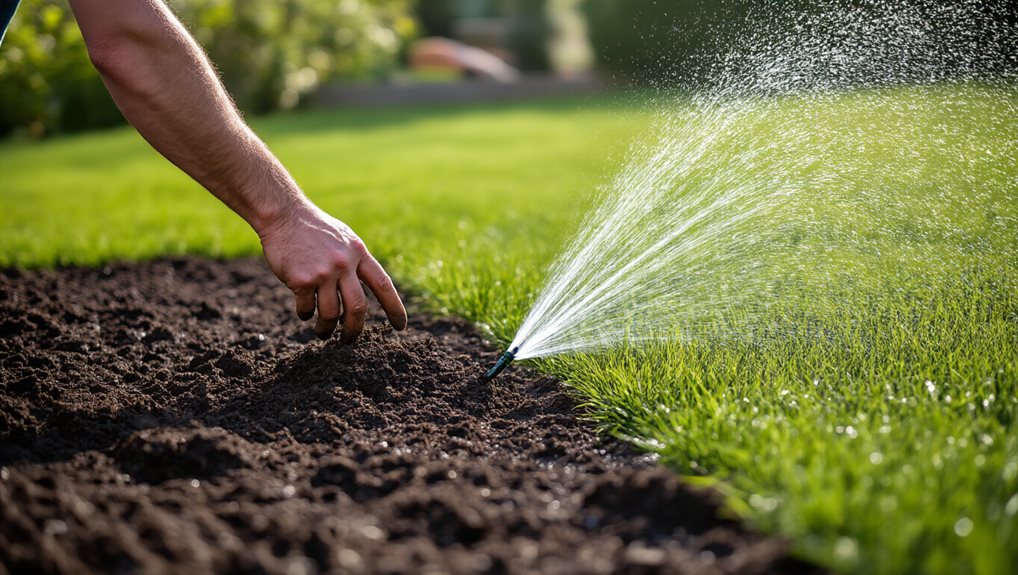
How can you keep a newly restored lawn thriving while preventing future flooding? Remove debris promptly, level low spots with topsoil, and install subsurface drainage where water pools. Avoid foot traffic and mowing on wet soil, then resume gentle mowing once it dries. Apply nitrogen fertilizer two days after storms, monitor for weeds and mold, and regularly assess drainage to protect your community garden.
Final Note
By promptly clearing debris, improving drainage, aerating, amending soil, and overseeding, you’ll restore a resilient lawn that can withstand future heavy rains. Regular maintenance—such as proper watering, fertilizing, and periodic aeration—will keep the turf healthy and reduce flood‑related damage. Implement these steps consistently, and your lawn will recover quickly, maintaining its aesthetic appeal and functional durability.

Nathan McPhail is a garden and home DIY expert who writes practical, easy-to-follow advice for homeowners and gardeners. Through Yardique, he shares hands-on tips covering gardening, lawn care, landscaping, home improvement, repairs, tools, and outdoor living. His focus is on helping readers solve everyday household and yard problems with straightforward guidance, useful techniques, and practical solutions.