Eliminate food sources by promptly cleaning up fallen fruit, securing trash cans and compost with tight‑fitting lids, and storing pet food indoors, especially at night. Seal any gaps around foundations, decks, and fences with buried‑edge fencing or hardware cloth buried two inches deep and extending outward an inch. Install motion‑activated sprinklers, lights, or noise devices at entry points, and trim low shrubs or plant thorny hedges to reduce shelter. Apply commercial or DIY repellents around perimeters and reapply after rain; regular walk‑throughs will reveal new gaps, and further steps will be explained if you keep going.
TLDR
- Eliminate food attractants by securing trash, compost, pet food, and promptly cleaning up fallen fruit, seeds, and garden waste.
- Seal all potential entry points with copper mesh or steel hardware cloth, burying fences 2 inches deep and extending outward 12 inches.
- Install motion‑activated sprinklers, lights, or noise devices at likely entry spots to startle and deter skunks.
- Reduce shelter by removing woodpiles, dense vegetation, and trimming low shrubs; plant thorny hedges as natural barriers.
- Apply layered deterrents—liquid sprays, granular repellents, cayenne, and ammonia‑soaked rags—and reapply after rain while monitoring for activity.
Eliminate Food Attractants to Make Your Backyard Skunk‑Free

Why do skunks keep showing up in your backyard? You’re likely leaving birdseed, fallen fruit, or garden scraps that create easy meals; skunks feast on scattered seed, overripe apples, and ripe vegetables, and they dig for grubs in lawns. Clean up spilled seed, harvest produce promptly, use elevated feeders, and apply nematodes to curb insect larvae—these steps remove attractive food sources and keep your space welcoming and skunk‑free. Unsecured trash cans can also draw skunks from a distance with strong leftover odors.
Secure Trash Cans, Compost Bins, and Pet Feeding Areas
You’ll want to use tight‑fitting lids on all trash cans and compost bins, because a secure seal locks in odors that otherwise attract skunks.
When you finish feeding your pets, remove any leftover food and store the dishes indoors, especially at night, to eliminate easy meals for roaming wildlife.
Combining these simple steps with sturdy containers and proper storage dramatically reduces the chances that skunks will linger in your backyard.
Tight‑Fitting Lids
Ever wonder how a simple lid can stop skunks from turning your backyard into a smelly mess? Tight‑fitting lids seal trash cans, compost bins, and pet food containers, preventing odors from escaping and denying skunks the scent cues they follow.
Use locking mechanisms, screw‑top designs, or bungee‑secured lids made of galvanized steel or HDPE; they resist prying, chewing, and tipping, keeping your space clean and secure.
Night‑Time Food Removal
How can you keep skunks from raiding your yard after dark? Use heavy trash cans that stay stable when skunks try to tip or claw them, secure lids with bungee cords, rocks, or lock‑down handles, and store bins indoors or in a shed whenever possible. Remove pet food dishes at night, clean leftovers promptly, and block odors with ammonia or sealed lids to deny skunks easy meals.
Install Buried‑Edge Fencing to Block Skunk Entry
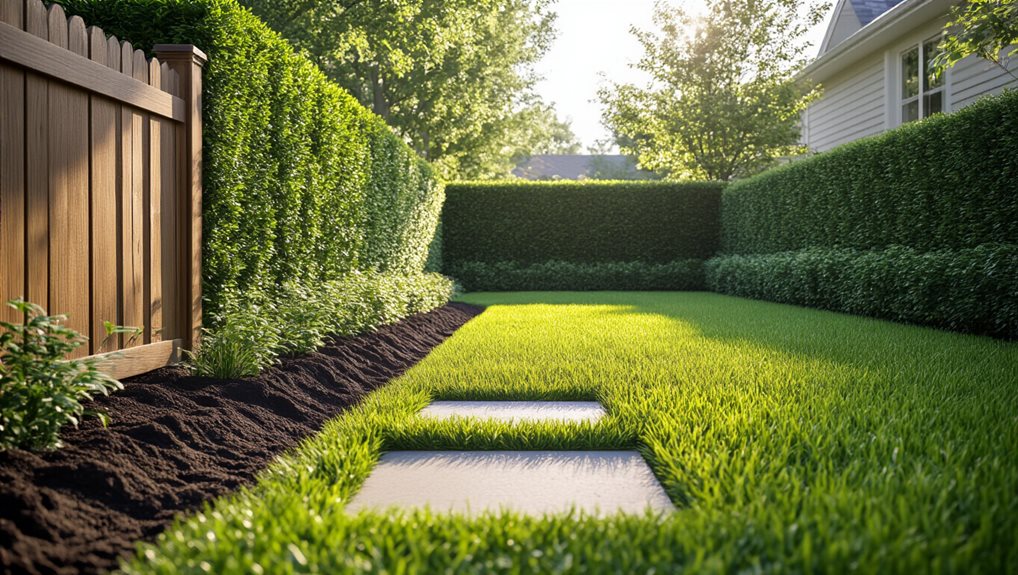
Could a buried‑edge fence really stop skunks from tunneling into your backyard?
You’ll dig a 2‑inch trench, bend galvanized hardware cloth into an L‑shape, and extend it 12 inches outward, securing the mesh with landscape pins; chicken wire at the base adds extra protection; a 3‑foot fence height works for simple yards, while 5‑6‑foot barriers with smooth metal overlays deter climbing and digging, keeping your space safe and welcoming.
Bury Hardware Cloth or Metal Flashing Around Foundations and Decks
You should select a heavy‑gauge, galvanized hardware cloth with a ¼‑ to ½‑inch mesh, then overlap the edges by at least an inch and staple or drill them securely to the foundation or deck.
Next, bend the material into an L‑shape and bury it two inches underground, extending the bottom leg twelve inches outward to block any digging attempts.
This combination of proper gauge, reinforced seams, and an underground L‑extension creates a durable barrier that keeps skunks out while remaining unobtrusive.
A durable option with extended cuff protection can also help guard forearms when working near openings or burrows thorn protection.
Choose Appropriate Gauge
What gauge should you pick when installing hardware cloth around foundations and decks? Choose 19‑gauge, ¼‑inch galvanized mesh; it’s heavy‑duty, resists chewing, and blocks skunks, rats, and mice.
Bury it two inches deep, extending twelve inches outward at a right angle, and secure with staples or concrete.
This gauge balances strength, rust resistance, and ease of installation, giving your yard a reliable, shared protection.
Overlap and Secure Edges
How do you guarantee the barrier stays intact when you bury hardware cloth around foundations and decks?
Overlapping each sheet by at least 12 inches, staple the top edge with galvanized staples, and secure the L‑flange flush against the trench bottom. Use a staple gun for quick attachment, reinforcing corners with screws if needed, ensuring no gaps for skunks to slip through.
Extend Underground L‑Shape
Why extend the underground barrier in an L‑shape? You bend ½″ galvanized hardware cloth at a right angle after digging a 12‑inch‑deep, 12‑inch‑wide trench, then lay a 12‑inch outward extension on the surface.
Staple the top edge to the foundation, backfill, and secure with pan‑head screws.
This L‑shape blocks skunks, armadillos, and other diggers, ensuring lasting exclusion.
Deploy Motion‑Activated Sprinklers, Lights, and Noise Devices
Ever wondered why skunks keep returning to your garden despite fences and repellents? Deploy motion‑activated sprinklers, lights, and noise devices to create a multi‑sensory barrier; position sprinklers outward toward entry points, set detection to 40 feet, and choose night mode for peak activity.
Pair water bursts with flashing LEDs and short bursts of sound, adjusting arcs and duration to avoid wetting pathways while conditioning skunks to stay away.
Clear Woodpiles, Brush, and Dense Vegetation That Offer Shelter
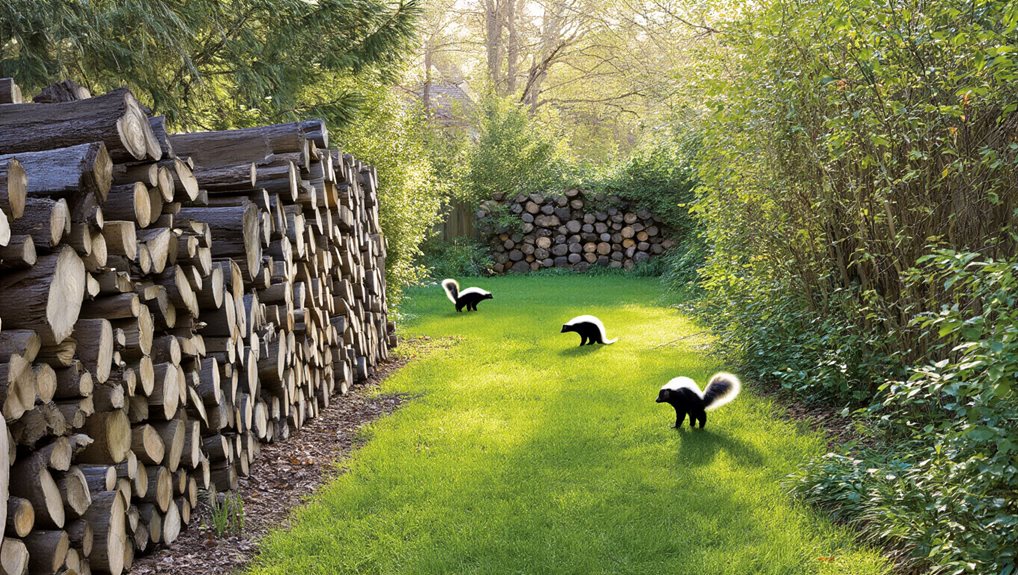
You should remove any woodpiles and brush stacks, because they give skunks warm, hidden places to burrow and rest.
Regularly trimming dense vegetation around the yard eliminates the cover they use for denning and reduces the chance they’ll settle nearby.
Remove Woodpile and Brush
Ever wonder why skunks seem to settle in the back of your yard? Remove woodpiles and brush, because those hollow spaces and crevices mimic natural dens, so skunks hide, dig, and return.
Stack wood tightly, seal gaps with wire mesh, and clear brush piles that offer shelter. By eliminating these shelters you reduce den sites, discourage activity, and protect structures, creating a less inviting environment for skunks.
Trim Dense Vegetation Regularly
When you trim dense vegetation regularly, you eliminate the thick understory and midstory layers that skunks use for shelter, for protection, and for foraging, because these habitats provide the cover they need from predators and the environment they prefer for den sites.
Cutting back brush, clearing woodpiles, and pruning invasive shrubs reduce hiding places, lower predator cover, and create open, less attractive zones, encouraging skunks to seek habitats elsewhere.
Trim Low Shrubs and Plant Thorny Hedges as Natural Barriers
Trim low shrubs regularly to keep the layer impenetrable, then intermix holly, barberry, or Oregon grape for sharp deterrents. Their prickly foliage confuses paws, prevents burrowing, and creates a visual boundary that welcomes neighbors while keeping skunks out. Additionally, ensure you avoid driving over areas near your vegetation and maintain clear zones around your plantings to protect both your yard and your septic system from unintended damage. weight-bearing capacity
Apply Commercial or DIY Repellents at Perimeters and Hot Spots

After establishing a thorny, low‑shrub barrier, the next step is to reinforce those edges and any identified hot spots with repellents that deter skunks through taste, scent, or sensation.
Apply Bonide Repels‑All liquid or granules around perimeters, reapply after rain, and scatter Skunk Scram granules at entry points.
Use fox urine sprays or motion‑activated sprinklers for added deterrence, ensuring consistent coverage and humane protection.
Protect slope bases and ground cover by maintaining dense, low-growing plants near perimeter edges to reduce accessible hiding spots for skunks and support erosion control.rooted vegetation
Schedule Regular Walk‑Throughs to Spot New Gaps and Attractants
How often should you walk your yard to catch emerging skunk entry points? Walk at dawn and dusk during fall and early spring, then repeat weekly in warmer months; inspect bins, decks, fences, woodpiles, and water sources for gaps wider than 1.5 inches or food and water attractants. Seal openings with copper mesh or steel rebar, remove fallen fruit, pet food, and fix leaky faucets, then re‑inspect after a few days of no activity.
Mix Deterrents for Ongoing Skunk‑Free Backyard Protection

Can you keep skunks out of your backyard by layering deterrents, rather than relying on a single method? Combine liquid spray on cans and mulch, granular repellent around garden edges, and electronic units that emit water bursts, then sprinkle cayenne on beds and hang ammonia‑soaked rags under decks. Reapply after rain, check electronics, and rotate scents to maintain a unified, long‑term barrier that keeps the whole neighborhood feeling safe and skunk‑free.
Final Note
By eliminating food sources, securing waste, and installing buried‑edge fencing, you’ll deny skunks easy access. Adding motion‑activated sprinklers, low‑shrub trimming, and thorny hedges creates additional barriers, while hardware cloth around foundations blocks burrowing. Apply commercial or DIY repellents at hotspots and conduct regular walk‑throughs to catch new gaps early. Mixing these deterrents ensures long‑term protection, keeping your backyard skunk‑free without excessive effort.

Nathan McPhail is a garden and home DIY expert who writes practical, easy-to-follow advice for homeowners and gardeners. Through Yardique, he shares hands-on tips covering gardening, lawn care, landscaping, home improvement, repairs, tools, and outdoor living. His focus is on helping readers solve everyday household and yard problems with straightforward guidance, useful techniques, and practical solutions.