
Start by upgrading your irrigation with a smart controller and rain sensor to save up to 30% on water—this alone protects your yard while cutting waste. Gradually reduce lawn size by adding curved island beds with native plants and mulch to control weeds and attract pollinators. Mow every two weeks, follow the one-third rule, and keep blades sharp to strengthen grass. Use slow-release fertilizer only in spring or fall, and replace turf over time with drought-tolerant ground covers like sedum or creeping thyme—there’s a smarter way to convert your terrain.
TLDR
- Start by creating small, curved island beds with native plants to gradually reduce lawn area while enhancing curb appeal.
- Upgrade irrigation with smart controllers and rain sensors to save water and avoid over-saturating reduced lawn spaces.
- Mow less frequently, following the one-third rule, to promote healthy grass and reduce maintenance as lawn size shrinks.
- Replace turf gradually with drought-tolerant ground covers like creeping thyme or sedum to conserve water and support pollinators.
- Improve soil health by using slow-release fertilizers, leaving clippings, and mulching beds to sustain a vibrant, low-lawn landscape.
Fix Irrigation First: It Saves More Water Than Turf Removal
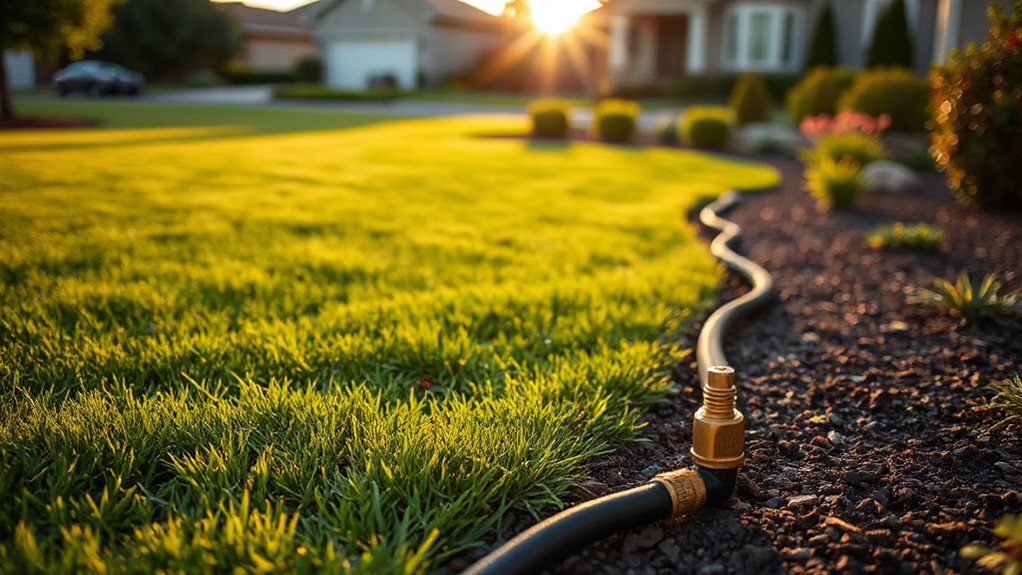
You can save more water by fixing your irrigation system than by tearing out turf—often with less effort and cost. Upgrading to smart controllers, adding rain sensors, and adjusting schedules can cut outdoor use by up to 30%.
Proper maintenance prevents thousands of wasted gallons yearly. Efficient irrigation delivers deeper savings than turf removal alone—making it the smarter first step for your yard and community. Maintain humidity to protect plantings and soil structure while you optimize watering practices. 991 gallons per irrigation cycle are typically used for an average Florida yard, highlighting how quickly inefficiencies add up.
Start Small: Create Island Beds to Shrink Lawn Area Gradually
Fixing your irrigation system sets the foundation for a water-wise yard, but once efficiency is in place, reshaping the grounds becomes the next logical step.
Start small by creating island beds—curved, freestanding plantings that break up lawn space. They reduce mowing, suppress weeds with edging and mulch, and add visual flow. Use native perennials, layer plants, and attract pollinators to enhance sustainability while gradually shrinking turf. Consider adding a mix of trailing plants to soften edges and increase biodiversity.
Mow Every Two Weeks to Grow Taller Grass and Reduce Work
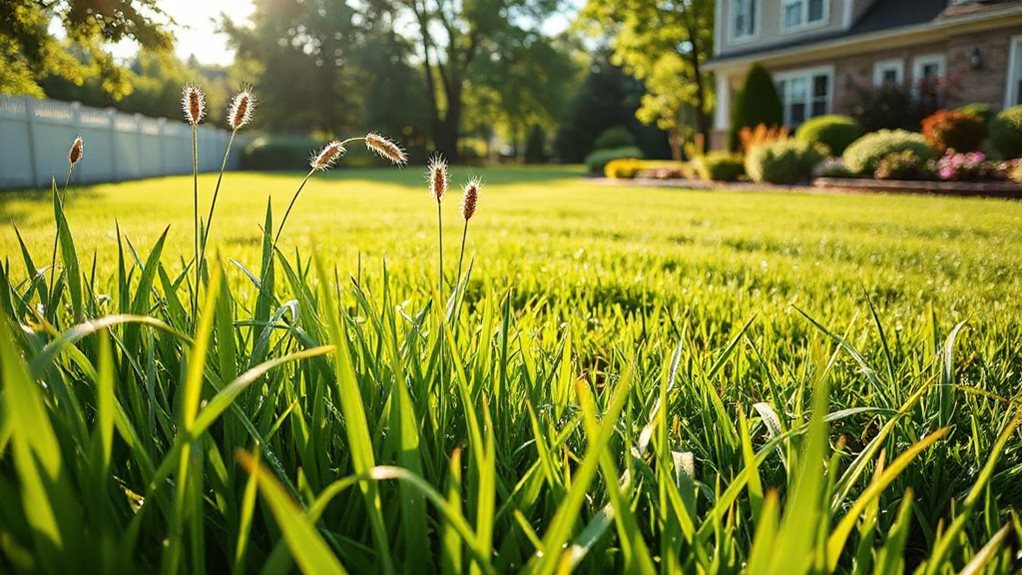
Often, simply mowing less frequently can convert your lawn into a healthier, more resilient scene while cutting down on weekly chores.
Mow every two weeks when grass reaches one-third above its ideal height—about 4 inches for a 3-inch lawn. This encourages deeper roots, shades soil to retain moisture, and reduces weeds.
Keep blades sharp, follow the one-third rule, and grasscycle clippings to nourish your lawn naturally.
Cool-season grasses can germinate and begin growing from seed in as little as 30 days, so time your mowing changes around new seedings.
Use Less Fertilizer to Cut Emissions and Improve Soil
Cutting back on fertilizer doesn’t mean sacrificing a lush, healthy lawn—instead, it’s a smarter way to support soil health while reducing environmental harm.
You can apply nutrients only when needed, use slow-release or organic options, and time applications for spring or fall.
Leaving clippings on the lawn enhances carbon storage, and proper rates below 150 kg N ha⁻¹ maintain quality while minimizing runoff and emissions.
Liquid concentrates and granular slow-release nitrogen products can both be used strategically to reduce application frequency and environmental impact.
Replace Turf Over Time With Drought-Tolerant Ground Covers

Thinking beyond traditional turf opens the door to resilient, water-wise alternatives that thrive with minimal care.
Replace sections of lawn with sedum varieties or creeping liriope to reduce watering and maintenance. Use buffalograss in sunny southern areas, or tall fescue up north for a familiar look.
These tough, attractive ground covers adapt beautifully, save water, and create a sustainable, welcoming yard you’ll enjoy with less effort. Consider adding low-growing purple-flowering ground covers like creeping thyme to attract pollinators and add seasonal color.
Final Note
You can reduce your lawn size without harming your yard’s appeal by starting small and working gradually. Fix irrigation first to save water, then create island beds to shrink turf areas over time. Mow less often and use less fertilizer to support healthier soil and lower emissions. Replace grass with drought-tolerant ground covers, ensuring a sustainable, low-maintenance setting that still looks cohesive and well-kept.

Nathan McPhail is a garden and home DIY expert who writes practical, easy-to-follow advice for homeowners and gardeners. Through Yardique, he shares hands-on tips covering gardening, lawn care, landscaping, home improvement, repairs, tools, and outdoor living. His focus is on helping readers solve everyday household and yard problems with straightforward guidance, useful techniques, and practical solutions.