Keep basement humidity between 30‑50 % by using a dehumidifier set to 40‑50 % and connecting it to continuous drainage; choose refrigerant units for warm basements and desiccant units for cool ones, and monitor levels with a hygrometer. Improve airflow with a central fan‑integrated supply or an energy‑recovery ventilator, and add DIY exhaust fans while sealing ducts to balance HVAC cycles. Seal the foundation with a liquid‑rubber membrane or crystalline coating, install a perimeter French drain and a sump pump that discharges water away from the house. Promptly repair any leaks, caulk windows and cracks with hydraulic cement or epoxy, and use mold‑resistant drywall and epoxy‑coated concrete or steel studs. Conduct regular inspections—annual for new waterproofed areas and semi‑annual for older homes—using hygrometers and infrared meters, and keep a moisture log; continued attention will reveal deeper strategies.
TLDR
- Keep basement humidity between 30‑50 % using a dehumidifier set to 40‑50 % and connect it to continuous drainage.
- Ensure proper airflow with a central fan‑integrated supply system or an energy‑recovery ventilator, sealing ducts and balancing HVAC cycles.
- Seal the foundation with liquid‑rubber membrane or crystalline coating and install a perimeter French drain with a sump pump to divert water away.
- Promptly repair any leaks, caulk windows and cracks with hydraulic cement or epoxy, and use mold‑resistant drywall and epoxy‑coated concrete.
- Conduct regular inspections—annual for new waterproofed spaces, quarterly for older homes—using hygrometers and infrared meters, and log moisture levels.
Control Basement Humidity for Moisture Control (30‑50%) With Dehumidifiers
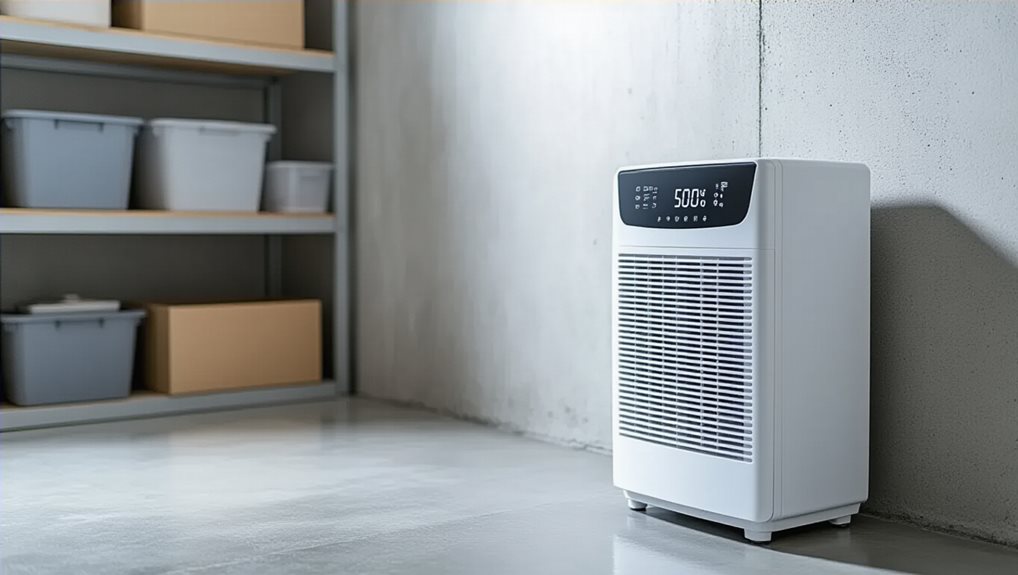
How can you keep your basement from becoming a breeding ground for mold? Maintain humidity between 30‑50 % by selecting a dehumidifier that matches your space and temperature: refrigerant units for warm basements, desiccant for cool ones. Set the humidistat to 40‑50 % for comfort, connect to drainage for continuous emptying, and use timers or smart controls during high‑humidity periods to protect health and preserve belongings. Improved air quality is a key benefit of keeping humidity in this range. Understanding how temperature and humidity shifts drive moisture problems in spaces like basements helps you pick the right controls and devices to reduce risks. Keeping subfloor and structural movements in check reduces not only squeaks but moisture channels as well. Regular monitoring with a hygrometer ensures you stay within target ranges even as seasons change, supporting long‑term mold prevention and climate stability. Humidity control reduces wood movement that can contribute to gaps and hidden moisture pockets where mold may develop.
Boost Airflow for Basement Moisture Control With Smart Ventilation & DIY Fans
Why not start by treating your basement’s air as a dynamic system rather than a static space? Install a central fan integrated supply (CFIS) or an energy‑recovery ventilator to cut particles and TVOC, while high‑efficiency DIY exhaust fans, EZ Breathe units, and proper duct sealing keep moisture low. Balance airflow, seal gaps, and sync fans with HVAC cycles for efficient, uniform, mold‑preventing ventilation. Humidity control is aided by addressing common moisture sources such as leaks and inadequate drainage, which aligns with preventing mold growth in damp environments drain buildup and improving overall bathroom and basement ventilation.
Seal Foundation for Basement Moisture Control Using Waterproofing, French Drains & Sump Pumps
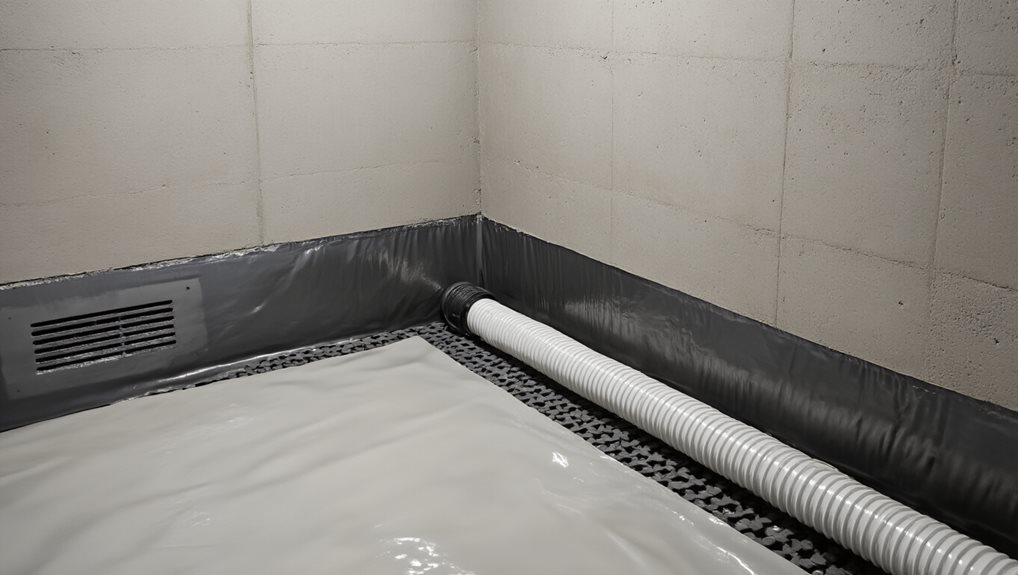
Treating your basement’s air as a living system sets the stage for addressing the source of moisture: the foundation itself. Apply a liquid‑rubber membrane or crystalline coating to create an impermeable barrier, install a perimeter French drain to channel water into a sump‑pump basin, and guarantee the pump ejects water far from the house, reducing hydrostatic pressure and keeping the foundation dry. Regularly inspect and maintain the drainage system and foundation seals to ensure long-term effectiveness inspections of leaks and moisture intrusion.
Fix Leaks Quickly and Install Mold‑Resistant Materials for Long‑Term Moisture Control
A leaking pipe, cracked wall, or faulty window seal can introduce moisture that fuels mold growth within hours, so you need to locate and repair any source of water as soon as you notice it.
Tighten fittings, replace damaged sections, caulk windows, and seal cracks with hydraulic cement or epoxy.
Then, choose mold‑resistant drywall, epoxy‑coated concrete, steel studs, or PVC panels to keep your basement dry and protected long‑term.
Maintain Basement Moisture Control: Schedule Regular Inspections & Early‑Detection Tips
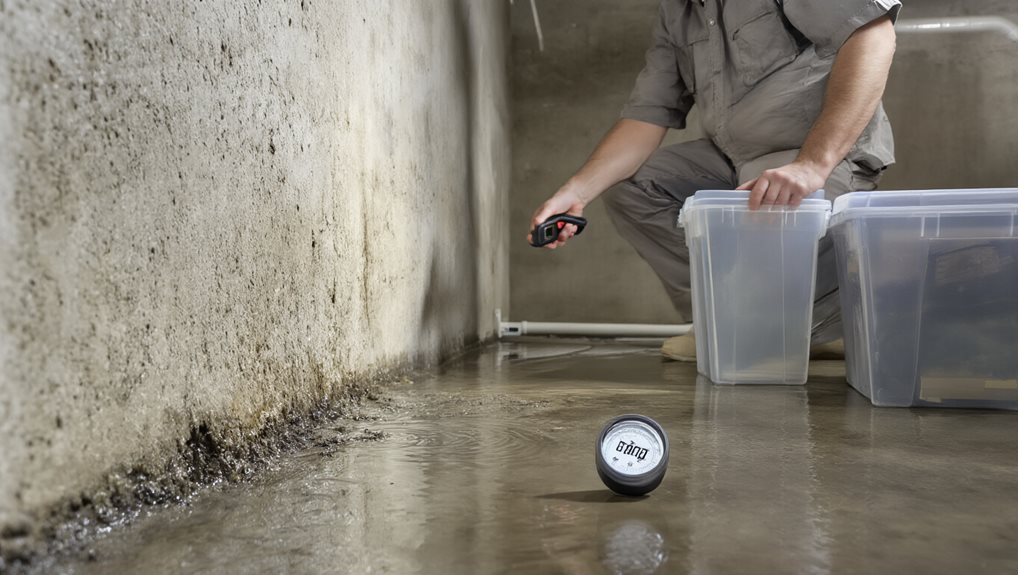
How often should you inspect your basement to keep mold at bay? Regular, systematic checks are essential because moisture can creep in unnoticed, especially after weather shifts or when a home ages.
Aim for annual checks in newly waterproofed spaces, semi‑annual or quarterly in older homes, and immediate inspections after storms or seasonal changes; use hygrometers, infrared meters, and visual cues like efflorescence, staining, and cracks to catch problems early.
Regularly document findings in a simple log to track moisture trends over time, and coordinate with a local professional if you notice persistent dampness or elevated humidity levels home moisture tracking.
Final Note
By keeping humidity between 30‑50 %, improving airflow with smart vents or DIY fans, sealing foundations with waterproofing, French drains and sump pumps, and promptly fixing leaks while using mold‑resistant materials, you’ll maintain a dry basement that resists mold. Regular inspections and early‑detection tips help catch problems before they spread, ensuring a healthy, low‑maintenance space. Consistent, proactive moisture control protects your home and preserves indoor air quality.

Nathan McPhail is a garden and home DIY expert who writes practical, easy-to-follow advice for homeowners and gardeners. Through Yardique, he shares hands-on tips covering gardening, lawn care, landscaping, home improvement, repairs, tools, and outdoor living. His focus is on helping readers solve everyday household and yard problems with straightforward guidance, useful techniques, and practical solutions.