
First, measure your garage’s length, width, ceiling height, and door clearances, then sketch a layout that puts the car nearest the entry and reserves a three‑foot aisle for safe movement. Clear the floor, sort items into keep, donate, and discard piles, and assign distinct zones for parking, a workshop, and seasonal storage. Install wall‑mounted hooks, pegboards, and slatwall racks to lift tools and gear off the floor, and choose adjustable cabinets and tall shelves that fit your door clearance. Use clear, stackable bins with color‑coded labels for quick identification, and add a heavy‑duty overhead rack for bulky items. Maintaining these zones with simple daily and weekly routines will keep the space organized, and the next steps will show you how to fine‑tune the system. Good outdoor storage keeps tools dry and off the floor, which matters more than the size of the building.
TLDR
- Measure the garage, sketch zones, and keep a minimum 3‑foot aisle for safe movement.
- Declutter by sorting items into keep, donate, and discard piles; allocate distinct floor zones for vehicle, workshop, and storage.
- Install wall‑mounted pegboards, hooks, and slatwall panels to store tools and gear vertically, freeing floor space.
- Use adjustable cabinets and tall lockers that fit door clearance, pairing base units with wall cabinets for flexible shelving.
- Store items in clear, color‑coded bins and overhead racks; set daily/weekly return and sweep routines to maintain order.
Assess Your Space, Define Zones, and Draft an Efficient Layout
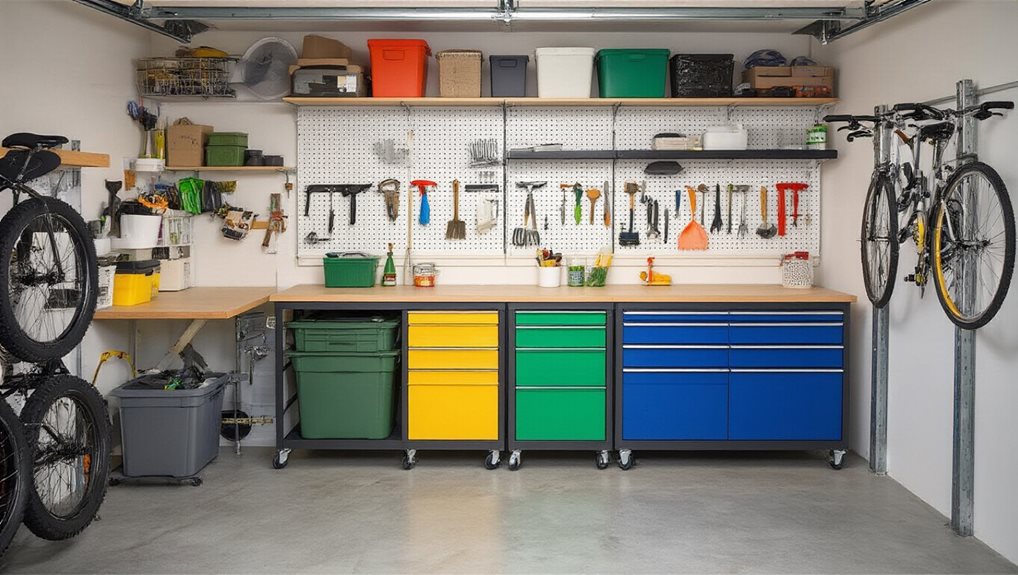
When you step into a cluttered garage, the first thing you notice is the lack of clear zones, so start by measuring the total square footage, noting ceiling height, door dimensions, and any fixed obstacles such as columns or built‑in shelves; then, based on how you use the space—parking a vehicle, storing tools, housing seasonal items, or creating a workbench area—divide the floor into functional zones, assigning each a purpose and a logical flow that minimizes back‑and‑forth traffic; finally, sketch a layout on graph paper or a digital app, positioning the car zone nearest the entry, placing heavy or frequently accessed items within easy reach, and leaving a clear aisle at least three feet wide for safe movement, which together form a practical blueprint that maximizes storage efficiency while keeping the garage safe and organized. 3D environment enhances visualization of the layout during planning.
Clear the Floor and Create Functional Zones
Do you know that up to 80 % of garage clutter comes from disorganization rather than a lack of storage space? Remove unnecessary items, sort everything into keep, donate, and discard piles, then allocate floor sections for distinct zones—workshop, storage, and vehicle parking. Use shelves or cabinets as dividers, label each area, and keep pathways clear so you can move confidently and maintain a shared sense of order. Wall mounted tool organizers free up floor space, which is the constraint in most single garages.
Add Wall‑Mounted Hooks, Racks, and Pegboards for Vertical Space
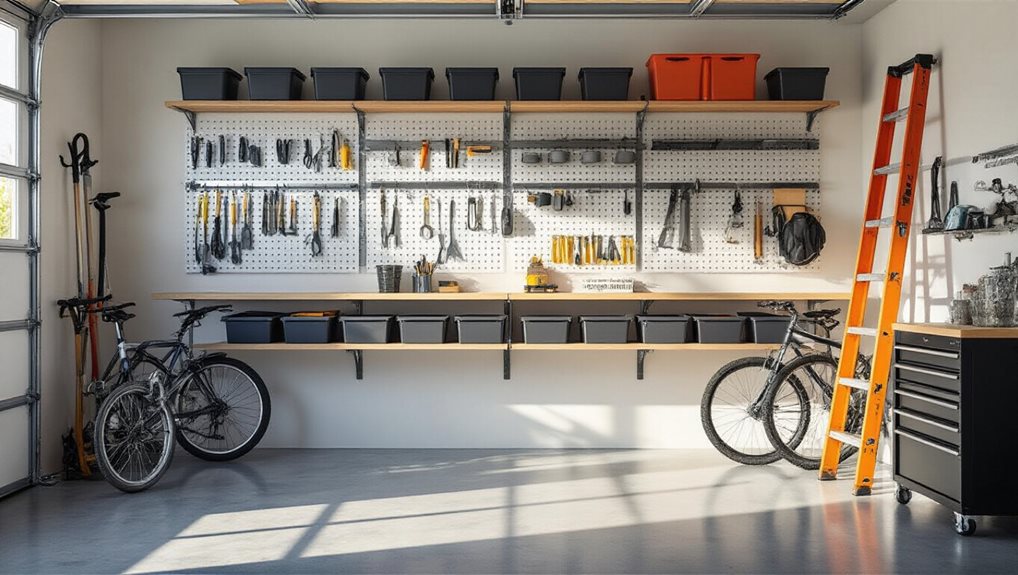
If you’re looking to reclaim floor space while keeping tools within arm’s reach, installing wall‑mounted hooks, racks, and pegboards is the most efficient solution.
These systems dominate the market, offering modular panels and steel‑based hooks that hold up to 350 lb, freeing floor area for vehicles or projects.
Select Garage‑Organization Cabinets & Shelves for Your Tools
When you choose cabinets, measure the interior height and width to ensure they fit your garage’s footprint while leaving room for door swing and aisles, and look for models that let you adjust shelf heights so you can accommodate both small hand tools and larger power equipment.
Pairing these cabinets with modular shelves lets you stack items vertically, using adjustable brackets or slotted rails to reconfigure spacing as your inventory changes. This combination of optimized dimensions and flexible shelf configurations maximizes storage capacity without sacrificing accessibility.
Optimized Cabinet Dimensions
Ever wondered how the right cabinet dimensions can turn a cramped garage into an efficient workspace?
Choose a 35‑inch‑wide, 18‑inch‑deep base unit for easy vehicle clearance, then pair it with a 72‑inch‑tall wall cabinet mounted at 54 inches for ergonomic reach.
For larger tools, select a 30‑36‑inch‑wide, 24‑inch‑deep locker reaching up to 80 inches, ensuring vertical space is maximized without crowding aisles.
Adjustable Shelf Configurations
How can you maximize storage while keeping your garage floor clear for vehicles and projects? Choose adjustable shelving with steel‑wire brackets that slide on powder‑coated metal tracks, letting you snap‑lock heights for tools of any size. Heavy‑duty units hold up to 300 kg per layer, while wall‑mounted shelves support 100 lb per foot. Freestanding or wall‑mounted options include adjustable feet or anchoring, ensuring stability on uneven floors or concrete walls. Complement with slatwall hooks, rolling casters, and GearBox cabinets for a cohesive, organized space.
Choose Clear Bins & Color‑Code Labels for Seasonal Gear
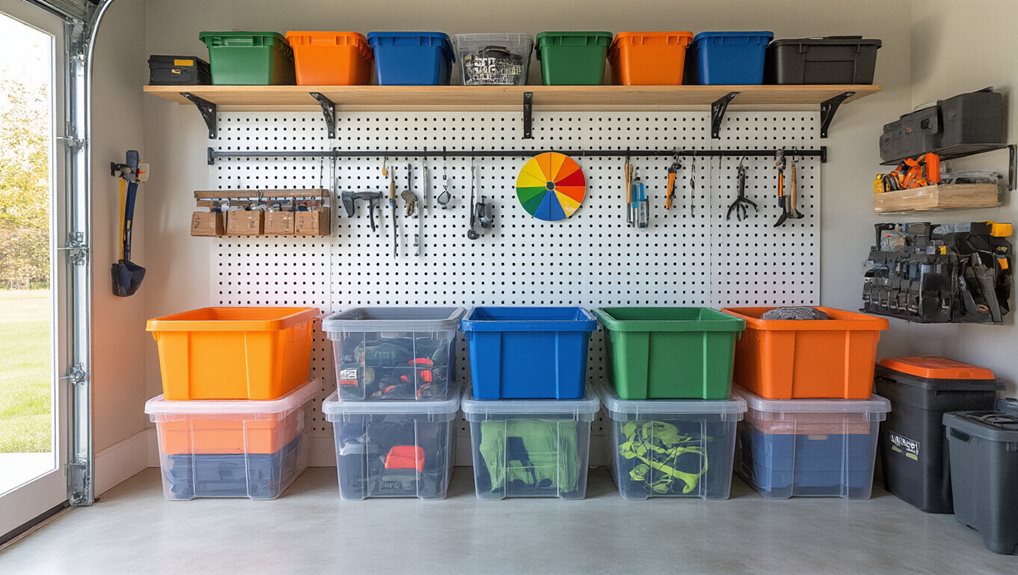
You’ll notice that clear bins protect seasonal gear from dust and moisture while letting you see exactly what’s inside, so you spend less time searching and more time using.
By assigning a distinct color to each label—like red for winter sports, blue for summer camping—you create a visual cue that speeds up retrieval and encourages you to return items to the right spot.
Combine the bins with a simple rotation schedule, and you’ll keep your garage organized year‑round without extra effort.
Transparent Bins Protect Items
Why settle for hidden clutter when clear bins let you see everything at a glance? Transparent bins shield tools and seasonal gear from dust, moisture, and debris, while sturdy lids keep items clean and secure. Their stackable, interlocking design maximizes vertical space, reduces tripping hazards, and guarantees quick visual inventory checks, promoting a tidy, organized garage that feels like a shared, protected space.
Color‑Code Labels Simplify Retrieval
A well‑planned color‑code system turns a cluttered garage into a quick‑access workspace, especially when you pair bright, contrasting labels with clear, stackable bins. Assign orange for gardening tools, blue for automotive supplies, and red for urgent items, then stick labels on front and sides of each bin. Contrasting colors let you spot the right container instantly, cutting search time and reinforcing a shared, organized atmosphere.
Seasonal Gear Rotation System
How do you keep seasonal gear ready without rummaging through a chaotic garage? Choose clear, stackable bins for each zone—winter skis, spring tools, summer toys, fall rakes—so you see contents instantly, cut search time, and protect items from damage.
Color‑code labels, match bins to slatwall hooks, and schedule quarterly swaps, making rotations seamless, space efficient, and belonging‑focused.
Add Overhead Garage Storage for Bulk Items
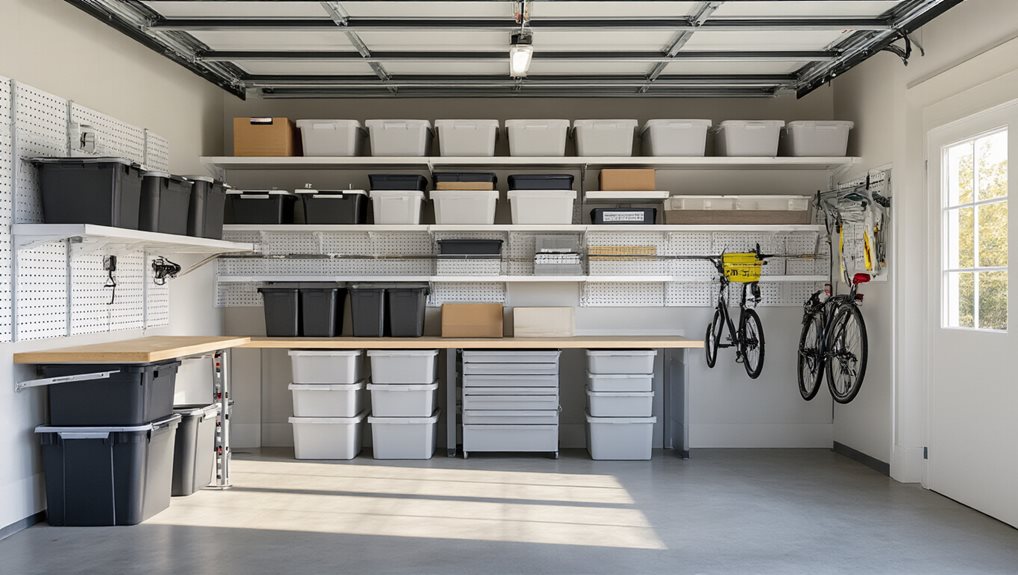
When you install an overhead rack, you instantly reclaim precious floor space while turning otherwise wasted ceiling area into a sturdy, organized storage zone for bulky items such as patio furniture, winter tires, or large gardening bins. overhead storage can dramatically maximize your garage’s usable area by keeping seasonal gear up and out of the way. Choose heavy‑duty steel racks supporting up to 600 lb, adjustable heights from 22–40 in, and sizes like 3×8 ft to match your garage dimensions, ensuring seasonal gear stays accessible yet out of the way.
Keep It Tidy: Simple Routines & Labeling Tips
Ever wondered how a few disciplined habits can turn a chaotic garage into a functional, stress‑free zone?
Spend five minutes each evening returning tools to labeled bins, and schedule a weekly 15‑minute sweep of landing zones for keys, wallets, and chargers; use wall‑mounted racks and clear stickers to define categories, which cuts search time, reduces clutter exposure, and reinforces a shared sense of order.
Final Note
By applying the steps you’ve just read—clearing the floor, defining zones, installing wall‑mounted storage, choosing appropriate cabinets and clear bins, and adding overhead solutions—you’ll convert a cramped garage into a functional workspace. Consistently labeling items and maintaining simple routines will preserve the organization, while the vertical and overhead systems maximize every square foot. This structured approach not only improves accessibility and safety but also guarantees the space remains adaptable for future needs.

Nathan McPhail is a garden and home DIY expert who writes practical, easy-to-follow advice for homeowners and gardeners. Through Yardique, he shares hands-on tips covering gardening, lawn care, landscaping, home improvement, repairs, tools, and outdoor living. His focus is on helping readers solve everyday household and yard problems with straightforward guidance, useful techniques, and practical solutions.