Grass seed seems slow because germination depends on precise soil temperature, moisture, pH, and seed‑soil contact; if any of these fall outside optimal ranges, biochemical processes stall. Cool‑season grasses need soil above 50 °F, preferably 50–65 °F, while warm‑season varieties prefer 65–70 °F, and temperature swings speed growth. Consistent moisture—daily misting for the first three weeks—keeps the top inch damp without waterlogging, and a pH of 6.0–7.0 with compost improves nutrient access and seed contact. Proper aeration creates a crumbly matrix that holds water and oxygen, further accelerating sprouting. Expect species‑specific timelines: perennial ryegrass in 5–10 days, Kentucky bluegrass 14–30 days, and others varying similarly. If you keep these factors in check, the seedlings will emerge faster, and the next section will show how to manage them for optimal establishment.
TLDR
- Soil temperature must stay above 50 °F; cooler soil slows metabolic activity, extending germination time.
- Seed‑soil contact and proper aeration are essential; compacted soil limits oxygen and water access, delaying sprouting.
- Moisture must be consistently damp but not saturated; uneven drying or waterlogging hampers seed metabolism.
- Species‑specific timelines vary: perennial ryegrass 5‑10 days, Kentucky bluegrass 14‑30 days, fescues 7‑14 days.
- pH, nutrient balance, and salinity affect enzyme function; pH 6.0‑7.0 and low salinity promote faster germination.
Control Grass Seed Germination Speed With Soil Temperature
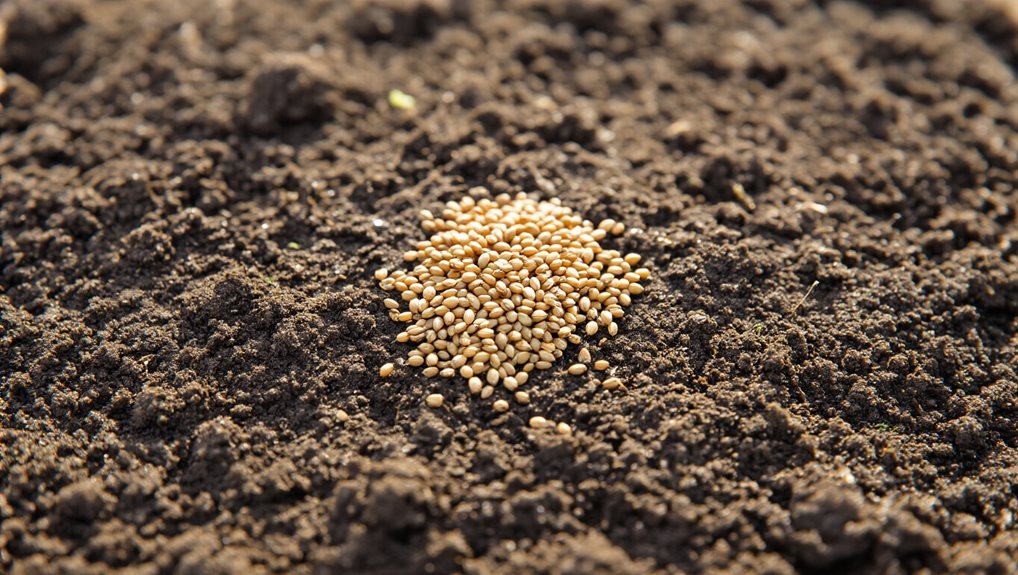
If the soil at two inches stays above 50 °F, seeds awaken and germinate, but cooler ground keeps them dormant, risking rot and pathogen attack.
Aim for 50‑65 °F—ideally 59‑86 °F for Kentucky bluegrass—to accelerate growth, remembering that air pockets, water content, and coastal breezes can slow warming, so monitor daily air temps and adjust watering to maintain optimal warmth. Higher salinity can further delay germination, especially for species like Bromus inermis and Elymus breviaristatus, which are more sensitive to saline conditions.
Plant Cool‑Season Grass Seed Germination in Early Spring or Fall
When the soil stays above 50 °F at a two‑inch depth, the same temperature rule that speeds germination in the summer still applies, but the calendar changes. In early spring you’ll see perennial ryegrass sprout in 5‑10 days, fine fescue in 7‑14, Kentucky bluegrass in 14‑30, while fall planting benefits from warm soil, cooler air, and fewer weeds, giving seedlings a head start before winter. cooler air benefits help explain why fall planting can give seedlings a head start before winter.
Optimize Soil pH and Add Compost for Better Seed Contact

First, test your soil’s pH and adjust it with lime or sulfur so it lands in the 6.0‑7.0 range that maximizes nutrient availability and microbial activity.
Next, work in a generous layer of organic compost, which not only supplies essential nutrients but also improves texture and water retention for the seeds.
Finally, press the seed lightly into the amended soil, ensuring firm contact without burying it too deep, to promote consistent germination.
Additionally, ensure proper soil aeration to maintain good moisture distribution and reduce compaction, which supports faster and more uniform germination. soil aeration
Test SoilHH Adjustment
Ever wondered why a simple pH test can make or break your lawn’s early growth? Test dry soil, record the reading, and compare it to the 6.5‑7.0 target; if it’s below 6.0, plan lime, if above 7.5, consider sulfur. Accurate results guide amendment amounts, prevent over‑correction, and ensure nutrients stay available, giving your grass seed the best chance to germinate strong.
Incorporate Organic Compost
If you spread a thin, quarter‑inch layer of organic compost over freshly seeded lawn, you’ll immediately improve moisture retention, heat absorption, and nutrient availability, all of which accelerate germination and promote stronger seedlings.
The compost’s dark hue traps warmth, while its organic matter balances pH and supplies nitrogen, creating a fertile cradle for seed.
This thin, fluffy blanket protects without smothering, encouraging rapid, dense growth and a sense of shared success.
Ensure Firm Seed Contact
A thin layer of organic compost already set the stage, but the next step is to guarantee that each seed particle stays in firm contact with the soil, and that the soil’s pH is tuned to the 6.0‑7.0 window where nutrient availability peaks. Adjust pH with lime or sulfur, lightly rake compost into the seed bed, then firm the surface with a roller or board to eliminate air pockets, ensuring consistent moisture and microbial activity for resilient germination.
Set a Daily Moisture Routine to Avoid Waterlogging and Dry‑Out
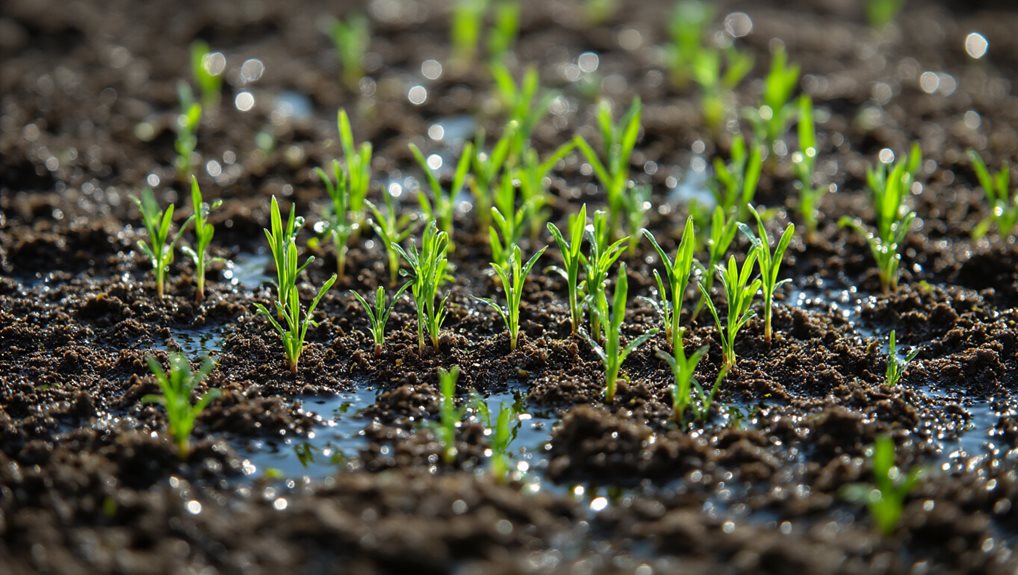
Water lightly two to four times daily, using a mist or oscillating nozzle for five‑to‑ten minutes each session, keeping the top 1.5 inches consistently damp but never saturated. To help maintain steady vaporization in colder conditions, consider elevating the tank and insulating the regulator to minimize moisture entry cold-weather regulation. Monitor for puddles, adjust timing if evaporation spikes, and consider a thin straw mulch to reduce loss, ensuring oxygen remains available for healthy germination.
Schedule Watering for the First Three Weeks After Sowing
You’ll start by misting the seed daily, keeping the surface damp without flooding it, then add a deeper soak once a week to encourage root penetration. As the sprouts appear, you’ll gradually cut back the frequency, letting the soil dry a bit longer between light waterings. Dusk-to-dawn lighting concepts from outdoor lighting guides can remind you to maintain consistent, gentle moisture patterns at dawn and dusk for steady germination dusk-to-dawn and to ensure your watering routine is durable enough to support seedling growth over time.
Mist Early Daily
Why must you water your newly sown grass seed twice to three times a day during the first ten days? Early‑morning mist keeps evaporation low, while a brief midday or early‑evening spray ensures the top quarter‑to‑two inches of soil stays uniformly moist, especially in sandy beds. Use a fine spray or oscillating sprinkler for five to fifteen minutes, adjusting for wind, heat, and drainage, and avoid nighttime watering to prevent fungal growth.
Deep Soak Weekly
When you’re planning the first three weeks after sowing, a deep‑soak schedule becomes the backbone of successful germination. Water deeply every seven days, aiming for 1‑1.5 inches of soil moisture that penetrates to the seed zone, then let the surface dry slightly before the next soak.
This rhythm keeps the seed bed consistently moist, encourages root development, and fosters a sense of shared progress among fellow gardeners.
Reduce Water After Sprouting
After the first visible sprouts appear, you should start scaling back the watering frequency, shifting from multiple short daily sessions to a single, deeper soak that still supplies the shallow root zone without saturating the surface.
Water once daily in the morning, adding a second brief soak on hot, dry days, and monitor soil moisture to keep the top inch damp but not soggy, fostering steady root development and community‑wide lawn health.
Day‑Night Temperature Swings That Speed Germination
When daytime soil temperatures rise into the ideal range—50 °F to 65 °F for cool‑season grasses and 65 °F to 70 °F for warm‑season varieties—while nighttime air stays cool enough to prevent excess humidity, the combined effect can accelerate germination by creating a steady metabolic rhythm in the seed. Additionally, selecting appropriate white perennial varieties and planning garden layout with proper soil and light conditions can contribute to healthier, more vigorous germination environments over time planning and soil conditions.
Compare Germination Timelines of Popular Grass Species

Day‑night temperature swings that keep soil within the ideal range set the stage for comparing how quickly different grasses sprout, and the timelines vary noticeably across species.
Perennial ryegrass bursts out in 5‑10 days, while Kentucky bluegrass lags 14‑30 days.
Tall fescue follows in 7‑12 days, Bermuda in 10‑30 days, and Zoysia reaches emergence after 14‑21 days, each reflecting its climate preference and soil needs.
When Soil Warmth Beats Air Temperature: What to Expect
Why does the soil often feel warmer than the air on a spring morning? Because air pockets insulate, the ground lags ten degrees behind the sky, so even when air reaches 60‑70 °F, soil stays around the 50‑65 °F range needed for cool‑season grass germination.
Expect slower sprouting until sustained warmth hits two‑inch depth, and remember coastal breezes can prolong this lag.
How Soil Aeration Improves Kentucky Bluegrass Seed Germination

When you aerate your lawn, you loosen compacted soil, creating a crumbly matrix that lets Kentucky bluegrass seeds settle into direct contact with fertile ground.
These aerated pockets hold water longer, ensuring moisture stays available for the seed’s early development while also improving oxygen flow for stronger root formation.
Creased Loosen Soil
Ever wondered why your Kentucky bluegrass seed seems to stall after planting? Loosening compacted soil creates channels that let water, oxygen, and nutrients reach the seed,,, aer and root growth. Aeration breaks up thatch, reduces compaction, and improves drainage, so seedling roots encounter less resistance and more breathable space. Perform core aeration in fall, before overseeding, and watch germination appear within ten days.
Enhances Seed‑Soil Contact
Core aeration dramatically enhances seed‑soil contact, which is vital for Kentucky bluegrass germination. By creating loose‑soil voids, aerator holes let each seed settle directly into nutrient‑rich pockets, shielding it from surface drying and compaction while improving oxygen flow. This direct contact accelerates root development, heightens germination speed, and guarantees seedlings establish strong, resilient turf that feels like a shared, thriving lawn.
Improves Water Retention
By securing solid seed‑soil contact, aeration also creates tiny pockets that hold moisture where the Kentucky bluegrass seed can draw it consistently. Those holes retain water long enough for germination, while preventing runoff and root rot; the loosened soil lets water infiltrate evenly, keeping the seedbed moist but not soggy. This stable moisture environment supports steady root development and a unified, healthy lawn.
When to Expect Full Establishment and Make the First Mowing Cut

When should you expect your new lawn to be fully established and ready for that first mowing?
Typically, cool‑season grasses reach mowing height 3–4 inches after 4–6 weeks of growth, while warm‑season varieties may need 5–6 weeks; ensuree roots are anchored, blades stand tall, and a tug test confirms stability.
Avoid cutting earlier to protect tender shoots and promote dense, healthy turf.
Final Note
By monitoring soil temperature, pH, and moisture, you’ll speed up germination and avoid common setbacks. Cool‑season grasses thrive when sown in early spring or fall, while consistent watering for the first three weeks prevents both drying out and waterlogging. Proper aeration improves seed‑soil contact, especially for Kentucky bluegrass, and compost enhances nutrient availability. Expect most species to sprout within 7‑21 days, full establishment in 8‑12 weeks, and the first mowing cut once the lawn reaches a uniform height of 2‑3 inches.

Nathan McPhail is a garden and home DIY expert who writes practical, easy-to-follow advice for homeowners and gardeners. Through Yardique, he shares hands-on tips covering gardening, lawn care, landscaping, home improvement, repairs, tools, and outdoor living. His focus is on helping readers solve everyday household and yard problems with straightforward guidance, useful techniques, and practical solutions.