Revamp your yard into a beautiful, productive space by replacing ornamentals with edibles like rainbow chard, blueberries, and fragrant thyme. Line walkways with strawberries or herbs to save space and simplify harvests. Use raised beds and trellises to grow tomatoes and vines vertically, boosting yield and reducing disease. Mix in edible flowers like nasturtiums and calendula to attract pollinators and add color. Choose climate-appropriate plants with staggered harvests, and blend annuals with perennials for lasting structure—smart pairings keep your landscape lush and bountiful year after year, while meeting community standards with ease. You’ll uncover even more ways to combine function and beauty in your own backyard.
TLDR
- Use colorful chard and kale as ornamental yet edible borders to add vibrant color and structure to garden beds.
- Replace traditional hedges with blueberries or rosemary for attractive, productive, and year-round landscaping.
- Grow strawberries along walkways or bed edges to combine ground cover beauty with easy kitchen access.
- Train vining crops like tomatoes and raspberries on trellises to save space and boost yield in small yards.
- Mix edible flowers like nasturtiums and calendula into beds to attract pollinators and enhance visual appeal.
Start With Easy Edible Swaps in Your Landscape
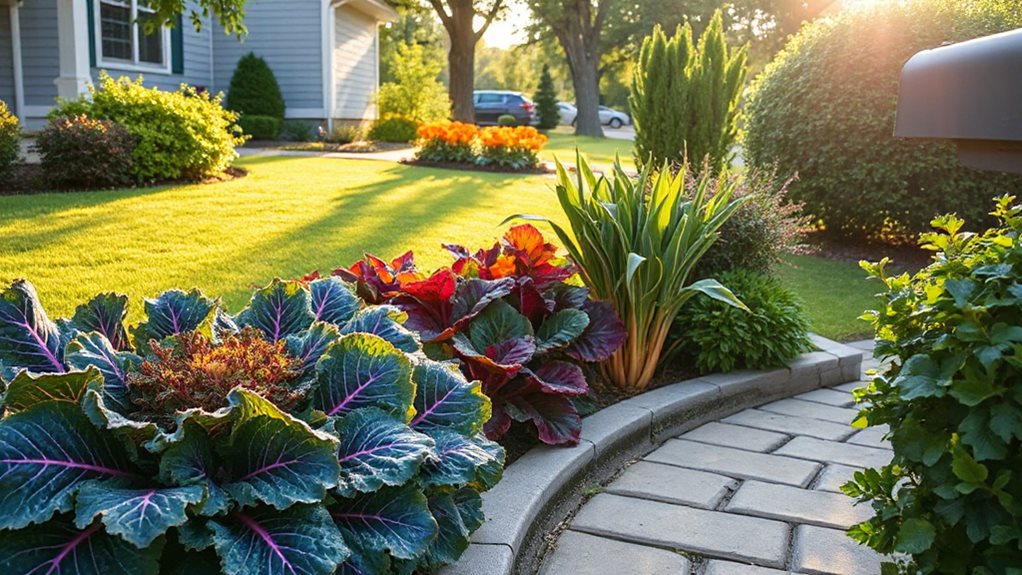
You can easily plunge into edible landscaping by swapping out ornamental plants with practical, food-producing alternatives that enhance both beauty and function.
Replace boxwood edges with fragrant herbs, plant colorful kale instead of annual flowers, and tuck in strawberries along walkways. These low-effort swaps save space, reduce maintenance, and invite pollinators—all while giving you fresh flavors just steps from your kitchen. Herbs like thyme and chives not only add texture and scent but also attract beneficial insects with their lavender-pink flowers. Consider using rust-resistant tools when installing new beds to make planting and long-term care easier.
Grow Berries That Beautify and Feed Your Family
While many ornamental shrubs offer seasonal interest, few deliver the dual appeal of beauty and bounty quite like berry-producing plants.
You can grow blueberries as tidy hedges with vivid fall color, or train raspberries and blackberries on trellises for order and yield.
Strawberries edge walkways beautifully, while elderberries and serviceberries add height, blooms, and harvests, all while thriving in full sun and enhancing your scenery’s health and flavor.
Pineapples can also be grown at home given warm temperatures and proper care, and they may take 18–24 months to produce fruit.
Line Walkways With Fragrant Culinary Herbs

Frequently, gardeners overlook the potential of walkways as functional and sensory extensions of the kitchen garden, but lining these paths with fragrant culinary herbs converts ordinary routes into productive, aromatic corridors.
You’ll enjoy thyme and rosemary for structure, basil in sunny spots, and mint in containers to prevent spreading.
These edible borders enhance harvests, add beauty, and guide you with scent, blending practicality and charm right outside your door.
Consider adding durable gloves with thorn protection when planting and maintaining these borders to protect your hands and forearms.
Frame Beds With Colorful Chard and Greens
Frame your raised beds with colorful chard varieties like Rainbow or Bright Lights to create vivid, edible borders that catch the eye.
Pair these with complementary greens such as Lacinato kale or ‘Black Seeded Simpson’ lettuce to add texture and extend harvests.
Plant them densely along bed edges, positioning stems outward for bold color impact while maintaining a clean, structured look.
Also consider mulching and regular watering to maintain moisture and protect roots during hot summers, especially since Zone 9 plants benefit from regular watering.
Colorful Borders With Chard
You’ll often find that rainbow chard converts ordinary garden edges into living ribbons of color, thanks to its lively stems in hues of red, yellow, pink, and orange that stand out vividly against its glossy green foliage.
You can blend it with marigolds, salvia, or nasturtiums for bold, edible borders. It thrives in full sun, adds structure to pathways, and pairs beautifully with lettuce, kale, or herbs, giving your yard both beauty and harvest.
Pair Greens And Flowers
With its bold stalks and lush foliage, Swiss chard doesn’t just feed you—it enhances your garden’s design by pairing effortlessly with both flowers and companion greens. Combine chard with petunias or dwarf zinnias for color continuity, while interplanting lettuce, kale, or mustard greens fills gaps and increases yield.
These combinations thrive in raised beds or borders, offering beauty and bounty. You’ll enjoy harvests longer with succession planting and compost-rich soil, creating a productive, inviting setting that welcomes both pollinators and people.
Edible Landscape Edging Ideas
Adding lively structure to your garden starts at the edges, where function meets flair in edible landscaping.
Frame beds with colorful chard, curly parsley, or compact kale for vivid, edible borders. Use wattle, bamboo, or stone edging to contain plantings while supporting mounding nasturtiums or bush basil.
Layer strawberries or garlic along front edges, and mulch regularly to simplify care while keeping your harvests thriving all season.
Add Edible Flowers to Attract Pollinators
Plant edible flowers like nasturtiums, calendula, and borage in sunny spots to enjoy their vivid colors and flavors while supporting pollinators. These blooms attract bees and other beneficial insects, especially when you choose single-petal varieties and leave some bare soil nearby for nesting.
Not only do they enhance your garden’s ecology, but they also offer health-boosting compounds you can use in meals. Twyford’s introduction of vitreous china revolutionized sanitation by creating durable, easy-to-clean fixtures that spread globally and influenced terminology like Unitas in other languages.
Pollinator-Friendly Edible Blooms
While many gardeners choose flowers solely for their beauty, you can grow blooms that both support pollinators and land on your plate.
Plant calendula for bees and salads, nasturtium to lure aphids away while delighting pollinators, borage for its cucumber-flavored blossoms, chive blooms for oniony zest, and pansies for delicate, edible petals—all easy, beneficial, and beautiful additions to your edible terrain.
Colorful Plants That Feed
You’ve already seen how blooms like calendula and borage support pollinators while offering edible rewards, but now let’s expand your garden’s palette with colorful plants that feed both pollinators and people.
Nasturtiums add lively yellow and red hues, their peppery flowers and leaves perfect for salads. Bachelor’s buttons provide blue accents and edible petals, while bee balm’s red, pink, or purple blooms attract hummingbirds and enhance teas or garnishes.
Grow Flowers You Can Eat
Adding lively, edible blooms to your scenery does more than brighten your plate—it fuels pollinators and fortifies your garden’s ecosystem.
Choose begonia ‘Cocktail Brandy’ or impatiens ‘Accent Coral,’ which attract pollinators as effectively as marigolds.
Opt for single-petal calendula and borage, which offer easy access to bees and draw beneficial insects.
These flowers support biodiversity while providing tasty, nutritious harvests for your kitchen.
Grow Tomatoes and Vines Vertically
Maximize your garden’s potential by growing tomatoes and vines vertically, where plants thrive with better support and improved growing conditions. You’ll enjoy higher yields, easier harvesting, and healthier plants with less disease.
Use trellises, cages, or stakes to train stems upward, secure them with clips or twine, and prune suckers to focus growth. This smart method saves space and keeps fruit clean, making your edible scenery productive and neat.
Mix Vegetables and Flowers for Natural Beauty

Now that your tomatoes and vines reach skyward with support and order, turn your attention to blending function and form by integrating vegetables and flowers throughout your edible scenery.
You’ll attract pollinators with marigolds, nasturtiums, and calendula, while enhancing yields and beauty. Pair sunflowers with zucchini, or tuck violas near kale.
These combinations maximize space, deter pests, and create lively, productive gardens where food and flowers thrive together.
Plan Your Edible Landscape for Year-Round Harvests
Thinking ahead guarantees your edible scenery delivers bounty and beauty across all seasons. Choose climate-appropriate plants with staggered harvests, blending annuals and perennials for structure.
Position tomatoes near paths and pumpkins farther out, using dwarf trees and evergreens for year-round form. Plan for mature sizes, integrate efficient watering, and fill gaps with spreading plants to keep your garden productive, orderly, and inviting all year.
Stay Hoa-Friendly With Smart Edible Pairings

While maintaining your community’s aesthetic standards, you can still grow food that’s both beautiful and productive by pairing edible plants with ornamental qualities. Choose blueberries for hedges, rosemary for borders, or nasturtiums for color.
Use raised beds and trellises to organize growth, blending strawberries, thyme, or kale seamlessly into your grounds. These smart pairings meet HOA expectations while providing harvests you’ll enjoy all season.
Final Note
You can convert your yard into a productive, attractive space by blending edibles with ornamentals. Replace traditional plants with edible swaps, layer herbs and flowers, and use vertical space wisely. With thoughtful planning, you’ll enjoy fresh harvests year-round while maintaining curb appeal. These strategies meet HOA standards and support pollinators, all while providing nutritious food right outside your door.

Nathan McPhail is a garden and home DIY expert who writes practical, easy-to-follow advice for homeowners and gardeners. Through Yardique, he shares hands-on tips covering gardening, lawn care, landscaping, home improvement, repairs, tools, and outdoor living. His focus is on helping readers solve everyday household and yard problems with straightforward guidance, useful techniques, and practical solutions.