You can keep your lawn green during droughts by choosing resilient grasses like TifTuf Bermudagrass, Zoysiagrass, or tall fescue. These varieties develop deep roots that access moisture below the surface, helping them stay lush with less water. Zoysiagrass retains color in dry spells, tall fescue recovers quickly with minimal irrigation, and Bermudagrass thrives in heat. For sandy soils or shade, specific cultivars offer customized solutions—there’s more to uncover about matching grass to your terrain needs.

TLDR
- Bermudagrass cultivars like TifTuf, Bimini, and TifGrand stay green longer with less water due to deep roots and drought resilience.
- Zoysiagrass conserves moisture with dense growth and stays green during short droughts, rebounding quickly when watered.
- Buffalograss uses up to 88% less water than bluegrass and maintains 50% green cover after 60 days without rain.
- Tall fescue accesses deep soil moisture with roots over 1 meter long, staying green under partial irrigation during drought.
- Bahiagrass thrives in sandy soils with minimal water and fertilizer, maintaining green cover in low-input, drought-prone areas.
Zoysiagrass: Dense and Drought-Defying
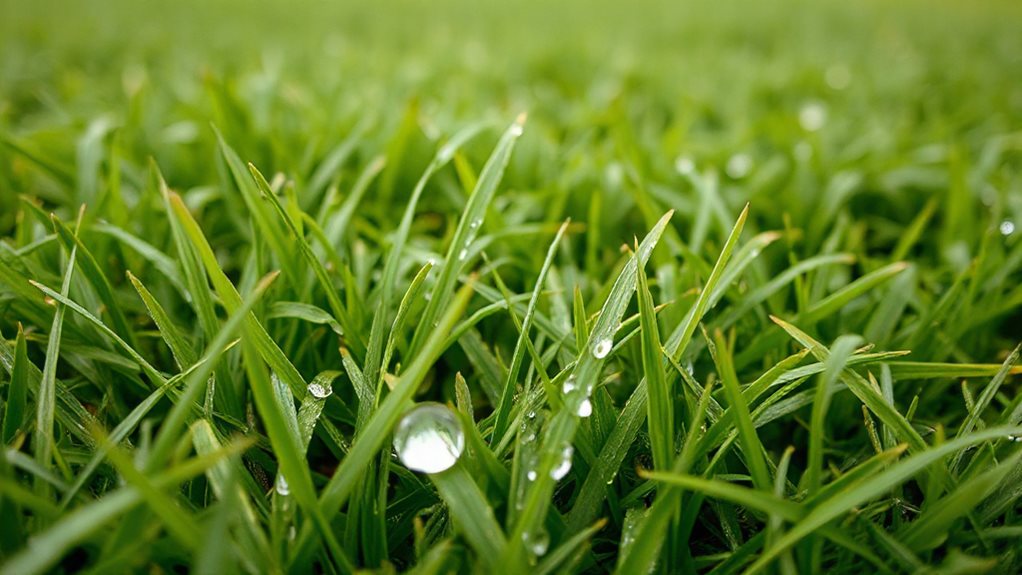
When it comes to withstanding dry spells without sacrificing lawn quality, zoysiagrass rises to the challenge with impressive resilience.
You’ll appreciate its deep roots and dense growth, which conserve moisture and stay green during short droughts.
It goes dormant in prolonged dryness but rebounds quickly.
You only need 1 inch of water weekly, and its low-maintenance nature fits your sustainable lawn goals perfectly. Deep roots
Zoysiagrass has a rhizomatous and stoloniferous growth habit, helping it form a dense turf that resists erosion and recovers slowly but steadily after stress.
Tall Fescue: Cool-Season Resilience
You’ll notice tall fescue’s deep roots pull water from below 0.6 m, helping it stay green longer during dry spells, especially when shallow-rooted grasses like Kentucky bluegrass struggle.
It recovers well after 60–83 days without rain and maintains decent turf quality even at 40–50% of normal irrigation, making it a smart choice for water-limited lawns.
With its cool-season vigor and tolerance for shade, poor soils, and temporary flooding, this grass delivers year-round resilience without demanding high maintenance.
Tall fescue is a cool-season grass that germinates relatively quickly compared to many warm-season varieties.
Deep Roots, Lasting Strength
Because its roots run deep, tall fescue stands strong when drought strikes, tapping into water reserves far below the surface that other cool-season grasses simply can’t reach.
You’ll see it pull moisture from over 1 meter down, using stored water efficiently, staying green longer, and recovering well—even after 83 dry days—thanks to its resilient, deep-rooted structure.
Year-Round Green Performance
Tall fescue’s deep-rooted strength sets the stage for its standout performance across seasons, especially when it comes to maintaining a green, lively lawn year after year.
You’ll notice it stays green through cool winters and handles summer heat better than most cool-season grasses.
With 3–4 hours of sun, it thrives in shade or sun, keeps its color, and delivers reliable, lush growth when you need it most.
Quick Drought Recovery
When drought strikes, tall fescue doesn’t just survive—it bounces back with impressive speed and resilience, thanks to its deep-rooted structure and physiological adaptability.
You’ll see it recover 18 days faster with just 50% irrigation, maintaining quality up to 43 days longer than unwatered grass.
Its stress tolerance and deep roots guarantee reliable rebound, even after 100+ dry days, making it a smart, durable choice for your drought-prone lawn.
Bermudagrass: Sun-Loving Durability
Choose bermudagrass for your lawn if you’re seeking a tough, sun-loving turf that thrives under heat and limited water.
You’ll benefit from its deep roots, slow growth, and low evaporation, which help maintain green cover.
Tolerant varieties like TifTuf and Tahoma 31 stay lush with less irrigation, while genetic resilience guarantees durability across stressful conditions.
Healthy bermudagrass also suppresses many weeds by forming a dense canopy and extensive root system, making it an effective weed barrier when maintained properly.
Bahiagrass: Low-Cost, High Toughness
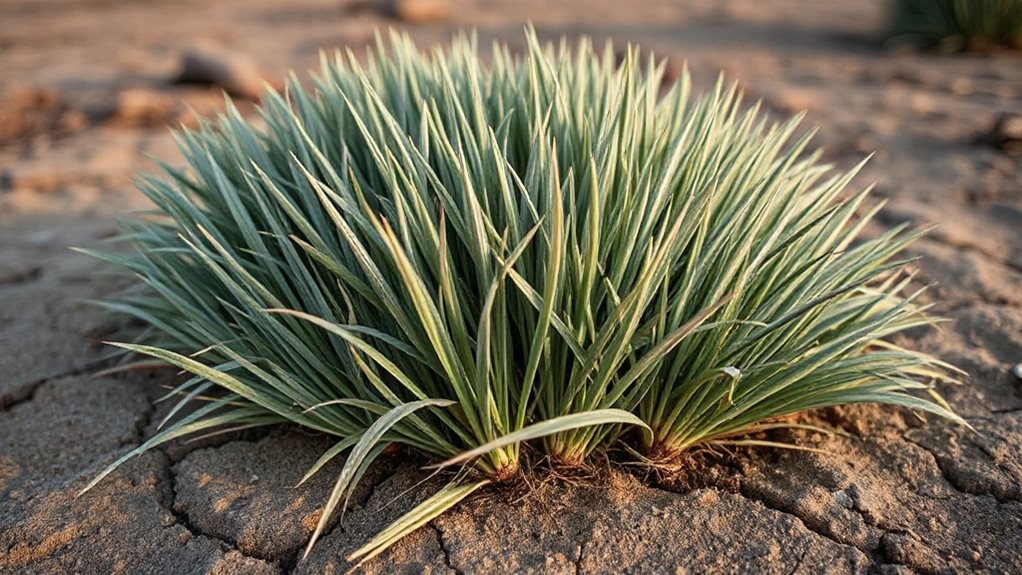
Bahiagrass stands out as a resilient, cost-effective option for lawns, pastures, and roadside plantings where water is limited and soil quality is poor.
You’ll appreciate its deep roots, drought tolerance, and low fertility needs, especially in sandy, acidic soils.
It thrives with minimal irrigation, handles shade and heat, and resists weeds, making it a smart, tough choice for low-maintenance settings across the Southeast.
For best long-term results, consider applying appropriate pre-emergent herbicides to established lawns to help prevent weed competition and protect Bahiagrass.
St. Augustinegrass: Coastal Climate Champion
St. Augustinegrass thrives in coastal climates, outperforming bermudagrass, zoysiagrass, and seashore paspalum in drought tolerance.
You’ll find Floratam and Cobalt cultivars lead in resistance, with Cobalt offering enhanced cold and pest resilience. Its wide stolons guarantee strong sod, while requiring less water than most warm-season grasses—ideal for sustainable, attractive lawns where salt, heat, and occasional drought challenge turf. Core aeration and dethatching help those stolons establish roots and prevent looping that can raise runners above the soil surface.
Buffalograss: Ultra-Low Water Usage
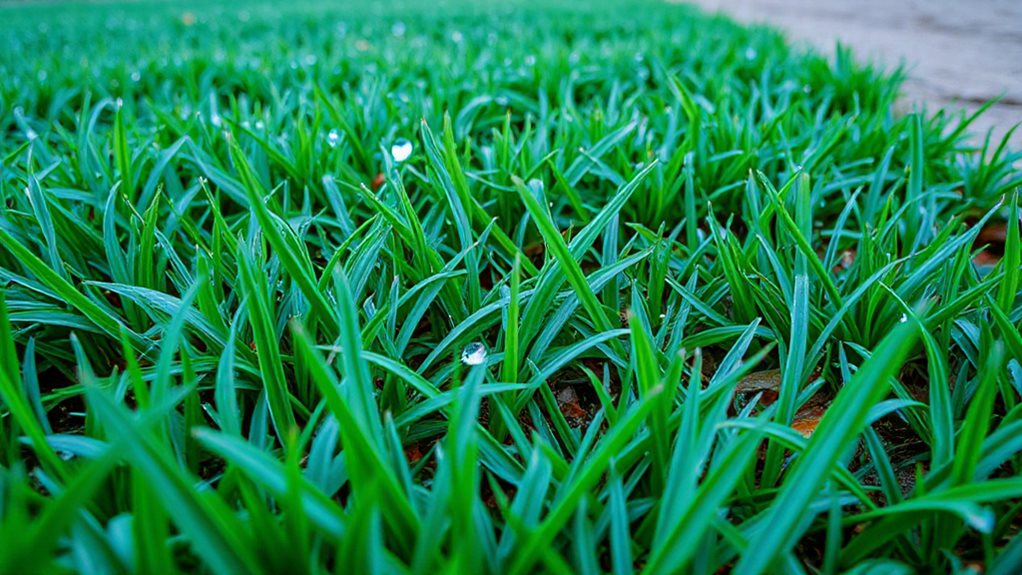
You’ll save nearly half the water by switching your ornamental lawn to UC Verde buffalograss, which thrives on 64% less irrigation than bermudagrass while maintaining full turf cover.
Even under drought, it stays 50% green after six weeks without rain, thanks to deep roots that pull moisture from 0.9 meters down.
With just 4–6 hours of daily sun and minimal fertilizer, you’re looking at lower costs and less work, all while cutting campus or household water use by hundreds of thousands of gallons a year.
Minimal Water Needs
While many traditional lawn grasses demand frequent watering to stay green, buffalograss stands out for its ultra-low water needs, making it a smart choice for sustainable landscaping in arid and semi-arid regions.
You’ll save up to 88% more water compared to Kentucky bluegrass, irrigate less often, and still maintain healthy cover, thanks to deep roots and efficient soil water use.
Drought Survival Strength
Buffalograss doesn’t just cut down on watering—it thrives when other lawn grasses start to fail, making it a standout choice for regions where drought is a recurring challenge.
You’ll see it maintain 50% green cover after 60 days without water, thanks to deep roots and dormancy.
It recovers fast when rain returns, outperforms tall fescue and bluegrass, and still looks good—proving resilience and beauty can go hand in hand.
Root Systems That Maximize Moisture Retention
Because strong root systems are essential for surviving prolonged dry periods, drought-resistant grasses like Bermuda, Zoysia, and Tall Fescue develop deep, extensive networks that reach moisture far below the surface, often extending six feet or more into the soil.
You’ll benefit from these deep roots, which access subsoil water and enhance drought resilience, especially when combined with proper watering and soil care that support healthy, moisture-retentive turf you can count on.
Grass Types for Sandy Soil Environments
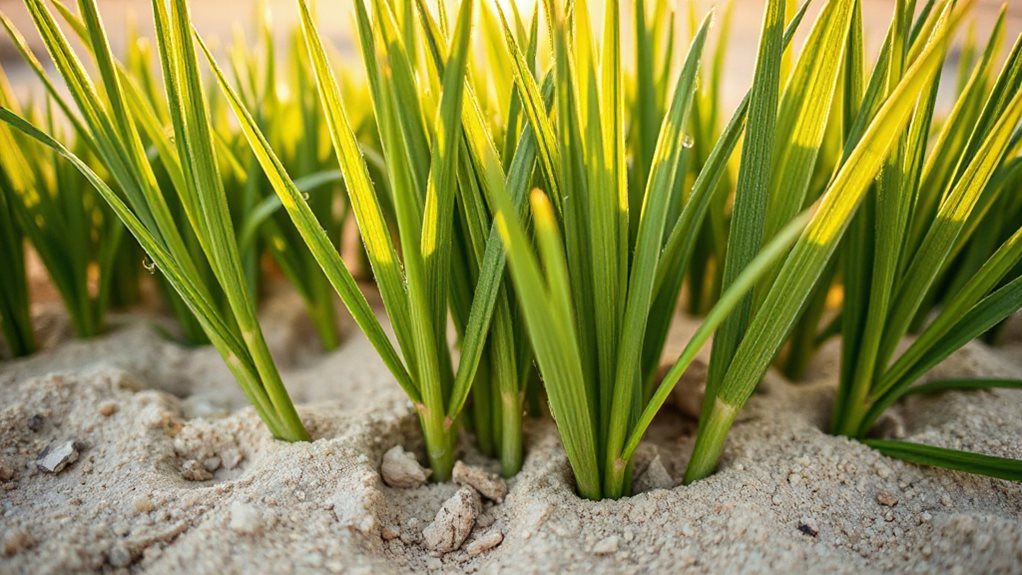
When it comes to establishing a resilient lawn in sandy soil, choosing the right grass variety makes all the difference—these soils drain quickly and retain fewer nutrients, so you’ll want a turfgrass that not only survives but thrives under such conditions.
You can count on Bermudagrass, Zoysiagrass, or Bahiagrass for deep roots and drought tolerance, while Centipedegrass and St. Augustinegrass handle heat, poor fertility, and coastal conditions with ease, ensuring your lawn stays green and healthy.
Shade Tolerance Among Drought-Resistant Varieties
While sandy soils present challenges with drainage and nutrient retention, another common hurdle for resilient lawns is limited sunlight—especially when drought resistance is also a priority.
You’ll want fine fescue or tall fescue for cool zones, and St. Augustinegrass or Zeon Zoysia in warm areas.
Mow higher, water deeply, and reduce fertilizer to help your grass thrive despite shade and dry conditions.
Recovery Speed After Dry Periods
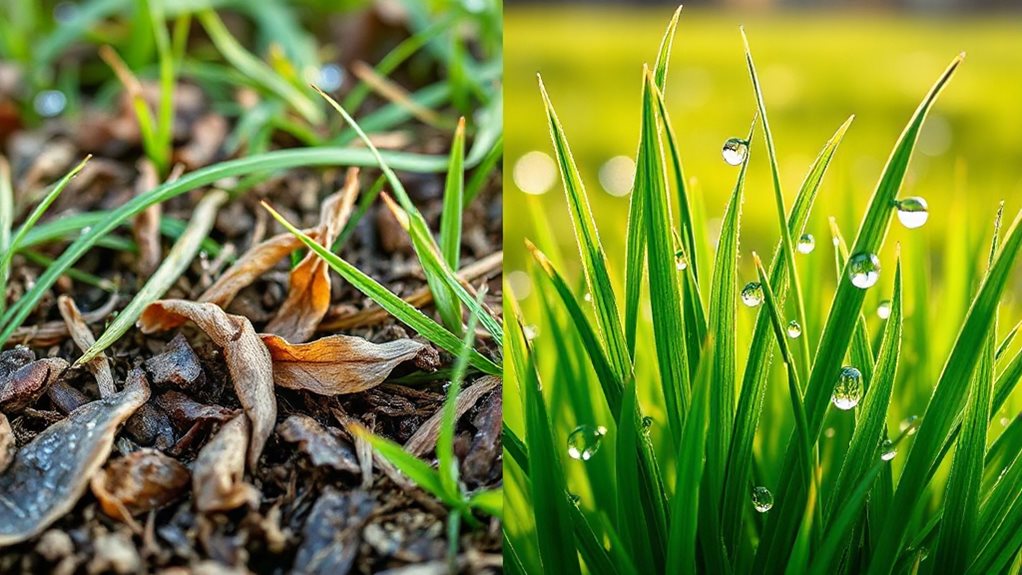
Though drought tolerance matters, how quickly your grass bounces back once water returns is just as critical—especially if you’re aiming for a consistently healthy lawn.
You’ll find hard fescue recovers fastest, maintaining green cover and low stress. Tall fescue bounces back within weeks, especially with partial irrigation. Zoysiagrass and St. Augustine vary—some cultivars revive in days, others struggle after prolonged drought.
Water-Saving Grass Options for Sustainable Lawns
Step into a smarter approach to lawn care by choosing grass varieties that thrive with less water—because sustainable lawns start with smart plant selection.
You’ll love Bimini, TifTuf, and TifGrand Bermuda for deep roots and drought resilience. Zoysiagrass and buffalograss need just minimal watering, while bahiagrass thrives in poor soils.
Tall fescue and sheep fescue offer low-input options, ensuring your lawn stays green and sustainable.
Final Note
You now know several drought-resistant grasses that stay green with less water. Zoysiagrass and Bermudagrass offer dense, sun-tolerant coverage, while Tall Fescue thrives in cooler climates. Bahiagrass suits sandy soils affordably, and St. Augustinegrass excels along coasts. Consider shade tolerance and recovery speed when choosing. These water-saving options support sustainable lawns without sacrificing quality, giving you a resilient, attractive yard even during dry spells.

Nathan McPhail is a garden and home DIY expert who writes practical, easy-to-follow advice for homeowners and gardeners. Through Yardique, he shares hands-on tips covering gardening, lawn care, landscaping, home improvement, repairs, tools, and outdoor living. His focus is on helping readers solve everyday household and yard problems with straightforward guidance, useful techniques, and practical solutions.