You can plant carrots, beets, radishes, and turnips 2–5 weeks before the last frost in well-drained, cool soil. Spinach, lettuce, and arugula also thrive when sown early, tolerating light frost with consistent moisture. Kale and cold-hardy brassicas like ‘Deadon’ cabbage grow reliably in chilly conditions, often sweetening after frost. Use row covers to protect tender growth when temperatures dip. Direct-seed at 1/8 to 1/2 inch deep in a fine, weed-free bed for best germination—success lies in timing, spacing, and simple protection. There’s more to optimize your early harvest.
TLDR
- Carrots, beets, radishes, turnips, and parsnips are ideal root crops for early planting in cool, well-prepared soil.
- Lettuce, spinach, kale, arugula, and mizuna are cold-hardy greens that thrive when sown early in the season.
- Brassicas like ‘Deadon’ and ‘Ruby Perfection’ tolerate freezing temps and benefit from fall planting for winter harvest.
- Direct-seed cool-season crops like peas, spinach, and radishes into fine, weed-free seedbeds at 1/8 to 1/2 inch depth.
- Use floating row covers, proper watering, and soil protection to extend growing seasons and shield plants from hard frosts.
Best Root Crops for Cool-Season Planting

When it comes to getting your garden off to an early start, root crops are your best bet for cool-season success. Sow carrots, beets, and radishes 2–5 weeks before the last frost in sandy, well-drained soil. Full sun and consistent moisture help roots develop, and consider planting in containers if your in-ground soil is poor.
Keep moisture consistent, thin early, and succession plant every few weeks. Turnips and parsnips thrive with fall sowing, sweetening after frosts—ideal for winter harvests. Add compost or well-rotted manure to enrich the soil and support healthy root development.
Cold-Hardy Leafy Greens for Early Spring
After getting your root crops in the ground, you’re ready to fill out your early garden with some of the most reliable performers of the cool season—cold-hardy leafy greens.
You can sow lettuce, spinach, and kale directly into cool soil, knowing they thrive in spring’s chill. Arugula and mizuna tolerate frost, while cloches protect tender growth.
With proper spacing and timing, you’ll enjoy continuous harvests of nutrient-rich, flavorful greens all season long. Newly sown seeds can dry out quickly, so keep the top 2 inches of soil consistently moist to ensure germination and healthy seedlings for your early plantings top 2 inches.
Cabbage Family Vegetables That Love the Cold
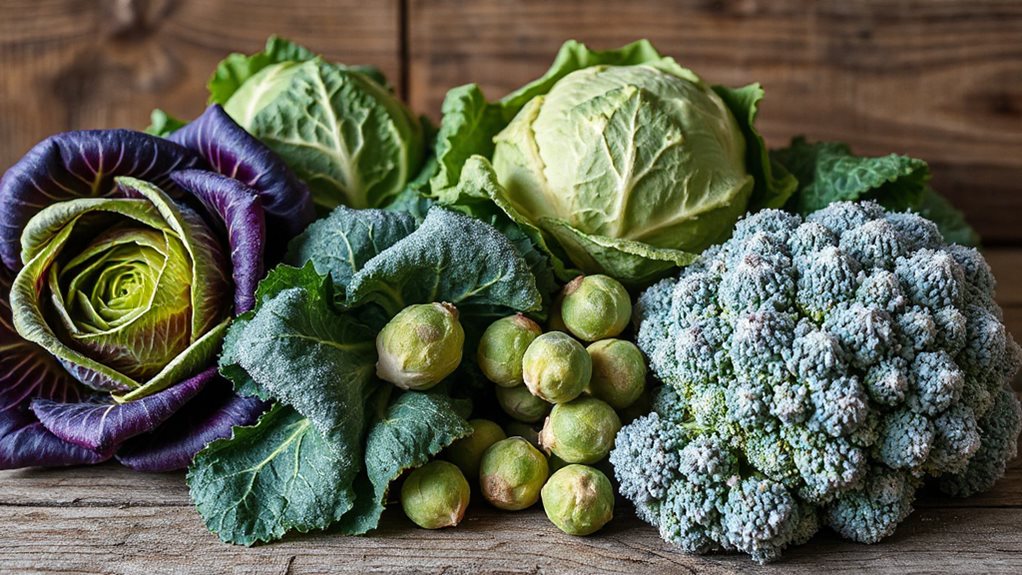
Though many gardeners assume cabbage demands mild weather, several cold-loving varieties actually thrive in chilly conditions, providing sturdy heads and sweeter flavor after frost.
You can grow ‘Deadon’ and ‘Ruby Perfection’ into winter, as they withstand temperatures down to 10°F and 18°F, respectively. Use row covers below 15°F, plant in late summer for fall harvest, and enjoy improved taste after frost. Zone 7b typically has average annual minimums between 5°F to 10°F, which helps explain why these varieties perform well there.
Cool-Season Crops to Direct-Seed Now
If you’re ready to get your hands in the soil, now’s the time to direct-seed a variety of cool-season crops that thrive in chilly spring conditions.
Sow beets, carrots, peas, radishes, and spinach directly, as they germinate well in cool soil and tolerate light frost.
Prepare a fine, weed-free seedbed, plant at proper depth—usually ⅛ to ½ inch—and keep soil evenly moist.
Thin seedlings early to guarantee strong growth, and space rows about a foot apart for easy care.
Soil temperature is important for germination, so aim for the ideal range for cool-season crops 50–65°F when planning sowing.
Frost Protection for Early Spring Vegetables

When chilly nights threaten your early spring vegetables, taking proactive steps to shield them from frost can make all the difference in establishing a successful harvest.
Use floating row covers or low tunnels to raise nighttime warmth and block snow. Secure frost cloth with soil or rocks, and pair with hoops to avoid plant contact. For extra sensitivity, try waxed paper cups or upside-down pots—simple, effective, and accessible. Water lightly a day or two before a hard freeze to help insulate roots and reduce frost damage to plants, especially when soil temperatures are above 40°F.
Final Note
You can successfully grow cool-season vegetables by choosing cold-tolerant varieties and planting them early. Root crops like radishes and carrots, along with leafy greens such as spinach and kale, thrive in cooler soil. Members of the cabbage family, including broccoli and cabbage, also establish well when sown early. Direct-seeding now gives crops a head start before summer heat. Using row covers or cold frames helps protect young plants from frost, ensuring stronger growth and earlier harvests.

Nathan McPhail is a garden and home DIY expert who writes practical, easy-to-follow advice for homeowners and gardeners. Through Yardique, he shares hands-on tips covering gardening, lawn care, landscaping, home improvement, repairs, tools, and outdoor living. His focus is on helping readers solve everyday household and yard problems with straightforward guidance, useful techniques, and practical solutions.