Pick a base of 30‑40 % organic material—coconut coir, peat moss, or well‑aged compost—to hold moisture and supply nutrients, then add 20‑25 % perlite or pumice for aeration and drainage, and finish with a small dose of limestone or garden lime to keep pH between 6.0 and 7.0. For succulents, use a sand‑soil‑perlite blend of roughly 2:2:1; aroids thrive on a 1:1:1 mix of coco‑coir, bark, and perlite with 30‑40 % inorganic filler; foliage plants do well with a 3:1:1 ratio of potting soil, peat, and perlite. Regularly test pH, adjust with lime or sulfur as needed, and repot if the mix becomes compacted, soggy, or salt‑laden—more details await if you keep exploring.
TLDR
- Use a balanced base of coco‑coir (or peat moss) mixed with perlite (20‑25 %) and optional vermiculite (≈12 %) for moisture retention, aeration, and drainage.
- Adjust pH to a 6.0–7.0 range by adding garden lime for alkalinity or elemental sulfur/coffee grounds for acidity, and test every few weeks.
- Tailor ratios to plant type: succulents (2 : 2 : 1 sand‑soil‑perlite), aroids (1 : 1 : 1 coco‑coir‑bark‑perlite), foliage plants (3 : 1 : 1 potting‑soil‑peat‑perlite).
- Incorporate two parts compost or worm castings for nutrients and beneficial microbes, plus a small dose of limestone for calcium.
- Monitor moisture; if the top inch stays soggy, allow drying before watering and repot with fresh, well‑draining mix to prevent root rot and fungal issues.
Choose the Right Base Mix for Your Indoor Potting Mix
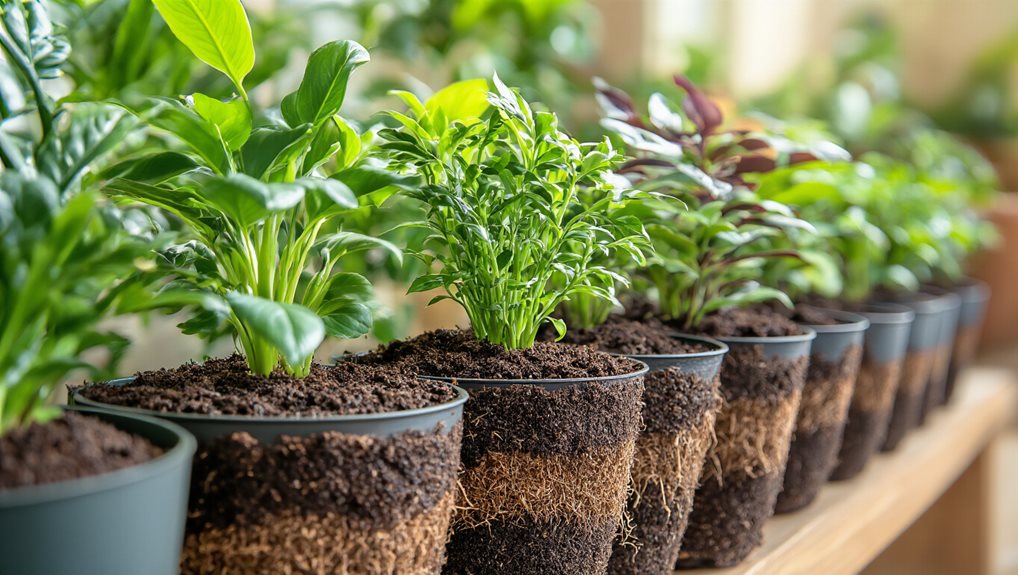
How do you pick a base that keeps indoor plants healthy while avoiding the pitfalls of compacted, water‑logged soil? Choose peat moss or coconut coir for moisture retention, then blend 20‑25% perlite to ensure aeration and drainage. For extra moisture balance, add 12.5% vermiculite, or substitute pumice or bark for lighter texture. These inert foundations create a supportive community for thriving houseplants. The Indoor Plant Soil Mix is specifically formulated to prevent fungus formation and promote expansive growth. Reflective surfaces can also help deter pests and improve light distribution in indoor plant spaces, supporting healthier growth and reducing stress on plants.
Select Essential Ingredients for a Balanced Indoor Potting Mix
What ingredients should you combine to create a balanced indoor potting mix that supports healthy growth and prevents common problems like compaction and poor drainage? Use equal parts coco‑coir and vermiculite for aeration and moisture retention, add two parts compost or worm castings for nutrients and microbes, include perlite or sand for drainage, and finish with a small dose of limestone or garden lime to keep pH in the 6.0‑7.0 range. A cautious approach to handling resources and safety is important when mixing media and near pets or wildlife, especially if you encounter an injured or dead animal nearby local council for proper removal and to ensure safe disposal practices.
Mix Ratios for Indoor Potting Mixes: Succulents, Aroids, and Foliage
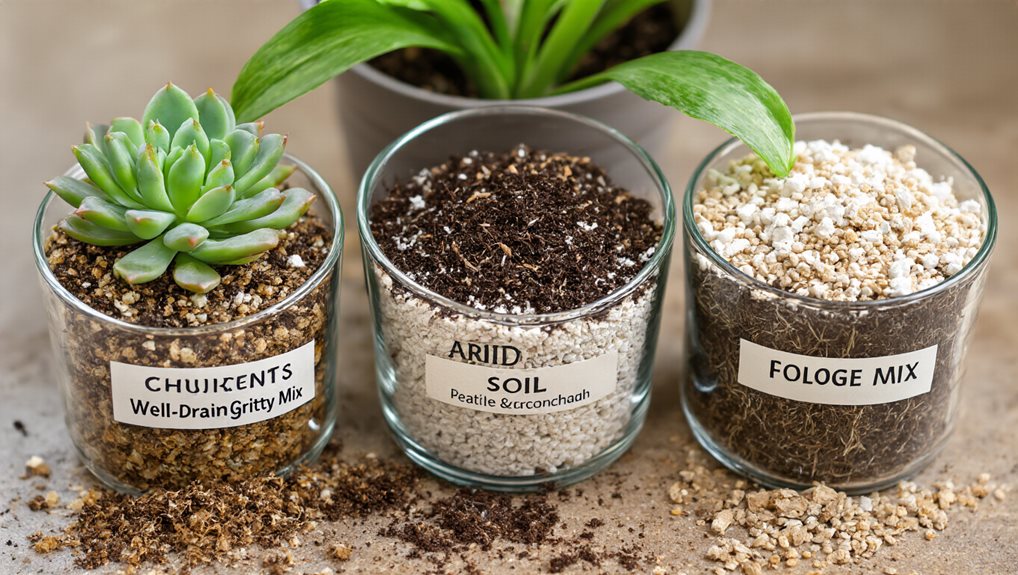
After selecting the right base ingredients, the next step is to tailor the ratios for specific plant groups, because succulents, aroids, and foliage plants each demand a distinct balance of aeration, drainage, and moisture retention.
For succulents, blend a 2:2:1 sand‑soil‑perlite mix or a 1:2 soil‑grit ratio to ensure rapid drainage. Proper drainage is crucial for preventing root rot in succulent varieties, especially in pots with limited airflow. drainage efficiency
Aroids thrive with a 1:1:1 coco‑coir‑bark‑perlite blend, adding bark or pumice to reach 30‑40% inorganic content.
For foliage, combine a 3:1:1 potting‑soil‑peat‑perlite mix or a 2:2:1 coco‑peat‑vermiculite‑pumice ratio, keeping organic and inorganic components roughly equal for balanced moisture.
Adjust pH and Add Nutrient Boosters for Healthy Plants
Where do you start when your indoor plants show signs of nutrient deficiency or stunted growth?
Test soil pH with a meter every few weeks, then adjust: sprinkle lime granules or apply a baking‑soda solution for alkaline soils, or mix sphagnum peat, coffee grounds, or elemental sulfur for acidic conditions, watering deeply to activate.
Add compost or rainwater to boost nutrients, making changes gradually to avoid shock.
Fix Common Soil Problems and Know When to Re‑mix
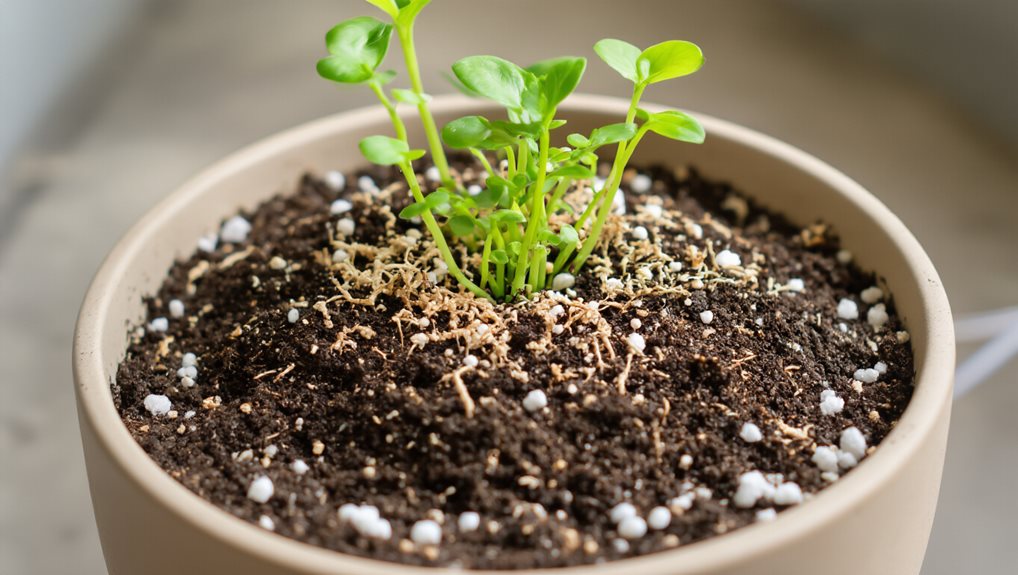
When your indoor plants show signs of nutrient deficiency or stunted growth, the next step is to address the underlying soil problems that often cause those symptoms. Check for overwatering by feeling the top inch; if it’s soggy, let it dry before watering again. Spot compacted soil, root rot, or salt crusts, and repot with fresh, well-draining mix whenever those issues persist. Proper ventilation and air circulation around your plants can also help prevent humidity buildup that can lead to root problems, especially in poorly ventilated spaces. root health and the overall structure of your soil will support healthier root development and nutrient uptake.
Final Note
By selecting a well‑balanced base, incorporating essential amendments, and tailoring ratios to each plant type, you’ll create a potting mix that supports strong root development, optimal moisture retention, and proper aeration. Adjusting pH and adding nutrient boosters further enhances growth, while regular monitoring lets you correct compaction or drainage issues before they become problematic. Follow these guidelines, and your indoor garden will thrive with minimal maintenance and maximum vigor.

Nathan McPhail is a garden and home DIY expert who writes practical, easy-to-follow advice for homeowners and gardeners. Through Yardique, he shares hands-on tips covering gardening, lawn care, landscaping, home improvement, repairs, tools, and outdoor living. His focus is on helping readers solve everyday household and yard problems with straightforward guidance, useful techniques, and practical solutions.