
Your garage feels humid because rain‑driven moisture, evaporating steam from wet cars, and infiltrating outdoor air combine with gaps in doors, poor drainage, and insufficient ventilation, pushing the relative humidity above the comfortable 30‑50 % range; cracks or unsealed walls let rain seep in, while blocked gutters and roof leaks add water that vaporizes, and porous items like firewood or cardboard absorb and slowly release moisture, so sealing gaps, adding a vapor barrier, and improving ventilation will lower humidity, and the next section explains how to do it.
TLDR
- Wet vehicles and stored firewood continuously evaporate moisture, raising indoor humidity.
- Poor drainage, roof leaks, and foundation cracks allow rainwater and ground vapor to enter the garage.
- Gaps around the garage door and unsealed walls create infiltration, bringing moist outdoor air inside.
- Inadequate insulation and ventilation cause condensation on cold surfaces, increasing moisture buildup.
- Lack of a vapor barrier under the slab permits ground vapor transmission, contributing to persistent humidity.
Identify Why Rainstorm Humidity Appears in Your Garage
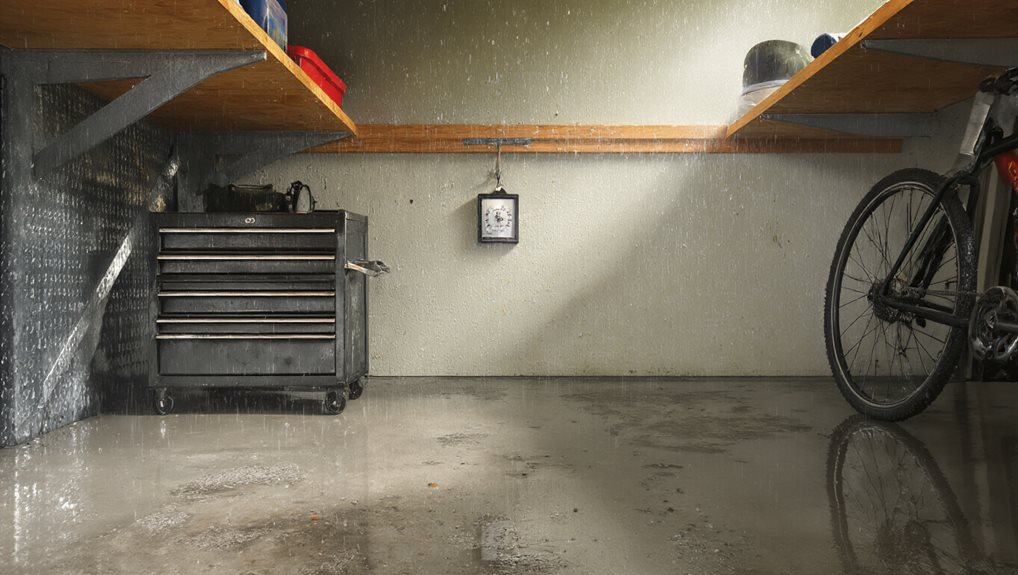
Why does rain‑storm humidity suddenly fill your garage? When wet vehicles sit inside, evaporating moisture, the air becomes saturated; melting wheel‑well ice and water droplets on cold surfaces add steam, while poor drainage directs runoff toward the foundation, and cracks or unsealed doors let rain seep in. Together, these sources raise humidity, making your garage feel damp and uncomfortable. Improper roof drainage can also introduce moisture into the space.
Explain How Outdoor Air Infiltration Adds 1.5‑3 ACH to Garage Humidity
You’ll notice that even a few millimeter‑wide gaps around your garage door can let a steady stream of outdoor air slip in, and that infiltration often translates to 1.5‑3 air changes per hour, directly raising the space’s humidity. Because the pressure difference between inside and outside—driven by wind, stack effect, or HVAC operation—pushes moist air through those unsealed joints, the garage’s ventilation rate climbs, overwhelming any dehumidification you might have. Sealing gaps and managing the ventilation rate are the quickest ways to keep the ACH low and the humidity under control. Those gaps let water in during rain as well, and stopping water leaking into a garage covers the seals, grading and drainage fixes.
Sealed Door Gaps
Ever wondered why a garage that appears sealed still feels damp?
Even with sealed door gaps, pressure differentials push outdoor air through seams and small cracks, adding roughly 1.5‑3 ACH of natural infiltration.
That airflow carries moisture, raising humidity levels despite your best sealing efforts.
Understanding this hidden exchange helps you target the real leakage paths and keep the garage comfortably dry.
Ventilation Rate Impact
How does the air that sneaks in through cracks and seams actually raise your garage’s humidity?
Outdoor infiltration adds 1.5‑3 ACH, meaning each hour a significant portion of indoor air is replaced by humid exterior air, which carries water vapor and pushes relative humidity toward mold‑prone levels.
Describe How Wet Cars and Firewood Raise Garage Humidity
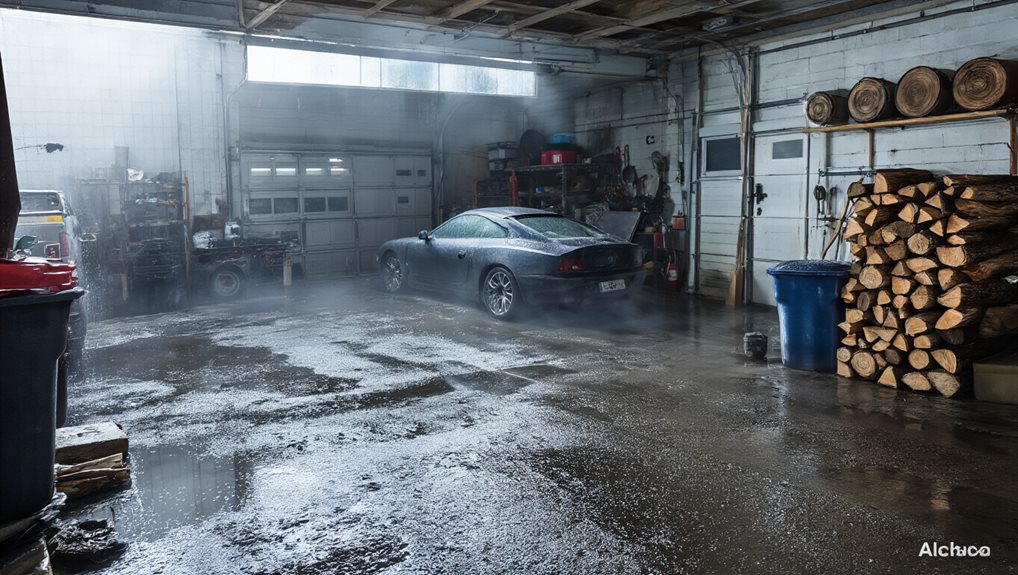
When a wet car rolls into the garage, the moisture clinging to its body, wheels, and interior immediately begins to evaporate, raising the indoor relative humidity toward saturation; this process is amplified if the vehicle still carries rainwater or melting snow, because the warm, moist air it releases meets the cooler garage surfaces and condenses, while insufficient ventilation traps the vapor and allows it to accumulate.
Simultaneously, damp firewood stored nearby absorbs ambient moisture and slowly releases it, adding vapor that further pushes humidity above 80%, especially when air circulation is stagnant, so you notice condensation on floors and a persistent, muggy atmosphere.
Show How Porous Items (Cardboard, Fabrics) Absorb and Release Garage Humidity
You’ll notice that cardboard panels soak up moisture from the garage air, forming a thin film of adsorbed water on their porous fibers, while fabrics such as old blankets or clothing can later release that trapped humidity when the ambient relative humidity drops, allowing the bound water to evaporate.
This bidirectional exchange helps regulate the overall moisture level, because the high porosity of these materials creates a network of capillary channels that transport vapor in and out.
Cardboard Absorbs Moisture
Ever notice how a cardboard box left in a damp garage seems to swell, curl, or lose its rigidity?
The wood fibers are hygroscopic, so they expand when ambient humidity rises, increasing thickness and softening the flutes; low humidity contracts fibers, causing warping.
Moisture absorption halves strength at 80 % RH, while coatings or controlled 40‑60 % RH storage can preserve rigidity and prevent deformation.
Fabrics Release Trapped Humidity
Some fabrics in your garage act like tiny sponges, pulling moisture from the air through capillary action and then releasing it back as vapor when conditions change. Natural fibers such as cotton and wool, with high moisture‑regain rates, wick water through fine yarn gaps, while synthetic layers repel it; this one‑way transport lets absorbed humidity evaporate from outer surfaces, stabilizing garage humidity.
Porous Materials Regulate Air Quality
Cardboard boxes and fabric panels act like tiny sponges in your garage because their porous structures provide a network of interconnected micro‑ and macropores that capture moisture from the air and later release it when conditions change.
Their hierarchical pores increase surface area, allowing adsorption in micro‑pores and liquid transport in larger channels; this flexible sorption balances humidity, reduces condensation, and helps maintain a steadier, healthier environment.
Detail How Poor Door Seals Let Humid Air Into Your Garage
How do poor door seals let humid air into your garage? Worn or cracked bottom seals create horizontal gaps that let moist outdoor air slip in, especially on uneven floors where T‑type and J‑type seals misalign.
Side seals that shrink, crack, or are misinstalled form vertical openings, while top seals that loosen or collect debris expose the garage to rain‑driven humidity.
Each degraded material—vinyl, rubber, brush, EPDM, or PVC—reduces tightness, increasing moisture exchange and raising indoor humidity.
Gasoline stored in plastic containers can also be affected by humidity and temperature changes, accelerating condensation and potential fuel quality degradation if stored improperly in a humid environment fuel stability.
Outline How Leaks, Roof Issues, and Floor Cracks Contribute to Garage Humidity
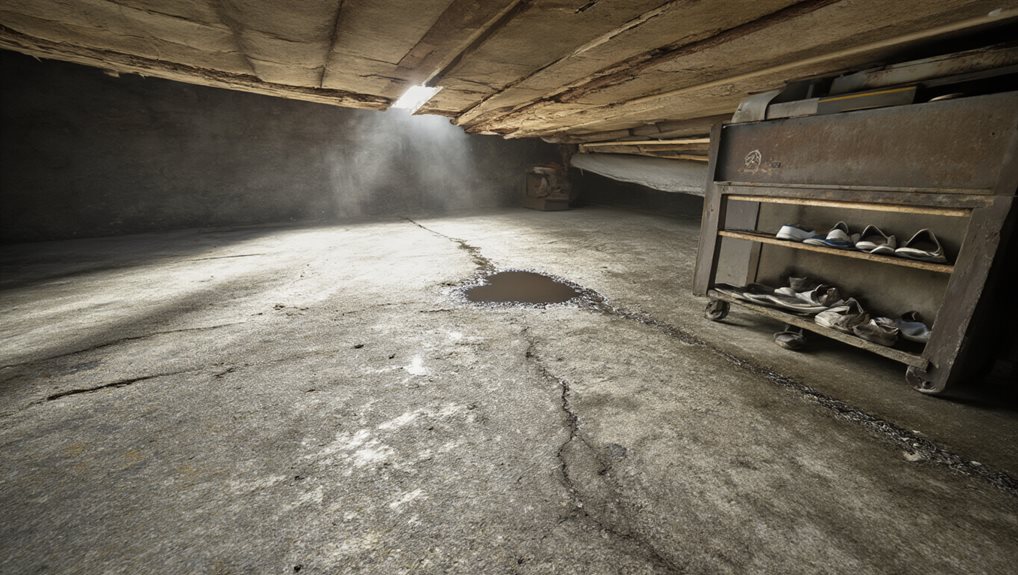
You’ll notice that roof leaks let rainwater and meltwater pour directly into the garage, raising the indoor humidity as the water evaporates and condenses on surfaces.
Meanwhile, cracks in the concrete floor act like tiny pipelines, allowing ground moisture and vapor to rise into the air, especially when there’s no vapor barrier beneath the slab.
Together, these entry points create a continuous cycle of moisture intrusion that keeps your garage damp and uncomfortable.
Roof Leaks Invite Moisture
Ever notice how a single drip from the roof can turn a dry garage into a damp, musty space? A cracked shingle or faulty flashing lets rain seep into joists, which act as conduits, spreading moisture throughout the garage.
Poor gutters or blocked drains pool water near the foundation, increasing infiltration.
Inadequate insulation and ventilation amplify temperature differentials, causing condensation on the cold roof deck, further raising humidity.
Floor Cracks Allow Ground Humidity
Even after fixing roof leaks, a garage can stay humid because the floor itself often serves as a conduit for ground moisture.
Cracks create pathways for groundwater, while moisture vapor transmission rises through concrete pores, and hydrostatic pressure pushes vapor upward via capillaries.
Shrinkage, freeze‑thaw cycles, and soil movement widen these fissures, allowing vapor intrusion, efflorescence, and dark damp spots to persist.
Summarize Dryer Vents, Unvented Appliances, and Hot Cars’ Effect on Garage Humidity
Dryer vents, unvented appliances, and hot cars each inject moisture and heat into a garage, creating a perfect storm for heightened humidity. Your dryer exhaust, especially when vented inside, releases steam and lint that condense on walls and stored items, while unvented dryers dump moist air directly, pushing relative humidity near saturation.
Hot cars radiate retained engine heat, raising air temperature and causing any infiltrating outdoor moisture to spike indoor humidity, often exceeding 70 %. Together, these sources overwhelm limited airflow, fostering condensation, corrosion, and mold risk. beta-carotene
Detect Condensation, Rust, Musty Odors, and Mold in Your Garage
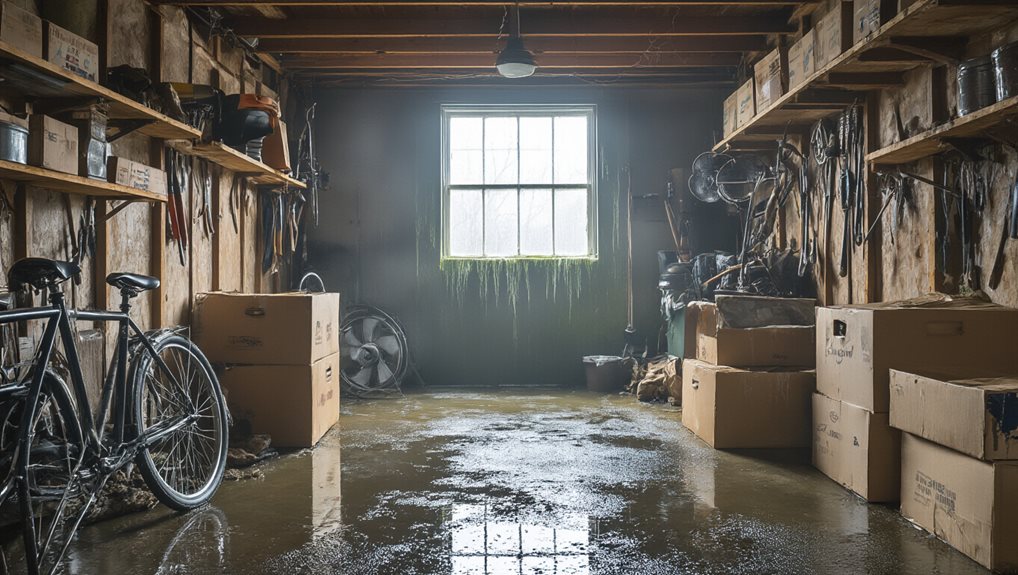
How can you tell if your garage’s humidity is turning into a problem? Look for water droplets on doors, windows, or metal tools, ice at thresholds, and persistent puddles—signs condensation exceeds 40 % in cold weather. Notice rust on hinges, tracks, or storage items, musty odors from stagnant moisture, and black or green spots on walls, ceilings, or insulation indicating mold growth.
Measure Garage Humidity With a Hygrometer and Set Safe Limits
Why bother measuring garage humidity at all? You’ll feel confident when a digital hygrometer, placed centrally away from sun and vents, gives real‑time percentages; record several daily readings, average them, and compare morning versus evening trends. Aim for a steady 30‑50 % range—50 % is a safe target—so you can spot rising levels, activate a dehumidifier, and keep rust, mold, and damage at bay. Regular monitoring supports early detection of moisture that can accelerate corrosion and material decay regrowth basics.
Explain Seasonal Temperature Swings That Increase Garage Humidity
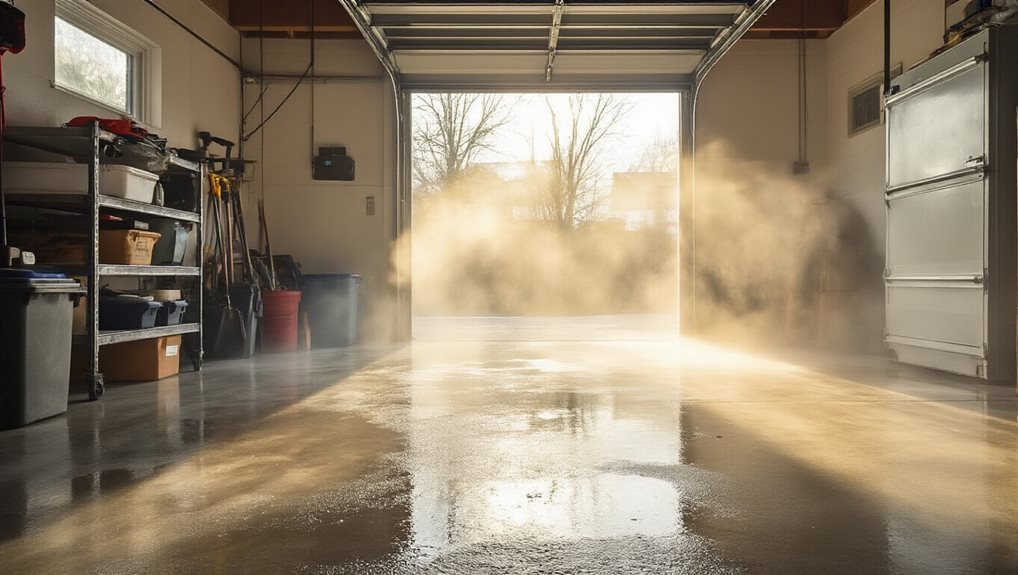
When temperatures shift from season to season, the garage’s internal climate can swing dramatically, and those swings often drive humidity spikes. This is especially true when tools and materials are stored without proper sealing or moisture barriers, allowing condensation to form on metal surfaces and wood substrates. seasonal temperature swings and the resulting expansion and contraction of building materials can create micro-cracks that trap moisture and promote mold growth.
Apply Simple Fixes: Seal Doors, Add Ventilation, Install Moisture Barriers
Ever noticed that a damp garage can feel like a slow‑leak despite the doors being shut? You can stop it by installing J‑, T‑, or U‑type bottom seals that hug the floor, applying weatherstripping on all four sides, and adding a threshold seal for a watertight base. Open the door periodically, fit wall vents or a small exhaust fan, and consider foam side‑block inserts to keep drafts out while allowing fresh air in. This combination of sealing, ventilation, and moisture barriers quickly restores a dry, comfortable space.
Implement Long‑Term Solutions: Upgrade Insulation and Install Moisture‑Control Systems
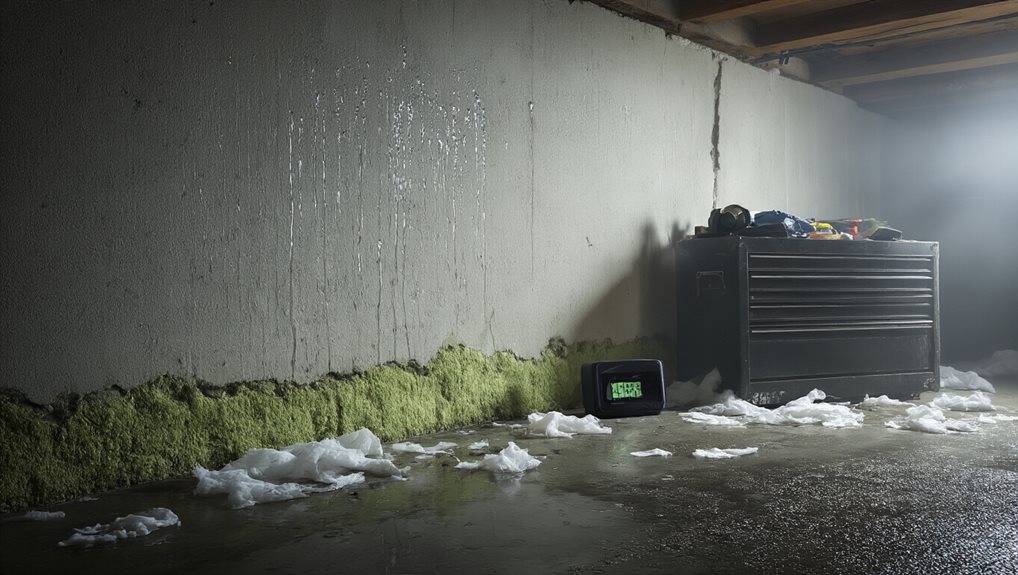
How can you keep a garage dry for the long haul? Upgrade to closed‑cell spray foam or polyiso rigid boards, then seal walls, ceiling, and door edges with foil‑tape to block humid air. Add reflective foil insulation to prevent condensation on metal surfaces, and integrate a vapor barrier appropriate for your climate. These long‑term measures create a continuous, moisture‑resistant envelope that maintains comfort and reduces mold risk.
Final Note
By sealing doors, improving ventilation, and managing moisture sources, you’ll keep garage humidity in check and protect stored items from mold and corrosion. Regularly monitor levels with a hygrometer, address seasonal temperature swings, and consider long‑term upgrades like insulation and moisture‑control systems. These practical steps reduce infiltration, limit condensation, and create a healthier, more stable environment for your garage year‑round.

Nathan McPhail is a garden and home DIY expert who writes practical, easy-to-follow advice for homeowners and gardeners. Through Yardique, he shares hands-on tips covering gardening, lawn care, landscaping, home improvement, repairs, tools, and outdoor living. His focus is on helping readers solve everyday household and yard problems with straightforward guidance, useful techniques, and practical solutions.