You’ll get better water efficiency and precise delivery with drip irrigation, especially on slopes or in gardens with varied plant needs. Drip systems use emitters to target roots directly, reducing runoff and evaporation, while soaker hoses often leak unevenly. Though pricier upfront, drip setups save water and require less maintenance over time. For flat, densely planted beds, soaker hoses work fine, but for long-term performance and control, drip is the smarter choice—especially if you value consistent results and resource savings.
TLDR
- Drip irrigation uses emitters to deliver precise water amounts directly to plant roots, minimizing waste.
- Soaker hoses seep water along their length, often leading to uneven distribution and overwatering at the start.
- Drip systems save 30–50% more water than sprinklers and are ideal for slopes and varied landscapes.
- Soaker hoses are easier and cheaper to install but may require frequent replacement and lack precision.
- Drip irrigation offers long-term savings through efficiency, durability, and lower maintenance despite higher upfront costs.
How Soaker Hoses and Drip Irrigation Work
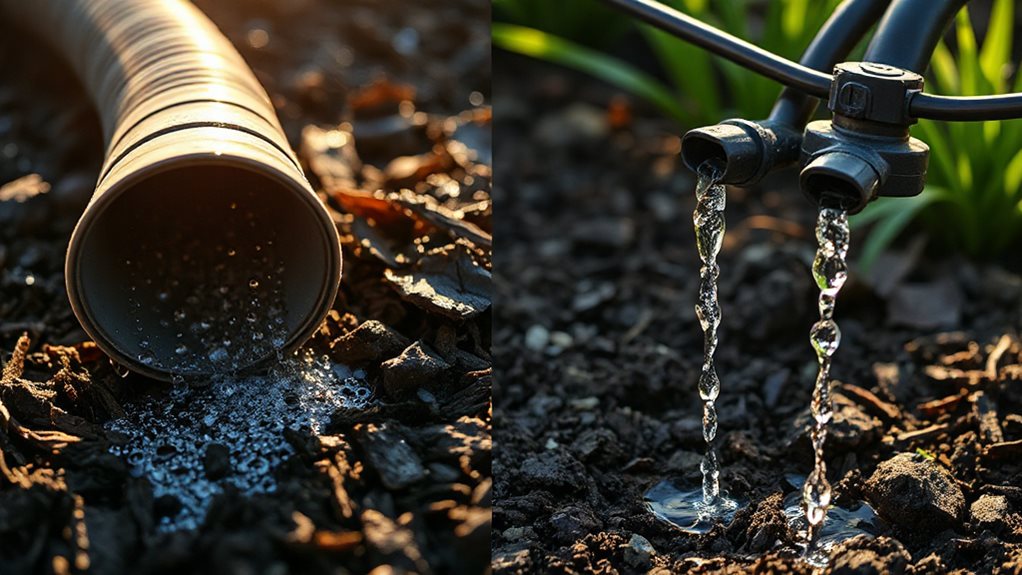
Imagine water moving quietly through your garden, supplying moisture exactly where plants need it most.
You lay soaker hoses along beds, their porous walls seeping water slowly, saturating soil to the roots. With drip irrigation, you run tubing with emitters that deliver precise amounts right to each plant’s base, minimizing waste and keeping foliage dry for healthier growth. Drip irrigation systems typically use 30–50% less water than traditional sprinkler methods, making them highly efficient for conserving resources. Proper watering and soil drainage are essential for tomato health and to get the most from either system.
Best Garden Types for Soaker vs Drip Systems
Now that you understand how soaker hoses and drip irrigation deliver water directly to plant roots, it’s time to weigh which system works best for your specific garden layout.
Use soaker hoses for flat rows, raised beds, or around trees, where even terrain or mulch helps.
Choose drip irrigation for slopes, flowerbeds, or raised beds needing precise watering—its adaptability guarantees every plant thrives.
Consider also using a soft rain wand for gentle watering of seedlings and hanging baskets when neither system is ideal.
Which System Saves More Water?
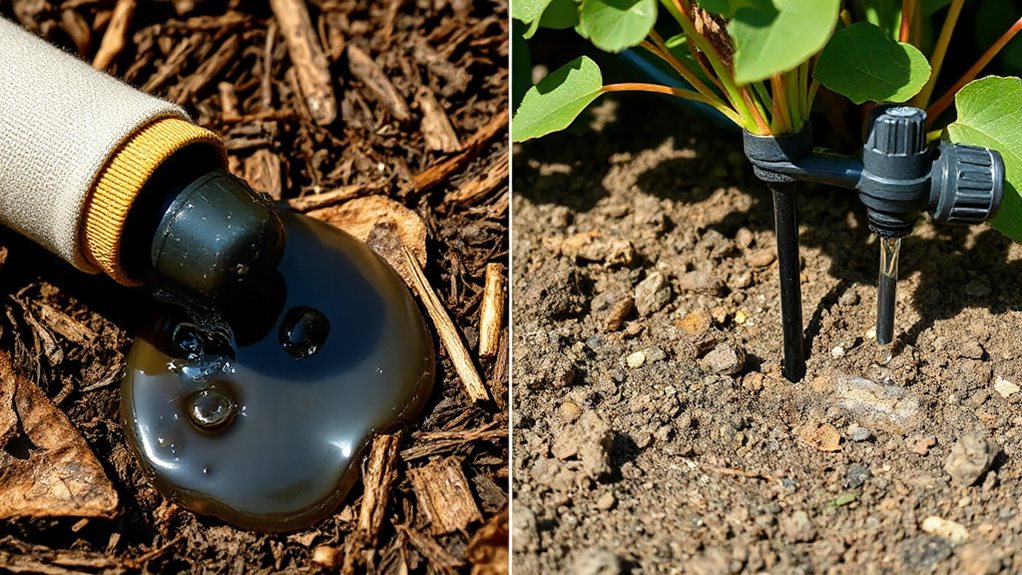
You’ll save more water with drip irrigation because it delivers moisture directly to plant roots, cutting down on evaporation and runoff.
Unlike soaker hoses, which leak water unevenly along their length, drip systems use precision emitters that maintain consistent flow and prevent waste.
Plus, with better flow control and less overspray, drip keeps water where it’s needed—right at the base of your plants.
Aerating your soil during the growing season can further improve water penetration and root development, especially for warm-season grasses like Bermuda grass.
Water Delivery Efficiency
When it comes to conserving water in your garden, drip irrigation outperforms soaker hoses by supplying water directly to plant roots with precision.
You’ll benefit from even distribution, reduced runoff, and minimal evaporation.
Drip systems maintain consistent pressure and moisture, especially on slopes or in rows, while soaker hoses often overwater at the start and underperform at the end, wasting resources and reducing overall efficiency.
Evaporation And Runoff
Because water conservation hinges on minimizing losses from evaporation and runoff, drip irrigation holds a clear advantage over soaker hoses.
You’ll reduce evaporation with drip’s targeted delivery, while soaker hoses lose more water through surface seepage and uneven leakage. Drip also prevents runoff by releasing water slowly, ensuring better soil absorption, especially on slopes.
Flow Control Precision
Drip irrigation takes precision to a higher level by supplying water exactly where it’s needed—right at the base of each plant—through individual emitters that you can adjust for specific watering needs.
You’ll enjoy consistent flow with pressure-compensating technology, even on slopes, while soaker hoses lose pressure over distance, leading to uneven watering and wasted resources.
How Easy Is Installation?
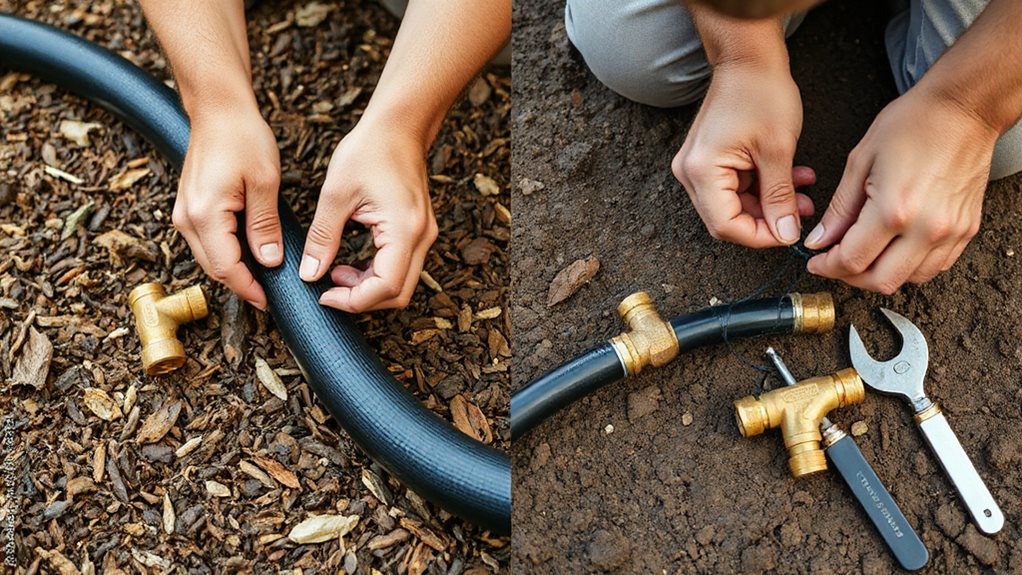
Getting started with soaker hose installation couldn’t be simpler—just connect it to your garden hose and unroll it along your planting beds after letting it warm in the sun to ease out kinks.
You’ll lay it directly on soil, secure with stakes, and cover with mulch.
Unlike drip systems, there’s no digging, complex emitter placement, or extra fittings—just straightforward setup anyone can handle.
Many gardeners also consider hose materials and fittings (like brass connectors) when choosing between systems to ensure durability and leak-free connections.
Cost and Maintenance: Soaker vs Drip Over Time
Now that you’ve got your irrigation system in place with minimal fuss, it’s worth considering how each option holds up financially and functionally over the seasons.
You’ll find drip costs more upfront but saves long-term through durability, efficiency, and lower water bills. Soaker hoses seem cheaper at first, yet frequent replacements, higher per-foot costs, and inefficiency add up, making them less economical and more demanding over time. Conduit is often required for outdoor wiring protection, so plan installations with conduit requirement in mind.
When to Choose Soaker Hose vs Drip Irrigation
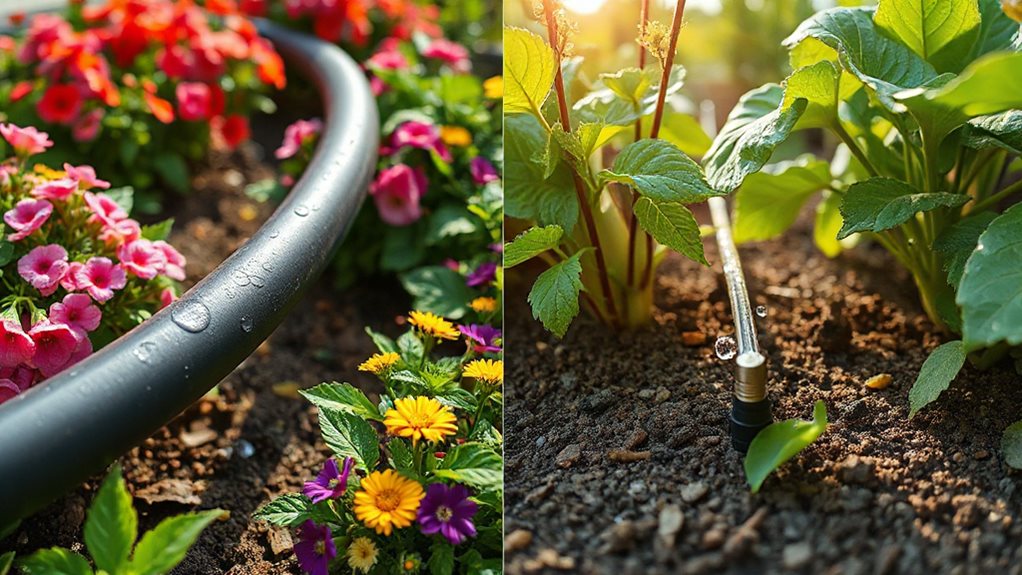
While both soaker hoses and drip irrigation deliver water directly to plant roots, your choice should depend on the specific conditions of your garden.
Choose soaker hoses for small, flat beds with closely spaced plants like carrots, where simplicity and low cost matter.
Opt for drip irrigation on slopes, in large gardens, or when precise watering for diverse crops is needed—you’ll gain better control, scalability, and performance across varied terrain and plant types.
Final Note
You’ll find both soaker hoses and drip irrigation effective, but your choice depends on your garden’s needs. Drip systems deliver precise water control, ideal for varied plant spacings and raised beds, while soaker hoses work well in tight rows or densely planted areas. Drip saves slightly more water and reduces runoff, but soaker hoses are simpler to install and maintain. For long-term efficiency and scalability, choose drip; for affordability and ease, go with soaker.

Nathan McPhail is a garden and home DIY expert who writes practical, easy-to-follow advice for homeowners and gardeners. Through Yardique, he shares hands-on tips covering gardening, lawn care, landscaping, home improvement, repairs, tools, and outdoor living. His focus is on helping readers solve everyday household and yard problems with straightforward guidance, useful techniques, and practical solutions.