Check humidity with a hygrometer and keep levels between 30–50% to prevent mold. Vent bathroom and kitchen fans outside to remove moisture at the source, and dry clothes outdoors or make sure your dryer vents outside. Take shorter, cooler showers to reduce steam, and use rock salt or baking soda in damp areas to absorb excess moisture. Place humidity-absorbing plants like peace lilies or snake plants in bathrooms. Seal leaks, cover crawl spaces with plastic, and pair passive methods with airflow for better results—there’s more to investigate on optimizing each strategy.

TLDR
- Use rock salt or baking soda in open containers to naturally absorb moisture in damp, enclosed spaces like closets or bathrooms.
- Vent bathrooms and kitchens directly outdoors to remove steam at the source and reduce indoor humidity.
- Dry clothes outside or use an outdoor-vented dryer to prevent excess moisture from entering your home.
- Take shorter, cooler showers and use efficient showerheads to minimize steam and bathroom humidity.
- Place humidity-absorbing plants like peace lilies or snake plants in bathrooms and kitchens to help regulate moisture levels.
Check Humidity Levels With a Hygrometer First
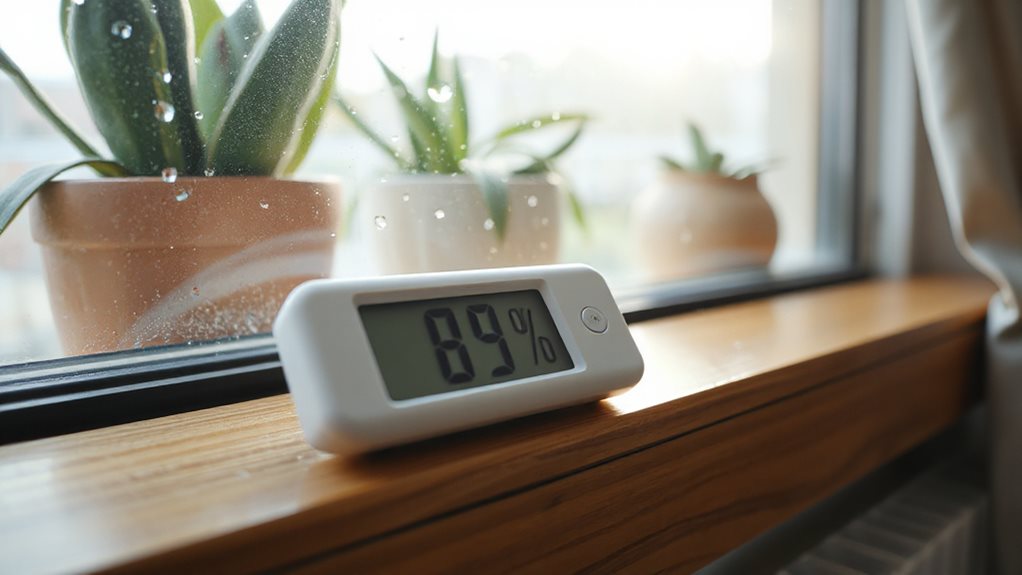
You’ll often find it helpful to start managing indoor humidity by first measuring it accurately with a hygrometer, since guessing based on comfort alone can lead to overlooked risks like mold or dry-air irritation.
Choose a digital model for ease and precision, place it at breathing height away from drafts or sunlight, and let it stabilize before reading.
Calibrate it yearly using a salt test to guarantee accuracy, so you can confidently maintain healthy, comfortable indoor air your household can rely on.
Different hygrometers are designed for specific environments, so ensure yours is suited for indoor use—especially if it has personalised engraving.
High indoor humidity above 60% relative humidity significantly raises the risk of mold growth and should prompt corrective action.
Vent Bathroom and Kitchen Fans Outside
To keep your home’s humidity in check, venting bathroom and kitchen fans directly to the outside is one of the most effective steps you can take.
You remove moisture at the source, reducing condensation, mold risk, and structural damage.
Unlike recirculating units, properly vented fans expel steam, odors, and contaminants, improving indoor air quality.
Make sure ducts run straight outside, are well-sealed, and avoid attics or crawl spaces for best results.
Professional testing is recommended after water damage or visible mold to determine if remediation is needed and to assess remaining indoor contaminants like mold >500/m³.
Dry Clothes Outside or Vent Your Dryer Outdoors

Hanging your laundry outside takes advantage of dry air, wind, and sunlight to remove moisture from clothes without adding humidity to your home.
If you use a dryer, make sure it’s vented directly outdoors—this keeps about 2.5 liters of water vapor per load from entering your indoor air and raising moisture levels.
Properly maintained, outdoor venting also prevents lint buildup, improves efficiency, and reduces the risk of mold and condensation inside your walls.
For homes without a suitable window, consider a through-the-wall unit or safe venting options to exhaust heat and moisture through a wall to the outdoors.
Clothes Drying Impact
Drying clothes indoors might seem harmless, but it quietly floods your home with excess moisture—up to 2 liters of water from just one load—significantly increasing indoor humidity levels.
This added dampness promotes mould growth, dust mites, and poor air quality, especially in airtight homes. Over time, it damages walls and fabrics, raises heating costs, and worsens respiratory issues—simple changes can make a healthier space for everyone.
Proper Dryer Venting
Letting your dryer vent indoors might seem convenient, but it’s a surefire way to trap moisture inside your home—moisture that belongs outside.
You’ll prevent humidity buildup, reduce mold risks, and improve air quality by venting outdoors. Proper dryer venting also enhances energy efficiency, lowers fire hazards, and keeps your laundry room comfortable, making your entire home healthier and safer with minimal effort.
Use Your AC to Remove Indoor Humidity
You can effectively reduce indoor humidity by leveraging your air conditioner’s built-in dehumidification capability, especially during warm, muggy conditions. As moist air passes over the cold evaporator coil, it condenses and drains outside, lowering indoor moisture.
Keep filters clean, make certain proper refrigerant levels, and run longer, moderate cycles for best results. Use “Dry” mode if available, and consider variable-speed systems or a separate dehumidifier for greater control. Regular maintenance, including cleaning filters, helps the system remove moisture efficiently.
Take Shorter, Cooler Showers to Reduce Steam

You can cut down on indoor humidity simply by shortening your showers, since even reducing your time by a couple of minutes slashes the amount of steam released—up to 2–3 pints of water vapor per shower.
Turning down the heat helps too, because cooler water produces less vapor and keeps bathroom air from holding excess moisture, which means less condensation on walls and mirrors.
Choosing a WaterSense-certified high-efficiency shower head can also maintain strong spray while using less water, helping reduce steam and save energy.
Shorter Showers, Less Steam
Frequently, a simple change in routine can make a meaningful difference in managing indoor humidity—taking shorter showers markedly reduces the amount of moisture released into your home.
A 3-minute shower releases about 0.2 kg of vapor, while a 15-minute one releases nearly 0.8 kg. Less steam means lower peak humidity, reduced condensation, and less re-evaporation from wet surfaces—cutting mold risk and easing strain on ventilation.
Cooler Water, Lower Humidity
By turning down the shower temperature, you’re not just saving energy—you’re also cutting the amount of steam that fuels indoor humidity.
Cooler water reduces evaporation, lowers latent heat release, and limits moisture-laden air from spreading.
This means less condensation, reduced mold risk, and more stable indoor humidity—keeping your home comfortable, healthy, and within the ideal 30–50% range without extra effort or equipment.
Quick Rinses, Reduced Moisture
Cutting your shower time packs a powerful punch when it comes to curbing indoor humidity. You release about 2.6 kg of vapour per hour while showering, so shortening your rinse cuts steam nearly in half.
A 3-minute shower produces just 0.2 kg of moisture, easing the load on ventilation. By opting for quick rinses, you help keep bathroom humidity below 65%, reducing condensation and mould risk.
Stop Moisture Leaks Around Windows and Floors

Moisture creeping in around windows and floors can quietly undermine your home’s comfort and structural integrity, so it’s essential to tackle these entry points head-on.
Inspect seals, caulk gaps, and check for rot or warping. Use silicone caulk outdoors, seal interior gaps, and maintain weatherstripping. Fix condensation by controlling humidity and improving airflow. Address floor moisture by ensuring proper drainage and using water-resistant underlayments.
Block Crawl Space Moisture With Plastic Barriers
You’ve sealed the gaps around windows and floors to keep moisture from sneaking into your home, but there’s another hidden source that can undo all that effort: the damp ground beneath your house.
Covering crawl space soil with a 10–20 mil polyethylene barrier blocks vapor, prevents mold and rot, and improves indoor air quality. Seal seams, extend it up walls, and secure edges to create a continuous, durable moisture defense under your home.
Use Rock Salt to Reduce Humidity in Damp Rooms

You can use rock salt to reduce humidity in damp rooms because it naturally absorbs moisture from the air, forming brine on the surface of the crystals.
Place the salt in a perforated container on a raised shelf so air circulates freely, and position several units around the space for even results.
While it won’t replace a mechanical dehumidifier, this low-cost, no-power method works well in small, enclosed areas like closets or bathrooms.
Rock Salt Benefits
A simple, natural solution for damp indoor spaces lies in a surprisingly common household item: rock salt. You can rely on its hygroscopic properties to pull moisture from the air, reducing humidity effectively. It’s affordable, accessible, and ideal for minor dampness in basements or bathrooms.
Placement Tips
In damp indoor environments, strategic placement of rock salt can substantially enhance its moisture-absorbing effectiveness, especially when positioned in high-risk areas like basements, crawlspaces, and bathrooms where humidity tends to accumulate.
Use small bowls or hanging bags in closets, windowsills, and musty corners to target dampness. Place multiple containers for better coverage, and pair with ventilation to maintain fresher, drier air you can feel good about.
Fight Dampness and Odors With Baking Soda
Tackle dampness and odors head-on with a simple, accessible solution: baking soda. You can place open containers in closets, cabinets, or shoe boxes to absorb moisture and neutralize musty smells.
It works slowly but effectively in enclosed spaces, reducing humidity and odors without harsh chemicals. Replace it when clumped, and consider reusing it for cleaning.
Grow Humidity-Absorbing Plants in Bathrooms and Kitchens

Turn your bathroom or kitchen into a natural humidity-control zone with moisture-munching houseplants that double as air purifiers.
Place peace lilies, spider plants, or snake plants near showers and sinks to absorb excess moisture and filter pollutants.
Hang ivy or ferns to catch steam, and group plants to enhance humidity control.
Keep them in bright, indirect light, avoid overwatering, and let them thrive while improving air quality.
Final Note
You’ve taken smart steps to manage indoor humidity naturally, and now your home can feel more comfortable and healthier. By monitoring levels with a hygrometer and using solutions like ventilation, moisture absorbers, and plants, you’re tackling dampness at the source. These methods work together to prevent mold, odors, and structural damage. Stay consistent, and you’ll maintain balanced humidity without relying heavily on machines.

Nathan McPhail is a garden and home DIY expert who writes practical, easy-to-follow advice for homeowners and gardeners. Through Yardique, he shares hands-on tips covering gardening, lawn care, landscaping, home improvement, repairs, tools, and outdoor living. His focus is on helping readers solve everyday household and yard problems with straightforward guidance, useful techniques, and practical solutions.