Plant lavender, rosemary, and lemongrass around entry points to use their strong scents as natural snake deterrents. Combine these with garlic, onions, and marigolds to enhance odor-based repellency. Use spiky plants like holly, cacti, or snake plant to block access and create physical barriers. While scientific support varies, proper placement and pairing with habitat management—like rodent control and debris removal—improve effectiveness. You’ll find even better results by understanding how each plant’s properties work together.

TLDR
- Lavender’s essential oils irritate snakes on contact, but work best when combined with other deterrents like marigolds.
- Rosemary’s strong scent and spiky texture discourage snakes, especially when planted along borders and entry points.
- Garlic and onions release sulfur compounds that repel snakes; sprays need weekly reapplication for effectiveness.
- Marigolds emit a pungent scent that may overwhelm snake senses, though scientific evidence remains limited.
- Daffodils deter snakes indirectly by repelling rodents and through their toxic, unpalatable bulbs and foliage.
Lavender: A Fragrant Barrier Against Snakes
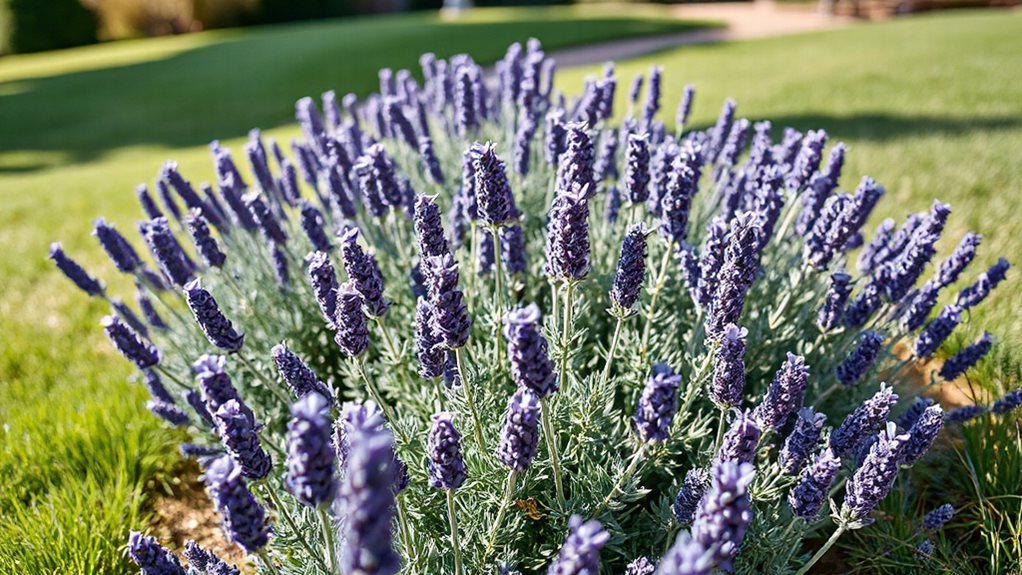
You’ll often find that lavender acts as a natural deterrent to snakes, thanks to its potent essential oils and strong aromatic profile.
When sprayed directly, lavender oil triggers irritant responses, prompting retreat.
Though responses vary, combining lavender with marigolds enhances coverage, offering a safe, fragrant barrier that supports a snake-free yard you can feel good about.
Adding plants like lavender near enclosures can also help reduce access points for predators and pests, especially when combined with secure chicken housing practices.
Effectiveness is limited to direct contact, as studies show essential oils like lavender only repel snakes when applied topically and not as a perimeter barrier.
Rosemary: Hardy Herb for Natural Snake Deterrence
You can use rosemary’s strong scent and spiky texture to help discourage snakes from entering your garden, especially near entry points or hiding spots like rock piles.
Plant it along borders or perimeter edges where its year-round, evergreen growth keeps the fragrance present, and consider pairing it with essential oil applications for added effect in warm climates.
Just be cautious in cooler zones—rosemary struggles in freezing temperatures, so grow it in containers you can move indoors during winter.
Rosemary also resists decay when stored properly, typically lasting up to two weeks refrigerated if wrapped in a wet paper towel and kept in an airtight container proper refrigeration.
Rosemary’s Snake-Repelling Properties
While its aromatic foliage is prized in kitchens, rosemary also plays a powerful role in natural snake deterrence, thanks to scientifically supported repellent properties.
You can rely on its essential oil to irritate brown treesnakes, triggering erratic movement and escape behaviors. Aerosolized or planted in your yard, rosemary’s strong scent and active compounds effectively repel snakes, offering a safe, practical solution when used alongside other odor-emitting plants.
Ideal Planting Locations
When positioning rosemary to maximize its snake-deterrent benefits, focus on strategic locations where snakes are most likely to enter or hide, such as garden edges, entry points, and high-risk areas.
Plant along perimeters, near doors, and around woodpiles using well-draining soil, gravel, and open spacing to enhance visibility and reduce moisture, making your yard less inviting to snakes while creating a fragrant, natural barrier you can rely on.
Care in Cold Climates
Though rosemary thrives as a hardy perennial in warmer regions, it can still serve as an effective snake-deterrent in colder climates with proper care and preparation.
Grow it in containers to move indoors when temps drop, or choose cold-hardy types like ‘Arp’ or ‘Hill Hardy’.
Mulch well, avoid wet soil, and keep foliage dense—this deters snakes while ensuring your rosemary survives winter strong.
Lemongrass and the Power of Citronella
Use the natural power of lemongrass to create a snake-resistant environment, starting with its potent essential oils and distinctive citrus scent.
You’ll find geranyl acetate deters snakes by irritating their skin and overwhelming their senses.
Pair lemongrass with citronella to strengthen your yard’s defense, as both plants emit odors snakes avoid.
Together, they form a safe, effective, and natural barrier.
Deer may still be attracted to nearby plants like sweet potatoes, so consider protective measures such as fencing to protect your garden.
Basil, Thyme, and Other Aromatic Herbs Snakes Avoid
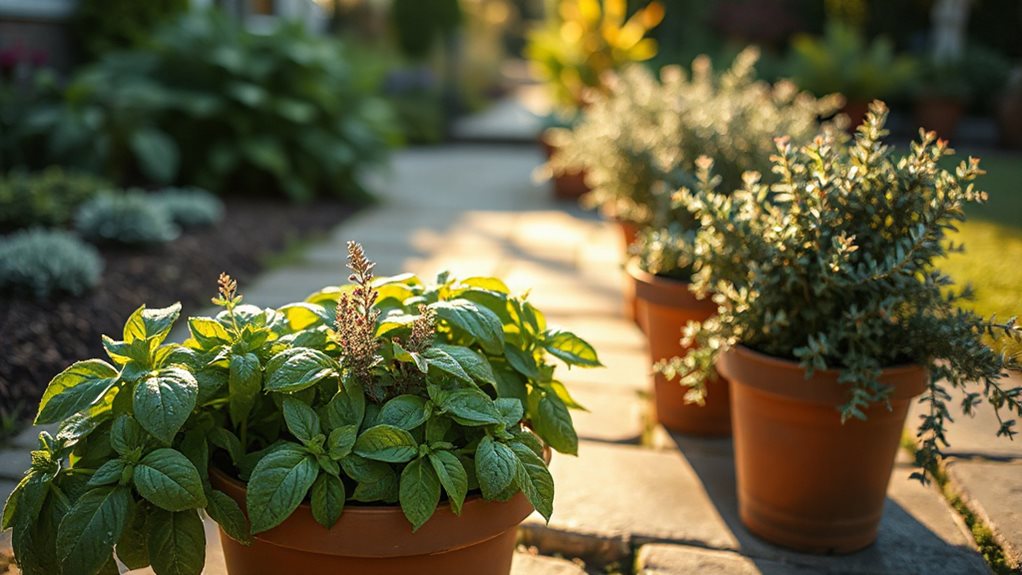
You’ve already seen how lemongrass and citronella use their strong citrus tones to discourage snakes, but your garden holds even more aromatic allies.
Plant basil, especially clove or tulsi, for its potent scent that overwhelms snake senses. Thyme and rosemary release fragrant oils, while sage adds a pungent barrier.
Use dried herbs as mulch near entrances, creating a welcoming space for you—and an unwelcoming one for snakes. Tropical sun-loving plants like bougainvillea also add color and can be grown in containers or beds in full sun.
Garlic and Onion: Pungent Bulbs That Repel Serpents
You can use garlic’s strong scent to deter snakes by placing chopped cloves near entry points or spraying a water-based solution along perimeter edges.
Onions, rich in sulfonic acids, create natural repellent barriers when planted or crushed around your yard, leveraging their pungent odor to discourage snake activity.
For lasting results, reapply garlic sprays weekly or after rain, since sulfur compounds fade over time but remain safe for pets and plants.
Consider also installing a French drain or other drainage solution to reduce standing water that attracts prey and, in turn, snakes.
Garlic’s Strong Scent Deters Snakes
Often, gardeners turn to garlic as a natural way to discourage snakes from entering their yards, and for good reason—its strong scent, driven by sulfonic acids in the plant’s chemical makeup, creates an environment snakes actively avoid.
You can chop cloves or mix crushed garlic with water to spray along borders, reapplying often, especially after rain, to maintain a consistent, effective barrier they won’t want to cross.
Onions Create Natural Repellent Barriers
Consistently relied upon in natural pest management, onions employ their pungent sulfur-based compounds to create effective, long-lasting barriers against snakes.
You can plant bulbs around borders or scatter chopped onions near entry points, combining them with garlic or cayenne for stronger results.
The scent disrupts snake guidance, persisting in soil and air, while proper reapplication after rain guarantees continuous protection, giving you peace of mind.
Allium Varieties for Effective Garden Protection
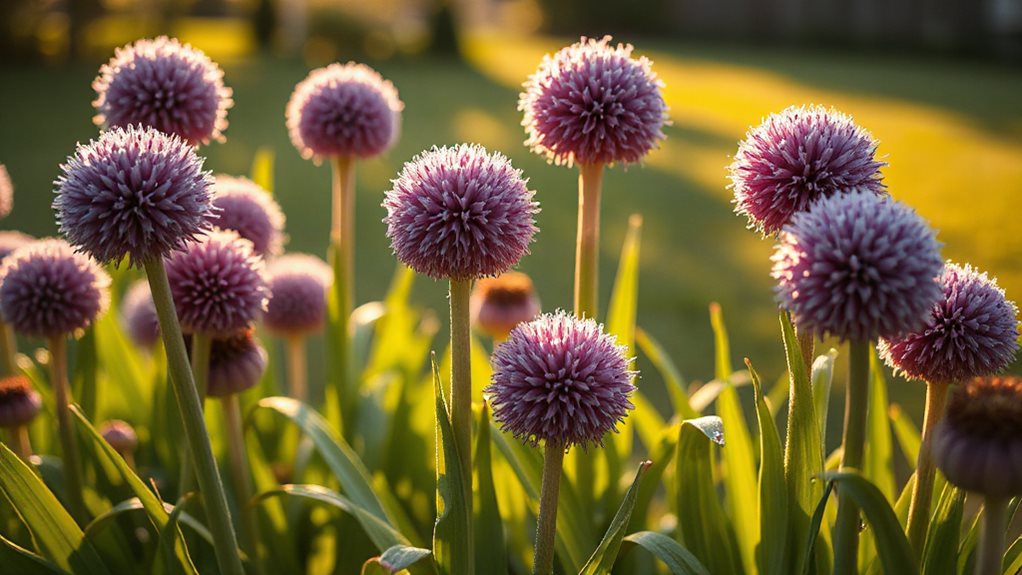
Use the natural power of alliums to create a snake-deterrent barrier that’s both functional and visually appealing.
You can plant ornamental onions, garlic, or society garlic along borders, where their sulfur compounds and strong scents repel snakes effectively.
These hardy, low-maintenance perennials thrive in zones 4–9, double as pollinator attractors, and blend seamlessly into your garden, offering protection while enhancing beauty.
Marigolds: Colorful Flowers That Snakes Dislike
Tap into the lively power of marigolds to add both color and snake-deterrent properties to your garden. Their strong, spicy scent overwhelms snakes’ Jacobson’s organs, causing avoidance, while bitter tastes and neural overload discourage lingering.
Though scientific evidence on broad pest control is limited, marigolds’ root exudates combat nematodes when planted early. Use them along borders to help deter snakes and support healthier soil naturally.
Geraniums and Their Snake-Repelling Fragrance
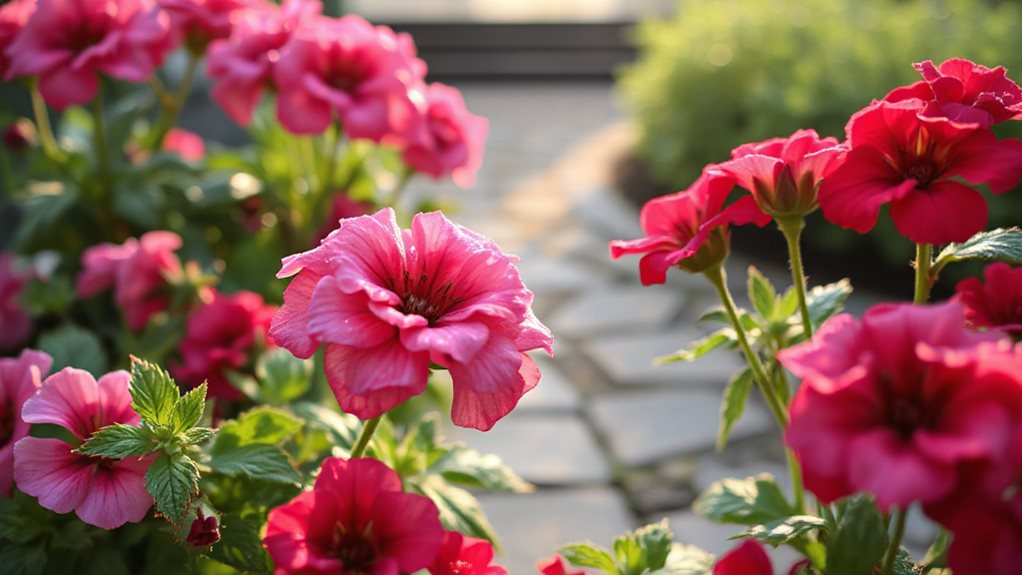
You might plant geraniums for their bright blooms and aromatic foliage, which emits strong scents that some believe deter snakes. The essential oils in these *Pelargonium* species release volatile compounds that can overwhelm a snake’s sensitive Jacobson’s organ, potentially disrupting its ability to orient and hunt.
However, while popular sources claim geraniums repel snakes, scientific research—like studies from the African Snakebite Institute—shows little evidence to support this, suggesting other factors may explain reduced snake presence.
Fragrant Properties Deter Snakes
While the scent of geraniums is often praised in gardening circles for its fresh, citrus-like aroma, you might be surprised to learn that its reputation as a snake repellent doesn’t hold up under scientific scrutiny.
Laboratory tests show initial promise, but field studies reveal no real-world effectiveness. Volatile compounds fade quickly outdoors, and controlled trials confirm geraniums don’t deter snakes. Relying on fragrance alone won’t protect your yard.
Scented Varieties Repel Effectively
Although some gardeners swear by the scent of geraniums to keep snakes away, scientific evidence consistently shows these plants don’t deliver on that promise.
Field and lab studies across South Africa found no significant repulsion, with geraniums performing no better than water.
While geraniol in essential oils may briefly delay snake movement, it doesn’t guarantee avoidance, and rapid chemical decay limits real-world effectiveness, making scented geraniums unreliable for snake deterrence.
Daffodils and Narcissus: Bulbs That Discourage Snake Habitation
Plant daffodils and narcissus to create a natural barrier that makes your yard less inviting to snakes by targeting their food supply. Their toxic bulbs and leaves repel rodents, reducing snake prey, while strong scents deter unwanted creatures.
Plant them in sunny areas, zones 3–8, near entry points or borders. Though not foolproof, they help—just remember to keep pets away and combine with other habitat controls for best results.
Snake Plant and Other Spiky Natural Defenses
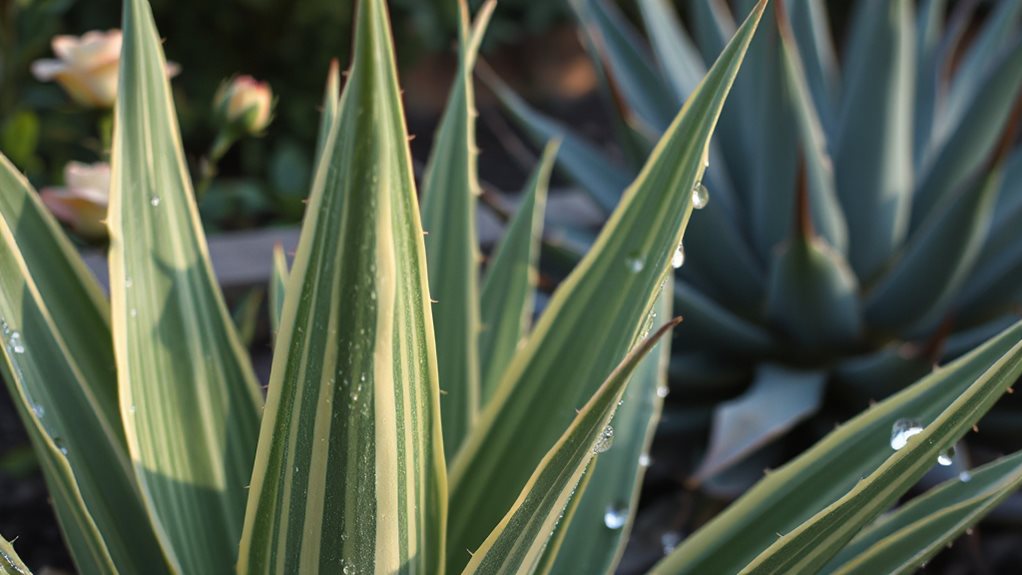
Snake plants offer a practical, low-maintenance option for discouraging snakes from entering your garden or home perimeter. Their sharp, upright leaves create a physical barrier, while their mild odor and toxicity may deter snakes.
Though scientific proof is limited, many gardeners find them effective when placed near entry points. Combine them with other aromatic plants to strengthen your natural defense strategy.
Holly, Cacti, and Thorny Plants as Physical Barriers
Create a natural defense against snakes by incorporating holly, cacti, and other thorny plants into your grounds design. You can use their spiky leaves and dense thorns to deter snake movement, as these textures cause discomfort and block access.
Trim monthly and plant densely along edges, but remember to remove debris and control rodents—barriers alone aren’t enough for long-term prevention.
Indian Snakeroot, Tobacco, and Scent-Based Deterrents
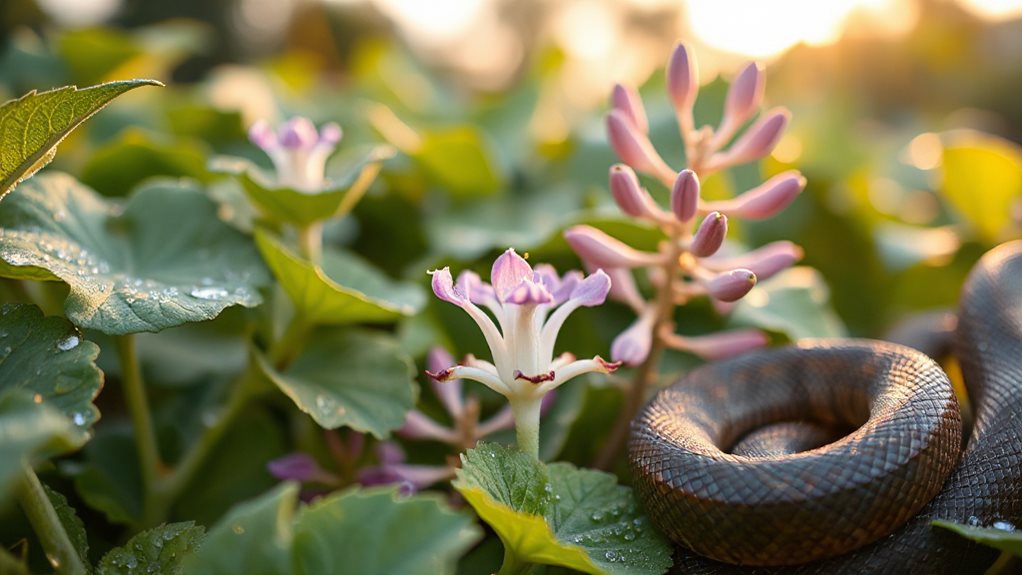
While you’re exploring natural ways to keep snakes away, consider leveraging the power of scent—some plants and aromatics emit odors that snakes instinctively avoid.
You can plant Indian snakeroot, which repels snakes with its strong odor and has historical use across South Asia.
Try garlic or clove basil, or use sprays with cinnamon, eucalyptus, or clove oil for effective, natural protection.
Final Note
You can effectively reduce snake presence in your yard by planting natural deterrents. Species like lavender, lemongrass, and garlic emit strong scents snakes avoid, while spiky plants such as holly and cacti create physical barriers. Combining aromatic herbs with thorny ground covers disrupts hiding spots and discourages habitation. These plants offer a practical, low-maintenance solution that aligns with ecological landscaping principles, ensuring your outdoor space remains both attractive and less inviting to serpents.

Nathan McPhail is a garden and home DIY expert who writes practical, easy-to-follow advice for homeowners and gardeners. Through Yardique, he shares hands-on tips covering gardening, lawn care, landscaping, home improvement, repairs, tools, and outdoor living. His focus is on helping readers solve everyday household and yard problems with straightforward guidance, useful techniques, and practical solutions.