
You build hugelkultur beds by layering decaying wood, organic matter, and soil to create self-sustaining mounds that retain water, reduce watering needs, and enhance fertility over time. They improve soil structure, support strong root growth, and feed plants for up to 20 years with minimal maintenance. While they require careful construction to avoid nitrogen tie-up and settling issues, their long-term benefits often outweigh the initial effort—especially in dry or poor soils. Smart design and material choices make them a resilient choice for low-input gardening. There’s more to learn about getting the most from your mound.
TLDR
- Hugelkultur beds improve water retention by using decaying wood as a sponge, reducing irrigation needs even in droughts.
- They enhance soil fertility over time as wood decomposes, releasing nutrients and supporting beneficial microbial life for up to 20 years.
- Initial nitrogen immobilization can limit plant growth in year one, requiring nitrogen-rich amendments to offset nutrient tie-up.
- The raised design warms faster in spring, extending growing seasons and supporting heat-loving crops on sun-facing slopes.
- Improper construction—like inadequate soil depth or using wood chips—can lead to poor results, demanding careful layering and maintenance.
What Is Hugelkultur and How Does It Work?
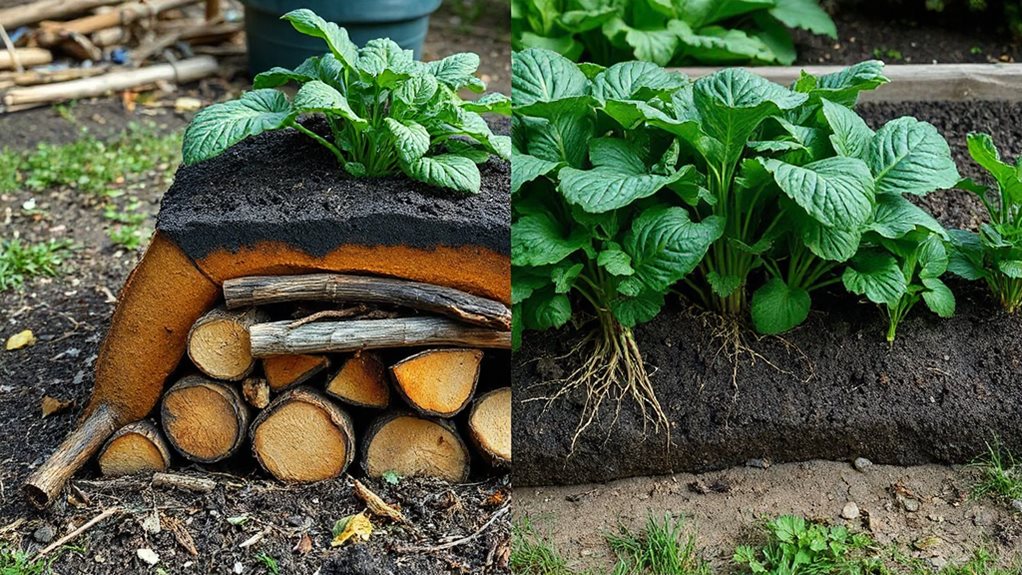
Think of hugelkultur as nature’s way of building fertile soil—only you’re helping it along.
You layer decaying wood, compostable biomass, and topsoil to create raised mounds that mimic forest nutrient cycles.
Over time, the wood breaks down, releasing nutrients, improving soil structure, and enhancing microbial activity—all without tilling.
It’s a self-sustaining system that feeds your plants for years, reduces waste, and conserves water, making your garden more resilient and productive.
This technique originated in Germany and has been refined by permaculture enthusiasts worldwide, with benefits that include long-term moisture retention thanks to the wood’s ability to act like a sponge—improved moisture retention.
Regular maintenance, such as removing packed debris and applying protective coatings to nearby structures, helps prevent corrosion and extends the lifespan of your beds.
Why Hugelkultur Beats Traditional Raised Beds
You’re already familiar with how hugelkultur employs natural decay to build fertile, self-sustaining growing environments—now consider how this method outperforms traditional raised beds in key ways.
You get superior soil fertility, enhanced water retention, and long-term sustainability, all while using free organic waste.
With less need for watering, amendments, or maintenance, hugelkultur offers a smarter, more resilient gardening solution that keeps improving over time.
Many gardeners also pair hugelkultur with durable planters like galvanized raised beds to combine the benefits of both systems.
Use Wood to Retain Water in Dry Climates
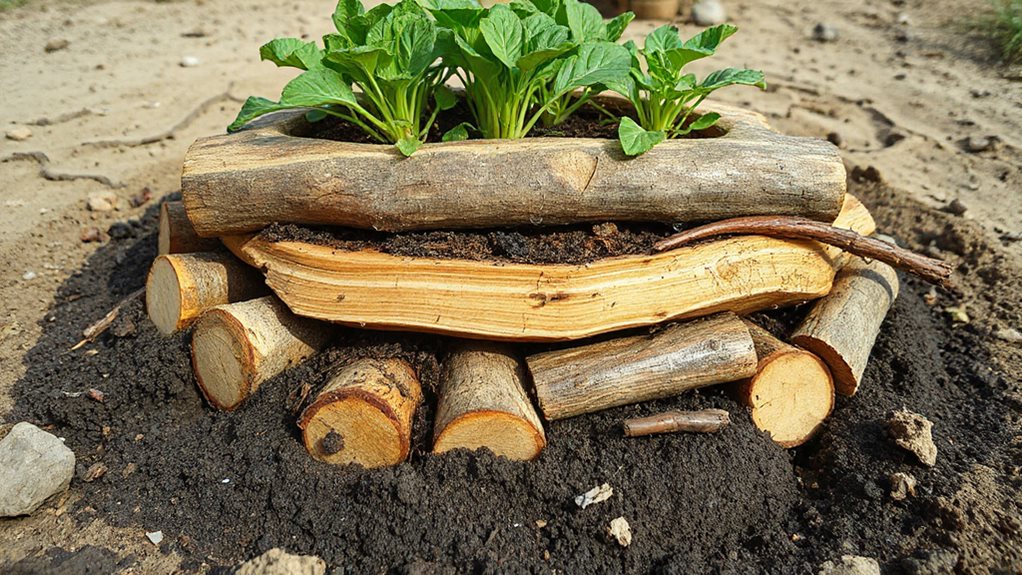
You can count on wood to hold water in dry climates by acting like a sponge that soaks up rain and slowly releases it during droughts.
As the buried logs break down, they create air pockets and feed fungal networks that move moisture directly to your plants’ roots, cutting back on irrigation.
This smart design stores water long-term, especially when you use hardwoods that last 20 years or more.
A well-timed introduction to a herd should be gradual to reduce stress and help establish the pecking order among animals.
Water Storage Mechanism
Beneath the surface of a hügelkultur bed, decaying wood acts like a sponge, absorbing rainwater during wet periods and gradually releasing it during dry spells.
You’ll find micro pores and fungal networks in rotting logs retain moisture, while buried hardwoods store water deeply.
This system reduces runoff, wicks moisture to roots, and maintains consistent hydration, functioning like a living water battery for your plants.
Drought-Resistant Design
Hügelkultur beds use decaying wood to create a resilient, drought-resistant growing environment, especially beneficial in dry climates where water conservation is paramount.
You’ll rely on buried logs and branches to store moisture like sponges, reducing irrigation needs.
Feed Your Soil for 20 Years: No Fertilizer Needed
You’re building a long-term nutrient reservoir every time you stack logs and organic matter in your hugelkultur bed, as the slow decay process feeds the soil for up to 20 years.
This natural fertility cycle relies on fungi and microbes to break down wood, steadily releasing nutrients without synthetic fertilizers.
Thanks to nitrogen-fixing plants and self-composting layers, your bed becomes a self-sustaining ecosystem that thrives with minimal input.
These beds also support drought-tolerant groundcovers like Gold moss sedum that help retain moisture and protect soil while adding color.
Long-Term Nutrient Reservoir
While most garden beds rely on regular fertilizing to maintain productivity, a well-built hugelkultur bed acts as a long-term nutrient reservoir that feeds your soil for decades.
You’ll benefit from slow wood decomposition, especially with hardwoods, which release nutrients steadily. In cooler climates, this process extends even longer, reducing or eliminating the need for added fertilizers while improving soil structure, aeration, and moisture retention over time.
Natural Fertility Cycle
Once established, your raised bed begins a self-sustaining fertility cycle that feeds the soil for up to two decades without synthetic fertilizers.
You’ll rely on microbes, fungi, and worms to break down wood and organic matter, gradually releasing nutrients.
Over 1–2 years, nitrogen immobilization fades, and fertility rises.
With hardwoods and cover crops, your bed builds rich, aerated soil, ensuring long-term productivity and resilience—naturally.
Wood Decay Benefits
Feeding your soil for decades starts with the slow, steady breakdown of wood buried beneath the surface.
You’ll benefit from consistent nutrients as hardwoods decompose, reducing leaching and recycling minerals back to your plants.
Over time, decaying wood improves soil structure, retains moisture, and supports fungal networks that enhance fertility.
With minimal effort, your hugelkultur bed becomes a self-sustaining ecosystem, eliminating the need for added fertilizer.
Fix Compacted or Poor Soil With Hugelkultur
You’ll often find that compacted or poor soils resist traditional gardening efforts, but hugelkultur tackles these challenges head-on by rebuilding soil structure from the ground up.
You’re using logs and woody debris to create air pockets, improve drainage, and prevent compaction, all while enhancing aeration and root development.
Over time, decay enhances texture in clay or sandy soils, mimicking natural forest processes so your garden thrives where it once struggled.
Many wet-tolerant conifers such as bald cypress and other species can thrive in moist conditions that hugelkultur beds help maintain.
Keep Soil Warm (And Grow Longer)
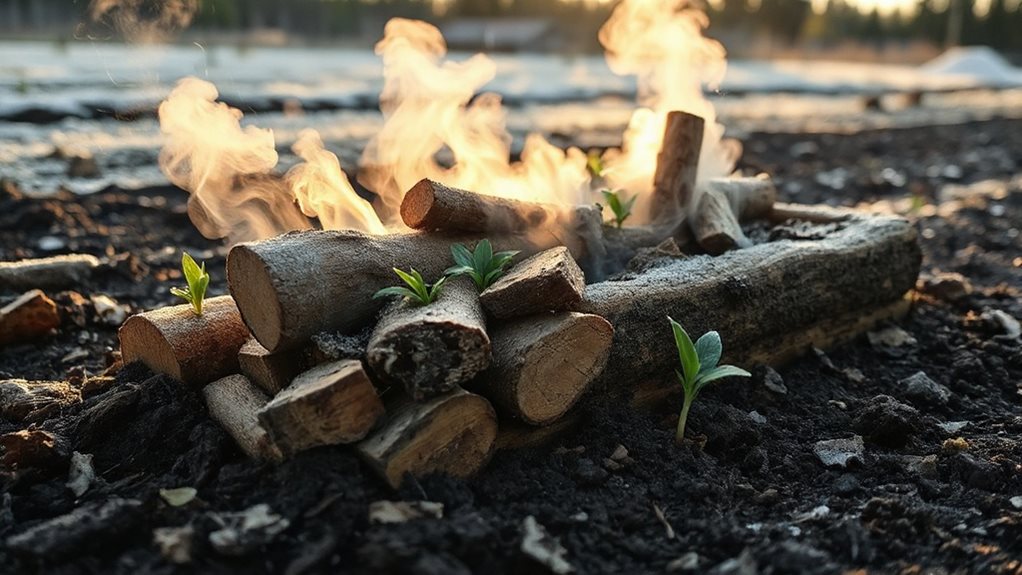
Because decomposition generates steady warmth from within, hugelkultur beds act like natural heating systems for your garden, helping soil temperatures rise earlier in spring and stay raised later into fall.
You benefit from extended growing seasons, as decaying wood releases heat, stabilizing root zones.
This thermal mass effect reduces temperature swings, so your plants thrive longer, even in cooler climates, with less frost stress and improved warmth retention.
The Year-One Problem: Nitrogen Tie-Up Explained
Decomposing wood at the heart of your hugelkultur bed kicks off a complex biological process that can temporarily limit nitrogen availability for plants. Microbes pull nitrogen into their biomass, especially in year one, tying it up as they break down carbon-rich wood. Fungi dominate undisturbed beds, localizing this effect.
Though leafy crops may stall initially, layering greens, using nitrogen-rich topdressings, and covering with compost or topsoil minimize impact, ensuring strong, healthy growth.
Best Crops to Grow on Hugelkultur Mounds
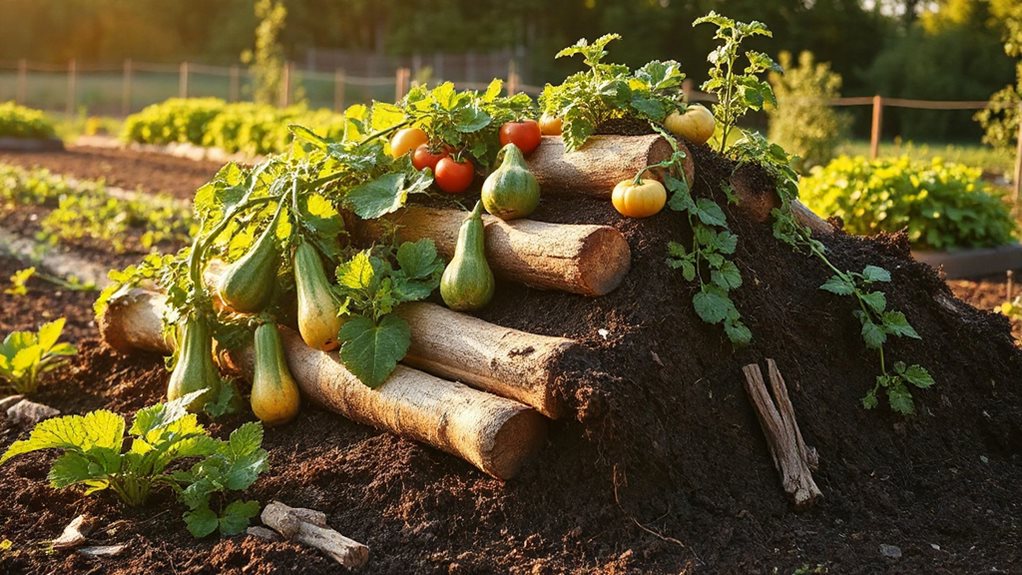
You’ll find root vegetables like rutabagas and beets thrive in the loose, well-aerated soil of new hugelkultur mounds, especially when given ample space to develop.
As decomposition warms the bed, heat-loving crops such as tomatoes and peppers take off on the sunnier sides, benefiting from the consistent moisture and thermal mass.
Over time, perennials like black raspberries and potatoes dominate mature mounds, with first-year yields often producing impressively large tubers.
Root Vegetables Thrive Early
Tap into the early potential of your hugelkultur mounds by planting root vegetables that thrive in their warm, nutrient-rich environment. You’ll benefit from nitrogen-fixing legumes, deep soil aeration, and consistent moisture retention, all supporting strong root development.
Decomposing biomass warms the soil, letting you plant earlier, while gradual nutrient release and thriving microbial life guarantee sturdy, healthy crops season after season.
Heat-Loving Crops Excel
Often, the natural heat generated within maturing hugelkultur mounds creates ideal conditions for heat-loving crops, giving you a longer, more productive growing season.
You’ll find tomatoes, peppers, and dwarf okra thriving, especially on south or west-facing slopes where warmth accumulates.
Greenhouses with Solawrap further enhance growth, while organic mulches and self-tilling soil structure maintain consistent warmth, supporting vigorous, resilient plants even at high elevations.
Perennials Dominate Mature Mounds
As the wood at the heart of a mature hugelkultur mound slowly decomposes over 5 to 10 years, fungal networks expand and dominate the soil ecosystem, creating conditions that strongly favor perennials over annuals.
You’ll find deep-rooted plants like fruit trees, berry bushes, comfrey, and rhubarb thrive, tapping into steady moisture and nutrients. These perennials integrate into self-sustaining guilds, reducing your workload while yielding reliably year after year.
Boost Yields With Less Water and Feeding
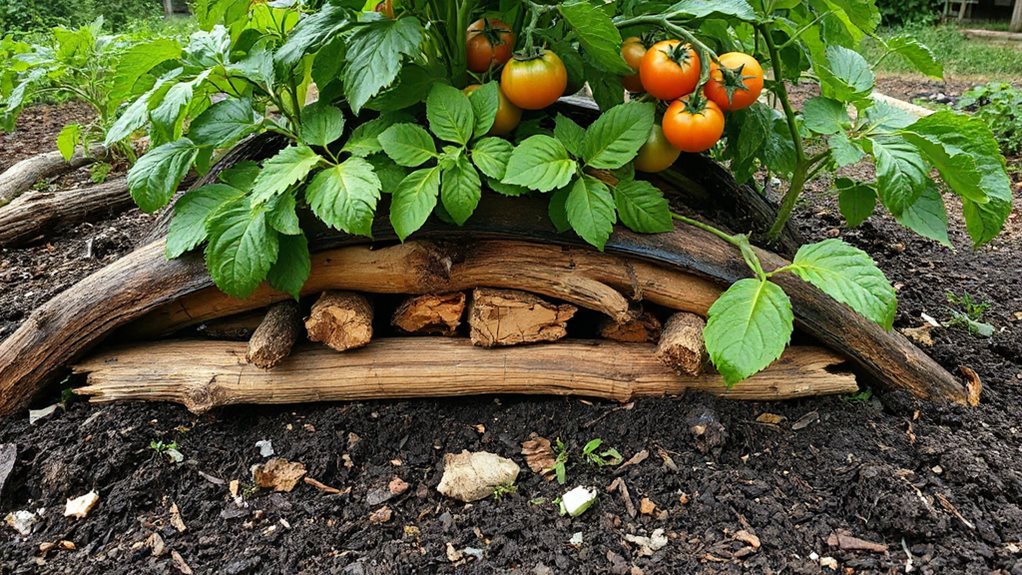
You’ll consistently see stronger plant growth with far less watering when you build hugelkultur raised beds, thanks to their unique ability to retain moisture through layered woody biomass and organic matter.
You’ll reduce irrigation needs considerably, even in drought, while decomposition enhances soil fertility.
This means healthier plants, higher yields, and less reliance on external inputs—ideal for sustainable, productive gardening in water-limited environments.
7 Common Hugelkultur Mistakes to Avoid
Building hugelkultur raised beds releases impressive gains in moisture retention and soil fertility, reducing your need for frequent watering and feeding while enhancing plant productivity.
Don’t skimp on soil depth—match it to your wood base, ideally 6–12 inches.
Use rotting logs, not chips, to avoid nitrogen loss.
Keep beds under 4 feet wide for easy access, guarantee proper spacing, and build at least 18 inches tall for lasting results.
When Hugelkultur Isn’t Right for Your Garden
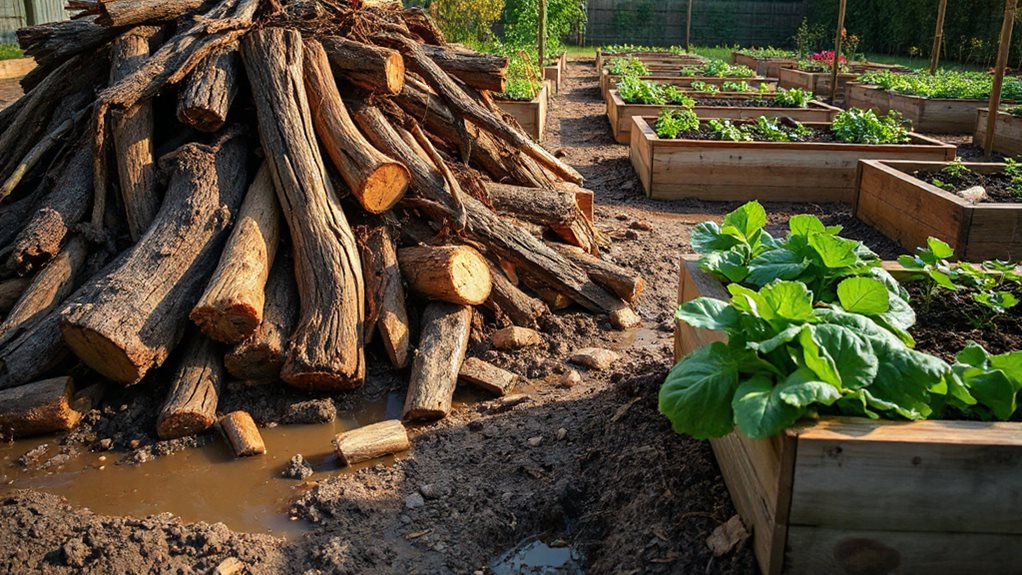
While hugelkultur beds offer notable benefits in moisture retention and soil fertility, they aren’t a one-size-fits-all solution, especially when your gardening goals involve deep-rooted plants or long-term structural stability.
You’ll face challenges with uneven decomposition, shallow soil depth, and settling over time, which limit plant variety and maintenance ease.
If you’re growing trees, perennials, or need consistent bed structure, traditional raised beds may better support your gardening vision and long-term success.
Building a Hugelkultur Bed: Labor, Materials, and Tips
Though hugelkultur beds aren’t ideal for every garden—especially where deep-rooted perennials or structural consistency matter—many gardeners find their benefits persuasive when planning for moisture efficiency and long-term fertility.
You’ll dig deeply, layer logs, branches, and organic matter, then cap with compost and topsoil.
Use rotting wood, build near water, and shape beds with concave tops to retain moisture, ensuring lasting, fertile planting zones.
Final Note
You now see how hugelkultur beds conserve water, enhance soil, and reduce long-term maintenance. By layering wood and organic matter, you create a self-sustaining system that feeds plants for years. While not ideal for all climates or soil types, proper planning helps you avoid common mistakes. With the right materials and effort, you build resilient gardens that yield more with less. Consider your site’s needs—hugelkultur could be a smart, sustainable choice.

Nathan McPhail is a garden and home DIY expert who writes practical, easy-to-follow advice for homeowners and gardeners. Through Yardique, he shares hands-on tips covering gardening, lawn care, landscaping, home improvement, repairs, tools, and outdoor living. His focus is on helping readers solve everyday household and yard problems with straightforward guidance, useful techniques, and practical solutions.