
Seal gaps around doors and windows, install soffit intake and ridge or wall exhaust vents for natural airflow, and add an active exhaust fan to pull humid air out; use a dehumidifier sized for the space, aim for 30‑50 % RH, and keep it running when levels rise. Store paints, solvents, and other chemicals in airtight, labeled containers inside a fire‑rated cabinet, and keep them away from heat sources. Clean fans, ducts, and the dehumidifier regularly, and check for leaks or condensation. Follow these steps, and you’ll discover even more ways to keep your garage fresh. Fix a tool organizer into studs or masonry plugs, as plasterboard alone will not hold a loaded rail.
TLDR
- Install soffit intake and ridge or wall exhaust vents to promote natural airflow and remove humid air.
- Use a dehumidifier sized for the garage (30–40 pints per 1,000 sq ft) to keep RH between 30‑50 %.
- Seal gaps around doors, windows, and wall penetrations with weather‑stripping or caulk to block moisture infiltration.
- Store flammable and volatile liquids in labeled, ventilated, fire‑resistant cabinets and keep them away from heat sources.
- Perform monthly inspections: check humidity with a hygrometer, look for leaks or condensation, and run the dehumidifier or exhaust fan as needed.
Identify Why Musty Smells Appear and What They Signal About Garage Ventilation
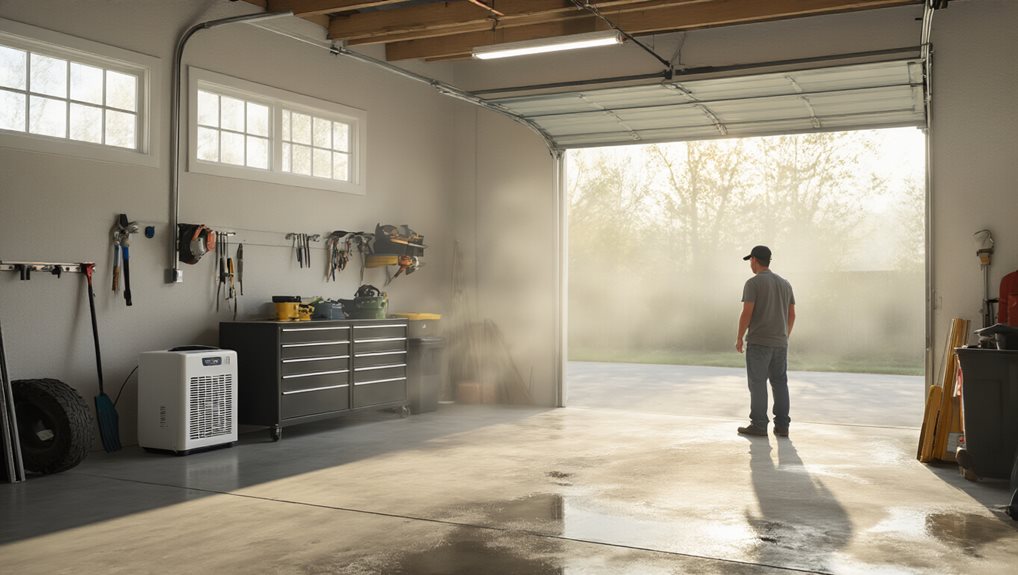
Why do musty odors linger in a garage, and what do they reveal about its ventilation? You notice an earthy, wet‑sock scent because mold and mildew release microbial volatile organic compounds when excess moisture saturates concrete, walls, and unsealed slabs. Poor airflow traps this humid, stale air, preventing dispersal and signaling that humidity exceeds 60 % and ventilation is insufficient, a sign that hidden fungal growth may be compromising health and structure. Insufficient ventilation can also cause chemical odors from stored paints and solvents to linger, further indicating poor air exchange.
Identify Primary Moisture and Odor Sources in Your Garage
The musty odor you’ve just traced back to poor ventilation actually points to several concrete sources of moisture and smell that you can address directly.
High humidity from leaking pipes, roof cracks, or clogged gutters condenses on cool concrete, fostering mold on cardboard, clothes, and stored firewood, while rain‑dripping vehicles and ground‑wicked moisture create damp spots that rust tools and fuel lingering odors. If the moisture is coming through the slab rather than the air, the garage water leak guide walks through sealing and drainage.
Install Passive Roof & Wall Vents for Natural Airflow

Ever considered how a simple vent can turn a stale garage into a drier, healthier space? By installing soffit intake vents and ridge or wall exhaust vents, you utilize natural convection: hot, humid air rises and escapes while fresh air enters low, reducing moisture, deterring mold, and protecting metal from rust. This low‑maintenance, electricity-free system works best on pitched roofs with adequate ridge space, and it balances airflow without noise or ongoing costs. Dusk-to-Dawn
Add Active Exhaust Fans to Kick Out Stale, Humid Air
Adding active exhaust fans takes the passive ventilation you installed a step further, actively pulling stale, humid air out of the garage and replacing it with fresh outside air. These fans, wall‑ or ceiling‑mounted, expel moisture, fumes, and VOCs, preventing mold, rust, and unpleasant odors while cooling the space, protecting appliances, and keeping the garage environment comfortable and safe for everyone. Regular maintenance of seals and vents helps ensure consistent airflow and efficiency energy efficiency across seasons.
Hybrid Ventilation: Balancing Airflow and Energy Use
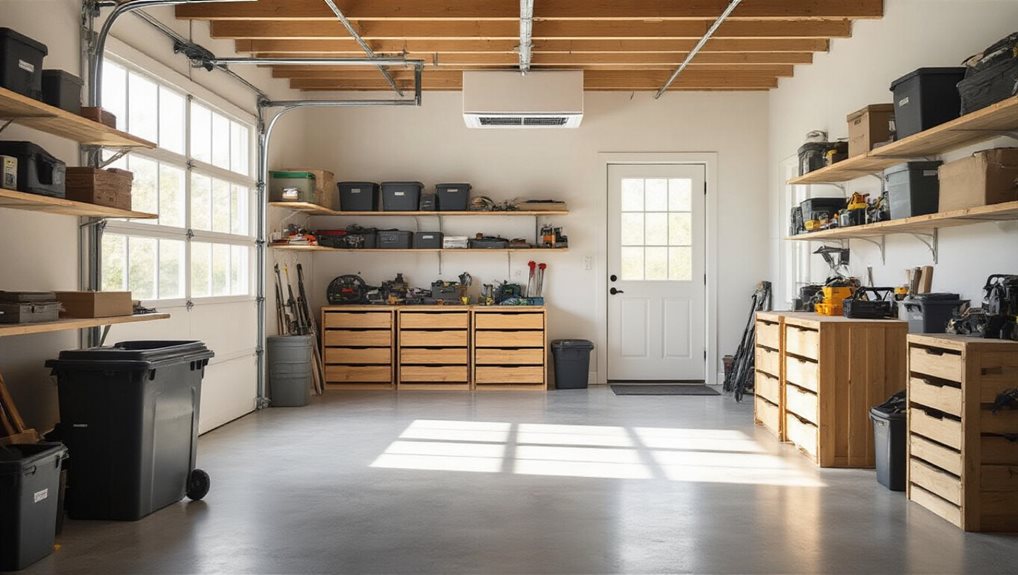
Why not combine natural breezes with smart fans to keep your garage fresh while slashing energy bills? You’ll let windows open when temperatures are mild, letting air flow naturally, then activate heat‑exchanger‑backed fans during extreme heat or humidity, preserving 97% energy savings and cutting costs to a few thousand euros yearly. Automated façade controls balance fresh‑air supply, remove contaminants, and maintain uniform circulation, fostering a community‑focused, efficient space.
Demand‑Control Ventilation to Cut Energy Costs
How can you slash garage energy bills while keeping the air fresh? Demand‑control ventilation senses CO levels, occupancy, and pollutants, then modulates fan speed with VFDs, cutting wasteful full‑power runs. Buildings report 85‑95% reductions, slashing annual costs from $108,000 to under $4,000, while preserving indoor air quality, extending fan life, and qualifying for up to $13,300 retrofit incentives.
Deploy a Dehumidifier for Garage Moisture Control

Ever wonder why your garage feels clammy even after you’ve cracked a window? Choose a dehumidifier sized for your space—about 30‑40 pints per 1,000 sq ft—so a 300 sq ft garage runs a 10‑12‑pint unit. Place it centrally, set the hygrostat to 50 % RH, and drain regularly; this cuts mold, rust, and odors while keeping the environment comfortable for your tools and projects.
Seal Gaps & Insulate Walls to Block External Humidity
Start by sealing every doorway and window with weather‑stripping or caulk, because even tiny cracks let humid air slip in and fuel musty odors. Then apply a vapor‑barrier insulation—such as closed‑cell spray foam or kraft‑faced batts—directly to the interior of the garage walls, ensuring the barrier faces the warm side to block external moisture. Finally, make the exterior walls weather‑tight by adding rigid foam or reflective insulation, taping seams and covering any gaps, so the garage stays dry and the air stays fresh. A well‑sealed garage also benefits from selecting breathable, moisture‑resistant interior finishes to help manage humidity air movement.
Seal Doorways and Windows
Do you notice a faint, musty odor drifting in when you open the garage door? Seal the door bottom with rubber or vinyl sweeps, caulk cracks in the frame, and apply foam seals to panels, cutting moisture infiltration up to 85 %.
For windows, use silicone caulk, foam tape, and insulation kits to block humid air, keeping relative humidity below 60 % and preserving a fresh, shared space.
Apply Vapor‑Barrier Insulation
How can you keep external humidity from seeping into your garage walls and floors? Install a vapor‑barrier on the warm‑in‑winter side, seal all seams, and apply moisture‑resistant drywall or sheet steel, ensuring airtight joints.
This barrier keeps concrete and wood dry, preserves insulation effectiveness, prevents mold and cracking, and maintains structural integrity, giving you a healthier, more comfortable garage community.
Insulate Exterior Walls Weather‑Tight
Why let external humidity creep into your garage walls when a simple, weather‑tight insulation system can stop it in its tracks?
Seal cracks with spray foam or caulk, then attach rigid foam boards or closed‑cell spray foam for high R‑values and vapor resistance.
Complement with fiberglass or rock‑wool batts, and consider reflective double‑bubble sheets on metal surfaces, ensuring airtight, moisture‑blocking walls that keep your space fresh.
Clean Fans, Ducts & Dehumidifiers for Best Performance
When you keep the fans, ducts, and dehumidifier clean, the system maintains optimal airflow and prevents the musty odors that develop from stagnant moisture. Regularly wipe fan blades and motor housings with a damp, soapy cloth, dry them thoroughly, and clear intake and exhaust vents of dust. Inspect and clean filters every few weeks, and wash condenser coils annually with foaming cleaner to sustain efficiency and prolong unit life.
Store Chemicals Properly to Minimize VOC Emissions in the Garage

You’ll keep VOCs in check by sealing every container tightly, using caps that won’t leak and storing them in a cool, ventilated spot away from heat sources. Label each bottle clearly with its hazard class and “Keep Closed” signage, then place it in a dedicated, lockable cabinet that’s rated for the chemical type. By doing so you prevent accidental spills, reduce off‑gassing, and make it easy to track what’s inside, which together help your garage stay fresh and safe.
Seal Containers Properly
A well‑sealed container is the cornerstone of minimizing VOC emissions in a garage, because any leak or loose lid allows volatile compounds to escape into the air and linger as a musty odor.
Keep paints, solvents, and cleaners in their original, tightly‑capped bottles or transfer them to airtight, chemically‑compatible containers, using secondary containment sized 110 % of the largest volume, and verify seals regularly to prevent vapor loss and maintain a fresh, shared space.
Label and Store Safely
Where should you start to keep your garage’s air fresh?
Label every container with the material name, hazards, and first‑aid instructions, then transfer unlabeled liquids into new, clearly marked bottles.
Store flammables in fire‑resistant, lockable cabinets labeled “FLAMMABLE – KEEP FIRE AWAY,” and keep volatile chemicals in ventilated units.
Separate acids from chlorine, place corrosives below eye level, and maintain a 50‑foot buffer from heat sources.
Regularly inspect for leaks, replace damaged containers, and keep the space tidy and well‑ventilated.
Monthly Inspection Checklist for Garage Ventilation & Moisture
When you schedule a monthly inspection for your garage’s ventilation and moisture control, start by checking humidity levels with a hygrometer at several times of day and under different weather conditions, aiming for a consistent 30‑50 % relative humidity to keep mold at bay; record the averages, note any condensation, especially during winter, and be ready to run a dehumidifier if readings exceed the optimal range.
Then clean vents, replace filters, lubricate fan bearings, tighten hardware, seal cracks, verify exhaust capacity, and inspect dampers, drainage, and door seals, ensuring each step supports a fresh, shared space.
Final Note
By addressing moisture sources, sealing gaps, and installing both passive and active ventilation, you’ll keep your garage dry, air fresh, and energy efficient. Regularly cleaning fans, ducts, and dehumidifiers, plus proper chemical storage, prevents VOC buildup and mold growth. Follow the monthly inspection checklist to catch issues early, and enjoy a well‑ventilated space that protects both your belongings and your health.

Nathan McPhail is a garden and home DIY expert who writes practical, easy-to-follow advice for homeowners and gardeners. Through Yardique, he shares hands-on tips covering gardening, lawn care, landscaping, home improvement, repairs, tools, and outdoor living. His focus is on helping readers solve everyday household and yard problems with straightforward guidance, useful techniques, and practical solutions.