Seal cracks, gaps, and floor joints with durable caulk or a deep‑penetrating concrete sealer, then install the garage‑door weather‑strip that matches your door’s design—J‑type for uneven floors, T‑type for double‑track systems, brush seals for windy, dusty conditions, or bulb seals for rough residential floors. Declutter shelves and floor space, storing items on wall‑mounted hooks or bins to minimize horizontal dust‑catch surfaces. Lay interlocking dust‑blocking tiles, seal any remaining fissures, and keep a routine of sweeping, vacuuming with a filtered Shop‑Vac, and replacing HVAC filters. Continue for, and you’ll discover deeper maintenance strategies.
TLDR
- Seal windows, doors, and floor joints with caulk, weatherstripping, or a deep‑penetrating concrete sealer to block dust and drafts.
- Choose a garage‑door seal (J‑type, T‑type, brush, or bulb) that matches your door design, floor condition, and climate.
- Select durable vinyl or rubber seal material, replace worn sections promptly, and ensure compatibility with the door and floor.
- Declutter and organize storage using wall‑mounted hooks, slatwall panels, or sealed bins to minimize dust‑catching horizontal surfaces.
- Install interlocking dust‑blocking floor tiles, seal all gaps, and maintain regular cleaning and HVAC filter replacement.
Seal Cracks and Floor for Garage Dust Control
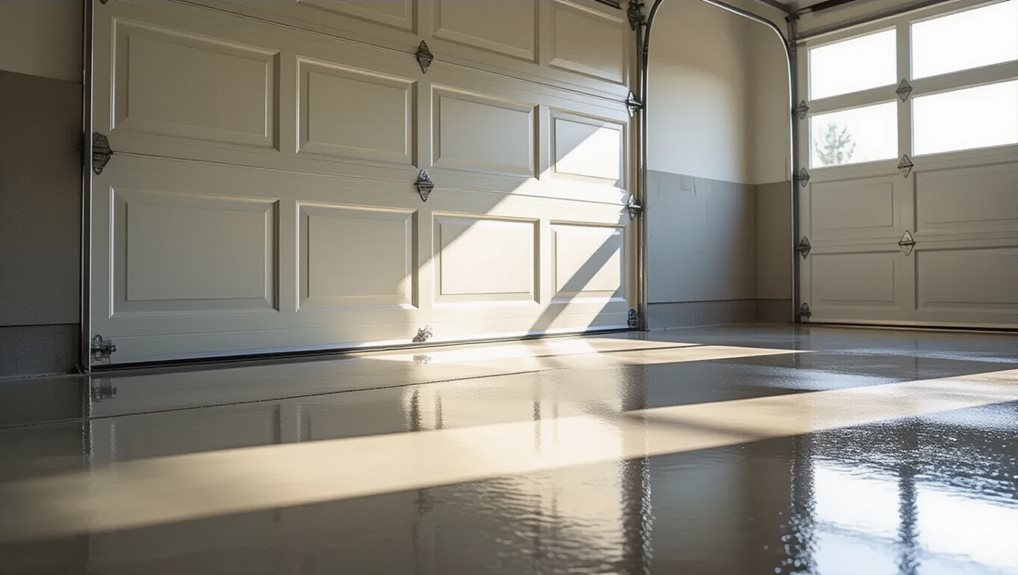
Why let tiny cracks and gaps turn your garage into a dust‑filled chute? You’ll seal windows, doors, and floor joints with caulk or weatherstripping, preventing dirt, pests, and drafts from invading.
Apply a deep‑penetrating sealer like RadonSeal to strengthen concrete, block dust, and create a non‑slip surface.
Clean, dry, and de‑dust before sealing to ensure lasting, energy‑efficient protection.
Excess dust can cause respiratory issues and sealing gaps helps keep the air healthier.
Choose the Right Garage‑Door Seal for Dust Prevention
Choosing the right garage‑door seal is essential for keeping dust out while maintaining energy efficiency, and the best option depends on your door’s design, floor condition, and climate.
If you have a single‑channel door on an uneven floor, a J‑type or T‑type seal offers firm grip and easy installation; U‑type seals adapt to double‑track systems and extreme weather.
Brush seals work well in windy, dusty environments, while bulb seals excel on rough residential floors.
Select the material—vinyl or rubber—to match durability needs and replace worn sections promptly for lasting protection.
Declutter and Organize to Reduce Dust‑Catch Surfaces
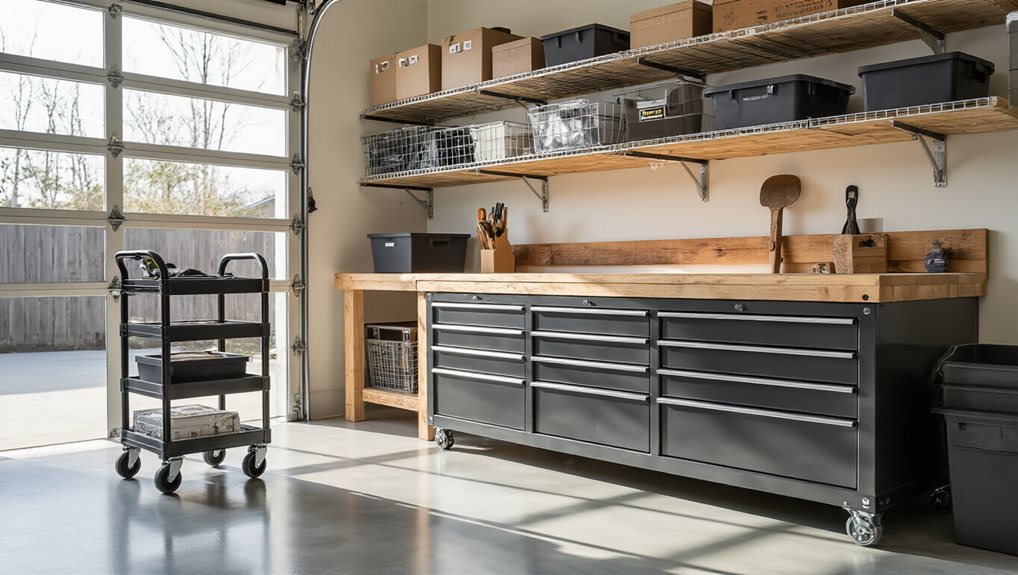
When you clear out everything from shelves, cabinets, and the floor before reorganizing, you instantly create a blank canvas that reveals how much space you actually have and where dust tends to settle.
Sort items into keep, donate, recycle, and discard piles, then store essentials on wall‑mounted hooks, slatwall panels, or plastic bins to keep floors clear, improve airflow, and make vacuuming and wiping quick and thorough.
Dust tends to accumulate most on horizontal surfaces and in corners, so consider adding airflow‑friendly storage solutions and ventilation improvements to minimize future buildup airflow optimization.
Install Dust‑Blocking Floor Tiles for Easy Maintenance
A solid layer of interlocking dust‑blocking floor tiles changes a bare concrete garage into a low‑maintenance surface that traps debris before it becomes airborne, and the installation process is straightforward enough for most DIYers.
Clear the space, sweep and power‑wash, then lay PVC interlocks with peg‑and‑loop connections, using a rubber mallet for snugness.
Choose vented or perforated tiles for drainage, align cuts toward corners, and enjoy a clean, resilient floor that fits your garage community.
Clean and Contain Dust to Prevent Re‑Entry
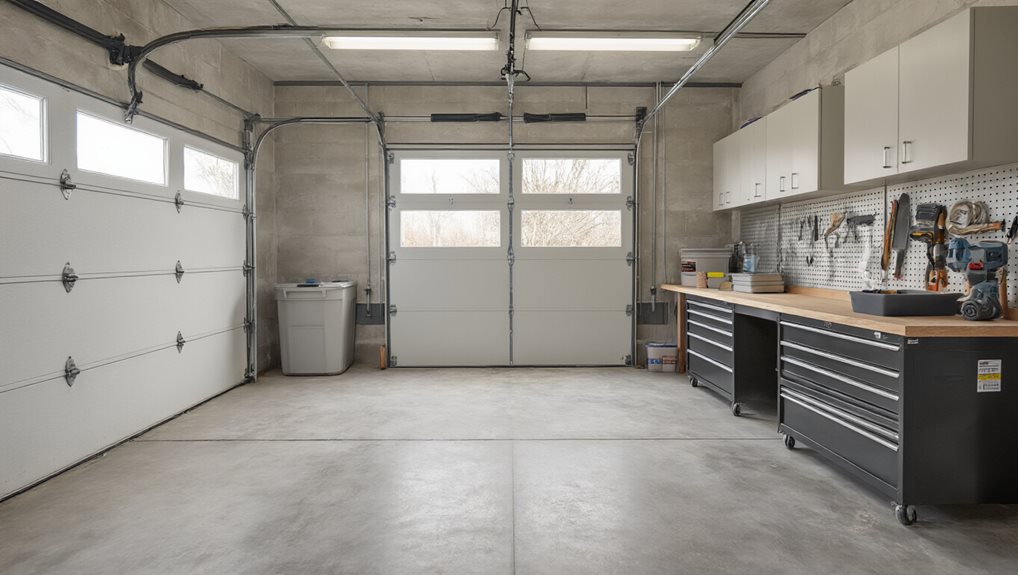
The interlocking floor tiles you just installed create a barrier that traps debris, but dust can still slip in through unsealed gaps and re‑settle on surfaces if you don’t contain it. Seal door and window cracks with weatherstripping, caulk floor fissures, and fit the garage door bottom seal tightly. Weekly wipe, sweep, then vacuum with a filtered Shop‑Vac, storing tools in airtight containers, and replace HVAC filters biweekly to keep dust from re‑entering and maintain a clean, shared space.
Final Note
By sealing cracks, installing a proper door gasket, decluttering, and fitting dust‑blocking tiles, you’ll keep garage dust at bay while maintaining a clean, functional space. Regularly vacuuming and containing debris prevents particles from re‑entering, ensuring the measures stay effective. These steps, grounded in practical maintenance and simple engineering, give you lasting control over dust without costly renovations, letting you focus on the garage’s primary uses.

Nathan McPhail is a garden and home DIY expert who writes practical, easy-to-follow advice for homeowners and gardeners. Through Yardique, he shares hands-on tips covering gardening, lawn care, landscaping, home improvement, repairs, tools, and outdoor living. His focus is on helping readers solve everyday household and yard problems with straightforward guidance, useful techniques, and practical solutions.