To fix compacted soil in your yard, start by aerating—use core aeration to remove plugs and improve airflow, or try liquid aeration with soil-loosening amendments. Test soil hardness with a screwdriver; if it doesn’t slide in easily, compaction is likely. Overseed afterward to thicken turf, and add compost to enhance structure and microbial activity. Avoid heavy traffic on wet soil, water deeply but infrequently, and maintain healthy habits. You’ll see how simple changes lead to stronger, more resilient soil over time.
TLDR
- Perform core aeration during the growing season to create channels for air, water, and nutrients in compacted soil.
- Apply liquid aeration with surfactants and microbes to loosen soil without disturbing the lawn surface.
- Overseed and topdress with compost after aeration to improve soil structure and support new growth.
- Water deeply but infrequently and mow at the correct height to encourage deep, resilient root systems.
- Prevent future compaction by avoiding foot traffic on wet soil and designating walkways to distribute pressure.
How to Tell If Your Soil Is Compacted
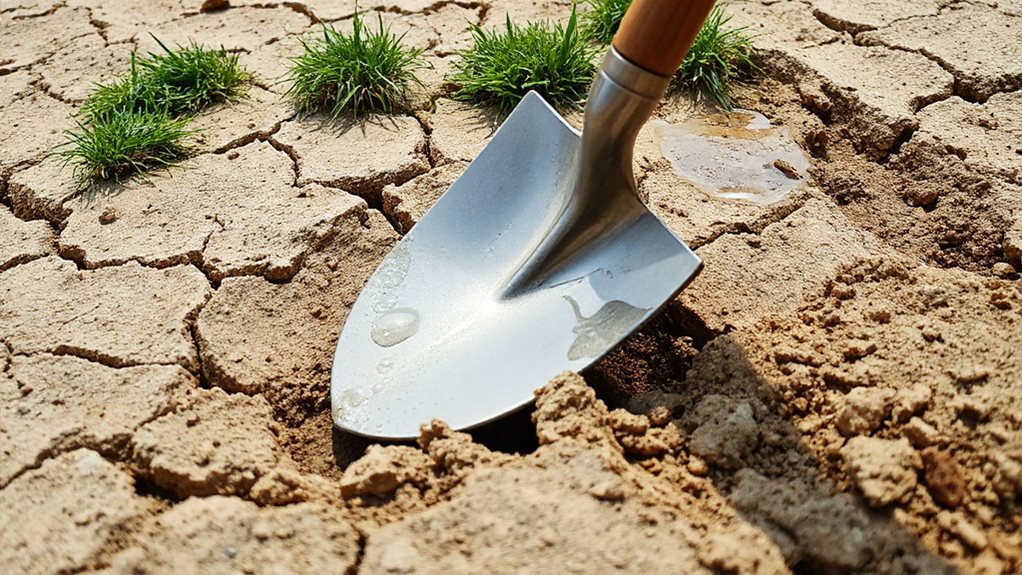
You mightn’t think about what’s happening beneath the surface, but your lawn often shows clear signs that the soil has become compacted.
Puddles after rain, thin or yellowing grass, and a hard, crusty surface mean water and roots can’t move freely.
Weeds take over, thatch builds up, and digging feels tough—these are all clues your soil is stressed and needs attention. Weeds adapt quickly to disturbed or compacted soil, outcompeting weakened turf.
Compacted soil restricts movement of air, water, and nutrients, making it difficult for your lawn to thrive even with regular care.
Check for Compacted Soil With a Screwdriver Test
Grab a 4- to 6-inch screwdriver and head to the garden after a rain or watering, when the soil’s moist but not soggy.
Push the screwdriver into the ground with steady pressure, checking how easily it penetrates and how deep it goes—smooth entry to 4 inches or more means your soil’s in good shape.
If you meet strong resistance or can’t get past a few inches, you’re likely dealing with compaction that needs attention.
A simple at-home soil test kit can help confirm nutrient availability and pH when addressing compaction, especially if you suspect reduced root growth due to low soil pH.
Screwdriver Test Basics
While evaluating soil compaction doesn’t require advanced equipment, starting with a simple screwdriver test can quickly reveal underlying issues affecting root development and lawn health.
Use a 4- to 6-inch screwdriver on moist soil, ideally 2–3 days after rain or watering. Push it in—if it slides easily to the handle, your soil’s loose and healthy. Resistance means compaction’s likely blocking roots.
Performing The Test
To get a clear image of your soil’s condition, start by performing the screwdriver test under the right conditions—ideally 2 to 3 days after rain or watering, when the soil is moist but not saturated.
Use a 4–6 inch Phillips screwdriver, applying steady pressure; aim for full shaft penetration.
Test multiple spots, especially high-traffic areas, to identify compaction patterns and make informed decisions about aeration.
Interpreting Results Quickly
If the screwdriver slips into the soil easily up to the handle with steady pressure—much like pushing a straw into a firm cake—you’re likely dealing with loose, well-structured soil that allows roots, water, and air to move freely.
Minimal resistance means healthy conditions, while hitting a hard layer within a few inches signals compaction, restricting root growth and drainage, especially if you notice shallow roots or pooling water.
What Causes Compacted Soil in Lawns
Soil compaction doesn’t happen overnight, but your lawn can quickly feel the effects as repeated pressure and poor practices break down its natural structure.
Over-tilling, working wet soil, and frequent foot or wheel traffic compress particles, reducing pore space. Heavy machinery worsens it, while clay-rich or low-organic soils are naturally prone. Together, these factors create dense, hard-packed ground that hinders root growth and drainage, weakening your lawn’s health over time. Installing a French drain can help redirect excess water and improve drainage in compacted areas.
Why Compacted Soil Damages Lawn Health
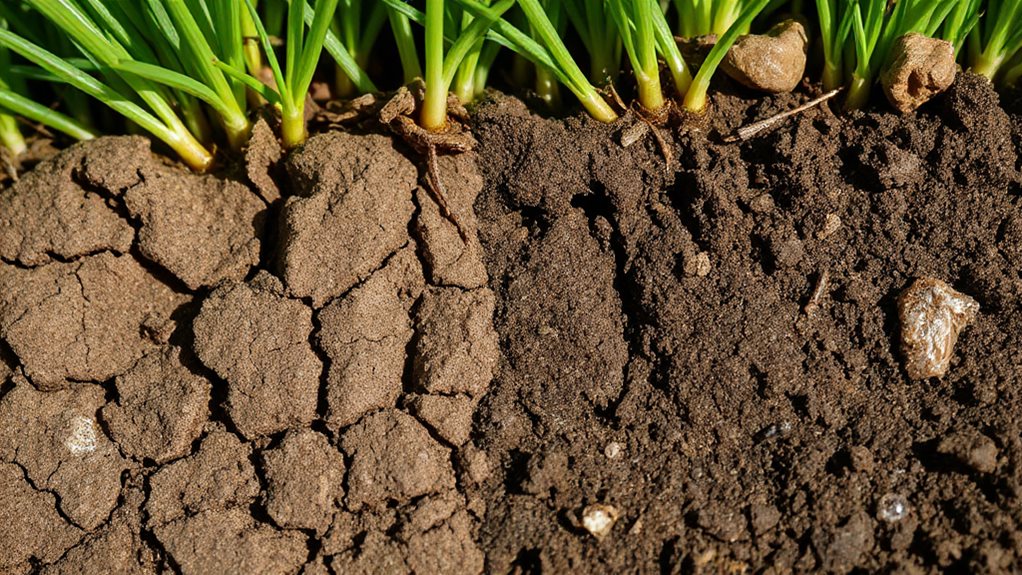
You’ve seen how foot traffic, heavy equipment, and poor soil management gradually press particles together, but the real consequences show up in the health of your lawn.
Compacted soil restricts root growth, reduces drainage and aeration, and limits nutrient uptake.
It weakens grass, invites disease, and suffocates roots, leaving your lawn thin and stressed despite your efforts to care for it.
Newly compacted areas often benefit from aeration to relieve pressure and restore healthy soil structure.
Use Core Aeration to Relieve Severe Compaction
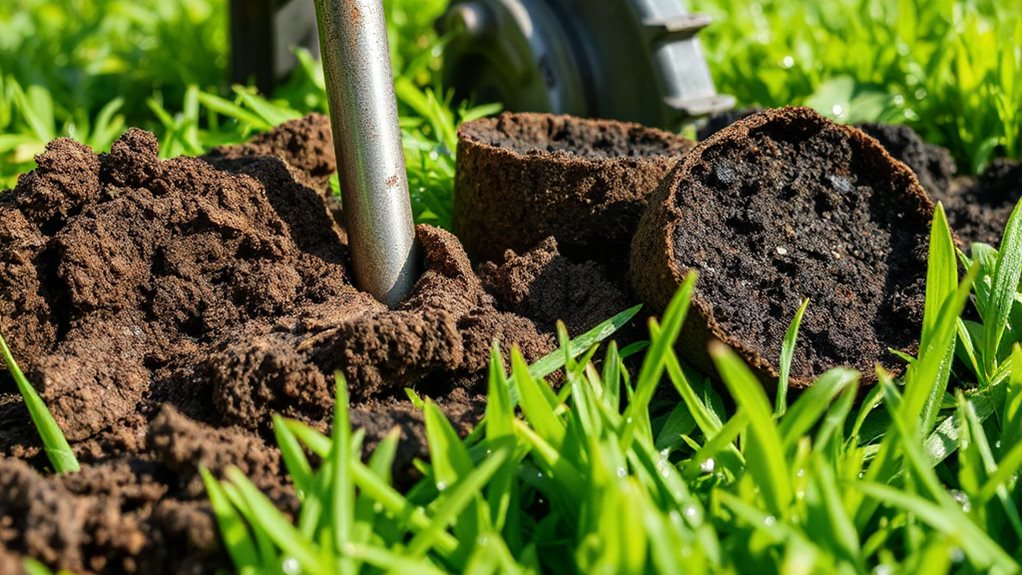
Relieving severe soil compaction starts with core aeration, a proven method that actively improves lawn health by removing small soil plugs to create essential channels for air, water, and nutrients.
You’ll enhance root growth, reduce runoff, and increase drought resistance. Unlike spike aeration, this approach prevents further compaction, ensuring your lawn breathes, absorbs better, and stays resilient with less maintenance over time. Effective timing is important, so aim to aerate during the growing season for best results.
Try Liquid Aeration for No-Till Soil Loosening
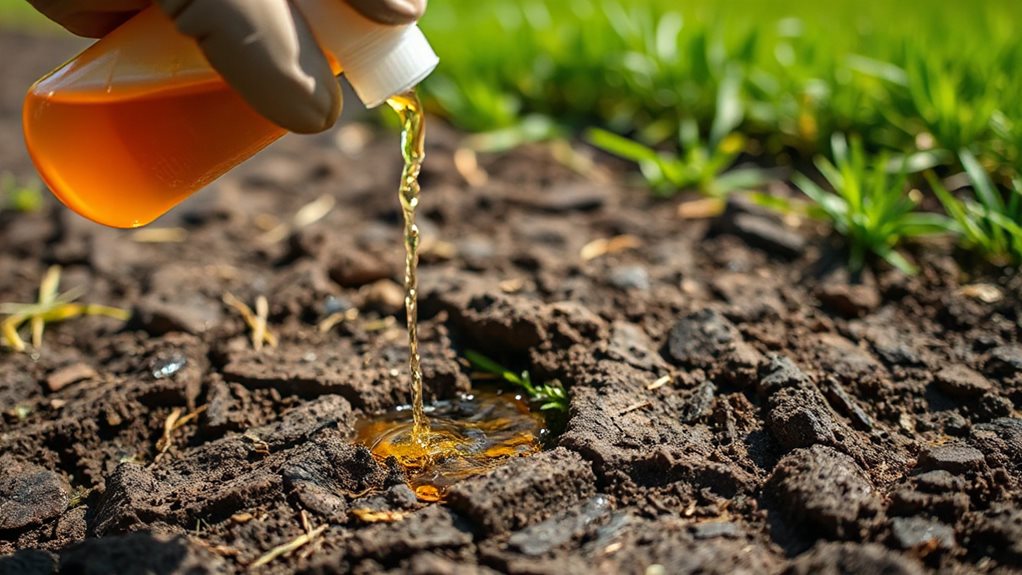
You can loosen compacted soil without tearing it up by trying liquid aeration, a no-till method that uses a pressurized mix of water and soil conditioners to improve porosity.
Unlike core aeration, it won’t leave piles of soil on your lawn and works by enhancing microbial activity while helping water, air, and nutrients reach deeper roots.
For best results, apply it in early spring or fall using a sprayer, especially if you’re dealing with mild to moderate compaction and want long-term soil health.
What Is Liquid Aeration
Breaking through compacted soil just got easier with liquid aeration, a no-till solution that delivers oxygen and key soil amendments deep into the root zone without heavy machinery.
You spray a pressurized mix of surfactants, humic acid, and beneficial microbes, which loosen soil particles, enhance microbial activity, and improve pore space. This enhances water absorption, root growth, and nutrient uptake—ideal for maintaining healthy, resilient lawns over time.
Benefits Over Core Aeration
A smarter approach to soil loosening starts with liquid aeration—offering clear advantages over traditional core methods.
You avoid messy plugs and lawn damage while still improving soil structure, and it’s safer around sprinklers, cables, and foundations.
With even coverage and no prep needed, you get consistent results, support microbial life, and enjoy long-term benefits—plus, it’s affordable, eco-friendly, and easy to reapply whenever your yard needs it.
How To Apply Effectively
Liquid aeration delivers measurable improvements in soil structure without the disruption of mechanical methods, making it a preferred choice for maintaining healthy lawns.
Mow first, water lightly the day before, then spray the solution evenly using a pump or hose-end sprayer.
Apply during cooler periods, water deeply after, and avoid foot traffic for 24–48 hours to let microbes and nutrients activate and loosen compacted zones.
When and How Often to Aerate Your Lawn
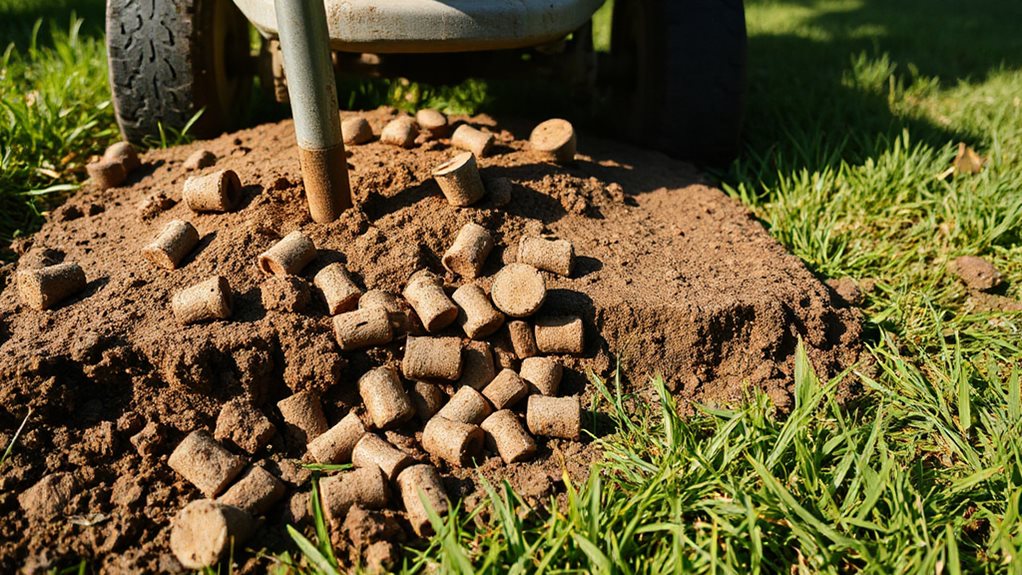
You’ll typically need to aerate your lawn at least once a year, but the ideal frequency depends on your soil type, grass variety, and how much foot traffic your yard endures.
Clay soils or high-traffic areas often need twice-yearly aeration, while sandy or loamy soils may require it every 2–3 years.
Time aeration with your grass’s growing season—early fall or spring for cool-season types, late spring to early summer for warm-season grasses—to maximize recovery and root growth.
Overseed After Aeration to Repair Compacted Soil
Now’s the time to take full advantage of aeration by overseeding right after, so you can lock in the benefits and kickstart a thicker, healthier lawn.
Spread seed immediately into the aeration holes at 5 lbs per 1,000 sq ft for tall fescue, enhance with compost, and water regularly to guarantee strong germination and lasting resilience.
Prevent Compacted Soil With Smart Lawn Habits
Preventing soil compaction starts with making thoughtful, consistent choices in how you use and care for your lawn. Designate walkways and rotate paths to reduce wear, while storing equipment off grassy areas.
Water deeply but infrequently, mow at the right height, and change patterns regularly. Aerate yearly, avoid wet soil traffic, and adjust practices seasonally to keep your soil healthy and resilient.
Add Compost to Improve Soil Structure and Prevent Compaction
Improving your soil’s ability to resist compaction starts with enhancing its physical makeup, and one of the most effective ways to do that’s by adding compost.
You’ll enhance soil aggregation, increase porosity, and reduce bulk density, making it easier for roots and water to move through.
Compost also feeds microbes that create natural soil binders, improving structure while preventing future compaction—giving your yard a stronger, healthier foundation.
Final Note
You’ve checked your soil and confirmed compaction—now it’s time to act. Core aeration breaks up tight layers, letting air, water, and nutrients reach roots. Overseed right after to enhance turf density, and add compost to improve long-term structure. Aerate annually if needed, especially in high-traffic areas. With smart mowing, watering, and minimal foot traffic, you’ll keep soil healthy and your lawn thriving. Prevention is just as important as repair.

Nathan McPhail is a garden and home DIY expert who writes practical, easy-to-follow advice for homeowners and gardeners. Through Yardique, he shares hands-on tips covering gardening, lawn care, landscaping, home improvement, repairs, tools, and outdoor living. His focus is on helping readers solve everyday household and yard problems with straightforward guidance, useful techniques, and practical solutions.