To grow strawberries in a raised bed, choose a location with full sun and well-draining soil, ideally at least 12 inches deep. Incorporate compost into the soil to enhance fertility, and select disease-resistant varieties suited to your climate. Plant crowns just above soil level and space them 12–18 inches apart. Water regularly, mulch to retain moisture and suppress weeds, and use mulch or row covers to protect from pests and frost. Proper care supports healthy plants and abundant harvests; delve further to uncover more tips.
TLDR
- Choose a deep, well-drained raised bed in full sun, and incorporate compost into the soil before planting.
- Select disease-resistant strawberry varieties suited to your climate and plant crowns just above soil level.
- Mulch immediately after planting with straw or leaves to retain moisture and suppress weeds.
- Water consistently, providing 1–1.5 inches weekly, and fertilize with continuous-release nutrients.
- Prune runners and maintain proper spacing to promote healthy growth and maximize fruit production.
How to Choose the Best Location and Container for Your Strawberries
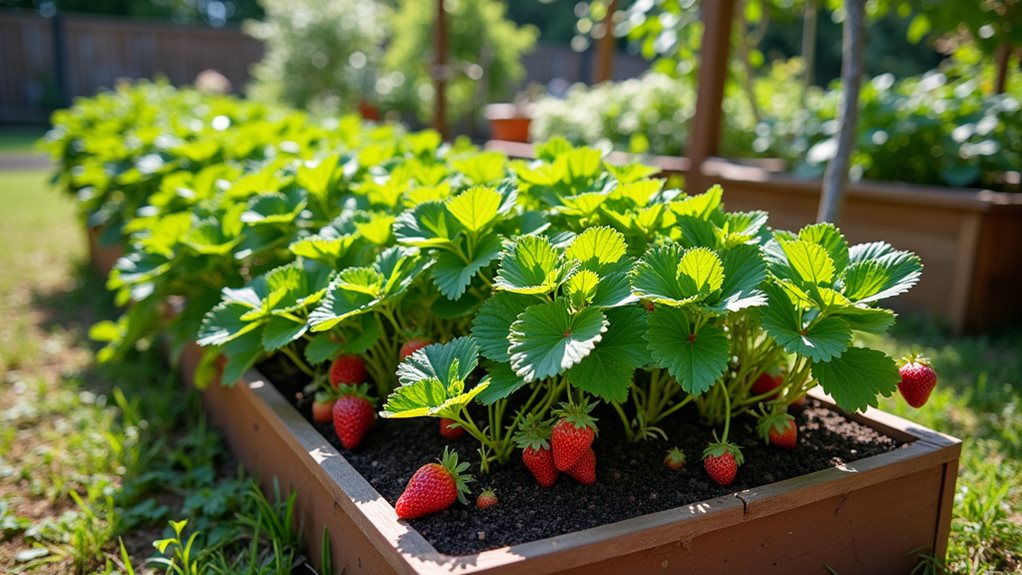
Choosing the right location and container for your strawberries is essential to guarantee healthy growth and a good harvest.
Select a raised bed that’s at least 12 inches deep and placed in full sun, ensuring proper drainage.
Avoid low-lying, shaded areas prone to waterlogging, so your plants receive sufficient sunlight and water flow for maximum development and fruit production.
Considering the planting timing based on your first fall frost date can help extend the harvest season and protect your strawberries from early frosts.
Preparing the Soil in Your Raised Bed for Optimal Growth
To maximize your strawberry plants’ growth, it’s crucial to prepare the soil in your raised bed thoroughly. Focus on soil preparation by adding organic matter like compost and organic starter fertilizers to promote healthy roots. Incorporate 2–3 inches of compost into the top 8–12 inches of soil for optimal results. Make certain the soil is well-draining by mixing in peat moss or compost. Test pH levels to maintain a slightly acidic environment ideal for strawberries. Regularly amend clay soil to improve drainage and texture over time.
Selecting the Right Strawberry Varieties for Your Climate and Space
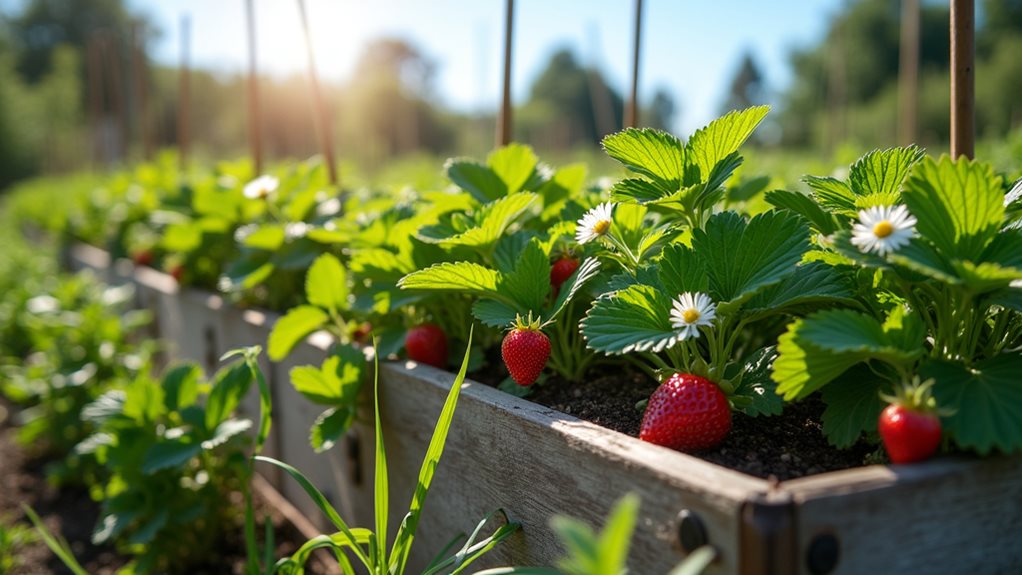
Selecting the appropriate strawberry varieties requires careful consideration of your local climate and available space, as these factors greatly influence plant health and productivity. Choose strawberry varieties suited to your climate zone, such as June-bearing for a single harvest or everbearing for extended fruiting. Make sure they’re disease-resistant for thriving raised beds. Additionally, selecting varieties with suitable growth habits can help maximize space and yield in your raised bed setup.
Step-by-Step Guide to Planting Strawberries in Raised Beds
To successfully plant strawberries in your raised bed, start by preparing the soil with organic compost and amendments to make certain it’s nutrient-rich and drains well.
Choose healthy plants suited to your climate and space, then plant them with the crowns just above soil level, spacing them about 12 to 18 inches apart.
After planting, water thoroughly, mulching around the plants to retain moisture and suppress weeds.
Regularly monitor soil pH and fertilize to promote vigorous growth.
Prepare Raised Bed
Filling your raised bed with a nutrient-rich soil mixture creates a strong foundation for healthy strawberry growth. Make sure the soil is well-drained, slightly acidic, and thoroughly mixed with compost and organic fertilizer.
Before planting strawberries, water the soil thoroughly to keep it moist. Then level the surface and create rows or mounds, spacing them 12-18 inches apart for ideal growth.
Select Suitable Plants
Choosing the right strawberry plants is vital for a successful harvest, and it’s important to focus on healthy, disease-free options that are well-suited to your growing season.
Select strawberry plants or bare-root strawberries adapted to your climate, such as June-bearing or Everbearing types.
Proper selection guarantees strong growth, better fruit yield, and a more rewarding gardening experience.
Plant and Mulch
After preparing your raised bed with well-draining, nutrient-rich soil, you can proceed to planting your strawberry crowns.
Plant each with roots fully spread, keeping the crown above soil to prevent rot.
Space plants about 12 inches apart, then fill holes with soil or compost, gently firming around roots.
Mulch immediately with straw or leaves to retain moisture and suppress weeds.
How to Water, Mulch, and Feed Your Strawberry Plants
Proper watering, mulching, and feeding are essential steps to guarantee your strawberry plants thrive and produce abundant fruit. Water consistently with about 1 to 1.5 inches weekly, keeping leaves dry to prevent disease. Apply a continuous-release fertilizer for steady nutrients. Mulch with straw or leaves to retain moisture, suppress weeds, and keep berries off the soil surface. Be mindful to handle any fallen or dead plant material with care, respecting the importance of proper animal removal to prevent attracting pests or wildlife.
Managing Runners and Pruning to Maximize Fruit Production
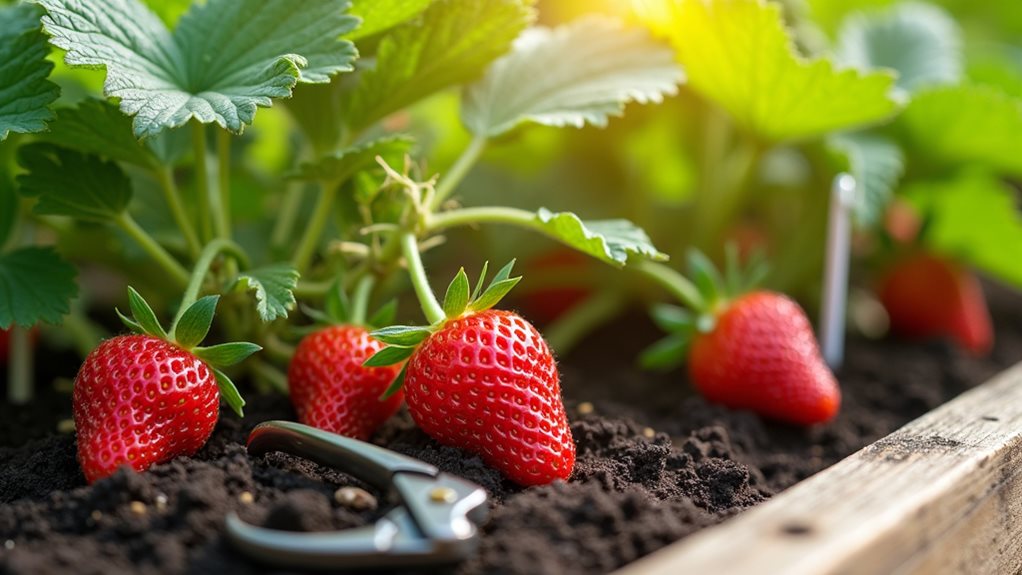
Managing runners and pruning your strawberry plants effectively directs their energy toward fruit production, rather than the growth of new plants. Limiting runners to three per summer and removing excess early in the season encourages stronger root development, larger berries, and better airflow. Regular pruning prevents overcrowding, ensuring your raised bed remains healthy and maximizes your strawberry plants’ fruit yield. Additionally, maintaining proper plant spacing helps improve airflow and reduces disease risk, supporting overall plant health.
Protecting Your Raised Bed Strawberries From Pests and Diseases
Protecting your raised bed strawberries from pests and diseases requires a proactive approach that combines physical barriers, vigilant management, and sound cultural practices.
Use bird netting and row covers to protect strawberries from pests. Keep the bed clean to reduce fungal diseases like powdery mildew.
Proper drainage and crop rotation are essential for preventing root rot and other fungal infections.
Additionally, selecting the appropriate fabric weight for row covers can enhance frost protection and pest control, helping to maintain healthy plants throughout the season.
Overwintering Your Strawberry Plants for Healthy Next Season
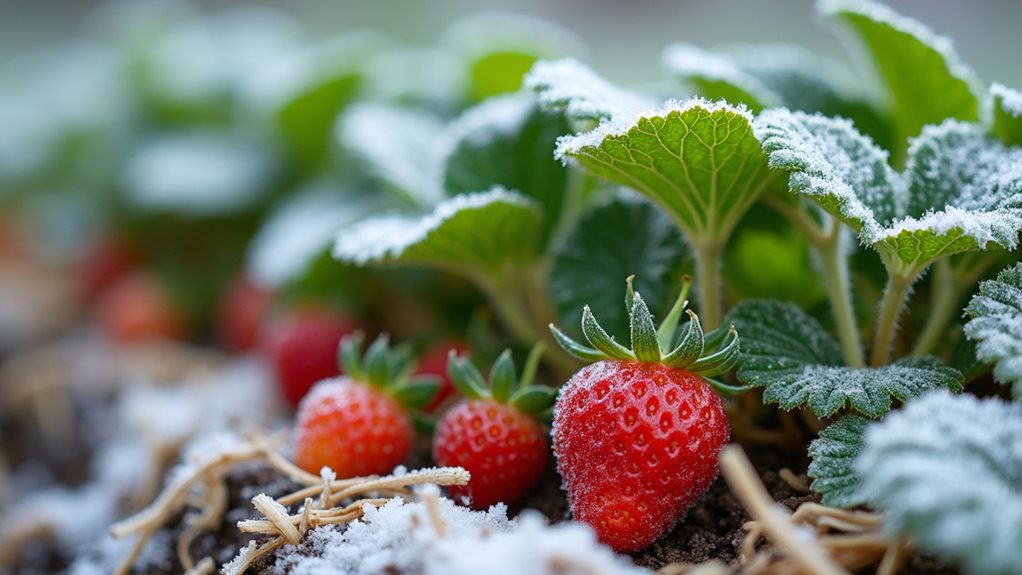
To guarantee your strawberry plants survive winter and thrive in the spring, proper mulching techniques are essential for insulation and frost protection.
Timing your cover and reapplying mulch annually helps maintain soil warmth and prevents weed growth.
While doing so, avoid overwatering during dormancy, as this reduces the risk of root rot.
Additionally, using a well-balanced soil mix with appropriate organic amendments can promote healthy root development and improve resilience against cold weather.
Mulching Techniques for Insulation
Mulching is a crucial step in overwintering your strawberry plants, as it helps insulate the roots and crowns from harsh winter temperatures.
Using straw, hay, or shredded leaves creates effective insulation, moderates soil temperature fluctuations, and discourages weeds.
A 2-4 inch layer guarantees proper mulching, protecting your plants during winter and promoting healthy growth in the spring.
Protecting Plants From Frost
As winter approaches, protecting your strawberry plants from frost damage becomes a priority to guarantee healthy growth in the following season.
Mulching with straw, leaves, or pine needles insulates the plants, reducing frost risk.
In colder zones, covering beds with frost cloths or burlap further protects the plants from freezing temperatures, ensuring a successful overwintering process.
Timing for Replanting
Timing for replanting strawberry plants after winter depends largely on your local climate and the specific hardiness zone you’re in.
Overwintering techniques, such as mulching, protect plants from frost, enabling healthy regrowth.
In early spring, assess plant health and replant or allow re-establishment, ensuring plants are properly overwintered to promote vigorous growth and fruit production for the next season.
Troubleshooting Common Strawberry Growing Problems and Boosting Your Harvest
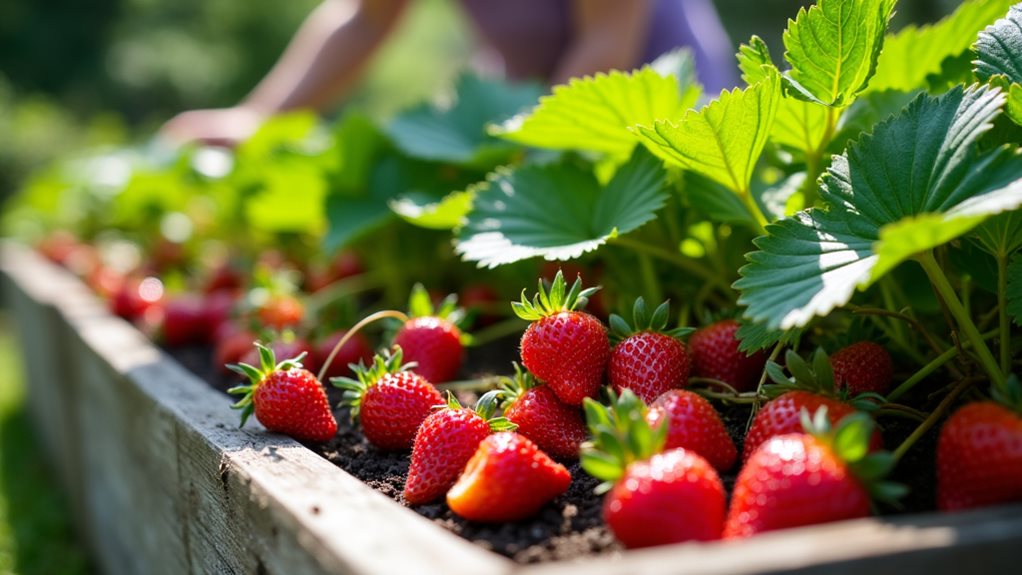
When strawberry plants face common problems, addressing these issues promptly can considerably improve your harvest.
Overcrowding causes fruit contact with soil, risking rot and disease, so space plants about 12-18 inches apart.
Consistent watering of 1-1.5 inches weekly prevents stress.
Proper planting, watering, and pest control are essential for healthy strawberries and increased yields.
Final Note
Growing strawberries in a raised bed offers a manageable way to enjoy fresh fruit while controlling soil quality and drainage. By selecting the right location, preparing the soil properly, choosing suitable varieties, and following proper planting and maintenance techniques, you can maximize your harvest. Regular watering, mulching, and pest management are essential for healthy plants. With careful overwintering and troubleshooting, you’ll enjoy a productive strawberry crop season after season, making your efforts well worthwhile.

Nathan McPhail is a garden and home DIY expert who writes practical, easy-to-follow advice for homeowners and gardeners. Through Yardique, he shares hands-on tips covering gardening, lawn care, landscaping, home improvement, repairs, tools, and outdoor living. His focus is on helping readers solve everyday household and yard problems with straightforward guidance, useful techniques, and practical solutions.