
To thicken thin Bermuda grass, start by ensuring it gets at least six hours of direct sunlight daily and prune overhanging branches to increase exposure. Maintain proper mowing height of 1-1.5 inches using sharp blades, and avoid cutting more than one-third of the grass at once. Fertilize regularly with a nitrogen-rich mix, aerate to reduce soil compaction, and overseed during ideal conditions. Address drainage problems and control weeds or pests to support dense growth—more detailed tips will help you achieve a lush, healthy lawn.
TLDR
- Regularly mow at 1-1.5 inches using sharp blades to promote dense, lateral growth.
- Overseed in late spring or early summer with high-quality Bermuda grass seed for thicker coverage.
- Fertilize every 4-6 weeks with high nitrogen ratios to enhance turf density and health.
- Aerate soil to reduce compaction, improve root development, and increase nutrient and water absorption.
- Manage weeds and pests proactively to prevent competition and maintain a thick, healthy lawn.
Assess Your Bermuda Grass’s Current Condition
Before attempting to improve your Bermuda grass, it’s crucial to evaluate its current condition thoroughly. Look for thin patches, discoloration, or sparse growth to assess density. A soil test can also reveal pressure ratings and other vital factors affecting root health. Measure grass height regularly, check for thatch buildup, and guarantee at least six hours of sunlight daily. Conduct a soil test to identify nutrient deficiencies and confirm soil pH for ideal growth.
Identify Causes of Thin or Patchy Areas
Identifying the causes of thin or patchy Bermuda grass involves examining environmental and management factors that hinder healthy growth.
Patchy Bermuda often results from poor soil drainage, compacted soil, or inadequate sunlight, which weakens the grass.
Overwatering, fungal diseases, and shading from trees can lead to grass thinning, making it essential to address these issues for a lush, even lawn.
Additionally, understanding how to properly overwinter perennials can help maintain a healthy landscape, which in turn supports a thicker Bermuda turf by promoting overall plant vigor winter hardiness.
Mow Properly to Encourage Thick Growth
Proper mowing techniques play an essential role in promoting a thick, healthy Bermuda grass lawn. Maintaining a grass height of 1-1.5 inches encourages lateral growth for a denser turf. Use sharp blades for clean cuts, mow frequently during the growing season, and avoid removing more than one-third of the grass at a time. Adjust mower height during stress periods to support healthy regrowth. Regularly mowing frequency helps prevent thatch buildup and promotes even, vigorous growth.
Fertilize Bermuda Grass for Better Density
Applying the right fertilizer at the correct times can markedly improve Bermuda grass density, especially when using high nitrogen ratios like 4-1-2 or 16-4-8. Regular fertilization every 4-6 weeks during peak growing seasons, combined with soil testing, helps guarantee your lawn receives the necessary nutrients for healthy, thick growth. Using slow-release formulas and adjusting based on soil results supports sustained development and overall turf strength. Incorporating cutting height adjustments can also promote denser growth by preventing over-mowing and encouraging healthy blade development.
Optimal Fertilizer Ratios
To achieve a denser, more vigorous Bermuda grass lawn, selecting the right fertilizer ratios is essential, especially those that emphasize nitrogen.
Using fertilizers with high nitrogen content, like 16-4-8 or 4-1-2, supports turf density.
Conducting a soil test helps determine nutrient levels.
While doing so, consider using slow-release fertilizers to provide steady growth during the active growing season.
Timing and Frequency
Timing and frequency of fertilization play a significant role in achieving a thicker Bermuda grass lawn. You should fertilize during the active growing season, from late spring to early summer, every 4-6 weeks.
Conduct soil tests for customized nutrient adjustments and choose slow-release fertilizers to guarantee consistent nourishment. This approach supports healthy, dense turf without risking over-fertilization.
Soil Testing Benefits
Conducting a soil test is an essential step in fertilizing Bermuda grass effectively, as it provides helpful knowledge into the current nutrient levels and soil pH of your lawn.
Soil testing reveals soil deficiencies or excesses, guiding customized fertilization to improve root development and turf health. Proper soil analysis guarantees ideal nutrient uptake, resulting in a thicker, more vigorous Bermuda grass lawn.
Overseed and Repair Thin Spots Effectively
To repair thin spots in Bermuda grass effectively, you need to time your overseeding carefully, ideally in late spring or early summer when soil temperatures reach around 65°F. Proper soil preparation, such as aerating before spreading high-quality seed, guarantees better seed-to-soil contact and promotes germination. After seeding, consistent watering, fertilization, and proper mowing help establish a dense, healthy turf that blends seamlessly with the existing lawn. Additionally, addressing potential clogs or drainage issues can prevent poor water flow that might hinder germination and growth.
Proper Timing Selection
Choosing the right time to overseed Bermuda grass is essential for achieving successful repair and thickening.
When soil temperatures reach around 65°F in late spring or early summer, overseeding promotes seed germination and active growth, helping thicken weak areas.
Proper timing guarantees the new grass establishes before extreme heat or cold, optimizing your lawn care efforts.
Soil Preparation Techniques
Preparing the soil properly is an essential step in successfully overseeding and repairing thin spots in Bermuda grass. Start with soil testing to identify pH and nutrient levels.
Then, aerate to improve drainage and root growth. Amend the soil with organic matter or soil amendments as needed.
Finally, lightly topdress for better seed-to-soil contact, ensuring *ideal* conditions for seed germination.
Seeding and Aftercare
After preparing the soil, the next step involves overseeding thin Bermuda grass areas to promote dense, healthy growth, especially during late spring or early summer when soil temperatures reach around 65°F.
Make certain of good seed-to-soil contact through aeration, then apply a starter fertilizer high in phosphorus.
Keep the soil consistently moist through watering to support germination and strong root development.
Control Weeds and Pests That Hurt Lawn Thickness
Controlling weeds and pests is essential for maintaining a thick, healthy Bermuda grass lawn, as these issues weaken the turf and create spaces for weeds to invade. Use weed control methods like pre-emergent herbicides in spring and spot-treat broadleaf weeds. Regularly inspect for pests, and maintain dense Bermuda grass through proper care to prevent lawn thinning and support healthy turf. Incorporating a weed barrier or landscape fabric beneath the grass can further help suppress weed growth and ensure a lush, resilient lawn.
Aerate and Dethatch to Promote a Thicker Lawn
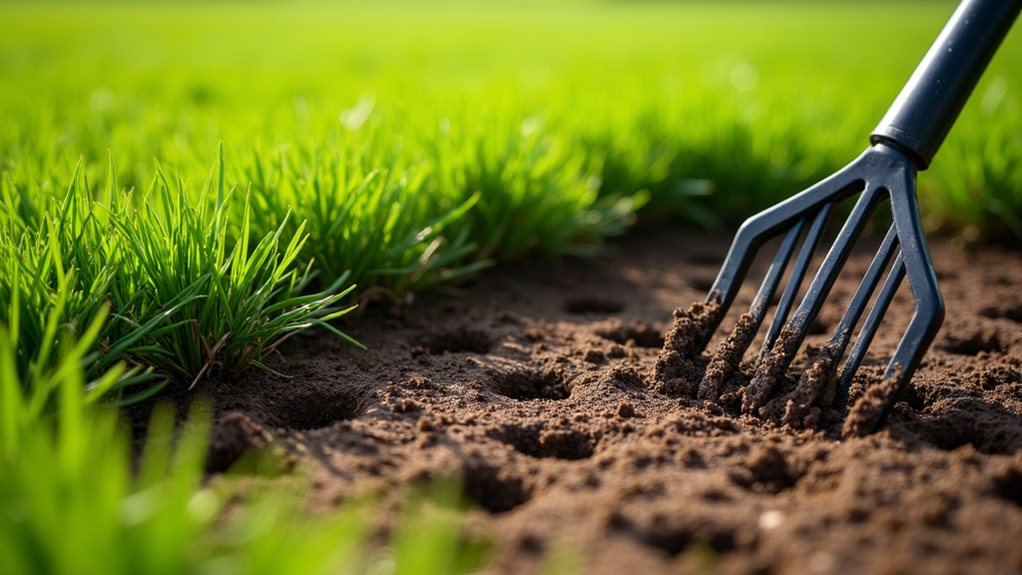
Have you ever wondered how to make your Bermuda grass lawn thicker and more resilient? Aeration and dethatching are key. Providing proper environmental conditions, such as ensuring adequate sunlight and avoiding over-fertilization, can also support a healthier, more vigorous lawn.
Manage Shade and Sunlight for Fuller Bermuda Grass
Maximizing sunlight exposure is essential for encouraging dense, healthy Bermuda grass growth. Effective shade management involves pruning overhanging branches and removing obstacles to improve sunlight penetration.
In shaded areas, raising mowing height and planting shade-tolerant grass like Zoysia or St. Augustine can help maintain lawn density and promote a fuller, more resilient turf.
Maintain Long-Term Lawn Health and Thickness

Maintaining long-term health and thickness of your Bermuda grass lawn requires a strategic approach that combines consistent practices and attentive management. Regular aeration and overseeding improve soil structure and turf density.
Proper fertilization supports healthy growth. Adjust mowing height, manage shade, and address soil health to create ideal conditions.
These practices help ensure your lawn remains thick, vigorous, and resilient over time.
Final Note
By regularly evaluating your Bermuda grass, addressing underlying issues, and implementing proper maintenance techniques like fertilization, aeration, and overseeding, you can considerably improve lawn density. Controlling pests and weeds, managing sunlight exposure, and maintaining ideal mowing practices are essential steps for lasting health and thickness. Consistent care and strategic interventions will help you achieve a lush, resilient Bermuda grass lawn that remains lively and full year-round.

Nathan McPhail is a garden and home DIY expert who writes practical, easy-to-follow advice for homeowners and gardeners. Through Yardique, he shares hands-on tips covering gardening, lawn care, landscaping, home improvement, repairs, tools, and outdoor living. His focus is on helping readers solve everyday household and yard problems with straightforward guidance, useful techniques, and practical solutions.