
For concrete foundations, a durable concrete slab or pavers with slip-resistant finishes offer stability and long-lasting support, while waterproof sealants enhance moisture resistance. On dirt bases, a gravel layer with crushed stone underneath a raised wooden or composite floor helps control ground moisture and prevents shifting. Proper preparation, including moisture barriers and leveling, is vital for both types to guarantee the floor’s durability. To identify the best methods for installation and maintenance, examine these options further.
TLDR
- Concrete floors offer a durable, level surface suitable for various coverings and can be reinforced with pavers or sealants.
- Gravel bases with crushed stone improve moisture control and stability on dirt foundations.
- Raised wooden or composite flooring on dirt prevents ground moisture infiltration and enhances durability.
- Waterproofing with sealants, membranes, or moisture barriers protects floors from water damage.
- Proper foundation preparation, including leveling and moisture management, extends the lifespan of shed floors.
Deciding on the Best Shed Flooring for Your Foundation Type
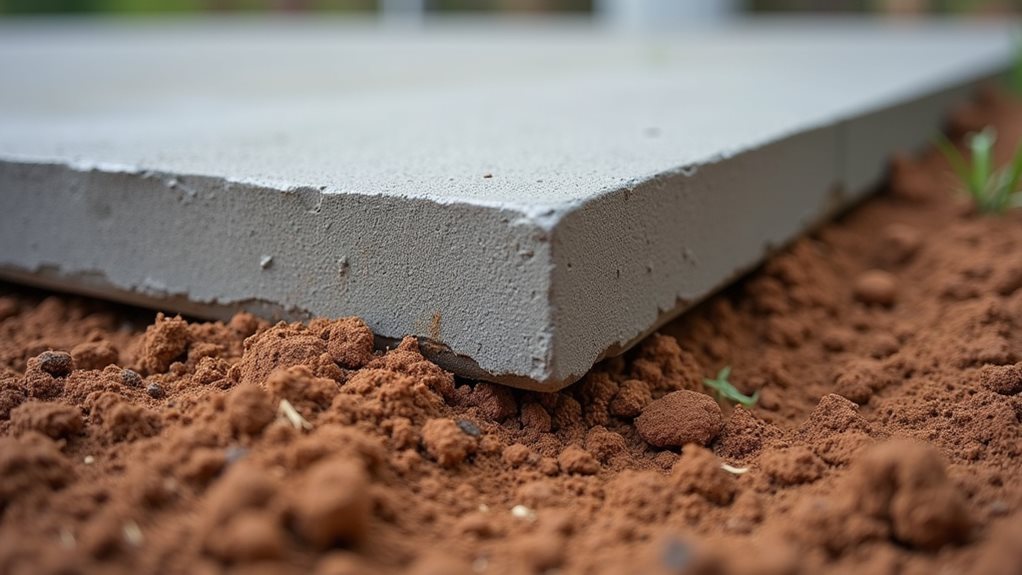
Choosing the right shed flooring depends largely on the type of foundation you have, as each requires specific materials to guarantee durability and stability.
For a proper foundation, a shed floor with moisture resistance is essential.
On concrete, reinforced slabs work best.
While for dirt foundations, raised wooden or composite flooring with gravel bases prevents moisture absorption and enhances stability.
Preparing Your Shed Base Before Installing Flooring
Before installing your shed flooring, taking the time to prepare a solid and level base is essential for ensuring long-term stability and durability. Focus on establishing a proper shed base by carefully leveling the foundation, whether gravel or concrete. Incorporate a moisture barrier beneath the foundation to prevent water infiltration, which helps protect against rot, mold, and shifting over time. To ensure the foundation remains level on uneven ground, consider using measured and marked slopes during the preparatory phase for better stability.
Top Flooring Options for Concrete Foundations
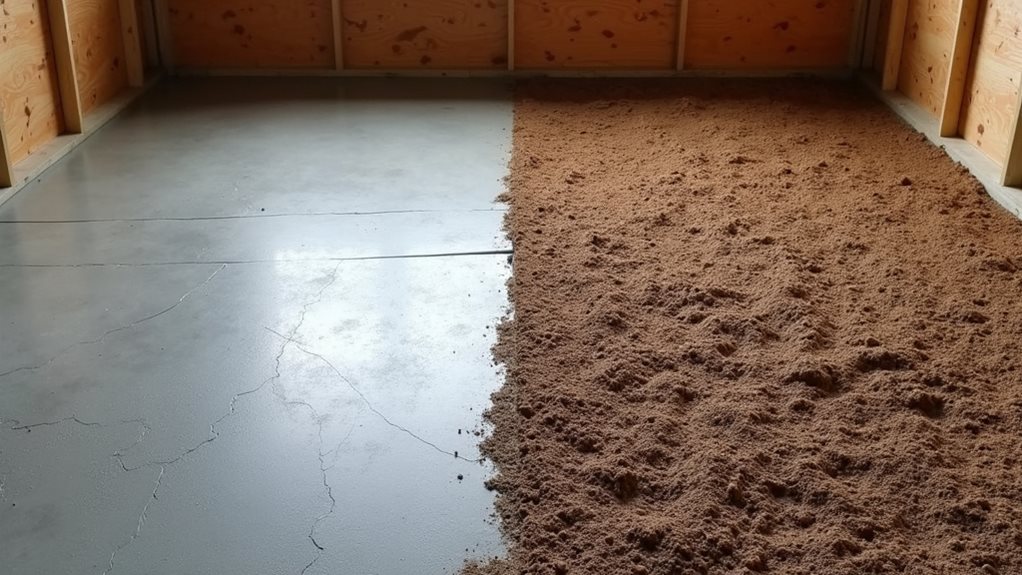
When working with a concrete foundation, there are several flooring options that can enhance the stability and functionality of your shed. A concrete floor provides a level foundation, supporting various floor coverings like pavers or sealed surfaces. Selecting durable, non-slip finishes guarantees safety and longevity, making your shed more comfortable and reliable for years to come. Incorporating drainage and amendments can further improve the overall durability and usability of your shed floor.
Choosing the Right Flooring for Dirt and Gravel Bases
For sheds built on dirt or gravel foundations, selecting the right flooring is essential to guarantee stability, durability, and proper drainage.
Using gravel bases with a crushed stone layer allows for excellent moisture control, reducing the risk of moisture buildup.
Installing a concrete slab provides a durable, level surface that minimizes shifting and sinking over time, ensuring your shed remains secure.
Waterproofing and Moisture Barriers for Shed Floors
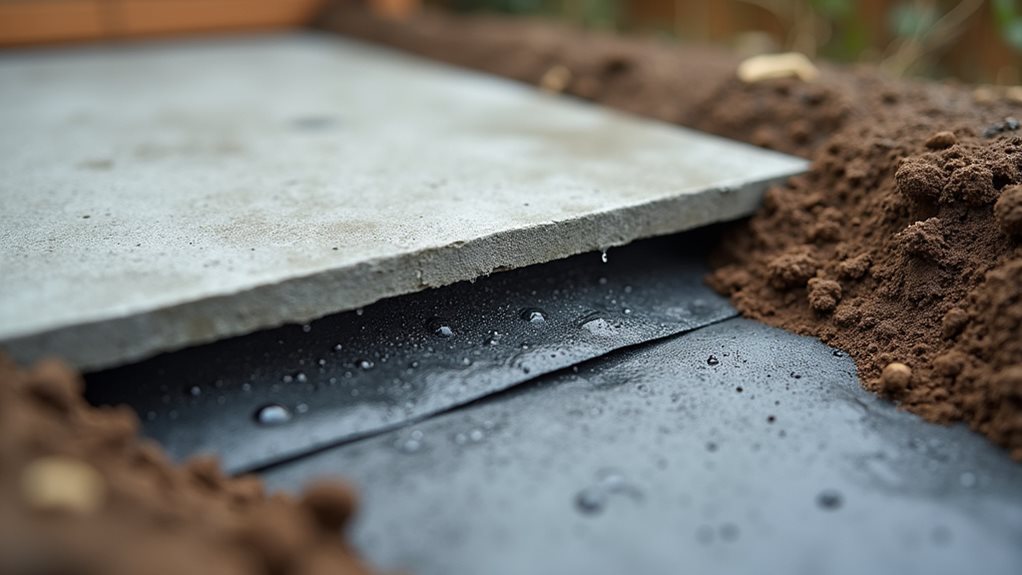
Proper waterproofing techniques are crucial for protecting your shed floor from moisture damage and extending its lifespan. Using sealants, membranes, and raised foundations helps prevent mold, rot, and structural issues.
Paying attention to sealing methods, moisture-resistant materials, and foundation height guarantees your shed remains durable and safe over time.
Sealing Techniques for Durability
Sealing techniques are essential for enhancing the durability of shed floors by creating effective moisture barriers that prevent water infiltration and damage over time. Using sealants to waterproof concrete or seal cracks in wooden floors helps resist moisture, rot, and insects.
Proper sealing guarantees a continuous barrier, prolonging your shed’s lifespan and maintaining a secure, stable environment.
Moisture-Resistant Materials
Moisture-resistant materials play an essential role in protecting shed floors from water infiltration and ground moisture. Using pressure-treated plywood or sealed cork helps prevent rot and mold.
Waterproofing with sealants and coatings enhances durability. Installing vapor barriers and sealing cut ends guarantees long-lasting protection.
Creating a secure environment where your shed remains stable and resilient against moisture-related damage is crucial.
Proper Foundation Elevation
Elevating your shed floor on a proper foundation is vital for preventing moisture from seeping in and causing damage over time. A solid base, like gravel or a concrete slab, combined with effective waterproofing and a moisture barrier, helps keep ground moisture out.
Incorporating drainage solutions guarantees water flows away, protecting your shed’s longevity and maintaining a dry, stable environment.
Installing Wooden or Composite Floors on Your Shed Base
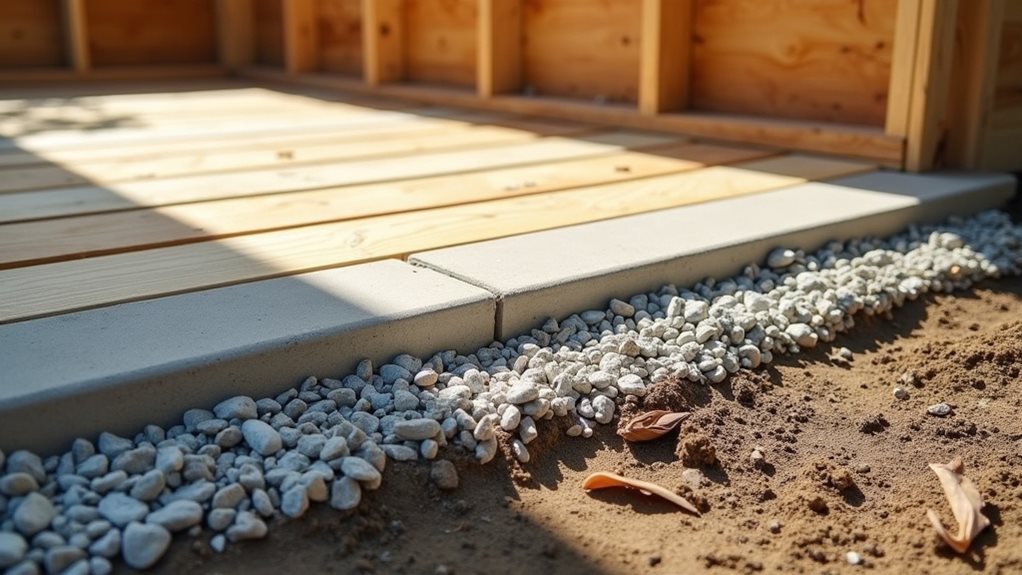
Building a sturdy shed floor begins with constructing a reliable frame using treated runners and rim-boards, which provide essential support and stability. You’ll want to focus on proper framing and leveling to create a flat surface. Using pressure-treated wooden or composite decking materials helps resist rot and moisture, ensuring your shed’s foundation remains durable and secure over time. Additionally, considering the environmental needs of your shed location can help prevent issues related to moisture and decay.
Maintaining and Extending the Life of Your Shed Floor
Regular maintenance is essential for preserving the integrity of your shed floor and ensuring it remains functional over time.
To prevent water damage, inspect for signs of moisture intrusion or mold, and apply protective coatings like waterproof sealants on wooden floors.
Elevating your shed and ensuring proper ventilation also help reduce ground moisture, extending the life of your shed floor.
Implementing seasonal and frequency guidance by scheduling inspections and maintenance routines can further help prevent issues related to compaction and moisture buildup.
Comparing Cost, Durability, and Ease of Installation for Shed Flooring Options
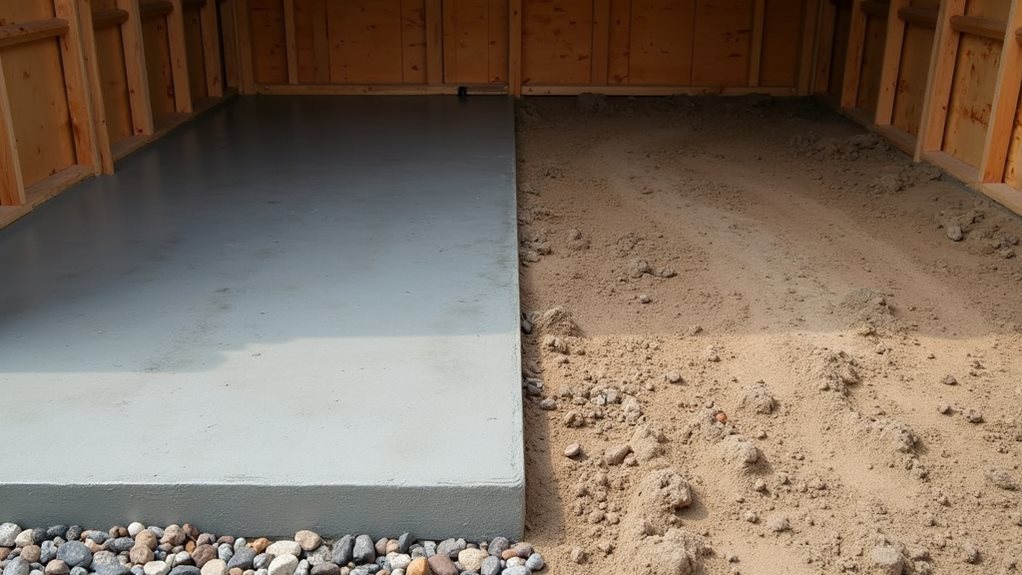
When choosing the right shed flooring, it’s important to take into account how each option balances cost, durability, and ease of installation, as these factors considerably impact your long-term investment and maintenance efforts. Concrete floors offer high durability but come with higher costs and complex installation. Dirt floors are more affordable but require additional treatments. Paving provides a stable, cost-effective alternative that’s easier to install. Additionally, considering installation labor and site requirements can influence the overall project cost and feasibility.
Final Note
Choosing the right shed floor depends on your foundation type, climate, and budget. Concrete provides durability and stability, making it ideal for heavy use, while dirt and gravel bases require proper moisture barriers and drainage solutions. Proper installation, waterproofing, and maintenance are essential to extend your shed’s lifespan. By carefully evaluating these factors, you can select a flooring option that balances cost, durability, and ease of installation, ensuring a functional and long-lasting shed.

Nathan McPhail is a garden and home DIY expert who writes practical, easy-to-follow advice for homeowners and gardeners. Through Yardique, he shares hands-on tips covering gardening, lawn care, landscaping, home improvement, repairs, tools, and outdoor living. His focus is on helping readers solve everyday household and yard problems with straightforward guidance, useful techniques, and practical solutions.