You’re risking lower resale value by choosing all-white kitchens that feel sterile or skipping proper prep on cabinet refinishes. Avoid full remodels when minor updates offer better ROI. Over-personalized spaces, like custom closets or DIY saunas, limit buyer appeal. Pools and unpermitted work often cost more than they return. DIY electrical or HVAC projects invite safety hazards and devalue your home. Neglecting maintenance or deck safety accelerates depreciation—smart upgrades protect long-term equity. There’s a smarter way to prioritize improvements that enhance value without the guesswork.
TLDR
- Over-personalized designs like bold murals or custom closets reduce buyer appeal and resale value.
- Skipping permits for electrical or HVAC work can void warranties and hinder loan approvals.
- Poor deck construction, such as attaching ledgers to siding, risks structural failure and safety hazards.
- DIY HVAC or electrical installations may cause code violations, fires, and long-term efficiency losses.
- Neglecting routine maintenance or over-improving landscaping erodes market value and buyer interest.
Choosing All-White Kitchen Designs That Date Quickly
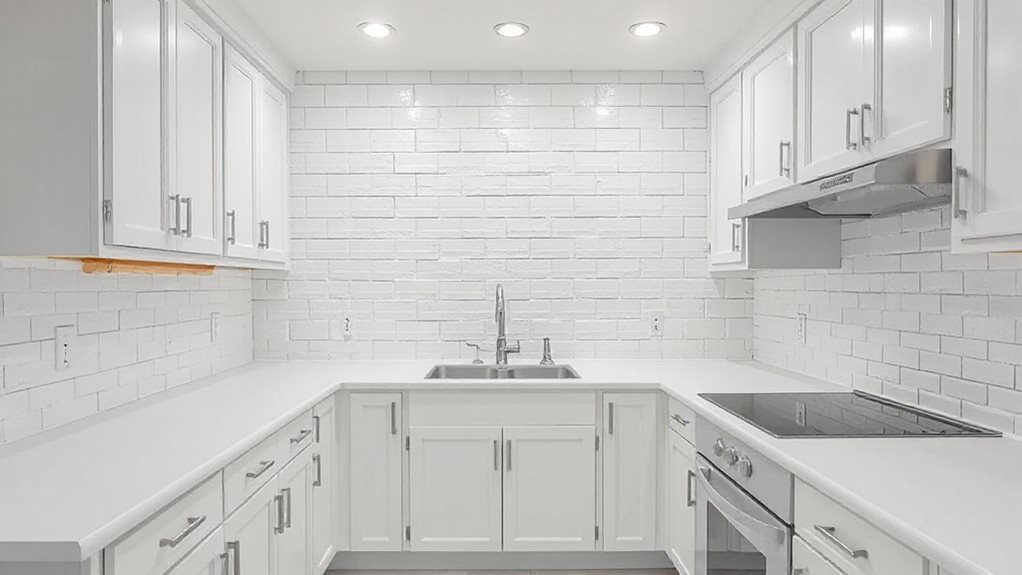
While all-white kitchens once reigned supreme, they’re now falling out of favor—and costing homeowners at resale. You risk a dated, sterile look that lacks personality, turning off buyers seeking warmth and drama. Though white offers broad appeal, it shows wear quickly and demands constant upkeep. Instead, consider two-tone cabinets or bold hues like graphite to enhance value, meet modern tastes, and create a kitchen that truly feels like home. Robust demand across B2C and B2B channels for white cabinets continues to indicate strong market interest despite shifting design trends. Refinishing or refacing cabinets can be a cost-effective way to update color and finish without the higher expense of full replacement, especially since professional refinishing typically ranges from roughly $2,000–$10,000 and refacing often costs 30–50% less than replacement, making it a smart option for many homeowners refinishing costs.
Undertaking Full Kitchen Remodels Instead of Minor Updates
If you’re considering a kitchen overhaul, think twice before tearing out walls or investing in custom cabinetry—major remodels often cost far more than they return, while minor updates can deliver stronger value with less risk.
Focus on cosmetic fixes like new countertops, paint, or hardware, which offer 70%–96% ROI.
These practical, budget-friendly changes align with buyer expectations, avoid overspending, and guarantee your upgrade enhances, rather than hinders, resale appeal.
Also, when refreshing surfaces consider proper preparation like sealing edges to prevent moisture issues and improve longevity.
Installing Custom Walk-In Closets With Limited Buyer Appeal
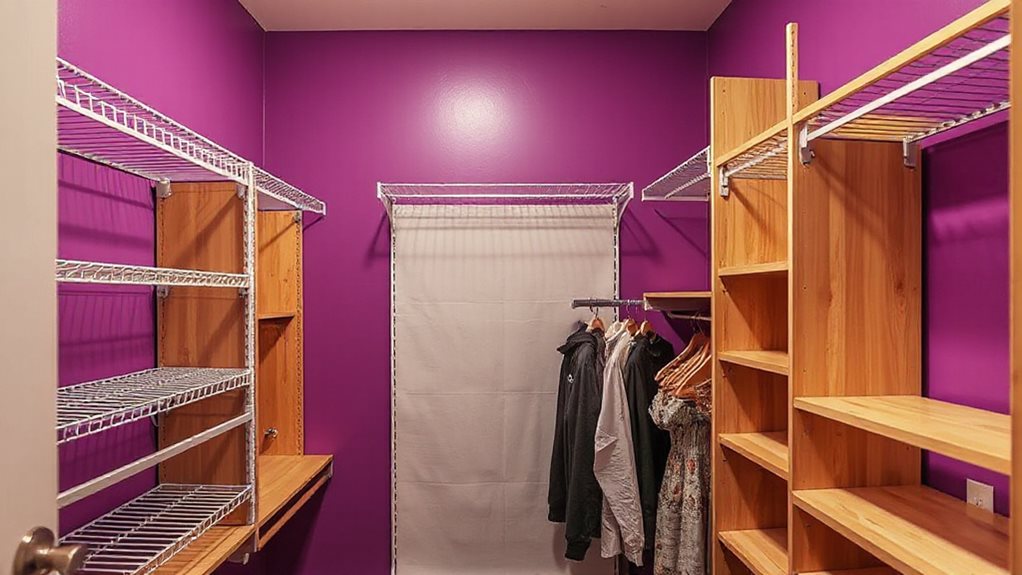
Tearing out a functional closet to install a highly customized walk-in may seem like a dream upgrade, but it often backfires when it comes time to sell. You risk alienating buyers with overly specific layouts, niche storage, or personal designs that limit adaptability.
These changes can shrink your buyer pool, extend time on market, and yield just 50–60% ROI—especially when funds could enhance higher-impact areas like kitchens or bathrooms. Legal action may be necessary if privacy rights are violated and you should document incidents of unauthorized surveillance to support any case.
Over-Personalizing Spaces With Handmade or Niche Finishes
You often pour time and passion into handmade or niche finishes because they reflect your personality and creative vision, but these one-of-a-kind touches can unintentionally diminish your home’s market appeal.
Bold colors, custom murals, or DIY flooring may bring you joy, yet they deter broad buyer interest.
Prioritize timeless, neutral upgrades to guarantee wider attraction and stronger resale value in competitive markets.
When preparing such surfaces for sale, be sure to follow proper prep steps like sanding the deck surface and repairs to ensure finishes look professional and durable.
Investing Heavily in Pools With Low Return on Investment
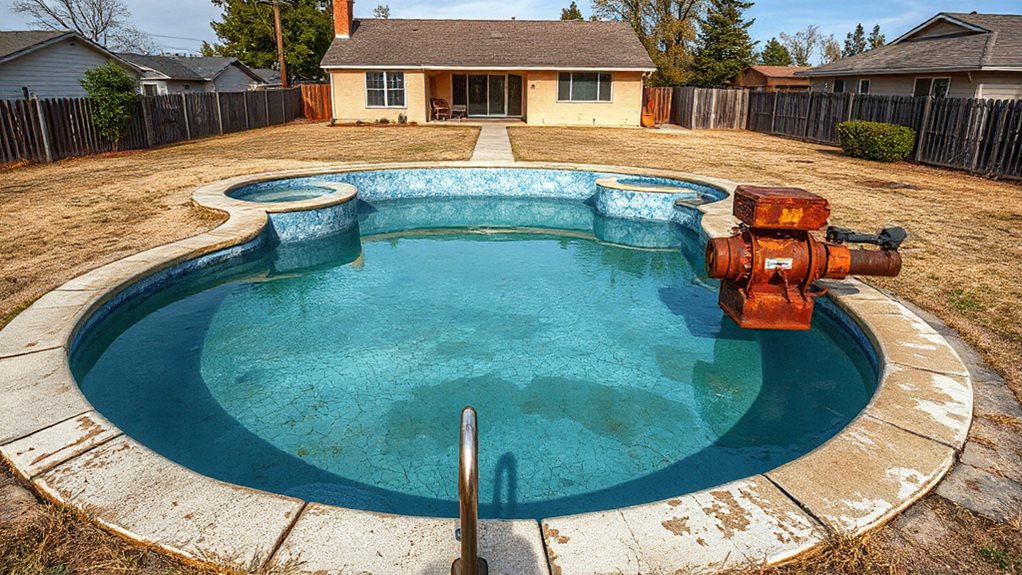
You might love swimming, but putting in a pool could cost you more than it adds to your home’s value, with most seeing just 5% to 8% return on average.
While inground pools can enhance curb appeal in warm areas like Texas or Florida, they often turn off buyers worried about high upkeep, safety rules, and yearly costs that can hit $5,000.
And since most people value kitchen upgrades or extra square footage more, a pricey pool is usually a lifestyle choice, not a smart financial move.
Consider that ongoing maintenance and protective measures, such as regular cleaning and sealing for durable surfaces like stone daily care, can add unexpected long-term expenses.
Pools Cost More Than They Add
Often overlooked in the excitement of backyard renovation, installing a pool can actually cost far more than it adds in resale value. You’ll typically spend $50,000 to $100,000, yet recoup only about 56% on average.
Annual upkeep runs $1,200 to $1,800, and removal can cost up to $15,000, making it a costly addition with limited return.
Limited Buyer Appeal for Swimming Pools
While not every homeowner regrets installing a pool, many find out too late that its appeal doesn’t translate broadly across the real estate market, leading to limited buyer interest and underwhelming returns.
You’ll likely attract only niche buyers, especially in colder regions where usage is short. Even in warm climates, returns vary widely, and most pools add just 1–7% to home value, making broad buyer appeal rare.
Maintenance Burdens Deter Future Buyers
Maintaining a swimming pool often comes with hidden financial demands that can catch even seasoned homeowners off guard.
You’re looking at $960–$1,800 yearly for basic upkeep, plus $300–$500 in electricity, and surprise repairs like a $700 salt cell replacement.
With total annual costs reaching $3,000–$5,000, future buyers may hesitate, seeing ongoing expenses rather than backyard luxury.
Over-Improving Landscaping Beyond Neighborhood Standards
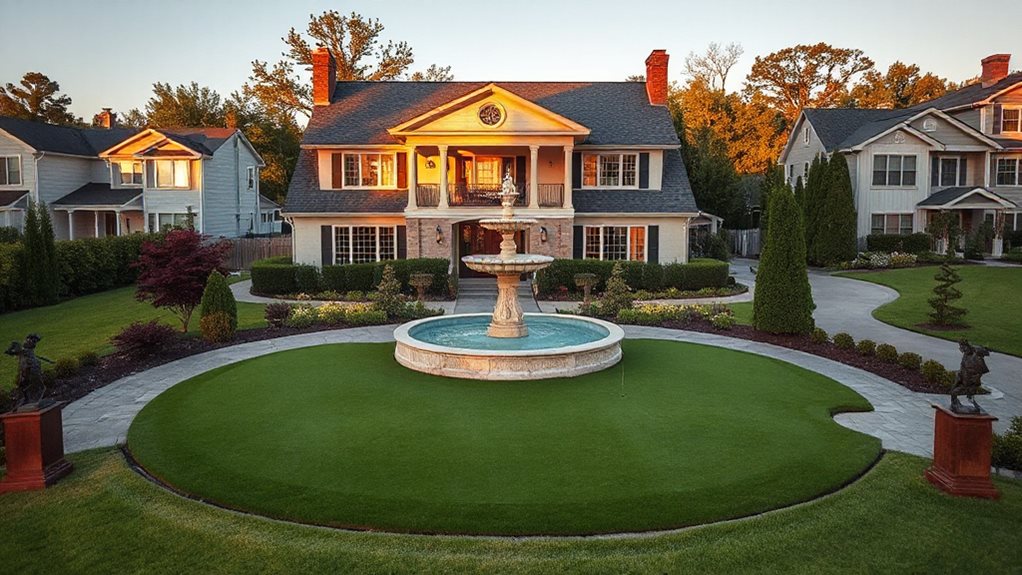
When you invest heavily in landscaping without considering the character of your neighborhood, you risk creating a yard that stands out for the wrong reasons. Over-improving with oversized trees or excessive hardscaping can disrupt local uniformity, lowering perceived value.
Align your upgrades with area standards—Virginia Tech and ASLA recommend matching plant types, design, and scale to community norms for maximum appeal and return.
Building Decks Without Professional-Quality Execution
If you’re attaching your deck’s ledger board directly to the siding without anchoring it to the house’s structural framing, you’re putting the entire structure at risk—half the deck’s weight relies on this critical connection.
Using nails or undersized fasteners, skipping corrosion-resistant hardware, or skimping on footing depth invites long-term failure, costly repairs, and safety hazards nobody wants near their home.
Attempting Structural Repairs Without Proper Expertise
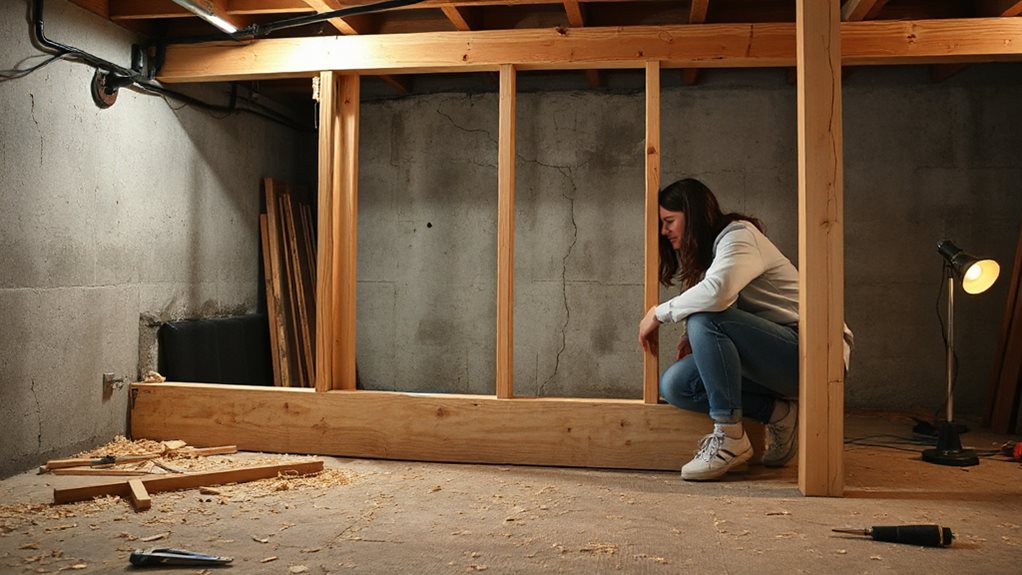
While it might seem cost-effective to patch visible cracks or stabilize sagging beams yourself, tackling structural repairs without proper skill often does more harm than good—compromising your home’s integrity and setting the stage for far more expensive interventions down the line.
You risk missed soil issues, unsafe load shifts, and inspector flags. Pros use steel piers and warranties, ensuring lasting strength and buyer trust, protecting both safety and value.
Handling Complex Upgrades Like HVAC or Electrical Systems DIY
You risk serious safety hazards when tackling HVAC or electrical upgrades yourself, like electrocution from high-voltage wiring or fires from incorrect connections.
Skipping professional installation can void your system’s warranty, leaving you on the hook for costly repairs and reducing long-term efficiency.
Plus, improper sizing, refrigerant handling, or ductwork mistakes don’t just hike energy bills—they’re red flags that can lower your home’s value at resale.
Risky DIY Electrical Work
Often, homeowners tackle electrical upgrades without realizing how quickly a simple project can turn into a dangerous or costly mistake.
You risk shocks, fires, or code violations when working with wiring, especially without training. DIY electrical work can void insurance, lead to legal liability, and reduce your home’s value.
Hidden faults may escape notice until it’s too late, making professional installation the safer, smarter choice for you and your family.
HVAC System Missteps
A surprising number of homeowners attempt to install or upgrade HVAC systems themselves, not realizing how quickly cost-saving intentions can backfire.
Skipping professional sizing, ductwork upgrades, or proper refrigerant handling leads to inefficiency, safety risks, and voided warranties. These missteps reduce comfort, spike energy bills, and lower resale value—costly mistakes that could’ve been avoided with licensed skill ensuring peak performance and long-term home value.
Permit Shortcuts Cost Value
Skipping permits on complex home upgrades like electrical or HVAC systems might save time upfront, but it triggers a chain of consequences that erode both safety and market value.
Unpermitted work raises red flags during inspections, lowers appraisals, and deters buyers relying on FHA or VA loans. You risk fines, insurance denials, and costly re-dos—ultimately cutting resale value and inviting liability.
Neglecting Routine Maintenance That Impacts Home Value
You’re likely underestimating how quickly small oversights add up when routine maintenance slips through the cracks—yet the data shows neglected upkeep directly erodes your home’s market value. Skipping cleanings or repairs cuts appraised value by 10%, while major system neglect drops prices 15–25%.
Well-maintained homes gain 2–5% more appreciation yearly, proving consistent care protects both value and buyer interest over time.
Skipping Essential Exterior Repairs Due to Cost Concerns
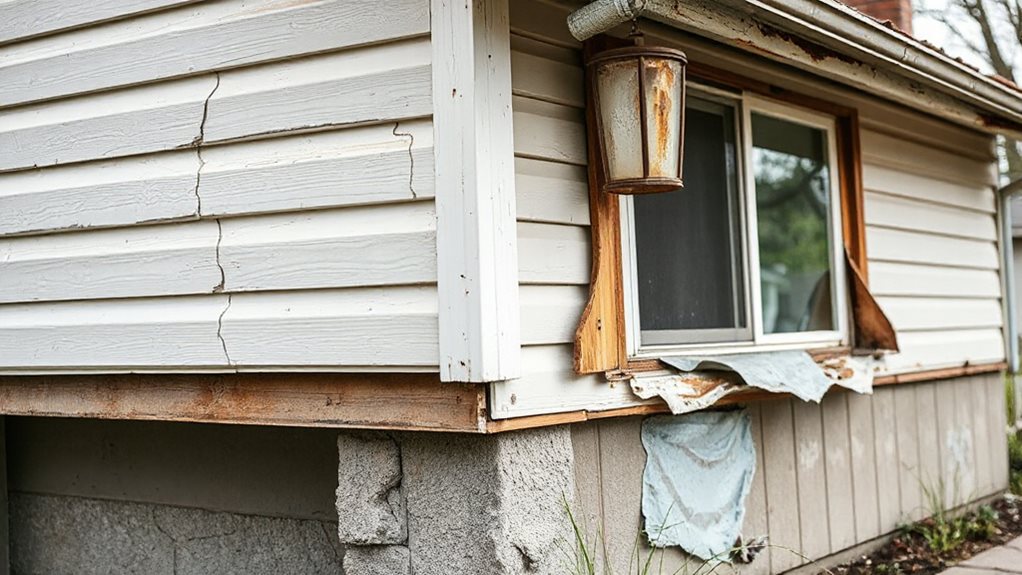
While cutting corners on exterior repairs might seem like a budget-friendly move today, ignoring visible damage can materially undercut your home’s market value down the line.
You risk lower offers, failed inspections, and higher negotiation losses when buyers spot roof damage, cracked siding, or peeling paint. These issues signal neglect, reduce curb appeal, and deter eco-conscious or family buyers—ultimately costing you more than timely repairs would have.
Converting Garages or Basements Into Low-ROI Lifestyle Spaces
You might think turning your garage into a gym or your basement into a sauna adds value, but these lifestyle upgrades often don’t pay off when it’s time to sell.
Most buyers prefer functional garage space or finished basements with versatile, rentable potential over personal amenities that limit usability. Since these conversions can cost tens of thousands and yield less than 60% return, you’re usually better off investing in improvements that enhance broad market appeal.
Basement Sauna Conversions
Though adding a personal retreat like a basement sauna may seem like a luxurious upgrade, it often delivers minimal financial return when it’s time to sell.
You’ll likely recoup only half your installation costs, as most buyers don’t value saunas highly. Converting space into a sauna sacrifices potential bedrooms or rental units that yield stronger returns, and ongoing maintenance, energy use, and code compliance can further diminish value.
Garage to Gym
Turning your garage into a home gym might sound like a smart way to stay fit and maximize unused space, but it often backfires when it comes time to sell.
You lose parking and storage—key selling points—while spending $7,000–$25,000 that you won’t fully recoup.
Most buyers won’t pay more for a gym, and resale value drops 12–38% in car-dependent areas, making this conversion a poor investment.
Final Note
You can enhance your home’s value by avoiding common DIY pitfalls. Skip overly trendy designs, like all-white kitchens, and opt for timeless updates instead. Avoid costly, low-return projects like pools or over-personalized spaces. Never tackle complex electrical or HVAC work yourself. Prioritize maintenance and essential exterior repairs, as neglect hurts value fast. Smart, simple improvements with broad appeal protect your investment and attract more buyers in the long run.