
To save vegetable seeds for next year, wait until seeds are fully mature, which means fruits are dry and hardened. Harvest them carefully, ensuring they are ripe, then dry seeds thoroughly until brittle. Store seeds in airtight containers away from light and moisture to maintain viability. To prevent cross-pollination, use physical barriers, stagger flowering times, or isolate plants. Label everything clearly for easy identification, and keep your seed collection organized. Stay attentive to avoid common issues, and you’ll uncover more tips as you continue.
TLDR
- Allow vegetable seeds to fully mature and dry on the plant before harvesting.
- Dry seeds thoroughly until brittle, then store in airtight, labeled containers in a cool, dark place.
- Use physical barriers or stagger planting to prevent cross-pollination and maintain seed purity.
- Keep detailed records of seed types, harvest dates, and storage conditions for easy management.
- Regularly check seed viability and replace stored seeds as needed for successful planting next year.
How Do I Know When Vegetable Seeds Are Fully Mature?
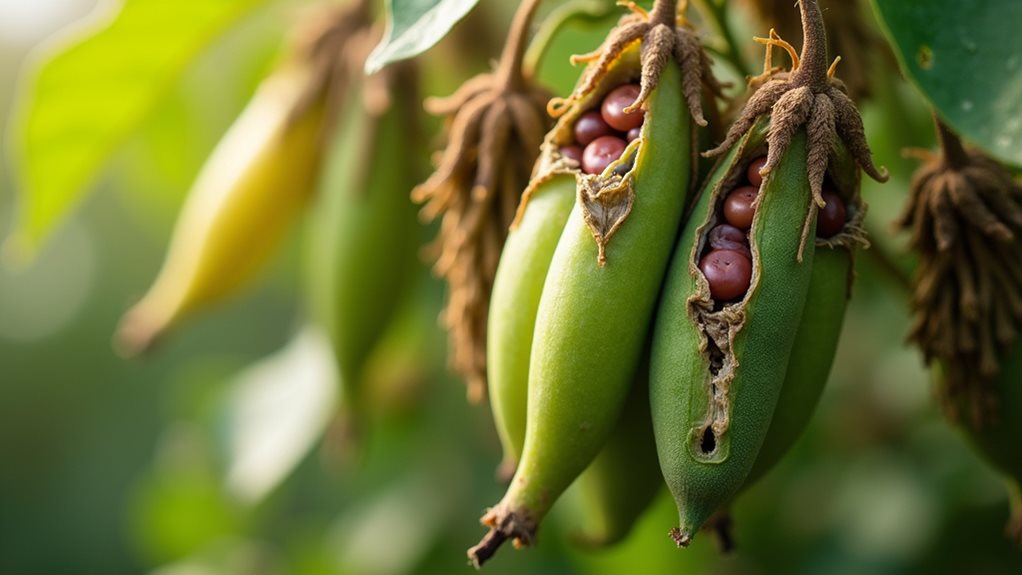
Knowing when vegetable seeds are fully mature is essential for successful seed saving, and it largely depends on observing the physical changes in the plant’s fruit or seedhead. Fully ripe seeds are ready for seed harvest when they’re dried out, with a hard seed coat indicating seed ripeness. Wait until the seeds are mature and dried for peak seed maturity, ensuring they’re fully ready to plant next season. Recognizing drywall imperfections and ensuring proper drying conditions can help preserve seed viability.
How to Harvest and Prepare Seeds From Different Vegetables
Harvesting and preparing seeds from different vegetables requires careful attention to their unique characteristics and ripening processes.
You should harvest seeds from fully ripe, dry fruits or seed heads, ensuring they’re thoroughly dried for at least two weeks.
Properly prepared seeds, stored in labeled containers and dried in a cool, dark place, improve germination and viability for future planting.
Best Ways to Dry and Store Your Seeds for Longevity
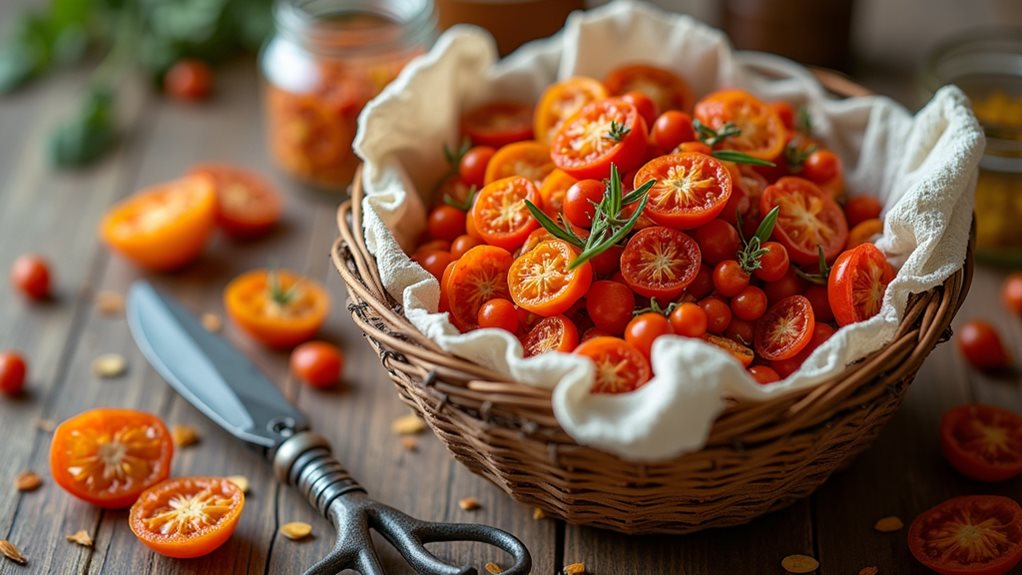
Proper drying and storage are crucial to preserve seed viability over time, as moisture and improper conditions can lead to mold, rot, or loss of germination potential. To guarantee seed longevity, dry seeds until they’re dry and brittle. Then store seeds in airtight containers, like glass jars, in a cool dark place. Regular checks help maintain seed viability for years. Incorporating soil amendments into your seed-saving process can help ensure healthy seed development and storage.
How Can I Prevent Cross-Pollination and Maintain Seed Purity?
Preventing cross-pollination is essential for maintaining seed purity, especially when saving seeds from specific vegetable varieties. You can do this by using physical barriers like isolation cages, staggering flowering times, or practicing hand-pollination and bagging flowers. Incorporate companion planting basics to help deter pests and support plant health, which can also contribute to more controlled pollination environments. For self-pollinating and open-pollinated crops, distance isolation helps, reducing the risk of unintended cross-pollination.
Labeling and Organizing Your Seed Collection for Easy Use
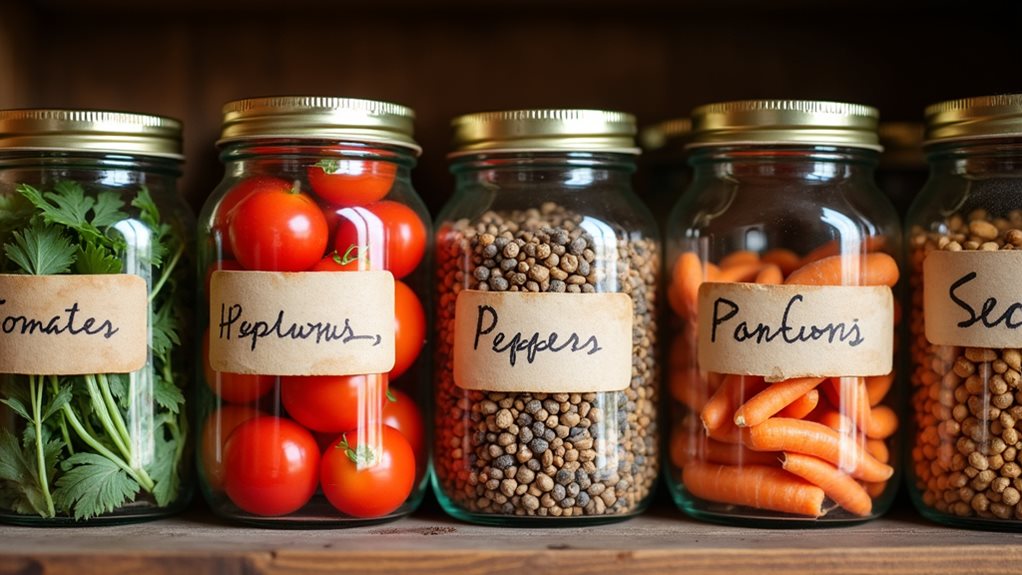
Organizing your seed collection efficiently not only saves time during planting but also helps guarantee you can quickly identify and access the seeds you need. Use clear seed packets with accurate seed labels, waterproof markers, and durable seed storage containers.
Maintain a seed log and organize by type or season in labeled bins, ensuring seed viability and easy seed identification for future planting success. Incorporate proper labeling techniques to prevent mix-ups and extend seed longevity.
Common Seed Saving Problems and How to Fix Them
Many common seed saving problems stem from issues that can be addressed through careful handling and attention to detail. Unwanted cross-pollination affects seed viability and can produce hybrid seeds, so isolating plants is vital. Proper seed harvest timing guarantees seed maturity, while ideal seed storage conditions prevent contamination and preserve seed germination. Avoiding damage, disease, and immature seeds enhances success. Incorporating crop rotation into your seed saving routine can help reduce pest and disease buildup, contributing to healthier seed production.
Resources and Tips to Improve Your Seed Saving Skills
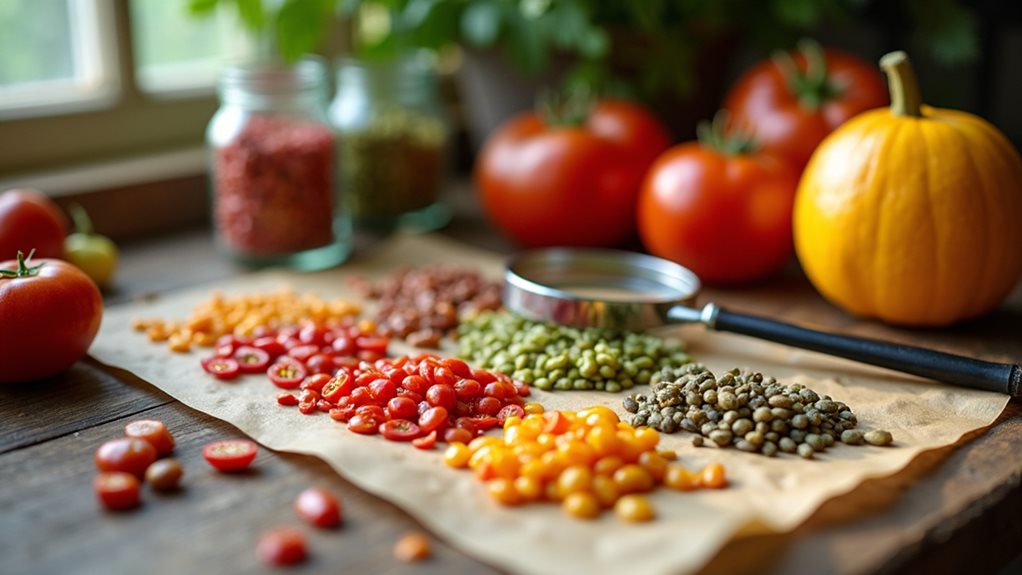
Enhancing your seed saving skills begins with utilizing reliable resources and adopting effective techniques that deepen your understanding of seed viability, seed storage, and seed drying.
Study crop-specific guides, watch instructional videos, and practice plant isolation to maintain seed purity.
Use seed labels for tracking heirloom seeds, select vigorous plants, and guarantee proper seed germination for successful planting next season.
Final Note
By understanding when your vegetables are fully mature, properly harvesting and drying seeds, and organizing them carefully, you can guarantee high-quality, viable seeds for future planting. Preventing cross-pollination and addressing common seed-saving issues will maintain seed purity and longevity. With consistent practice and attention to detail, you’ll develop a reliable seed-saving routine that enhances your garden’s resilience and productivity. Proper seed saving not only preserves your favorite varieties but also promotes sustainable gardening practices.

Nathan McPhail is a garden and home DIY expert who writes practical, easy-to-follow advice for homeowners and gardeners. Through Yardique, he shares hands-on tips covering gardening, lawn care, landscaping, home improvement, repairs, tools, and outdoor living. His focus is on helping readers solve everyday household and yard problems with straightforward guidance, useful techniques, and practical solutions.