
To build a cold frame for winter gardening, select a sunny, level site with good drainage, ideally south-facing. Use durable, weather-resistant materials like cedar or composite lumber, and choose clear covers such as polycarbonate or recycled storm windows for good insulation and light transmission. Construct a sloped lid taller on the south side, with adjustable vents to control airflow and temperature. Insulate the sides with foam board or mulch, seal gaps, and guarantee stability. Continuing will reveal more detailed steps for ideal winter crop success.
TLDR
- Select a sunny, level site with good drainage, ideally south-facing and sheltered from prevailing winds.
- Build a sturdy, insulated frame using weather-resistant materials like cedar or treated lumber.
- Use transparent cover materials such as glass or polycarbonate to maximize sunlight and durability.
- Incorporate vents or hinged lids for adjustable airflow and temperature regulation.
- Grow cold-hardy crops like kale, spinach, and carrots to extend your winter gardening season.
Why Build a Cold Frame for Winter Gardening?
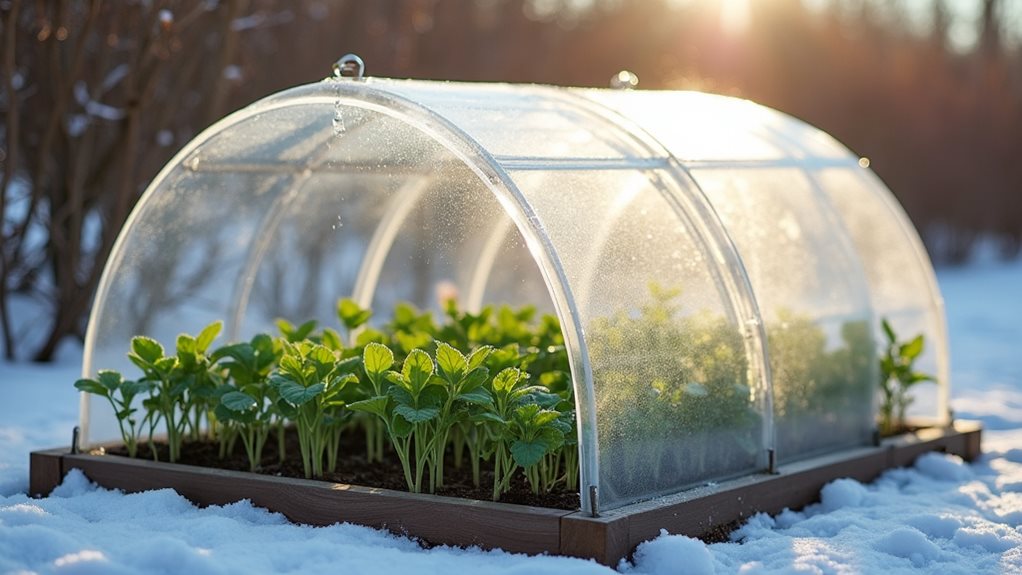
Building a cold frame is a practical way to extend your gardening season into the winter months, especially if you want to keep growing fresh produce year-round.
A cold frame creates a micro-environment, maintaining temperatures 5-10°F warmer than outside. This allows you to practice winter gardening and grow cold-hardy crops.
It also helps protect your plants from harsh weather conditions. Using proper ventilation and airflow is essential to prevent disease and support healthy plant growth inside the cold frame.
How to Choose the Best Site for Your Cold Frame
Choosing the right site for your cold frame is essential to guarantee it functions effectively and provides the best environment for your winter crops. Proper site selection involves ensuring sufficient sunlight, ideally facing south for maximum solar gain, and selecting a level, well-draining area. Avoid shaded spots and prevailing winds to prevent heat loss and structural stress, promoting ideal plant growth.
What Materials Make a Durable, Insulating Cold Frame?
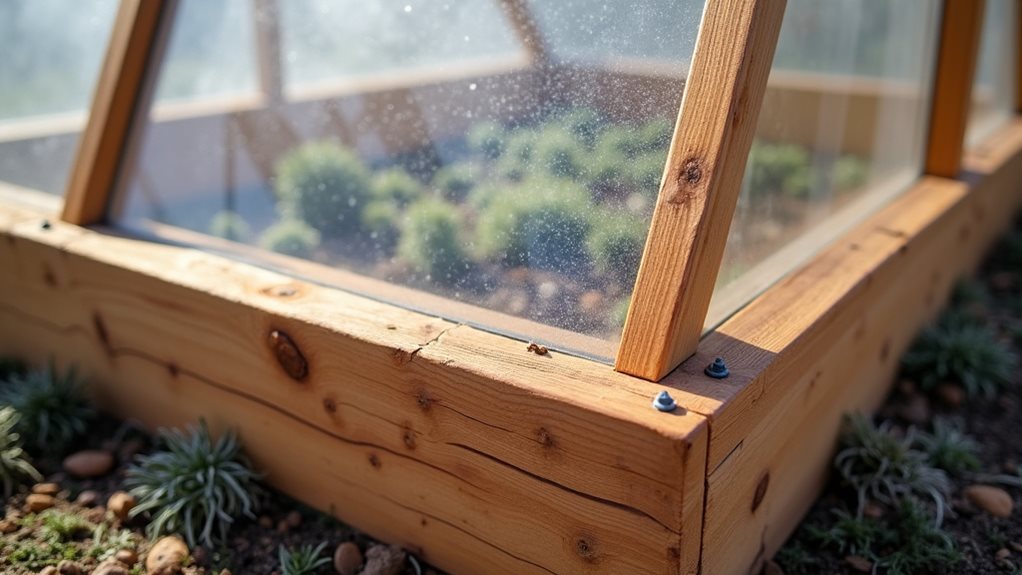
Selecting the right materials is essential for building a cold frame that lasts through harsh weather and provides effective insulation. Treated or weather-resistant lumber, like cedar or composite materials, guarantees the frame resists moisture and decay over time. Using polycarbonate or double-pane glass lids helps retain heat better than single-pane options. Using recycled items such as storm windows or plexiglass can also offer sturdy, insulating covers. Sealing gaps with straw, mulch, or foam improves overall warmth and energy efficiency. Additionally, choosing materials that resist moisture ensures the cold frame remains durable and functional for many seasons.
Effective Insulating Materials
When choosing insulating materials for your cold frame, it’s important to focus on durability, thermal efficiency, and resistance to environmental factors.
Insulation options like polycarbonate panels offer excellent thermal protection and durability.
Rigid foam board enhances thermal efficiency in framing.
These materials help create a sturdy, well-insulated cold frame that retains heat and withstands outdoor conditions effectively.
Durable Frame Options
Durability is a key factor when selecting materials for your cold frame, as it directly impacts its longevity and effectiveness in protecting plants during winter.
Cedar offers natural resistance to rot.
Polycarbonate panels provide excellent insulation and shatter resistance.
Metal framing, such as galvanized steel or aluminum, guarantees high durability and rust resistance, making your cold frame sturdy and long-lasting.
How to Design Your Cold Frame: Size, Shape, and Ventilation
When designing your cold frame, choosing the right size guarantees it fits comfortably in your garden while maximizing heat retention. Common options include 4×4 or 4×8 feet.
The shape, especially a sloped lid taller on the south-facing side, helps capture more sunlight and improves runoff during rain or snow.
Incorporating adjustable vents or hinged lids allows you to regulate airflow and temperature, creating a stable environment for winter growth. Additionally, selecting durable and rust-resistant materials ensures the cold frame maintains its integrity through harsh weather conditions, as noted in the maintenance savings discussed in lawn mower features.
Optimal Size Considerations
Choosing the right size for your cold frame is essential to make certain it effectively extends your growing season without becoming difficult to manage.
A size between 4×4 and 4×8 feet offers a good balance of space and manageability. This allows you to efficiently manage temperature, ventilation, and maintenance.
Proper dimensions guarantee your cold frame is functional, accessible, and suited to your gardening needs.
Shape for Sunlight Capture
Designing the shape of your cold frame plays a significant role in maximizing sunlight capture and optimizing plant growth during winter months. An angled design with a sloped lid guarantees better sunlight exposure and efficient rain or snow runoff.
A taller back panel allows the lid to catch more direct sunlight, increasing heat gain and overall effectiveness of your winter garden.
Effective Ventilation Strategies
Effective ventilation is essential for maintaining a stable environment inside your cold frame, especially during winter when temperature fluctuations can be significant.
You can achieve this by incorporating adjustable vents, such as side vents or hinged panels, that allow for precise airflow regulation.
Strategic placement of vents promotes natural convection, ensuring ideal temperature control and preventing overheating or excessive cooling.
Step-by-Step: Building Your Cold Frame
Building a cold frame begins with precise measurements and careful cutting of plywood panels to form the structure’s walls.
For a sturdy, functional cold frame, guarantee the back panel is taller for maximum sunlight capture.
Assemble the box by screwing or nailing the panels.
Then construct a lid frame with matching plywood strips, attaching clear plastic with hinges for ventilation—making your DIY project complete.
Which Cover Material Is Best: Glass, Plastic, or Polycarbonate?
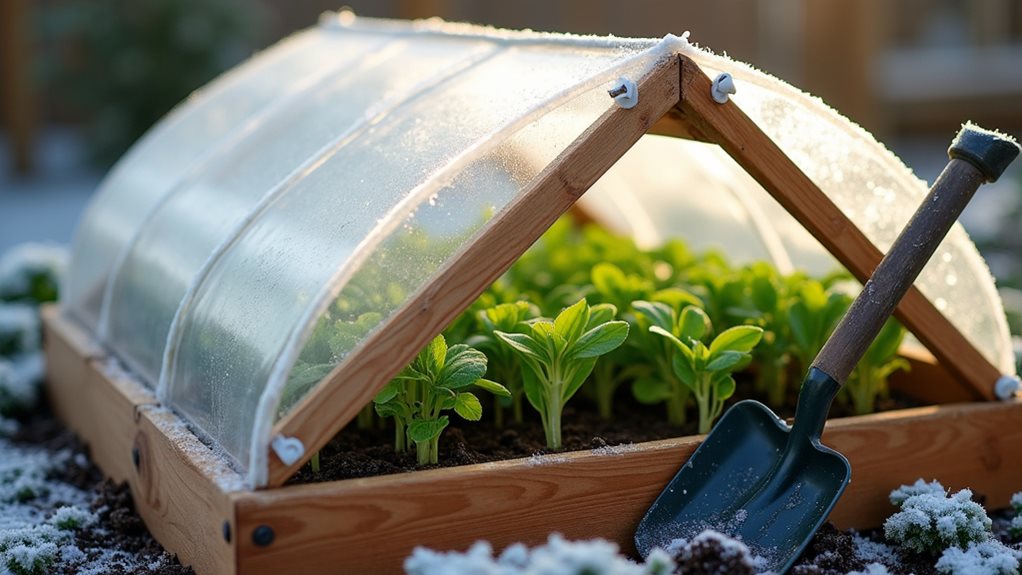
Choosing the right cover material for your cold frame is essential because each option offers different benefits and trade-offs.
Glass provides excellent light transmission and durability, promoting faster growth. However, it is fragile and heavy.
Plastic covers are lightweight and inexpensive but may degrade over time.
Polycarbonate balances durability with good light transmission, making it a practical, long-lasting choice for your winter gardening needs.
How to Fill and Insulate Your Cold Frame for Winter
To keep your cold frame warm during winter, choosing the right insulation materials and sealing gaps is crucial, as these steps prevent heat loss and drafts.
Filling the space between the frame and soil with straw or hay traps heat.
While insulating the sides with foam board or bubble wrap enhances thermal retention.
Layering additional coverings over the lid, especially in extreme cold, can provide extra protection.
Sealing cracks with weatherproof caulk guarantees your plants stay protected and healthy.
Insulation Materials Selection
Proper insulation is crucial to maintaining a stable temperature inside your cold frame during winter.
Selecting the right materials can make a significant difference. Use insulating materials like foam board or bubble wrap for thermal protection.
Fill gaps with mulch or straw, and add natural barriers such as leaves on the floor.
Sealing joints guarantees consistent, effective insulation.
Proper Gap Sealing
Sealing gaps effectively is crucial for maintaining a stable temperature inside your cold frame during winter, as even small openings can lead to significant heat loss.
You should seal gaps with weatherstripping or foam tape along edges, fill soil gaps with mulch or straw for insulation, and use caulk around joints and hinges.
Regular resealing guarantees consistent insulation and ideal thermal efficiency.
Layering for Warmth
Layering materials inside your cold frame considerably enhances its ability to retain heat during winter months. You can insulate the bed by filling the space between the cold frame and soil with mulch or straw, which helps maintain a stable temperature.
Adding compost on top generates warmth as it decomposes, creating a cozy environment for your plants.
Managing Temperature and Ventilation in Your Cold Frame
Managing temperature and ventilation effectively is essential for maintaining a healthy environment inside your cold frame. You should use ventilation options like adjustable vents or open side panels to control airflow and prevent overheating. Regularly monitoring interior temperatures with a thermometer helps you maintain ideal conditions, ensuring your plants stay healthy and stress-free, especially during fluctuating outdoor temperatures. Proper air circulation helps prevent moisture buildup and reduces the risk of mold, creating a more stable environment inside your cold frame.
Best Crops to Grow in Your Cold Frame During Winter
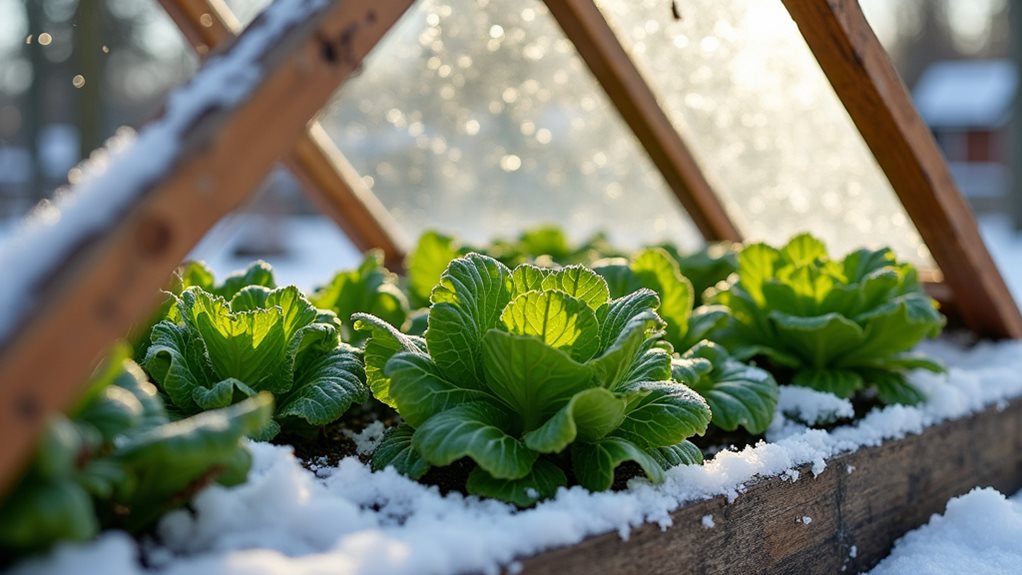
During winter, certain crops thrive in cold frames because they’re naturally adapted to withstand low temperatures and short daylight hours. Cold-hardy crops like kale, spinach, and carrots can be grown to extend your growing season and support winter gardening efforts. Incorporating productive planting areas into your garden can maximize space and yield during the colder months. These resilient plants provide fresh produce, making your winter months more productive and connected to your gardening community.
Tips to Maintain and Extend Your Cold Frame’s Life
Maintaining your cold frame is essential for ensuring its durability and continued effectiveness in winter gardening. Regularly inspect and repair damage to the frame, hinges, or glazing to prevent drafts and improve insulation.
Keep panels clean for maximum sunlight, apply weatherproof sealant annually, and lubricate moving parts.
Cover during extreme weather to protect it from wind, snow, and ice.
Final Note
Building a cold frame is a practical way to extend your winter gardening season, providing protection and insulation for your crops. By carefully selecting the site, choosing durable materials, and designing your cold frame with proper ventilation, you can create an effective growing environment. Regular maintenance and thoughtful management of temperature and crops guarantee longevity and success. With attention to detail and proper construction, your cold frame can be a beneficial tool for year-round gardening, providing fresh produce even in colder months.

Nathan McPhail is a garden and home DIY expert who writes practical, easy-to-follow advice for homeowners and gardeners. Through Yardique, he shares hands-on tips covering gardening, lawn care, landscaping, home improvement, repairs, tools, and outdoor living. His focus is on helping readers solve everyday household and yard problems with straightforward guidance, useful techniques, and practical solutions.