Your lawn turns yellow in summer because heat stress dries the grass faster than its roots can replenish water, while nutrient deficiencies—especially nitrogen or iron—limit chlorophyll production, and soil problems like compaction or improper pH restrict root access to water and minerals. Over‑watering can leach nitrogen and lock iron, and under‑watering dries the medium, both creating pale patches. Mowing too low or with dull blades also stresses the turf, making it more vulnerable to these issues; continue for detailed diagnosis and care steps.
TLDR
- Nutrient deficiencies, especially nitrogen or iron, cause pale, yellow blades, often evident in older or new growth.
- Heat stress and drought reduce soil moisture, leading to desiccated leaves that turn yellow and brittle.
- Over‑watering or underwatering disrupts water balance, leaching nutrients or preventing nutrient dissolution, causing yellowing.
- Compacted soil and improper pH (outside 6‑7) limit root access to water and nutrients, producing yellow patches.
- Fungal diseases, pests, or improper mowing practices can stress turf and manifest as yellowing in summer.
Why Is My Lawn Yellow in Summer?
Why does your lawn turn yellow in summer? You’re likely dealing with nutrient deficiencies—nitrogen or iron shortage produces pale, yellow blades—so a soil test can pinpoint the missing elements and guide proper fertilization.
Over‑ or underwatering also disrupts root uptake, while compacted, low‑pH soil blocks air and nutrients. Excessive soil acidity can further inhibit nutrient absorption, leading to yellowing. Regular aeration, balanced watering, and targeted nutrient amendments will restore vigor and keep your lawn thriving.
How Heat Stress and Drought Dry a Yellow Lawn
You’ll notice the soil moisture dropping fast as the heat climbs, which leaves the grass unable to replace the water it loses through transpiration. The scorching sun then desiccates the leaves, turning them yellow and brittle before the roots can recover. A practical mitigation step is to ensure the lawn receives adequate irrigation and mulching to conserve soil moisture, reducing stress on the grass during peak heat periods L-shaped apron and buried barrier.
Depleted Soil Moisture
How does summer heat turn a once‑green lawn into a dull yellow carpet? The scorching sun evaporates moisture from the upper soil layer, while drought blocks roots from accessing water, especially in compacted zones where penetration is limited. As roots struggle, blades fade, nutrient uptake stalls, and dry patches appear.
Aerate and water early, supplying 1–1.5 inches weekly, to restore moisture and prevent further yellowing.
Heat‑Induced Leaf Desiccation
When the soil’s moisture is already low, the added heat of summer pushes the stress into a rapid desiccation of each blade. You’ll notice blades curling inward, turning brittle and crunchy underfoot, while bluish‑grey tips precede full browning.
Stomata close to conserve water, photosynthesis drops, and the lawn wilts, leaving footprints that stay flat and a patchy, lifeless appearance.
Early‑Morning Deep Watering
What makes a yellow lawn recover faster in summer? Water early, before 10 AM, and let it soak deep into the root zone, not just the surface. This slow, thorough soak lets roots grow deeper, tapping stored moisture, reducing evaporation, and limiting fungal risk. Deep morning watering builds drought‑resistant roots, curbs runoff, and keeps your lawn resilient and united against heat stress.
Why Over‑Watering and Under‑Watering Both Cause a Yellow Lawn
You’ll notice that both too much and too little water upset the soil‑moisture balance, which in turn chokes the roots’ ability to breathe and pull in nutrients. Deep taproots, like those of daikon radish and alfalfa, can help create channels for moisture and aeration that may improve drainage over time, especially in compacted soils subsoil tillage. When the soil stays soggy, oxygen is displaced and shallow roots develop, while dry soil forces roots deeper but limits their contact with moisture and minerals, leading to yellow blades.
Soil Moisture Balance
Why does a lawn turn yellow under both too much and too little water? When soil stays soggy, roots drown, lose oxygen, and rot, letting fungal disease spread, while dry soil pulls moisture from blades, causing wilting and chlorophyll loss. Balance moisture by watering deeply once a week, testing soil, and irrigating early mornings; this keeps roots healthy, nutrients available, and your lawn thriving.
Root Aeration Disruption
When soil stays consistently soggy or bone‑dry, the roots lose the oxygen and moisture balance they need to function, and that imbalance shows up as yellowing blades. Over‑watering suffocates roots, while under‑watering dries them out, both limiting respiration and nutrient flow; compacted areas worsen this by trapping water or repelling it, so proper aeration restores airflow, improves water penetration, and helps your lawn stay vivid.
Nutrient Uptake Interference
How does the amount of water you give your lawn affect its ability to absorb nutrients? Over‑watering floods soil, starving roots of oxygen, leaching nitrogen, and locking iron, so roots can’t transport nutrients and yellowing appears.
Under‑watering dries the medium, preventing nutrients from dissolving and moving upward, slowing chlorophyll production, and also producing uniform yellow patches.
Balance moisture to keep roots breathing and nutrient uptake steady.
How to Spot Nitrogen vs. Iron Deficiencies in a Yellow Lawn
Ever wondered why parts of your lawn look uniformly pale while other sections display a striped yellow‑green pattern? Nitrogen deficiency shows on older leaves, spreading evenly, thinning grass and inviting disease, while iron shortage appears on new growth as interveinal chlorosis, leaving green veins amid yellow tissue. Observe leaf age, pattern uniformity, and test soil to confirm the culprit and apply the proper fertilizer. Nitrogen deficiency patterns can indicate older leaf impact and uniform pale patches, guiding you toward the right soil amendments and feeding schedule.
How Soil Compaction and pH Make Your Lawn Turn Yellow
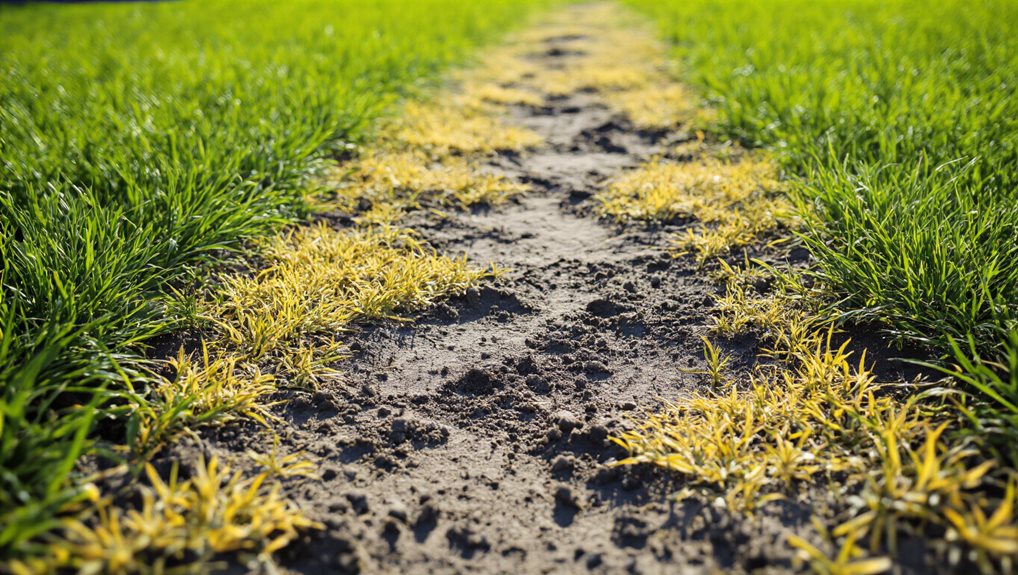
When soil is compacted, the dense mass blocks oxygen and water, forcing your grass roots to stay shallow and limiting the nutrients they can absorb; at the same time, a pH imbalance in that tight soil prevents essential minerals from becoming available, so even a well‑fertilized lawn can turn yellow.
Together, these factors restrict root access and lock up nutrients, making the turf look dull and patchy during summer heat.
Understanding how compaction and pH interact gives you a clear target for remediation—aerating the soil and adjusting pH to restore healthy, green growth.
Compaction Limits Root Access
Why does your lawn turn yellow in summer?
Compaction squeezes soil, forcing roots to stay shallow, limiting moisture and nutrient access, while reducing aeration that suffocates roots and invites disease.
Shallow roots can’t tap deep water, so heat stress intensifies, leading to thin, patchy grass.
Alleviate this by aerating or loosening soil, restoring root pathways for healthier, greener turf.
pH Imbalance Hinders Nutrient Uptake
Compaction already limits root depth, but if the soil’s pH is off‑balance, the roots that exist can’t absorb the nutrients they need, causing the grass to turn yellow.
When pH falls below 5.5 or rises above 7, nitrogen, phosphorus, potassium, iron and magnesium become unavailable, leading to thin, patchy, yellow turf; applying lime or sulfur to restore a 6‑7 range revives nutrient uptake and restores a thriving, unified lawn.
Which Summer Fungal Diseases Cause Yellow Patches?
Ever notice those bright‑green‑to‑yellow circles that keep reappearing in the same spots on your lawn?
Summer fungal culprits include Rhizoctonia cerealis (yellow patch), which thrives in cool, wet conditions and recurs in rings; Take‑All Root Rot, which starts as chlorotic patches and spreads with heat; Magnaporthiopsis poae (summer patch), forming “frog‑eye” rings on warm, moist soils; and grass rust, which begins as tiny yellow dots before producing orange‑brown spores. Recognizing these patterns helps you target treatment and protect your turf.
What Mowing Mistakes Lead to a Yellow Lawn?
How often you mow, and how you do it, can spell the difference between a lush green carpet and a patchy yellow lawn. Cutting too low removes shade‑holding blades, exposing soil to sun and drying roots, while dull blades tear grass, causing uniform yellowing. Mowing in hot afternoons or on wet grass stresses turf, and skipping regular cuts or leaving clippings to smother light further weakens the lawn. Consistency, proper height, sharp blades, and timing protect your grass.
How to Diagnose the Exact Cause of Yellow Patches
Where do you start when a lawn suddenly shows yellow patches? Walk the yard, note timing, moisture, and patterns; feel soil texture, check for thatch, and inspect blades for fungal spots or insect damage. Test water habits, irrigation schedule, and fertilizer rates, then sample soil for pH, nitrogen, iron, and potassium levels. Correlate observations to pinpoint whether fungus, pests, drought, over‑watering, or nutrient imbalance is responsible. The same principles that explain nocturnal floor squeaks—temperature and humidity changes affecting material movement—also guide how environmental shifts influence lawn color and root health, so monitor seasonal weather patterns and indoor-like moisture swings that can stress turf. Environmental factors play a crucial role in how patches appear and persist.
Quick Summer Care Routine to Prevent a Yellow Lawn
Why let a yellow lawn ruin your summer? Water deeply early each morning, aiming for one inch per week, and test depth with a tin can.
Mow at three to four inches, never cutting more than a third of the blade, and keep blades sharp.
Apply a slow‑release fertilizer with nitrogen and iron after any pest treatment, and aerate annually to relieve compaction and improve nutrient flow.
Regular care and observation support ongoing lawn regrowth and health, much like how kitchen scraps can regrow into edible parts to reduce waste regrowth basics and sustain home gardening.
When to Call a Professional for a Yellow Lawn
When the yellowing spreads beyond isolated spots and simple remedies—like deeper watering, occasional fertilization, or a one‑time aeration—fail to restore vigor, it’s time to contemplate professional help.
You should call an expert if patches persist despite deep watering, soil tests reveal compaction or pH issues, or you notice pest signs such as billbugs, white grubs, or fungal patterns that DIY methods can’t resolve.
Final Note
By identifying the exact stressor—whether heat, water imbalance, nutrient deficiency, compaction, pH, or mowing error—you can apply targeted remedies that restore vigor and prevent future yellowing. Adjust irrigation schedules, fertilize with the right nutrients, aerate compacted soil, maintain proper mowing height, and monitor pH to keep your lawn resilient. Consistent, informed care will keep the grass green throughout summer, saving time, money, and frustration.