You can reduce ground‑nesting bees safely by combining exclusion, moisture changes, and targeted water treatments: block tunnels with buried mesh or dense mulch, keep soil damp through early spring watering or carefully flood active burrows, and use soapy water sprays to collapse tunnels and immobilize insects without widespread toxins. Wear proper protective gear, avoid daytime treatments near flowers, and reserve pesticides for professional, timed applications; keep going to learn specific step‑by‑step methods and safety tips.
TLDR
- Flood nests carefully with soapy water (1–2 fl oz dish soap per gallon) to collapse tunnels and drown insects, repeating as needed.
- Maintain consistent soil moisture or irrigate nesting areas during early spring to deter ground‑nesting bees from settling.
- Apply dense wood mulch (1–2 inches) or establish thick turf/groundcover to change soil conditions and discourage burrowing.
- Use nonlethal exclusion like buried mesh or impermeable fabric (bury >10 cm) to block re‑establishment while preserving habitat.
- Prefer relocation, vacuum removal, or calling a beekeeper/professional if conserving pollinators is desired or infestation is large.
Understanding Ground Bee Behavior and Nesting Habits
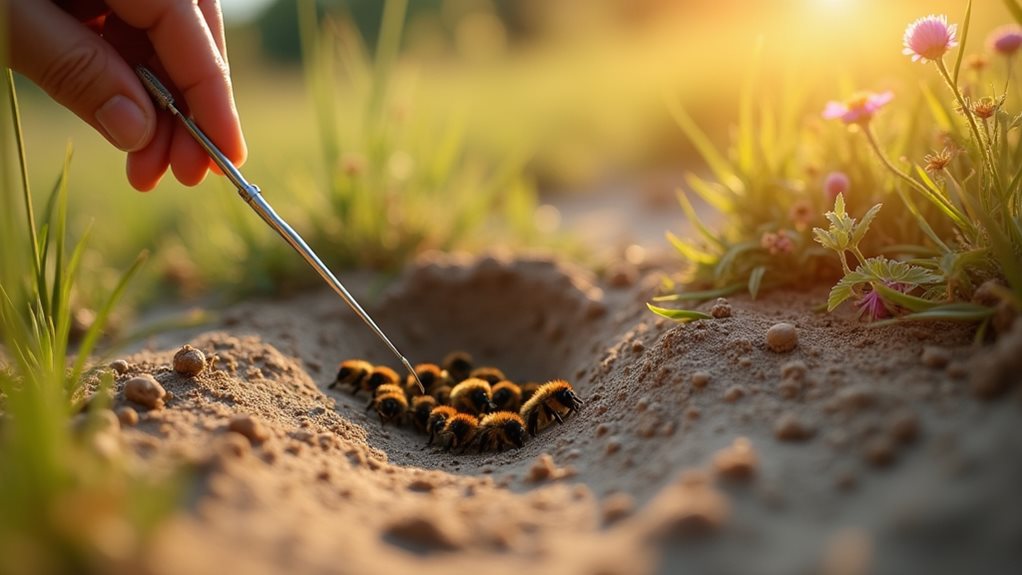
Because many bees nest in the ground, recognizing their behavior and nesting habits helps you manage them safely and intelligently.
You’ll note solitary females dig pencil-sized burrows in sandy or clay soils, provisioning brood cells with pollen, while males patrol without stingers. Ground bees play a significant role in pollination benefits, contributing to the overall health of the ecosystem.
Nests favor warm, bare patches, can form dense, long-lived aggregations, and improve soil aeration, so avoid unnecessary disturbance. Ground bees are generally not aggressive and pose little threat to people.
Nonlethal Physical Barriers to Block Nest Access
If you want to keep ground bees out without harming them, well‑placed physical barriers are one of the most reliable options, offering targeted exclusion while letting you preserve nearby nesting habitat. Use impermeable weed fabric, dense turf, thick wood‑chip or gravel mulch, or mesh exclosures to block burrowing, bury supports >10 cm for durability, and limit impermeable coverage to balance exclusion and soil health. Implement designs informed by studies showing exclosure effectiveness depends on size, shape, and installation details. Additionally, ensuring that the area remains clean and free from debris can help reduce potential nesting sites for these bees, as spider prevention strategies often highlight the importance of maintaining a tidy environment to deter pests.
Mulch and Ground Cover Strategies to Discourage Nesting

Start by thinking of mulch and ground cover as tools you can use to change the physical and moisture conditions that ground‑nesting bees prefer, because choosing the right materials and timing their application will strongly reduce nesting opportunities without wholesale habitat destruction. Use 1–2 inches of dense wood mulch, establish thick turf or low-growing mat plants, avoid sparse cover and dyed mulches, and time installation after nesting. Additionally, maintaining proper drainage conditions can help reduce moisture levels that attract these bees.
Moisture Management: Using Water to Deter Ground Bees
You can use consistent moisture to make a site unattractive to ground bees, since they prefer dry, well-aerated soil and will avoid repeatedly dampened areas. Flooding active nests carefully — pouring soapy water slowly at dusk and, if needed, following with boiling water — increases penetration and suffocation of occupants, but requires protective gear and multiple treatments to reach larvae.
Time watering for evening or night when most bees are inside, and avoid over-saturating surrounding vegetation to protect beneficial insects and prevent soil damage.
Keep Soil Consistently Damp
When you keep soil consistently damp during early spring nesting windows, you make the site far less attractive to ground-nesting bees because many species prefer dry, well-drained substrates for burrow excavation and brood development.
Use timed or manual irrigation to sustain moisture for several weeks, focus on turf or mulched areas, water at night to avoid daytime foraging disruption, and avoid overwatering that harms turf.
Flood Nests Carefully
Although flooding can be an effective, non-chemical tactic to deter or disrupt ground bee nests, it should be used carefully because many species and their brood have adaptations that resist moisture intrusion; glandular secretions, waterproof linings, and organic nest materials can protect larvae even in saturated soils.
You should soak nests gently to collapse tunnels, inspect for persistent activity, avoid standing water, and combine flooding with habitat changes.
Water Timing for Deterrence
Regularly timing water applications can be a highly effective way to discourage ground bees from nesting, since most species prefer dry, well-drained soil and will avoid repeatedly moistened sites.
Water at dusk or night when adults are inside nests, repeat for several nights, and target peak excavation phases; combine with soapy water for added penetration, then seal and monitor to prevent reinfestation.
Water-Based Sprays and Flooding Techniques
You can use soapy water sprays to target exposed or clustered ground bees, mixing about 1–2 ounces of liquid dish detergent per gallon of water and thoroughly soaking the insects so the surfactant penetrates their waxy exoskeleton and prevents flight.
For nests with visible entrances, gently flooding the tunnels can drown occupants and disrupt colony activity, though effectiveness varies with soil type and may require repeated applications to reach deeper brood and the queen.
Always wear protective clothing, avoid electrical hazards, and consider combining these water-based tactics with mechanical measures for a more reliable, lower-toxicity control strategy.
Flooding Nest Entrances
When flooding nest entrances, take care to balance effectiveness with environmental and safety concerns, because water can rapidly suffocate bees and destroy brood while also creating moisture problems in structures.
You should use warm water with mild detergent only as a last resort, wear protective gear, avoid wall voids to prevent mold, monitor for surviving bees, and prefer relocation or exclusion where ecological impact matters.
Soapy Water Sprays
Flooding nest entrances can be effective but carries moisture and structural risks, so many people prefer targeted soapy water sprays for exposed bees and surface combs instead.
You’ll mix about 1–2 fl oz dish soap per gallon, use a 1–3 gallon pump sprayer, and saturate bees thoroughly so surfactant action floods spiracles. Repeat treatments expose inner bees; avoid electricity and protect people, pets, and plants.
Natural Repellents: Cinnamon, Vinegar, and Cucumber
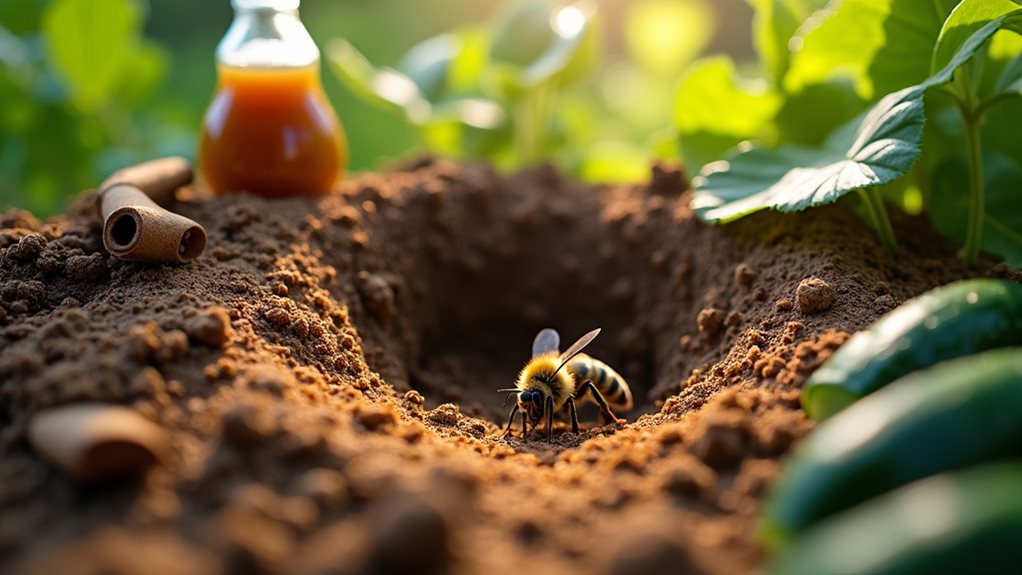
Although natural repellents won’t destroy a colony, cinnamon, vinegar, and cucumber offer practical, low-toxicity options to discourage bees from settling in unwanted spots, and you can combine them to create an effective multi-sensory barrier.
You can sprinkle cinnamon or use a diluted spray, place vinegar containers or clean surfaces with vinegar, and set bitter cucumber slices, rejuvenating them regularly and wearing protection during application.
Smoke Use for Calm Evacuation and Relocation
When you need to move or evacuate a colony, controlled smoke can calm bees by masking alarm pheromones and triggering their honey‑consumption instinct, which together reduce defensive behavior and make handling safer.
Apply smoke sparingly with a proper bee smoker or brief puffs so you don’t overheat or stress the colony, and always use protective gear and caution around enclosed spaces like chimneys.
For relocations, smoke the entrance and hive briefly before opening or transport to lower sting risk and improve success, but remember it’s less effective on colonies that have been established for days.
How Smoke Calms Bees
How exactly does smoke calm a hive, and why is it such a reliable tool for short-term management? You’ll find smoke masks alarm pheromone detection by impairing antennal responses, halving sensitivity within a minute and restoring over 10–20 minutes, so alarms don’t spread.
Guards retreat, sting readiness drops, and bees often engorge, reducing aggression temporarily, though floral scent detection recovers more slowly.
Safe Smoke Application
Regularly practicing careful smoke application will help you calm a colony for short-term evacuation or relocation while minimizing stress to the bees and reducing fire risk.
Use organic fuels, pre-cut and stored at ~10% humidity, light smokers upwind, and apply smoke gently at the entrance then top bars.
Monitor density, cool smoke with green material, wear protective gear, and fully extinguish ash safely.
Moving and Relocating
After you’ve practiced careful smoke application to calm a colony for short-term work, moving or relocating bees requires a different balance of techniques and a clear plan to keep the queen and most workers intact.
Use minimal smoke when brood is absent, favor gentle sugar or water misting to mask alarm pheromones, transfer frames into a nuc without shaking, and avoid crushing bees to maximize survival.
Mechanical Methods: Blocking, Trapping, and Vacuum Removal
When you’re dealing with ground or structural bee infestations, mechanical tactics like blocking, trapping, and vacuum removal give you practical, low-toxicity options that protect both people and pollinators, and they integrate well with broader hive-management strategies.
Use drone brood removal and screened bottom boards to reduce Varroa pressure, powdered sugar dusting to dislodge mites, and careful vacuuming or trap-outs to relocate colonies safely.
Targeted Chemical Treatments and Safe Application Timing
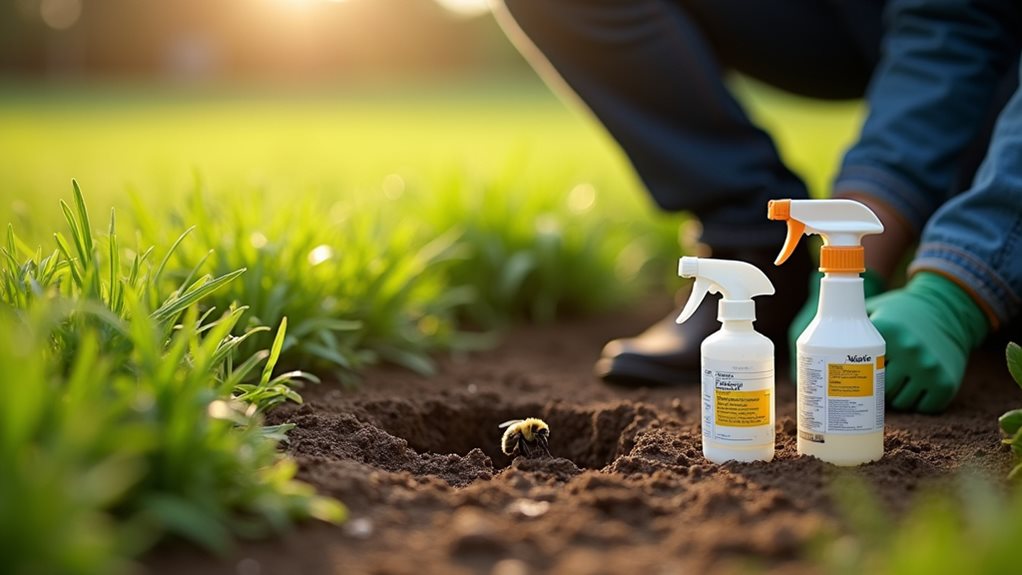
If you’re considering chemical options for ground bee control, targeted treatments can be effective but they require careful timing, precise application, and an awareness of collateral risks to other pollinators and the environment.
Apply dusts or permethrin aerosols into nest cavities at dusk, avoid flowering periods, irrigate after treatment to reduce residues, and plan repeat visits aligned with life cycles, preferably using professional-grade, targeted products.
Protective Gear and Safety Precautions When Removing Nests
Always wear properly fitted protective gear, because most sting incidents happen from gaps or ill-fitting equipment rather than from bold bees; a complete suit system—veil, jacket or full suit, gloves, and ankle-high boots—creates layered defenses that dramatically reduce risk while you locate and treat ground nests.
Choose a fencing or round veil for vision, tuck pants into boots, wear snug gloves, and carry basic first-aid.
When to Call a Professional for Ground Bee Problems

Because ground bee nests can escalate from a minor nuisance to a safety or property issue quickly, you should call a professional whenever nests are large, multiple, close to frequently used areas, or when anyone has a known allergy to stings.
If you see aggressive behavior, recurring infestations, unclear species ID, structural damage, or nests in critical seasons, get expert inspection and customized removal.
Balancing Control With Pollinator Conservation
While you need to control ground bee problems to protect people and property, you should also take steps that reduce harm to pollinators and preserve their habitat, because long-term pest management depends on healthy pollinator populations.
Use IPM: monitor thresholds, favor exclusion, timed low-toxicity applications, and buffer zones; maintain equipment, avoid mixed chemicals, preserve untilled refuges, and plant native flowers to support recovery.
Final Note
You can reduce ground bee problems while protecting pollinators by combining prevention, nonlethal barriers, targeted moisture management and, when necessary, carefully timed chemical options used according to label instructions. Wear appropriate protection and favor exclusion or habitat modification first, resorting to treatments only after evaluating nest activity and local regulations. If colonies persist or pose safety risks, contact a licensed professional. This balanced approach minimizes harm to bees while effectively addressing health and property concerns.