You should avoid letting your chickens eat nightshades like tomato vines and raw potatoes, which contain solanine. Steer clear of avocado skins, pits, and leaves, along with apple and stone fruit seeds that release cyanide. Toxic ornamentals like foxglove, lily of the valley, and tulip bulbs pose serious risks. Weeds such as bracken fern, ragwort, and pokeweed are dangerous over time. Always remove citrus peels and cook beans and potatoes. You’ll find detailed guidance on safer foraging choices just ahead.
TLDR
- Avoid feeding chickens nightshade family plants like tomato vines, raw potatoes, and eggplants due to solanine toxicity.
- Never allow access to avocado skins, pits, or leaves, as they contain persin, which can cause heart and respiratory issues.
- Apple, cherry, peach, and apricot seeds or pits contain cyanogenic compounds that release toxic cyanide when ingested.
- Keep chickens away from ornamental plants like foxglove, lily of the valley, and tulip bulbs, which contain cardiac or neurotoxins.
- Remove toxic weeds and ferns such as bracken fern, ragwort, yew, and pokeweed from grazing areas to prevent poisoning.
Nightshade Family Plants and Their Risks
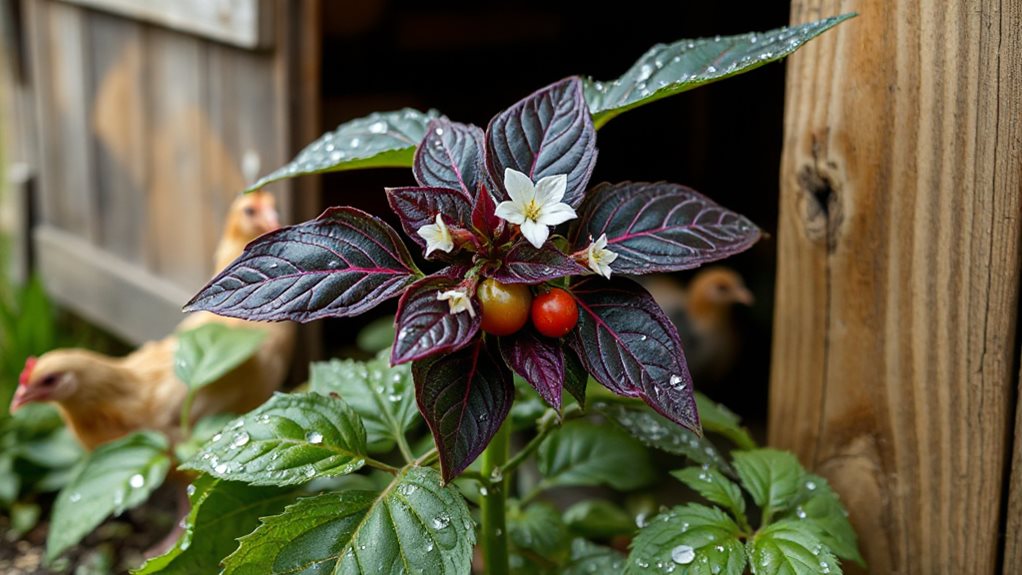
While you might grow tomatoes, potatoes, and eggplants in your backyard for harvest, you’ll want to keep your chickens away from the leafy parts of these plants—because they belong to the nightshade family (Solanaceae), which includes over 70 species that can pose serious health risks to your flock.
Solanine, the toxic alkaloid in green stems, leaves, and sprouts, can cause digestive upset, weakness, and breathing trouble. Though ripe tomato fruit is safe in moderation, cooking reduces solanine levels, making it less harmful.
Always fence off or remove nightshade plants to protect your chickens. Chickens are generally savvy about what not to eat, but it’s still important to minimize risks, as very rare cases of poisoning can occur if they consume toxic plants. Additionally, avoid letting chickens forage among untreated plants recently sprayed with pesticides or herbicides, since chemical residues can be dangerous.
Fruits With Hidden Toxins for Chickens
You mightn’t realize that common fruits like avocados, apples, and stone fruits can pose serious risks to your chickens if fed improperly.
Avocado skins and pits contain persin, a toxin that can cause heart damage, while apple seeds and stone fruit pits—like those in cherries and peaches—release cyanide when digested, cutting off oxygen to cells.
Always remove pits, seeds, and skins before offering these fruits, and stick to small amounts of ripe flesh to keep your flock safe.
Ripe persimmons are safe and nutritious in moderation, providing chickens with vitamins and antioxidants that support immune health.
Avocado Pits and Skin
Keep your chickens safe by steering clear of avocado pits and skins, as both harbor a hidden danger in the form of persin—a natural fungicidal toxin that’s especially concentrated in these parts.
You should also avoid letting your flock nibble on avocado leaves or bark, which contain harmful levels of the toxin.
Even though ripe flesh is lower in persin, sticking to safer treats guarantees your birds stay healthy and protected from potential respiratory distress or heart damage.
Apple Seeds Danger
Apple seeds might seem harmless, but they contain a compound called amygdalin that can release cyanide when broken down in the digestive tract—a risk that becomes real if enough seeds are consumed.
You’d need to feed your chicken 8–52 apples, depending on size and seed potency, for it to be dangerous.
While accidental nibbling isn’t a threat, removing seeds keeps your flock safe and gives you peace of mind.
Stone Fruit Pits Toxic
While the juicy flesh of stone fruits may seem like a safe summer treat, the pits hidden inside contain a dangerous toxin that can quickly turn a backyard snack into a fatal mistake.
You should always remove pits from peaches, apricots, plums, nectarines, and cherries before feeding them to your flock.
These pits contain amygdalin, which converts to cyanide during digestion.
Even small, cracked fragments can be harmful, so dispose of pits securely and monitor your chickens closely when they’re foraging near fruit scraps.
Dangerous Flowering Ornamentals in Your Yard
You mightn’t realize that common flowering ornamentals like foxglove and delphinium pose serious risks to your chickens, as both contain potent toxins that can disrupt heart function or the nervous system if ingested.
Tulips and hyacinths may look harmless in spring, but their bulbs hold toxic compounds that can cause vomiting, drooling, and even more severe symptoms in your flock.
Even lily of the valley, with its delicate blooms, releases cyanide-like substances that are dangerous to poultry, so it’s best to keep these plants out of reach or remove them entirely.
Monitor your garden closely for pests and diseases that can weaken plants and increase the chance of chickens ingesting harmful material.
Foxglove and Delphinium Dangers
Though they add striking vertical beauty to garden scenery, foxglove and delphinium pose serious health risks to backyard chickens and should be treated with caution.
You’ll want to remove foxgloves and avoid planting delphiniums near foraging areas, as both contain toxins that can cause heart, respiratory, and neurological issues.
Watch for symptoms like weakness, trouble breathing, or digestive upset—prompt action can protect your flock.
Tulip and Hyacinth Toxicity
Foxglove and delphinium aren’t the only ornamental plants hiding dangers in your garden—tulips and hyacinths, often prized for their lively spring blooms, also pose significant risks to backyard chickens.
You should know all parts contain toxins like lycorine and tulipalin, causing digestive distress or lethargy.
Bulbs are especially dangerous if chickens scratch them up. Prevent exposure by fencing off beds or avoiding planting near coops.
Lily of the Valley Risks
While admired for its delicate bell-shaped flowers and sweet fragrance, Lily of the Valley harbors hidden dangers that can quickly turn fatal for backyard chickens.
You’ll want to remove or fence off this plant, as all parts contain cardiac glycosides and saponins, causing sudden death, seizures, and respiratory failure.
Even small ingestions are deadly, so provide safe forage and monitor your flock closely around ornamentals.
Toxic Shrubs and Hedgerow Plants
When managing your chickens’ foraging areas, you’ll want to pay close attention to the shrubs and hedgerow plants that border or grow within their reach, as several common garden and terrain species pose serious health risks.
You should avoid yew, foxglove, and periwinkle, which contain cardiac toxins, while hydrangeas and bracken ferns—though less immediately dangerous—can still cause illness if consumed regularly or in large amounts.
Common Weeds That Pose a Threat
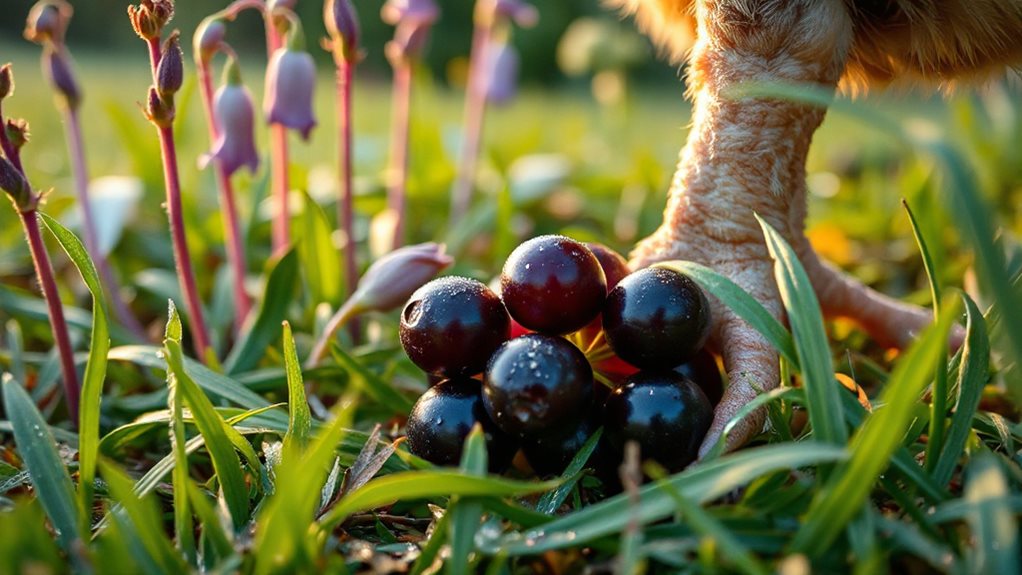
You mightn’t realize that common weeds in your yard or pasture can be dangerous to your chickens, even if they usually forage safely.
Watch out for toxic plants like ragwort, which damages the liver over time, and pokeweed, especially the red-stemmed varieties that attract curious birds.
Also keep an eye out for buttercup, nightshades, and horsetail—these weeds thrive in lawns, wet areas, and disturbed soils, and can cause anything from digestive upset to severe poisoning.
Many common weeds also grow extremely quickly, with some able to put on 2-3 inches of growth in a single day, allowing them to spread through a flock’s range before you can remove them.
Deadly Ferns to Avoid
Though often overlooked in backyard foraging zones, certain ferns pose serious health risks to your chickens, especially bracken fern, which thrives in UK woodlands and hedgerows.
It contains ptaquiloside, a carcinogen causing weight loss and anemia, while also inhibiting essential thiamine.
Avoid letting hens forage near bracken-heavy areas, and remember that water hemlock and bryony are equally dangerous.
Poisonous Weeds in Pastures
While your chickens naturally forage for greens, several common weeds lurking in pastures can pose serious health risks if ingested, so it’s essential to identify and manage these toxic plants before they cause harm.
Multiflora rose, horsenettle, and lambsquarters contain compounds that trigger kidney damage, neurological issues, or gastrointestinal distress.
Regularly inspect grazing areas, remove poisonous weeds like milkweed and hemp dogbane, and use targeted herbicides or grazing controls to keep your flock safe and healthy.
Poisonous Ferns and Ground-Covering Plants
Where ferns and ground-covering ornamentals thrive, chickens face hidden risks from plants that may seem harmless but carry significant toxicity.
You should remove bracken fern, which causes anemia and tremors, and avoid letting birds access ivy, foxglove, or lily of the valley, all toxic.
These plants spread easily in woodlands, gardens, and hedgerows, so vigilant control protects your flock effectively.
Introduce any new plant material to chickens slowly and in moderation, and monitor for digestive upset or other reactions, especially with citrus like orange segments, which should be offered sparingly.
Vegetable Parts That Are Harmful to Chickens
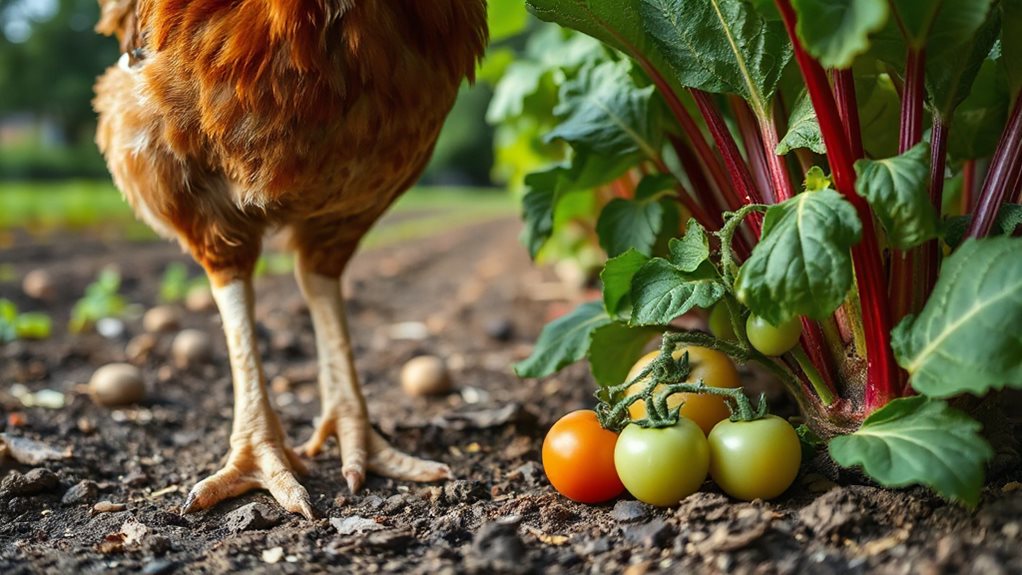
When letting your chickens forage near vegetable gardens or offering kitchen scraps, you need to know that certain plant parts commonly considered harmless can pose serious health risks.
Avoid feeding tomato vines, raw potatoes, or avocado skins, as they contain toxins like solanine and persin.
Never offer raw or dried beans, and steer clear of nightshade plant greens—cooking helps but isn’t foolproof.
Tree Parts and Pits That Contain Cyanide
If you’ve got fruit trees in or near your chicken run, it’s critical to understand which parts can release cyanide and potentially harm your flock. Cherry, peach, plum, and apricot pits, leaves, and twigs contain cyanogenic glycosides, especially when crushed or stressed by frost or pruning.
Apple and pear seeds also pose risks. Avoid letting chickens access fallen leaves, wilted branches, or crushed pits to keep them safe.
Citrus and Other Fruit Peels to Avoid
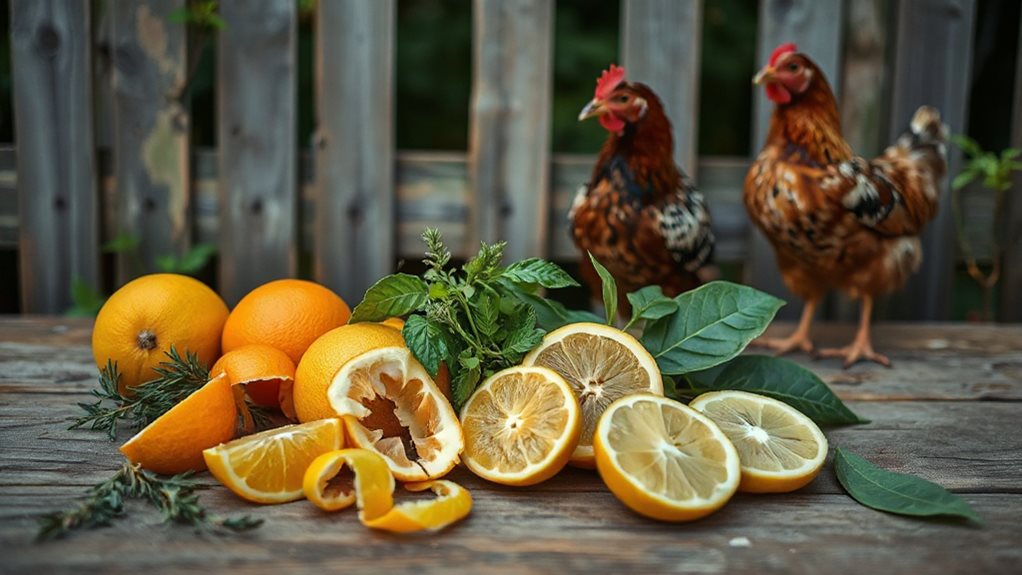
While citrus fruits like oranges, lemons, and grapefruits aren’t outright toxic to chickens, their peels—especially those from highly acidic varieties—can cause digestive upset if consumed in large amounts, so it’s best to limit access.
You should avoid feeding lemon, lime, or grapefruit peels entirely, as their high acidity and strong taste pose greater risks.
Though orange peels are safer in small, chopped pieces, always wash them well to remove pesticides, and remember—most chickens naturally avoid peels anyway.
Plants That Affect the Nervous System
Though they may seem harmless, several common backyard plants contain potent toxins that can severely disrupt your chickens’ nervous systems, leading to symptoms ranging from lethargy and weakness to seizures and respiratory failure.
Plants like deadly nightshade, larkspur, and golden chain tree harbor alkaloids that impair nerve function, while yellow jessamine and frijolito can trigger paralysis or convulsions—keep these out of your flock’s reach.
Garden Crops That Require Cooking Before Feeding
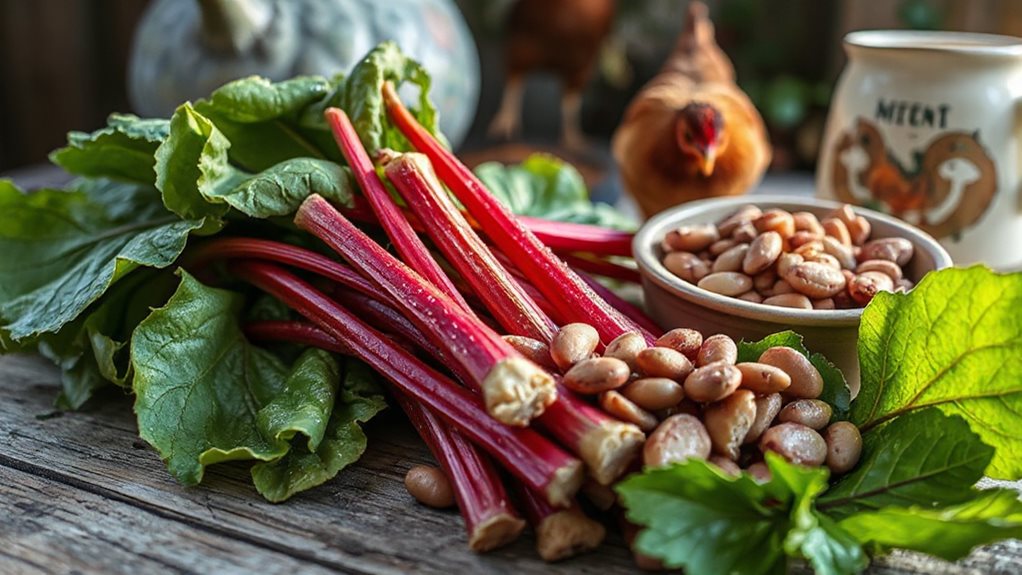
Keep your flock safe by cooking certain garden crops before feeding them, as raw forms of common vegetables contain natural toxins that can harm or even kill chickens.
Raw beans have lectins causing digestive distress, while potatoes and nightshades contain solanine; cooking neutralizes these.
Avoid avocado skins and pits due to persin, and never feed raw onions or citrus peels to keep your chickens healthy.
Final Note
You now know which backyard plants pose risks to your chickens, from nightshades to cyanide-containing pits and toxic ornamentals. By removing or securing these hazards, you protect your flock’s health and prevent avoidable poisoning. Always research new plants before introducing them, and remember that even common garden crops can be dangerous when raw. Staying informed guarantees a safer, healthier environment for your birds to thrive in naturally and safely.