You can reduce indoor humidity naturally by using moisture-absorbing houseplants like peace lilies and pothos, spaced properly to avoid excess transpiration. Place open bowls of baking soda or silica gel in damp areas to draw out moisture. Run exhaust fans after showers and cooktop use, and dry clothes on wooden racks near airflow. Pair these with smart ventilation and AC use to maintain ideal humidity between 40–50%, creating a balanced, healthy home environment through proven, simple methods.
TLDR
- Use moisture-absorbing houseplants like peace lilies and spider plants to naturally regulate indoor humidity levels.
- Space plants properly to avoid overcrowding, which can increase humidity through excessive transpiration.
- Place open containers of baking soda or silica gel in damp areas to absorb excess moisture naturally.
- Hang clothes to dry near airflow sources instead of using electric dryers to manage moisture release.
- Run exhaust fans and squeegee showers to remove steam at the source and prevent humidity buildup.
Use Houseplants That Absorb Excess Moisture
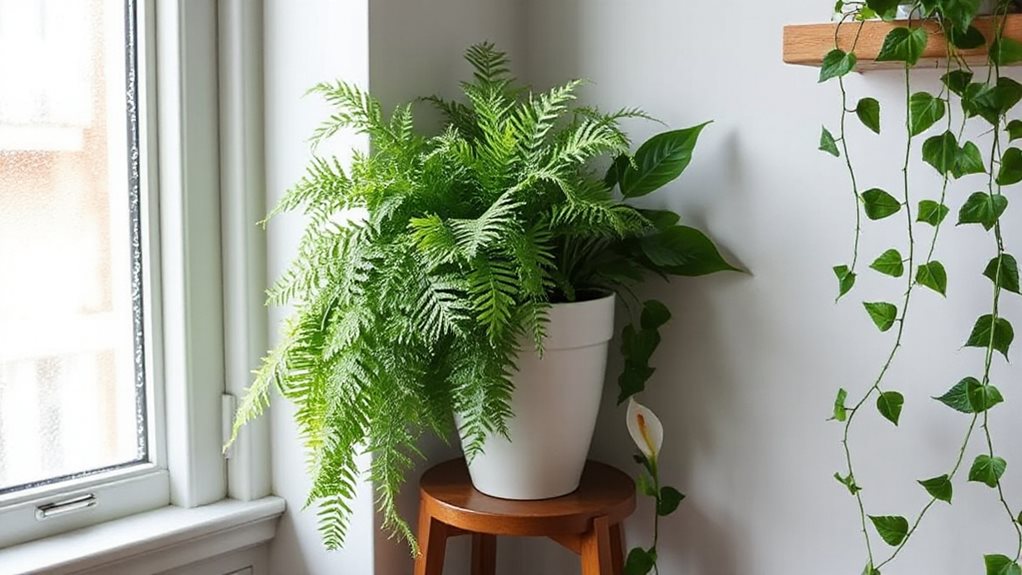
Houseplants aren’t just for decoration—they’re functional allies in managing indoor humidity. You can use Monstera Deliciosa to reduce moisture in damp spaces, while Phalaenopsis Orchids absorb humidity and thrive in bright light.
English Ivy and Spider Plants tolerate steamy rooms, purify air, and help prevent mold. Peace Lilies enhance indoor air quality, adding beauty and balance to your home naturally. Maintaining indoor humidity levels between 40–50% helps limit mold and dust mites, and certain houseplants contribute to this ideal range through natural humidity regulation. A few low-maintenance options like peace lilies and spider plants do especially well in humid bathrooms and require minimal care.
Leverage Air Conditioning to Lower Humidity
While your air conditioner primarily cools the air, it also plays a key role in reducing indoor humidity by pulling moisture from the atmosphere.
Set your thermostat between 73°F–76°F, use auto fan mode, and maintain clean filters and coils.
Opt for two-stage or variable-speed systems to remove more moisture efficiently, ensuring comfort, better air quality, and system longevity.
Regular maintenance, including inspecting the fan, motor, and capacitors, helps prevent common failures and keeps the system operating effectively for humidity control (see fan operation).
Install and Use Exhaust Fans Strategically
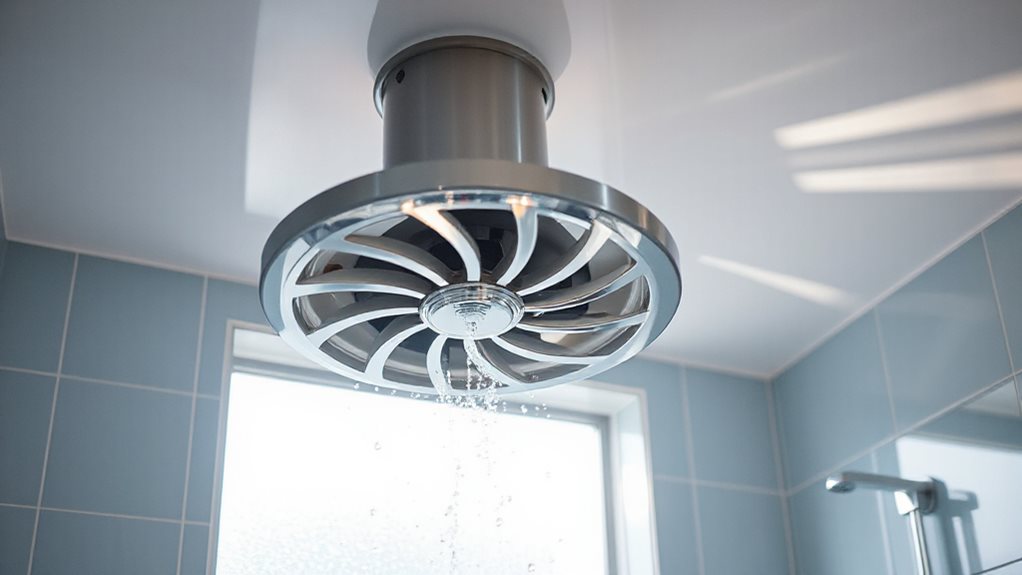
You’ve already seen how air conditioning helps manage indoor humidity by cooling and dehumidifying the air, but mechanical cooling isn’t the only line of defense.
Install exhaust fans in kitchens, bathrooms, and laundry rooms to remove moisture at the source. Position them properly, vent directly outside, and use sensors or timers to run them during and after high-humidity activities, ensuring drier, healthier air. High indoor humidity above 60% can promote mold growth and should be addressed promptly.
Place Baking Soda in Humid Areas
Tackle dampness head-on by placing baking soda in humid areas, where its natural hygroscopic properties pull excess moisture from the air.
Put open containers in closets, bathrooms, or cabinets to reduce humidity and odors.
Replace or refresh it every few weeks, or when clumped.
Use socks or perforated bags for shoes.
It’s affordable, power-free, and perfect for small spaces—ideal for keeping your home fresh and dry naturally.
For stubborn mildew or odors, consider spot-cleaning with a diluted vinegar solution and rinsing well to protect surrounding materials and plants while cleaning vinegar solution.
Utilize Silica Gel and Other Natural Desiccants
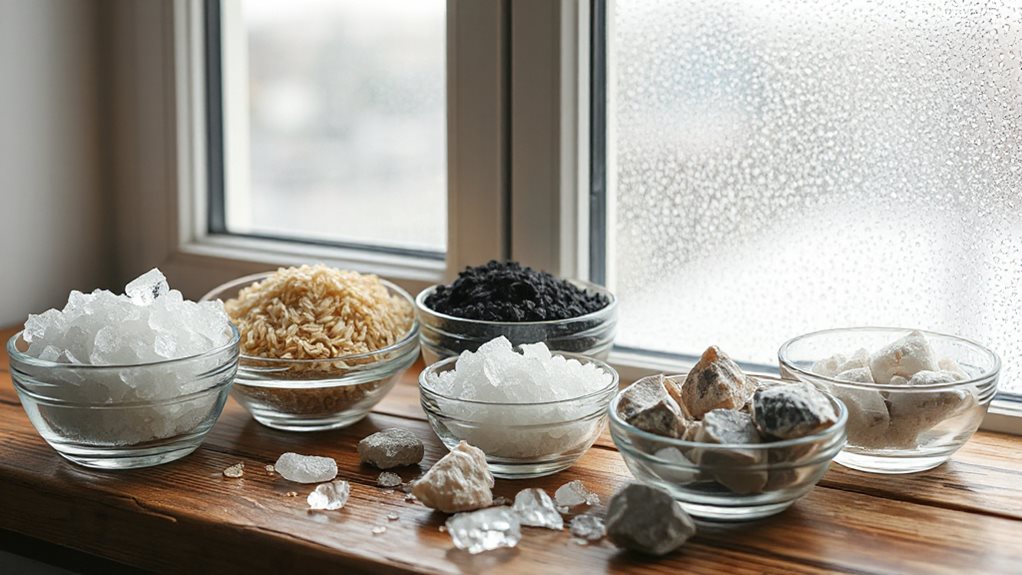
You can count on silica gel to quietly pull moisture from the air using its network of microscopic pores, making it a reliable choice for keeping enclosed spaces like safes or display cases dry.
It’s reusable too—just pop the saturated packs into the oven to reactivate them and get years of service.
While it works best in moderate humidity, pairing it with good seals helps maintain stable conditions without constant recharging.
For larger or persistent moisture problems, consider increasing air exchange or using HEPA and carbon filtration systems as part of a broader mitigation strategy.
Silica Gel Benefits
Silica gel’s moisture-absorbing power makes it a reliable ally in maintaining dry, damage-free storage environments.
You can protect prized possessions, documents, and electronics by placing silica gel in sealed containers, where it actively pulls humidity from the air.
It’s more effective than rice, reusable after baking, and ideal for preventing mold, tarnish, and fogging in small, controlled spaces—perfect for keeping your cherished items safe and dry over time.
Reusable Desiccant Options
Maximize moisture control in your home by exploring reusable desiccant options that go beyond single-use solutions. You can reuse silica gel by reactivating it in an oven, and color-changing packets help you track saturation.
Montmorillonite clay regenerates at low heat, while baking soda and rock salt offer affordable, natural alternatives. Pair them with fans or mesh screens to enhance airflow and extend effectiveness in enclosed spaces.
Limit Hot Shower Duration to Control Steam
Frequently, hot showers contribute more to indoor humidity than many realize, primarily because prolonged exposure to heated water markedly increases steam production.
You release 0.5–1 liter of moisture in just 10 minutes, elevating humidity above 60%.
Seal Shower Enclosures to Contain Humidity
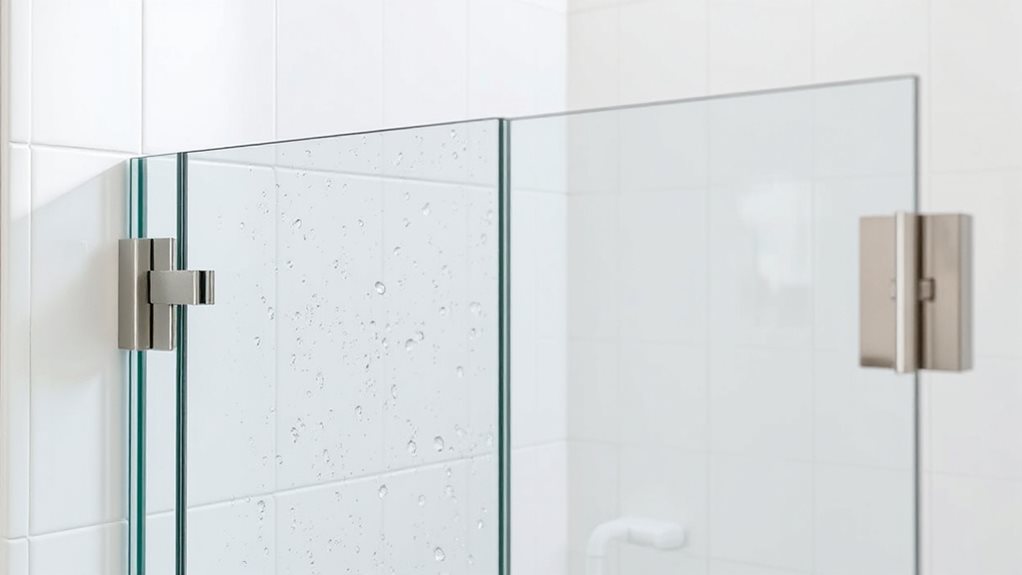
You can stop excess humidity from spreading by sealing gaps around your shower enclosure with 100% silicone or MS polymer sealant, both of which handle moisture and movement well.
Make sure to apply the sealant at joints, corners, and door edges—common leak points—and pair it with properly installed door sweeps or tight-fitting shower curtains to block steam escape.
Regularly check and maintain these seals, since even small gaps can let enough moisture out to raise indoor humidity and encourage mold growth.
Seal Gaps to Contain Steam
Keep steam where it belongs by sealing gaps in your shower enclosure, ensuring humidity stays contained and doesn’t spread into the rest of the bathroom. Use clear silicone, magnetic seals, and acrylic weather stripping to close openings, especially around doors and corners.
Reinforce joints and align hinges properly so heavy glass stays secure, preventing leaks and maintaining consistent heat and moisture levels for a more effective, spa-like experience.
Use Shower Curtains Effectively
While sealing gaps in your shower enclosure helps contain steam, using shower curtains effectively plays an equally important role in controlling indoor humidity. Position the plastic liner inside the tub and fabric curtain outside to prevent trapped moisture.
After each shower, spread the curtain, shake out folds, and separate it from the liner so both dry quickly. Use mildew-resistant materials, run the exhaust fan, and clean regularly with vinegar or baking soda to maintain a healthier, drier bathroom environment.
Install Proper Enclosure Seals
Because moisture control begins at the source, sealing your shower enclosure properly is one of the most effective ways to reduce indoor humidity.
You contain water vapor and prevent mold by using epoxy grout, silicone caulk, or seamless panels.
Frameless designs improve airflow, while squeegeeing and post-shower ventilation enhance drying.
Together, these steps protect surfaces and maintain healthier air—simple upgrades that make a real difference in your home’s comfort and quality.
Choose Heat Pump Clothes Dryers for Efficiency
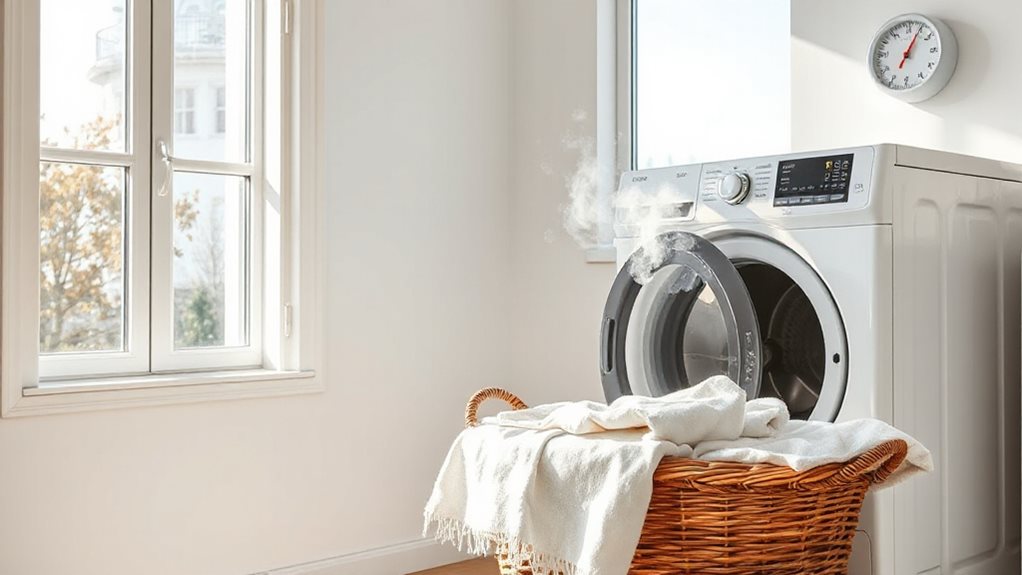
Upgrade your laundry routine with a heat pump clothes dryer and cut energy use by up to 70% compared to conventional vented models.
You’ll save $90–$120 yearly, reduce indoor humidity without venting, and protect fabrics with gentler, lower-temperature drying.
Though drying takes longer, you gain efficiency, safety, and flexibility—especially when pairing it with a high-efficiency washer.
Dry Clothes Indoors Using Wooden Racks
Skip the dryer altogether and dry your clothes indoors on wooden racks to save energy and protect your garments.
Choose sturdy hardwood racks that support heavy items while blending into your home’s decor.
Place them near a furnace vent or in a well-ventilated room, leave space between clothes, and use a fan to speed drying.
This eco-friendly method reduces electricity use, adds natural moisture in winter, and preserves fabric integrity—simple, sustainable, and effective for mindful living.
Prevent Overgrouping Houseplants
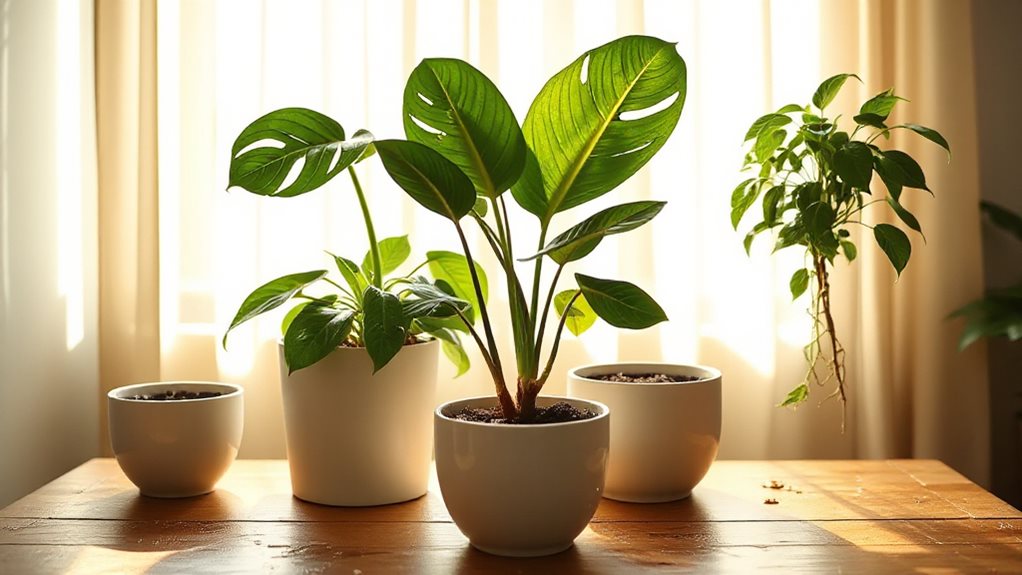
You mightn’t realize it, but grouping too many houseplants together can raise indoor humidity by trapping moisture in the air. To prevent this, space your plants 6–12 inches apart depending on their size, which allows air to circulate and helps excess moisture evaporate.
This simple step reduces the risk of mold and keeps humidity in the ideal 35–65% range.
Grouped Plants Raise Humidity
A cluster of indoor plants doesn’t just enhance your space visually—it actively raises humidity through transpiration, the process by which plants release water vapor into the air.
When grouped, they create localized moisture zones, especially effective in smaller, less ventilated rooms.
Species like Boston fern and Golden Pothos increase humidity best, recycling moisture among themselves and increasing levels by up to 15% nearby.
Space Plants for Airflow
Grouping plants increases humidity, but spacing them thoughtfully guarantees that benefit doesn’t come at the cost of plant health or indoor air quality.
Space small plants 12–18 inches apart, medium ones 24–36 inches, and large varieties 3–5 feet apart.
Use staggered, raised, or hanging arrangements to enhance airflow, reduce fungal risks, and prevent stagnant microclimates—keeping your space fresher and your plants thriving.
Enhance Air Circulation With Smart Ventilation
By leveraging sensor-driven intelligence, smart ventilation systems actively optimize indoor air circulation to combat excess humidity without sacrificing energy efficiency.
You can rely on real-time data from humidity, CO2, and VOC sensors to adjust airflow based on occupancy, weather, and indoor conditions.
These systems seamlessly balance comfort, air quality, and energy savings, ensuring your home stays healthy, efficient, and aligned with ASHRAE standards—all while adapting to your daily life.
Combine Methods for Optimal Moisture Reduction
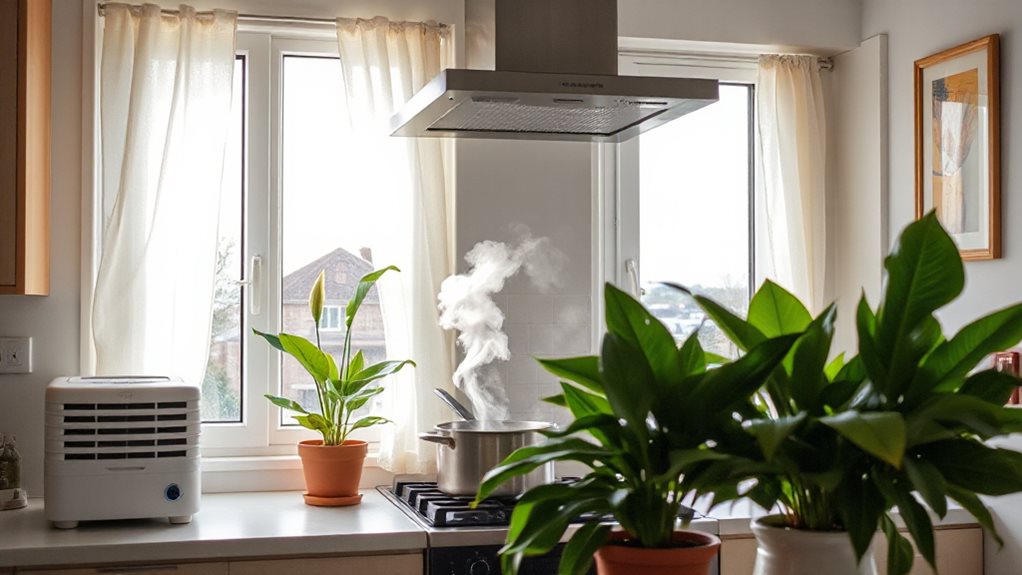
Tackle stubborn indoor humidity by combining proven methods that work together to keep your home dry and healthy. Use houseplants like snake plants and pothos alongside baking soda bowls and desiccants to actively pull moisture from the air.
Run your air conditioner and take shorter showers to reduce steam, enhancing results. Together, these strategies create a balanced, effective approach you can rely on daily.
Final Note
You can effectively reduce indoor humidity by combining natural methods that work together. Use moisture-absbing houseplants and desiccants like baking soda or silica gel, while running exhaust fans and air conditioning to remove excess moisture. Avoid overgrouping plants and dry clothes indoors on wooden racks to minimize dampness. Improve airflow with smart ventilation, and remember, layering these strategies delivers the best results for maintaining a healthy, comfortable indoor environment.