You can naturally improve compacted soil by planting species that break up dense layers and enhance soil health. Deep taproots like daikon radish and alfalfa penetrate hardpans, creating channels for water and future roots. Fibrous-rooted plants such as cereal rye and clover shatter compaction while enhancing structure. Nitrogen-fixing legumes add fertility, and groundcovers like clover prevent re-compaction. Together, these plants rebuild soil over time—discover how combining them accelerates recovery.
TLDR
- Deep taproots like daikon radish and alfalfa penetrate compacted soil, creating channels for water and future roots.
- Fibrous-rooted plants such as cereal rye and clover form dense networks that loosen soil and improve structure.
- Legumes including vetch and cowpeas fix nitrogen, enriching soil fertility while breaking up compaction.
- Groundcovers like clover and sedum protect soil surface, reduce erosion, and prevent re-compaction from rain.
- Combining deep, fibrous, and nitrogen-fixing plants in rotations builds healthy, well-aerated, fertile soil over time.
Struggling With Hard, Bare Soil? Plants Can Fix It
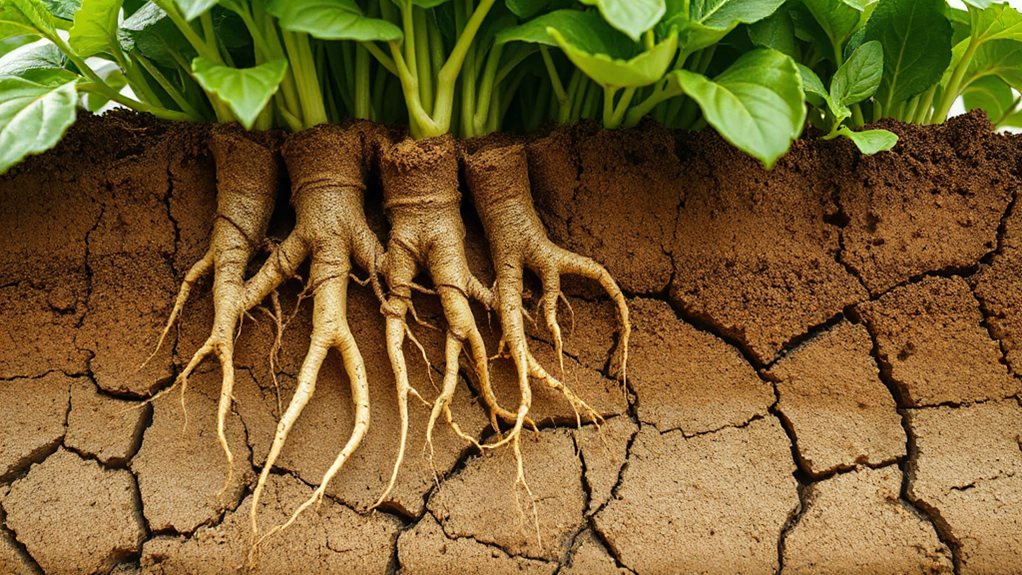
If you’ve ever tried to dig into hard, bare soil and felt like you were hitting a brick wall, you’re not alone—compacted ground is a common challenge in gardens and environments, but the good news is plants can actually help break it up.
Fibrous-rooted cover crops like annual ryegrass and cowpeas penetrate tight layers, improving aeration and water movement while adding organic matter to enhance soil structure over time. Deep-rooted plants such as daikon radish and sunflowers act as natural tillers, loosening compacted soil with their tillage radish roots. Tropical species with vigorous root systems, like Hibiscus, can also help stabilize and loosen compacted areas when used appropriately.
How Deep Taproots Break Up Compacted Soil Naturally
Penetrating deep into dense layers, thick taproots act like natural subsoilers, using sustained axial pressure to push through compacted soil where finer roots fail.
You’ll see them widen under pressure, fracturing hardpans and creating macropores that improve water flow and root access.
As these roots decay, they leave lasting biopores—pathways future plants use to reach deeper moisture, gradually restoring structure and function to your compacted soil.
Growing sphagnum moss at home can provide a sustainable source of moisture-retentive material to support soil recovery and reduce reliance on commercially harvested peat products.
Best Bio-Driller Plants for Dense, Hardpan Soil
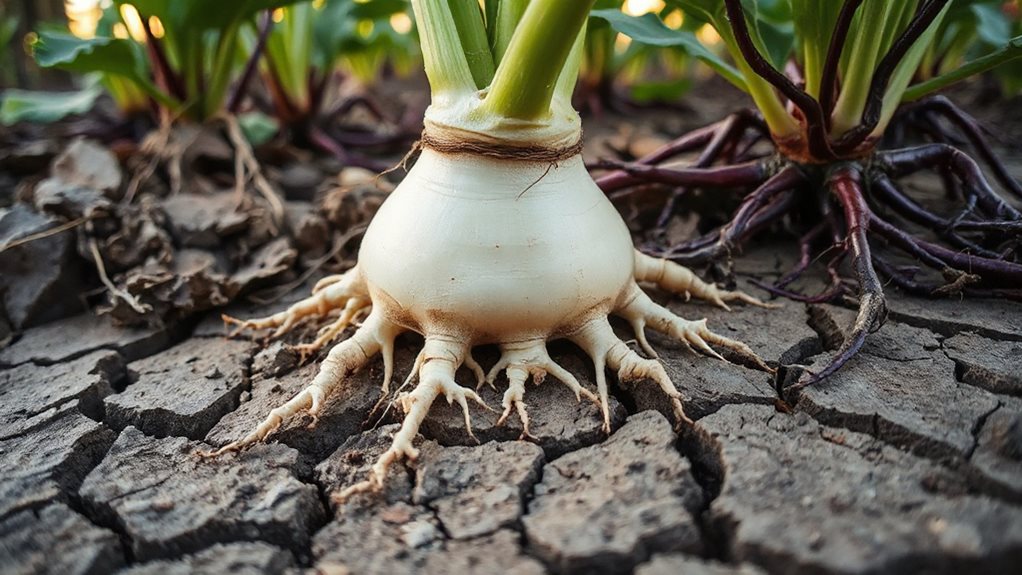
You can break through dense hardpan naturally by planting deep-taprooted bio-drillers like daikon radish, whose thick roots exert strong downward pressure to fracture compacted layers.
These plants don’t just loosen soil—they mine nutrients from the subsoil and leave behind stable root channels that enhance aeration and water movement.
With proper species selection and timing, you’ll create lasting pathways for future crops to follow, improving soil structure without a plow.
Sedum Golden Moss is also useful in rocky, compacted areas as a low-growing, drought-tolerant groundcover that thrives in well-drained soils and helps protect soil surface from erosion.
Deep Taproots Break Hardpan
Breaking through stubborn hardpan starts with nature’s own subsoil engineers—plants that wield deep taproots to crack dense layers and restore soil function.
You can use daikon radish to punch vertical shafts, while alfalfa’s persistent roots penetrate over a meter deep, fracturing compacted zones.
Chicory and dandelion enhance porosity, and together with fibrous-rooted companions, they stabilize channels, improve drainage, and prevent re-compaction over time.
Nutrient Mining From Subsoil
Deep taproots don’t just open up physical pathways in compacted soil—they also act as nutrient pipelines, pulling precious elements from deep below where most plants can’t reach.
You can rely on rye, radish, and alfalfa to mine Ca, K, and micronutrients, cycling them upward through residue decay.
Their deep roots feed microbes, improve fertility, and build resilient, well-balanced soil over time.
Root Channels Enhance Aeration
While mechanical methods can temporarily relieve soil compaction, certain plants go further by naturally drilling deep channels that enhance long-term aeration and water movement.
You can rely on bio-drillers like daikon radish, alfalfa, and perennial ryegrass—their sturdy roots penetrate hardpan, creating pathways that improve soil structure. These plants not only break up dense layers but also increase microbial activity, nurturing healthier, more resilient soil ecosystems you’ll see results in.
Fibrous-Root Plants That Shatter Compacted Layers
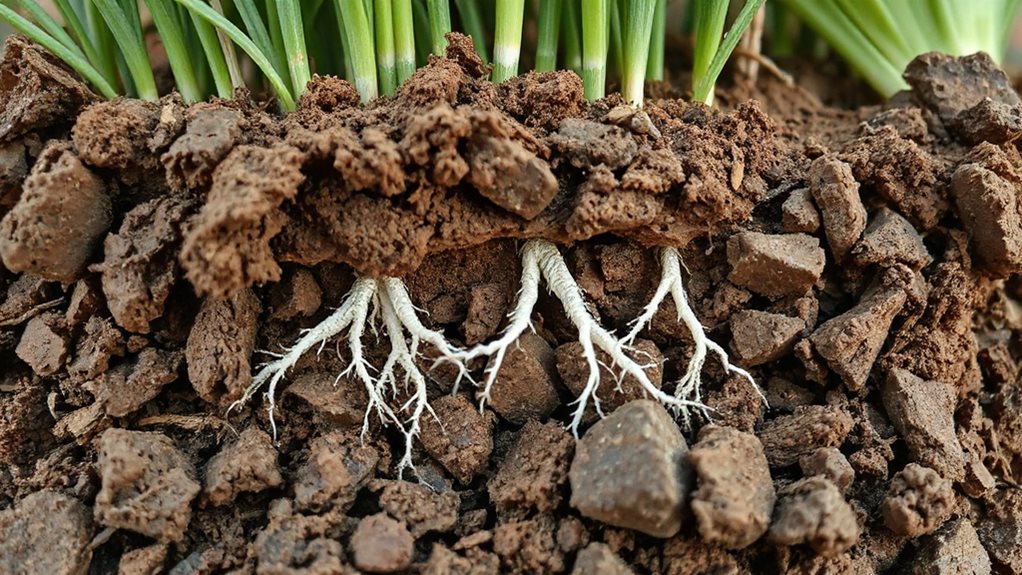
You’ll find that fibrous-root plants like cereal rye and sorghum–sudangrass can effectively shatter compacted layers by pushing thousands of fine roots through tight soil, creating microfractures that improve pore space and reduce bulk density.
These dense root zones not only penetrate hardpan but also host exudates and microbes that enhance aggregate stability, while species like clover add nitrogen to support future crops.
When you combine them with deep-rooted plants, you’re building a living network that loosens soil from the surface down, enhancing infiltration, aeration, and long-term resilience.
Planting at the proper depth (typically 4 to 6 inches for many crops) and ensuring well-drained soil helps these roots develop fully and avoid issues like rot or stunted growth, so be mindful of planting depth when establishing your cover crops and companions with proper planting depth.
Deep Root Networks
Because they’re built to persist in tough conditions, fibrous-rooted plants like ryegrass and cereal rye tackle soil compaction head-on by driving dense networks of fine roots through tight layers, creating microfractures that gradually loosen the soil.
You’ll see improved structure as these roots thicken, resist breakage, and exploit weaknesses, while their decay leaves behind biopores that enhance future root growth and water movement in compacted profiles.
Nitrogen Fixing Fibrous Roots
Fibrous-rooted legumes take the work of soil improvement a step further by combining structural benefits with natural fertility building.
You’ll find species like clover, vetch, and peas especially effective, as their dense roots bind soil, enhance porosity, and fix nitrogen—boosting microbial activity.
These plants loosen compacted layers, improve aggregation, and leave behind organic matter, gradually restoring soil health in a way that’s both sustainable and deeply supportive of future growth.
Dense Root Zone Penetration
Break through the barrier of compacted soil with plants that employ dense, fibrous root systems to physically pry apart tightly packed layers near the surface.
You’ll find these roots exert pressure, create pores, and improve soil structure over time. Their persistent growth breaks up compaction, enhances porosity, and promotes healthier, more resilient soil—naturally.
Legumes That Fix Nitrogen and Loosen Compacted Soil
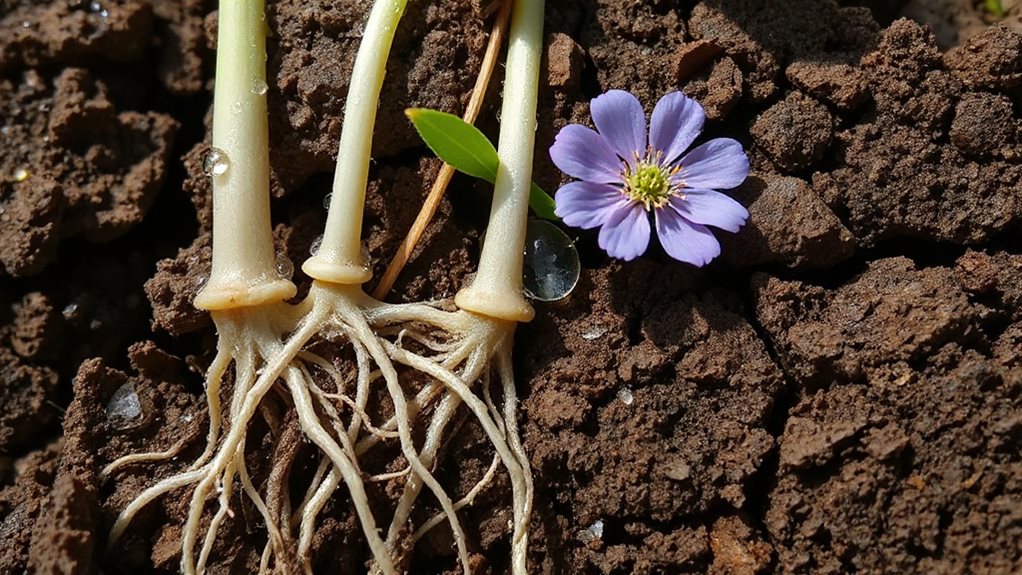
Tap into the power of deep-rooted legumes to tackle compacted soil head-on, where their roots don’t just survive in dense layers but actively alter them.
You’ll find alfalfa, sunn hemp, and cowpeas breaking up compaction while fixing nitrogen—boosting fertility.
Their decayed roots leave channels, improving structure, and their biomass enriches soil with organic matter and up to 200 lb N/acre, cultivate healthier crops in once-degraded zones.
Dual-chamber tumblers can speed composting to 4–6 weeks when using this biomass as a green amendment, especially in continuous production systems.
Flowers That Beautify and Repair Compacted Soil
You can convert tired, compacted soil into thriving garden space with flowering plants that do more than just look pretty.
Deep-rooted varieties like sunflowers and dandelions break through hardpan, improving aeration and water flow, while fibrous-rooted perennials such as coreopsis and asters build stable soil structure over time.
Deep-Rooted Beauties Emerge
When compacted soil resists water infiltration and limits root growth, deep-rooted flowering plants step in as silent designers of renewal, converting dense, lifeless layers into energetic, biologically active zones.
You’ll find comfrey, chicory, and dandelion breaking through hardpan, mining nutrients, and improving structure. Their roots create channels for water and air, while their blooms support pollinators, blending function with beauty in your healing garden.
Colorful Fixers Break Barriers
While many gardeners see compacted soil as a dead end, you can turn it into an opportunity with the right flowering allies—plants that don’t just survive but actively repair and enhance the ground they grow in.
You’ll love how lupines fix nitrogen and loosen soil, while echinacea and black-eyed Susans add lively color, improve structure, and invite pollinators, making your garden both beautiful and healthier over time.
Bloom While Building Soil
Often overlooked, certain flowering plants do far more than brighten a garden—they actively rebuild compacted soil from the inside out.
You can grow sunflowers and lupines to break up dense earth while enjoying their colorful blooms. Yarrow and comfrey not only mine nutrients but also add beauty, proving you don’t have to choose between function and form in your healing garden.
Living Mulches That Stop Soil From Re-Compacting
Keeping your soil loose and resilient starts with choosing the right living mulch—one that forms a protective, living shield against the forces that lead to re-compaction. You can rely on low-growing, fibrous-rooted plants like clover to cushion soil, maintain pores, and enhance organic matter.
Best Cover Crop Mixes for Compacted Soil
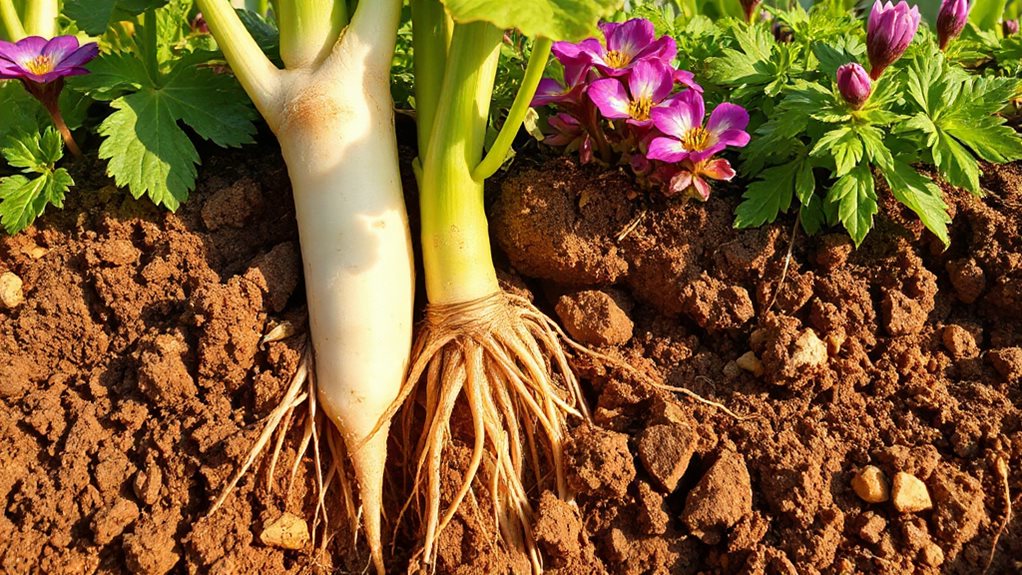
Break up stubborn compaction with cover crop mixes that work deep below the surface, where roots act as natural tillers to reengineer soil structure.
You’ll get the best results by combining daikon radish for vertical penetration, cereal rye for fibrous networks, and legumes like vetch or clover to fix nitrogen.
These diverse blends improve aeration, enhance organic matter, and support microbial life, ensuring your soil stays loose, fertile, and resilient over time.
Rotate These Crops to Fix Compacted Soil Faster
You’ve already seen how cover crop mixes can loosen compacted soil from within, using complementary root types to rebuild structure naturally.
Now, rotate in deep-rooted perennials like alfalfa to break up dense layers, followed by taproot crops such as radish to bio-drill and improve drainage.
Add fibrous-rooted cereals and legumes to enhance organic matter, aggregation, and nitrogen, creating a resilient, well-structured soil ecosystem over time.
How Mulch Boosts Plant-Driven Soil Repair
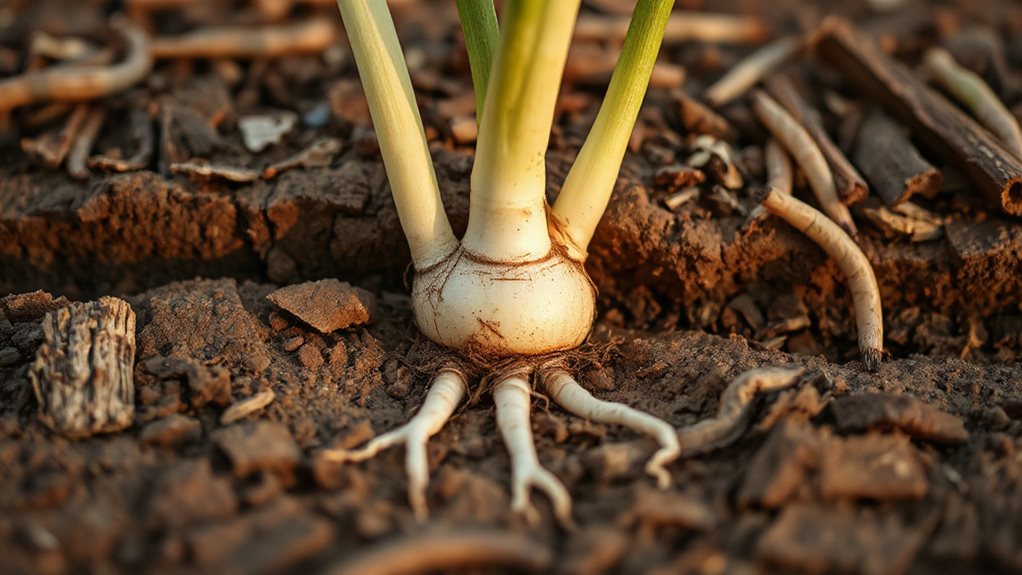
Often overlooked, mulch plays a powerful role in repairing compacted soil by working hand in hand with plants to restore structure and life.
You’ll find it increases organic matter as it breaks down, improving soil fertility and water retention.
It cushions against rain impact, reduces runoff, and enhances aeration—helping roots penetrate deeper while supporting earthworms and microbes that naturally loosen soil over time.
Perennial Plants That Build Healthy Soil Over Time
While mulch sets the stage for soil recovery by protecting the surface and feeding microbial life, the real metamorphosis begins beneath your feet—driven by the steady, persistent work of perennial plants.
You’ll see improved aeration, deeper water infiltration, and reduced compaction as their extensive roots grow year-round. These plants continuously feed soil life, cycle nutrients, and anchor topsoil, building healthier, more resilient soil over time.
Final Note
You can restore compacted soil naturally by choosing plants with deep taproots or fibrous root systems that break up dense layers. Incorporate legumes to add nitrogen and improve fertility, while cover crop mixes enhance structure and prevent erosion. Rotate crops regularly and use mulch to support ongoing soil repair. Over time, perennials build stable, healthy soil. These strategies work together to enhance aeration, drainage, and microbial activity—giving your garden a stronger foundation.