You can grow resilient plants in clay soil and poor drainage by choosing species adapted to wet, compact conditions. Try river birch or bald cypress for trees, switchgrass or feather reed grass for texture, and daylilies or Joe Pye weed for perennials. Shrubs like weigela and chokeberry handle moisture and compaction well, while sedges and wild ginger stabilize soil in shade. These tough, proven plants thrive where others fail—discover how each one performs in your garden’s toughest spots.
TLDR
- River birch and bald cypress thrive in wet clay, offering flood tolerance and erosion control.
- Swamp white oak handles poor drainage and compacted soil, ideal for low-maintenance landscapes.
- Smooth hydrangea and weigela tolerate heavy, moisture-retentive clay with seasonal color.
- Feather reed grass and switchgrass survive soggy conditions while improving soil structure.
- Daylilies and Joe Pye Weed endure wet, compacted clay and provide resilient, long-term coverage.
Trees That Thrive in Heavy Clay and Wet Conditions
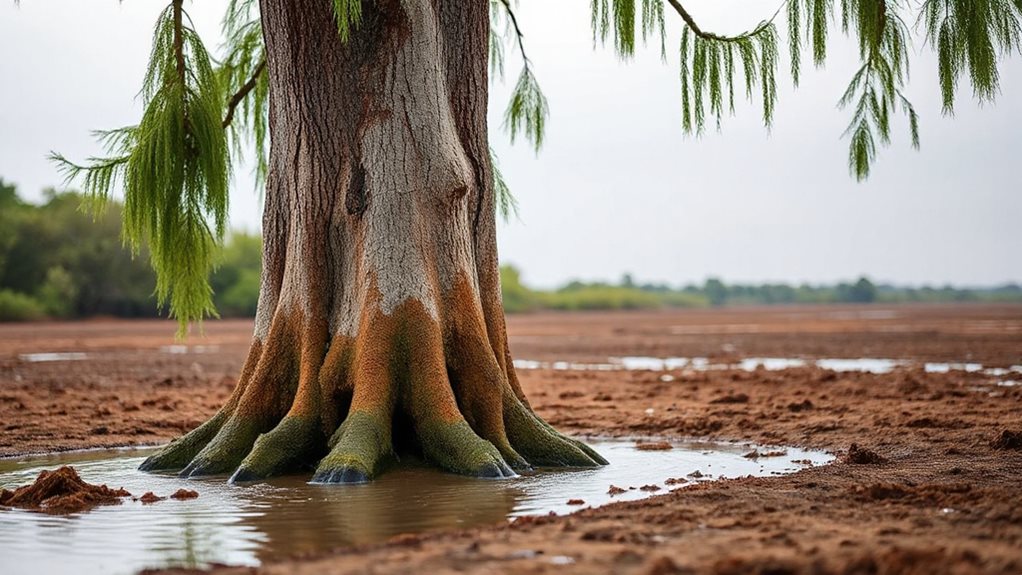
While clay soil can challenge many plants due to poor drainage, you’ll find several tree species not only survive but actually thrive in these heavy, moisture-retentive conditions.
You can count on river birch, swamp white oak, and bald cypress, all adapted to wet clay, with features like erosion control, flood tolerance, and oxygen-efficient roots—ideal choices for resilient, low-maintenance grounds near water or in poorly drained areas. Match planting plans to drainage and moisture characteristics to ensure long-term success and healthy growth. Bald cypress is especially notable for its ability to tolerate standing water and wet soil.
Shrubs for Challenging Clay and Poorly Drained Sites
When dealing with heavy clay and poor drainage, you’ll find that many shrubs not only survive but actually flourish once established, thanks to their adaptable root systems and tolerance for compacted, moisture-retentive soils.
You can rely on deutzia, weigela, and smooth hydrangeas for lively blooms, while chokeberry and viburnum offer resilience and structure. With proper organic amendments and slight elevation, your shrubs will thrive despite challenging conditions. Tropical shrubs like Croton can also tolerate intense sunlight and offer multicolored foliage to enliven moist garden spots.
Ornamental Grasses That Handle Soggy Clay Soils
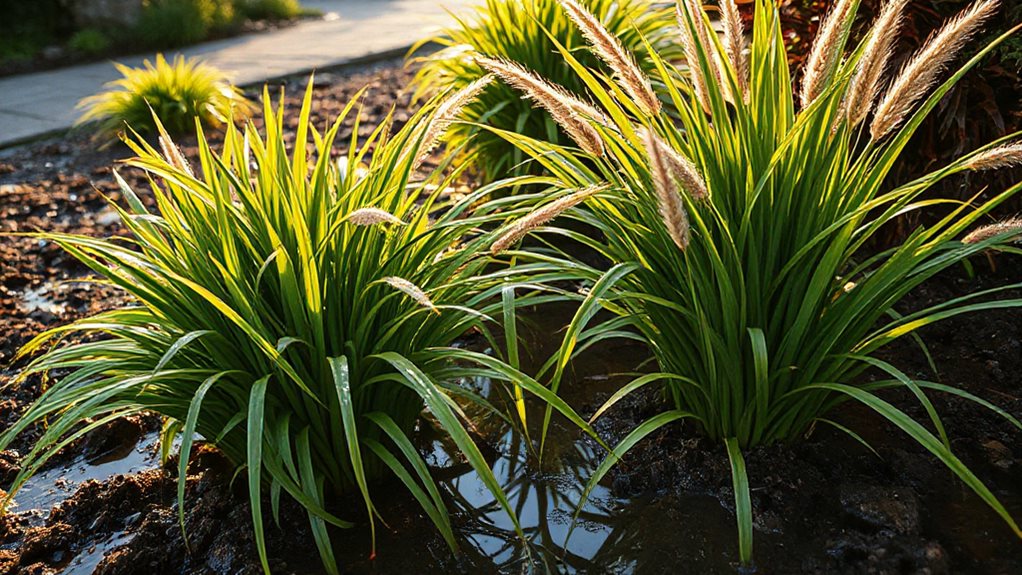
You’ll find many ornamental grasses thrive in soggy clay soils, especially tough varieties like feather reed grass and switchgrass that handle poor drainage with ease.
If you’re working in shade, try Hakone grass or native sedges, both of which tolerate moist clay and bring texture to low-light areas.
Just make sure to avoid planting in wet soil to prevent compaction, and you’ll set your grasses up for long-term success.
Grasses for Wet Clay
Often overlooked in challenging groundforms, ornamental grasses thrive where other plants struggle—especially in wet clay soils with poor drainage.
You’ll find Feather Reed Grass easy to grow, tolerating cold, compaction, and soggy conditions. Switchgrass handles humidity and clay, while Miscanthus adds year-round texture.
Blue oat and fescue grasses offer striking color contrast, and sedges like *Carex* break through dense soil, ensuring resilience and beauty in tough groundforms.
Shade-Tolerant Clay Options
Though many plants struggle in dense, waterlogged clay under shade, several ornamental grasses not only survive but excel in these tough conditions.
You’ll appreciate Northern Sea Oats for their bronze fall seed heads and erosion control, while Tufted Hair Grass offers semi-evergreen structure.
Wavy Hair Grass and Moor Grass thrive in compacted, soggy spots, and Bottlebrush Grass adds texture with its bristly plumes, all forming reliable, attractive cover where few plants dare.
Perennials Built to Survive in Dense, Moist Clay
You can count on daylilies to thrive in dense, moist clay, thanks to their tough roots that store water and handle both flooding and drought.
When you plant coneflowers in clay soil, mix in compost to enhance drainage so they’ll bloom reliably despite poor conditions.
These perennials not only survive heavy soil but actually improve it over time by breaking up compaction with their strong root systems.
Bougainvillea also tolerates heat and poor drainage in well-drained spots and provides striking color in sunny areas with dramatic cascading flowers.
Tough Perennials for Wet Clay
When it comes to thriving in wet clay soil, some perennials don’t just survive—they excel, leveraging deep root systems and moisture tolerance to flourish where others struggle.
You’ll love Astilbe for its feathery plumes and love of damp shade, while Daylilies handle compaction and variable moisture with ease.
Hostas, Bee Balm, and Coneflowers bring color and resilience, all thriving in your tough clay garden with minimal fuss.
Thrive in Heavy Soil
Some perennials don’t just endure heavy, moisture-laden clay—they use it to their advantage, anchoring deep and growing stronger with each season.
You’ll find Russian sage thrives even in poor soil, while Joe Pye weed handles compaction and wet roots with ease.
Coneflowers and daylilies return bigger yearly, and switchgrass’s deep roots break through dense layers, making these plants ideal for your resilient, low-maintenance garden.
Bloom Despite Poor Drainage
Often thriving where other plants struggle, several perennials reliably bloom despite poor drainage, proving well-suited to dense, moisture-retentive clay soils.
You’ll find daylilies and Siberian iris handle wet roots with ease, while bee balm and coneflowers return bigger each year.
Russian sage adds height and texture, all thriving in tough conditions, offering color, resilience, and reliable beauty season after season.
Low-Growing Plants for Clay Soil Ground Cover
You’ll find excellent options for low-growing ground covers that thrive in clay soil and handle poor drainage, helping stabilize the soil while reducing maintenance.
Cranesbill geranium offers dense, blooming foliage, while wild ginger’s roots break up compaction. Hardy sedum tolerates drought and poor fertility, Ajuga spreads quickly in damp shade, and Heuchera adds color without rotting, forming living mulch that suppresses weeds and cools roots.
Native Species Adapted to Flood-Prone Clay Areas
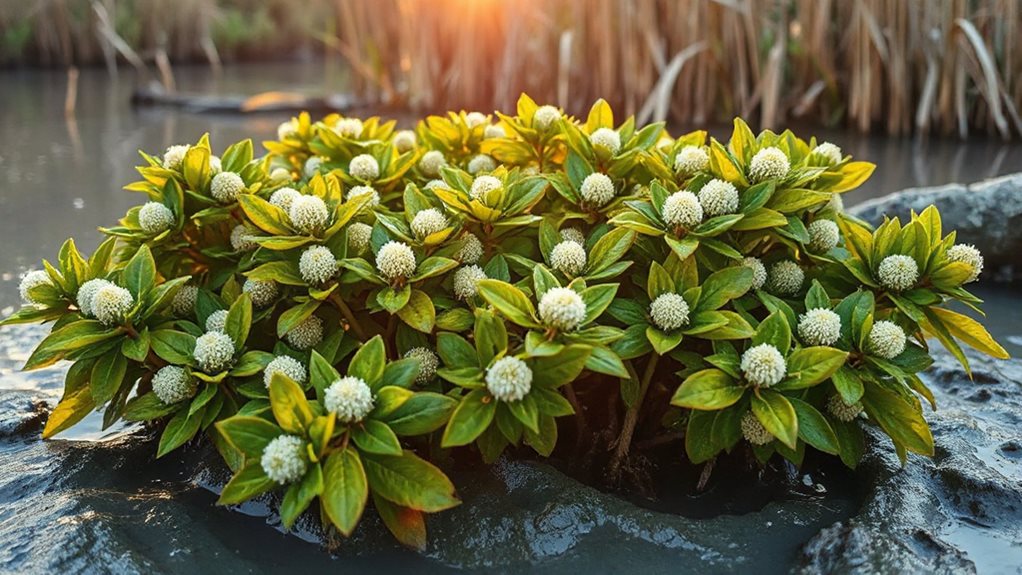
When selecting plants for flood-prone clay areas, native species offer resilient solutions that thrive under challenging conditions, stabilizing soil while supporting local ecosystems.
You can count on Cardinal Flower and Swamp Milkweed, which flourish in saturated soils. Big Bluestem’s deep roots prevent erosion, while Turtlehead species handle fluctuating water. Wetland sedges like Carex and switchgrass anchor soil, slow runoff, and enhance habitat value. Container gardening with deep pots can also help manage soil conditions for certain species, especially when drainage is improved with well-draining soil and proper pot size.
Sun-Loving Plants for Sticky, Compacted Clay
Though sticky, compacted clay can challenge even seasoned gardeners, selecting the right sun-loving plants converts this dense soil into a thriving, resilient garden.
You can grow coneflower, daylily, and black-eyed Susan, all thriving in full sun and heavy soil. Add bee balm or butterfly bush for color, and amend clay with compost to improve drainage and root growth. Aerating in late spring to early summer can also help break up compaction and improve root access to nutrients and water, especially when combined with proper watering afterward.
Shade-Tolerant Options for Wet, Heavy Soil
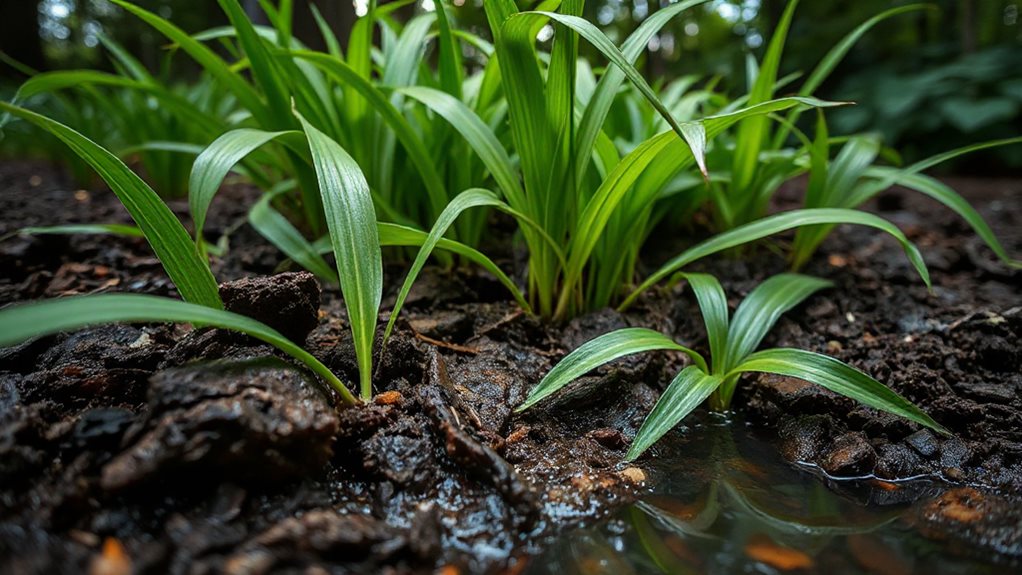
Gardening in wet, heavy clay soil under shade doesn’t have to mean limited choices or constant struggle—plenty of resilient plants thrive in these challenging conditions when matched correctly.
You can grow hostas, astilbe, and Jack in the Pulpit for foliage and form, while cardinal flower and goatsbeard add height and color.
Sedges, liriope, and sweet flag handle moisture well, and forget-me-nots or tiarella bring seasonal blooms, all thriving where drainage lags and light fades.
Final Note
You now have practical, proven options for thriving plants in clay soil and poor drainage. By choosing species adapted to heavy, wet conditions, you improve scenery resilience and reduce maintenance. Whether in sun or shade, native or ornamental, these plants handle compaction and moisture effectively. Matching the right plant to your site’s conditions guarantees long-term success, promotes healthier growth, and supports sustainable gardening practices without unnecessary amendments or guesswork.