If your lawn has dull, yellow patches, pools water after rain, or feels hard underfoot, you likely have compacted soil. Shallow roots and poor grass growth are common, especially in high-traffic areas. Use a screwdriver or shovel to test—resistance at 4 inches means compaction. Core aeration helps relieve it, while topdressing with compost improves soil structure. Avoid heavy traffic on wet soil and adjust mowing patterns. There’s more to learn about restoring your lawn’s health.
TLDR
- Yellow, patchy grass and poor response to water or fertilizer signal compacted soil restricting nutrient uptake.
- Water pooling after rain or slow infiltration indicates reduced pore space and poor drainage from compaction.
- A hard, crusty soil surface or resistance when inserting a shovel or screwdriver reveals compacted layers.
- Shallow, sideways-growing roots and increased weeds or moss suggest soil compaction limiting root growth.
- Core aeration, topdressing with compost, and reducing foot traffic can effectively relieve and prevent soil compaction.
Is Your Lawn Struggling? Soil Compaction Might Be Why
If your lawn looks tired and underperforming despite regular care, compacted soil could be the hidden culprit.
You might notice dull, patchy grass, water pooling after rain, or shallow roots that pull up too easily. These signs mean nutrients, water, and air can’t reach roots. Reduced pore space limits the movement of air and water through the soil, worsening root stress.
Over time, this stress weakens your turf, inviting weeds and diseases your lawn should naturally resist. Core aeration helps relieve compaction by removing small plugs of soil to improve air and water movement.
Is Your Soil Too Hard to Dig? A Sign of Compaction
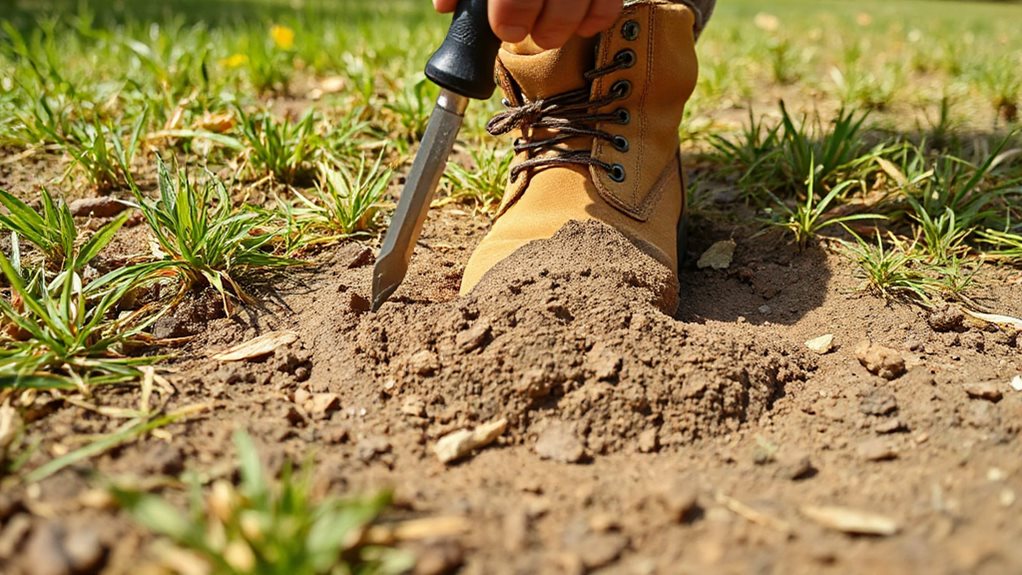
If your shovel bounces off the soil or you have to push hard just to get a few inches deep, you’re likely dealing with compaction.
When fine particles are pressed tightly together, they form a dense, crusty layer that blocks tools, water, and roots—especially after rain or irrigation.
Try pushing a screwdriver into damp soil; if it stops suddenly, that’s a clear sign of a compacted layer beneath the surface.
Check soil temperature and moisture before reseeding, since soil temperature strongly affects germination and can influence whether compacted layers prevent new grass from emerging.
Hard Soil, Poor Penetration
Beneath your feet, compacted soil can feel like a stubborn barrier, resisting every shove of the shovel and turning simple gardening tasks into exhausting chores.
You’ll notice water pooling, slow infiltration, and surface crusting—clear signs of poor penetration. Hardpan forms just below the surface, blocking roots and limiting oxygen.
Core aeration and topdressing with compost break through compaction, restoring pore space and helping your lawn breathe, drink, and grow.
Simple Test, Clear Results
How deep does your shovel really go? If you’re jumping on it or hitting a hard layer at 4 inches, your soil’s likely compacted.
A screwdriver should slide in 4–6 inches easily; less than that, and roots are restricted.
Use a wire flag or penetrometer for clearer proof—consistent resistance means it’s time to aerate and revive your lawn’s health.
Why Won’t Grass Grow in Bare Spots?
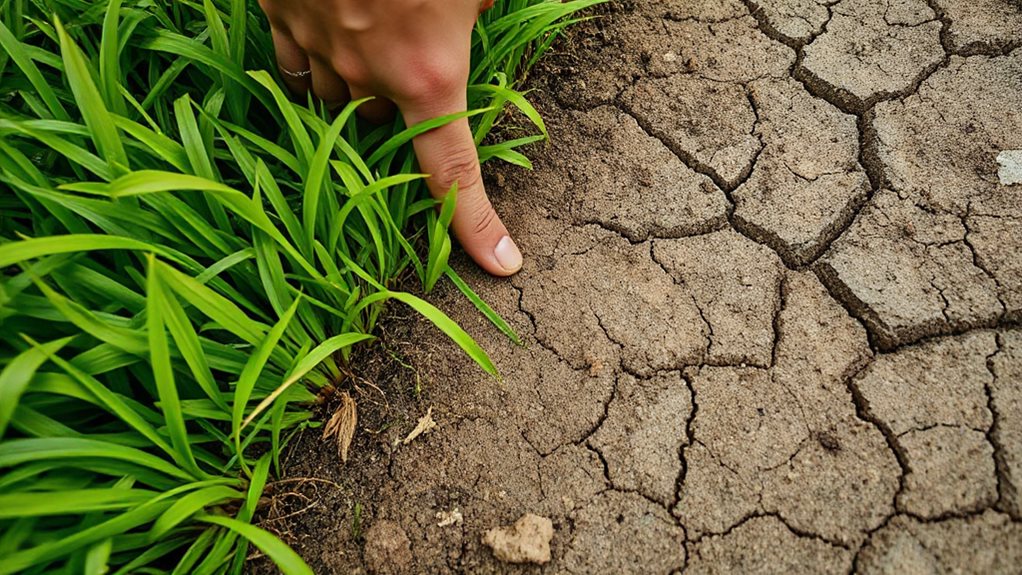
Seeing bare spots stubbornly resist new growth can be frustrating, especially when you’ve tried reseeding or patching them.
Compacted soil restricts root expansion, limits water infiltration, and reduces oxygen, preventing new grass from establishing.
Even with proper seeding, poor soil structure, thatch buildup, or lingering pests and diseases can halt recovery.
Addressing these hidden issues is key to helping your lawn heal and thrive.
Watering during cold periods can also matter, since effective watering is generally recommended above 40°F to protect roots and support recovery.
Yellow Grass? Soil Compaction Could Be the Cause
You might notice your grass turning yellow, especially in high-traffic areas where soil compaction is likely restricting root growth and nutrient uptake.
When the soil becomes too dense, it limits water infiltration, air exchange, and fertilizer effectiveness—leading to stressed, discolored turf. Fortunately, core aeration can relieve this hidden pressure, helping your lawn breathe again and regain its healthy green color. Installing a French drain can also help redirect excess surface water away from compacted areas to improve drainage over time.
Yellow Grass Clues
Often, yellow grass isn’t just a sign of thirst or hunger—it’s a clear warning that your lawn’s soil may be compacted.
Irregular yellow patches in high-traffic areas, poor response to watering or fertilizer, and worsening discoloration during heat all point to compression.
You’ll also notice hard soil, runoff, shallow roots, and weeds taking over—clear clues your turf is struggling beneath the surface.
Hidden Soil Stress
Yellow grass can signal more than a need for water or nutrients—it often reveals hidden stress beneath the surface, where compacted soil restricts everything your lawn depends on to thrive.
You’ll notice stunted, wilted patches, shallow roots, and poor bounce-back after foot traffic. These signs, especially along paths or near driveways, mean your soil’s structure is compromised, limiting oxygen, water, and nutrient movement essential for healthy turf growth.
Revive With Aeration
Break up the tight grip of compacted soil and watch your lawn begin to breathe again. Core aeration increases air, water, and nutrient flow, encouraging deeper roots and greener growth.
You’ll see improved hydration, reduced runoff, and stronger stress tolerance. Healthier soil means fewer diseases, less thatch, and a resilient, lively lawn you can be proud of.
Are Roots Growing Sideways, Not Down?
When soil becomes compacted, it doesn’t just feel harder underfoot—it actively reshapes how plant roots grow, forcing them to spread sideways instead of pushing down.
You’ll notice roots growing horizontally, especially near the surface, because dense layers block their path. This shallow network struggles to access water and nutrients, leaving your lawn stressed and weak during dry spells. Reducing nearby mouse habitat and outdoor clutter can help prevent burrowing that worsens compaction and soil disturbance, especially around foundations and slabs (outdoor clutter).
Puddles After Rain? Classic Soil Compaction Sign
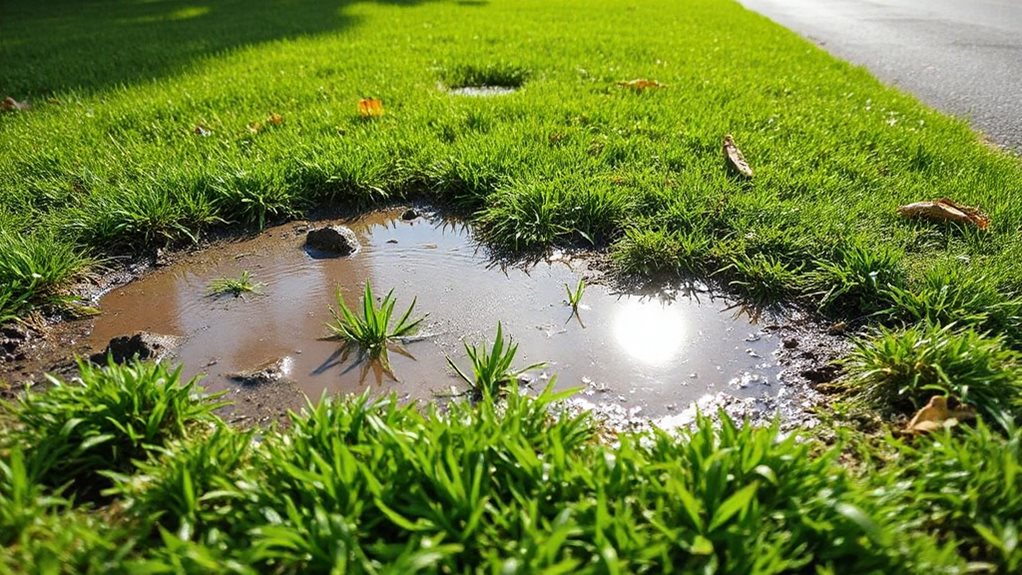
You’ve probably noticed puddles forming in your yard after even a light rain, and that’s a clear sign water isn’t soaking in like it should.
When soil becomes compacted, it loses the ability to absorb moisture, forcing water to pool on the surface instead of filtering down to plant roots. This poor drainage often stems from dense clay soils or repeated pressure from foot traffic, lawn equipment, or pets running the same paths.
Puddles Signal Poor Drainage
Often, persistent puddles lingering a day or more after rain reveal more than just wet grass—they signal underlying drainage problems rooted in soil compaction, poor grading, or site-specific conditions.
You might notice soggy turf, water beading on the surface, or recurring wet spots where grass struggles.
These clues point to compacted soil or flawed terrain contours, both preventing proper water infiltration and requiring targeted fixes to restore healthy drainage and lawn resilience.
Compacted Soil Prevents Absorption
If you’re seeing puddles form shortly after a rain and linger for hours or even days, it’s a clear sign your lawn’s soil has lost its ability to absorb water—thanks to compaction.
Reduced macropores and increased bulk density limit infiltration, enhance runoff, and restrict root growth, leaving your lawn vulnerable to erosion and stress. You can restore absorption by improving soil structure with organic matter, increasing pore space and water movement where it’s needed most.
Why Weeds Love Compacted Soil (And Moss Too)
When soil gets packed down from foot traffic or heavy use, it loses the open structure that healthy grass needs to thrive—air spaces shrink, water pools on the surface, and roots struggle to grow deep.
You’ll notice weeds like crabgrass, chickweed, and moss taking over because they thrive in low-oxygen, compacted conditions where grass weakens and can’t compete.
How to Test for Compacted Soil at Home
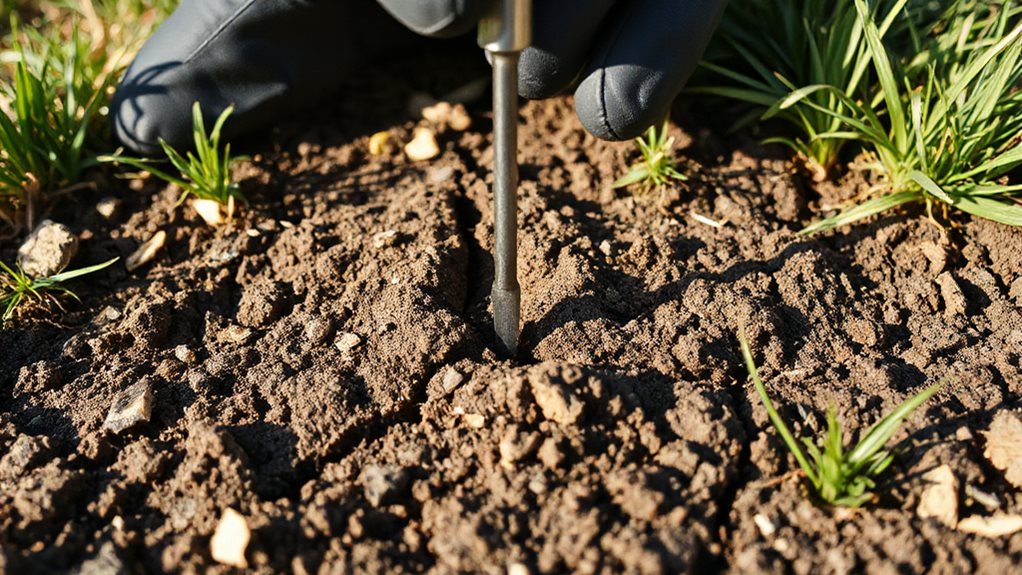
To get to the root of your lawn’s struggles, start by checking for soil compaction using simple, reliable methods you can do yourself. Push a screwdriver into moist soil—if it stops at 4 inches, compaction’s likely.
Use a shovel to check for dense layers and horizontal roots, or walk across the lawn to feel for hardness. These signs, plus poor drainage, point to compacted soil.
What Causes Soil Compaction in Lawns?
Soil compaction doesn’t happen overnight, but your lawn may already be feeling the squeeze from everyday pressures you don’t even notice.
Walking the same paths, parking equipment, or letting kids and pets play in wet areas packs down soil, especially in clay-rich or poorly drained spots.
Construction, over-tilling, and even well-meaning fixes like adding sand can make it worse over time.
Core Aeration: The Best Fix for Compacted Soil
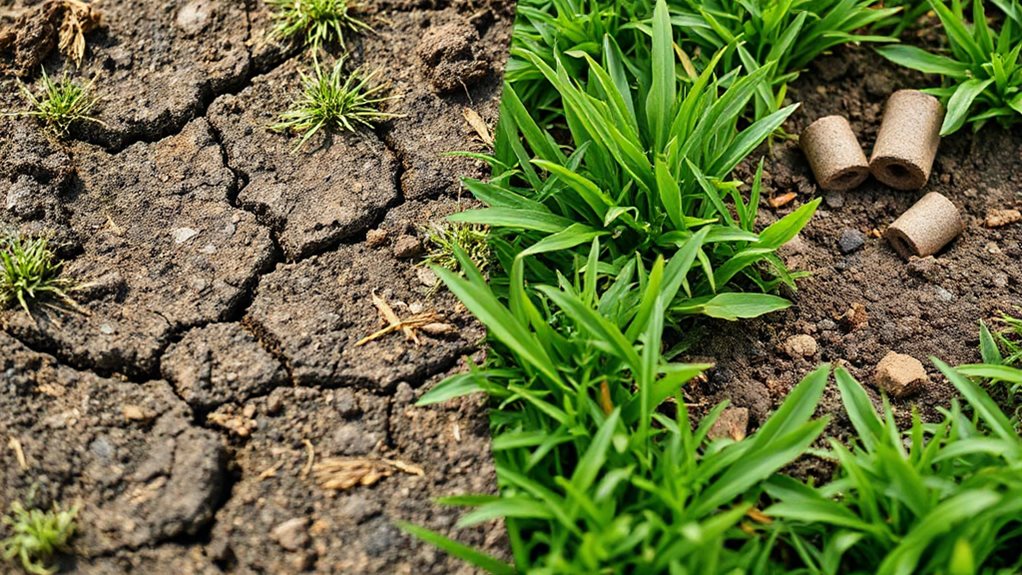
While your lawn may look healthy on the surface, hidden stress from compacted soil could be restricting root growth and limiting nutrient uptake—core aeration tackles this problem head-on by removing small plugs of soil to restore essential airflow and structure.
You’ll increase oxygen, water, and nutrient movement, encourage deeper roots, improve drainage, and reduce thatch, giving your lawn the breathing room it needs to thrive.
Smart Habits to Prevent Soil Compaction Long-Term
You’ve taken the step to relieve existing compaction with core aeration, but lasting lawn health depends on what you do next—preventing the problem from returning.
Limit traffic on wet soil, rotate play areas, and use stepping stones to reduce pressure. Alternate mowing patterns, keep blades sharp, and choose lightweight equipment.
Topdress with compost, maintain plant cover, and improve drainage to build resilient, well-structured soil over time.
Final Note
You now know the signs of compacted soil—poor grass growth, yellowing, shallow roots, and difficulty digging. Testing your soil is simple and worthwhile. Core aeration effectively relieves compaction, improving airflow, water absorption, and root development. To prevent future issues, avoid heavy foot or equipment traffic, especially on wet soil, and maintain regular lawn care. These steps guarantee healthier, more resilient turf over time.