You can test your soil’s pH naturally at home by preparing a 1:5 soil-to-water slurry and using simple household items. Try the vinegar and baking soda test—fizzing with vinegar means alkaline soil, while bubbling with baking soda indicates acidity. For more detail, use pH strips or a calibrated probe on the settled slurry. You can even make a red cabbage indicator to observe color changes: pink shows acidity, green suggests alkalinity. Each method offers practical observations, and there’s more to uncover about choosing the right approach for your garden.
TLDR
- Collect and prepare soil by sieving and mixing 20 g with 100 g distilled water to create a consistent slurry.
- Test acidity by adding vinegar to soil; fizzing indicates alkaline conditions, while no reaction suggests neutrality.
- Check for alkalinity by mixing soil with water and baking soda; fizzing means the soil is acidic.
- Use red cabbage juice as a natural pH indicator: mix with soil filtrate and observe color changes for pH levels.
- Compare results: pink indicates acidic soil, purple-blue is neutral, and green to yellow-green signals alkaline soil.
Make a Soil-Water Slurry for pH Testing
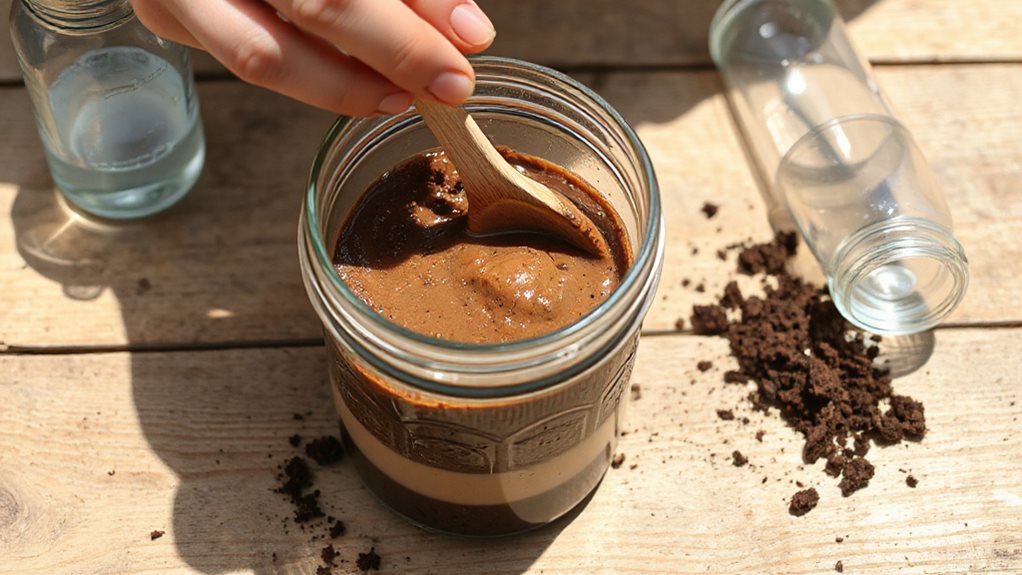
To get an accurate read on your soil’s pH, start by preparing a soil-water slurry—a simple yet essential step that sets the foundation for reliable results.
Collect soil from 6 inches deep, avoiding surface layers, then mix 20g of sieved, air-dried soil with 100g distilled water. Shake vigorously for 5 minutes or stir with a magnetic stirrer to form a uniform slurry before testing. Thoroughly mix all collected soil to ensure a representative sample for testing. Consider testing the slurry alongside a soil pH test to confirm the acidity level.
Test Soil pH With Vinegar and Baking Soda
With just a few household items, you can quickly gauge your soil’s pH using simple chemical reactions that reveal whether your garden bed leans acidic, alkaline, or neutral.
Add vinegar to one soil sample—if it fizzes, your soil is alkaline.
Mix another sample with water and baking soda; fizzing means it’s acidic.
No reaction? Your soil is likely neutral.
Ceiling paint is formulated to resist staining and yellowing from moisture and aging, making it less suitable for durable wall finishes but useful for hiding imperfections on flat surfaces like ceilings and textured ceilings.
Use pH Strips for Quick Soil Testing
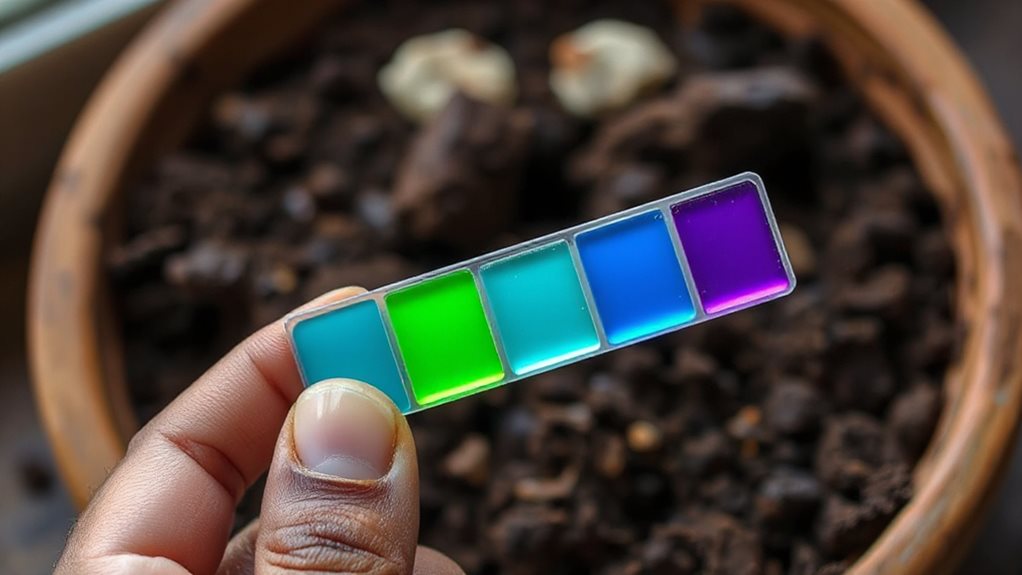
You can get a quick read on your soil’s pH by dipping a test strip into a prepared soil solution, giving you a straightforward way to assess whether your garden is leaning acidic, neutral, or alkaline.
Mix soil with distilled water, let it settle, then dip a pHhydrion strip. Compare the color under natural light, using the chart for a whole-number estimate. While not lab-precise, it’s reliable for general gardening needs. A simple pH strip test is especially useful when used alongside color charts from reputable kits to improve accuracy.
Test Soil pH With Red Cabbage Juice
You can easily make a pH indicator by simmering chopped red cabbage in distilled water, then straining the liquid to get a purple-blue juice that reacts to acidity and alkalinity.
Mix a tablespoon of your garden soil with 10 drops of the cooled cabbage juice, shake well, and let it sit for 30 minutes to see the color change.
A pink hue means your soil’s acidic, green signals alkaline, and purple stays neutral—just compare it to a color chart for a closer pH estimate.
Keep seedlings’ watering needs in mind when interpreting results, since consistent moisture affects nutrient availability and pH readings.
Red Cabbage Indicator Preparation
Pulling observations from your kitchen can lead to surprisingly accurate soil testing, and red cabbage is a powerhouse when it comes to natural pH indicators.
Chop one cup of red cabbage, simmer it in two cups of distilled water for five minutes, then strain the liquid.
For deeper color, use a 2:1 cabbage-to-water ratio, blend with four cups water, and filter through a coffee filter—cool before using.
Soil Filtrate Mixing Technique
After preparing your red cabbage indicator and collecting a representative soil sample, it’s time to combine the two for accurate pH testing.
Mix 1/4 cup soil with an equal part distilled water, stir well, and let sit for 15–30 minutes.
Stir again, then filter the slurry to collect clear extract.
Use this filtrate to test pH with cabbage juice, ensuring precise, reliable results you can trust.
Color Change Interpretation
Once the soil filtrate is ready, it’s time to observe how the red cabbage juice reacts when mixed with your sample, revealing the pH through distinct color changes.
Pink means acidic soil, purple-blue signals neutral (pH 7), and green to yellow-green indicates alkaline conditions.
Wait 30 minutes for stable results, then compare your color to a pH chart for accurate interpretation.
Test Soil pH Right in the Ground
You can skip the lab and get reliable pH readings by testing right in the ground, where your plants grow.
Poke holes at a consistent depth using an auger or ruler, then add distilled water until the soil is damp.
Insert your calibrated pH probe, wait for the reading to stabilize, and record the value.
Test multiple spots in a W-pattern for accurate, on-site results without sample collection or delays.
Call 811 before digging to locate any buried utilities and avoid hitting underground lines.
Compare Natural Soil pH Testing Methods
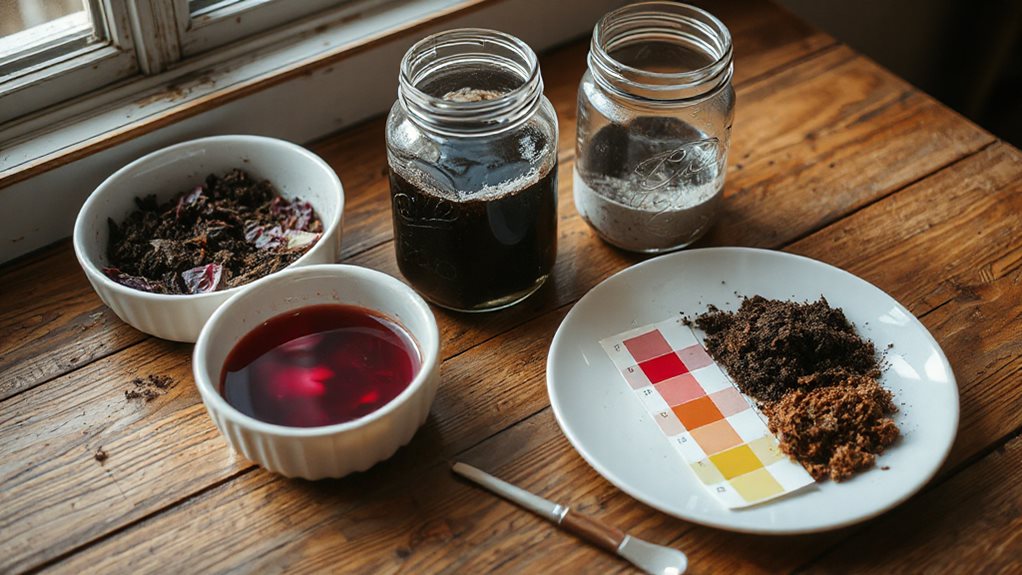
You can quickly check your soil’s pH using simple methods like the vinegar and baking soda test, which relies on visible fizzing to signal acidity or alkalinity.
For more consistent results, try pH strips or a digital probe, both of which give clearer readings when used with a proper soil-to-water mix.
While homemade tests are handy, tools like strips and probes offer greater accuracy without needing special preparation.
Vinegar Baking Soda Test
Kick off your soil pH testing the simple way with the vinegar and baking soda method—a classic home technique that separates acidic, neutral, and alkaline soils through basic chemistry.
You’ll mix soil with vinegar to check for alkalinity, then use water and baking soda to test for acidity. Fizzing means reaction: vinegar bubbles signal alkaline soil, baking soda fizz means acidic.
No reaction? Your soil’s likely neutral, around pH 6–7, perfect for most plants. Watch for subtle bubbles—they reveal slight imbalances.
While not exact, this test gives you a quick, low-cost snapshot of your soil’s chemistry, helping you make informed gardening choices without lab tools.
pH Strips And Probes
A reliable pH assessment begins with choosing the right tool, and when it comes to at-home soil testing, pH strips and electronic probes offer distinct advantages and limitations.
You can use strips with a 1:1 slurry or direct probe testing, but strips may give inconsistent results. Probes provide more accuracy, especially pocket testers or portable meters, though they require care.
Why Test Soil pH at Home the Natural Way
While soil pH plays a critical role in garden success, testing it naturally at home guarantees you’re working with accurate, actionable data without relying on costly lab services or unreliable digital meters.
You’ll optimize nutrient availability, support healthy plant growth, and prevent toxicity by making informed, eco-friendly choices—saving money and protecting your soil’s long-term health with simple, effective methods.
Final Note
You now have several natural, reliable ways to test your soil’s pH right at home. Whether using vinegar and baking soda for a quick check or red cabbage juice for more detail, these methods are simple and effective. pH strips offer speed, while soil-water slurries allow close observation. Each technique has strengths, so choose based on your needs. Testing regularly helps maintain balanced soil, supporting healthier plants and better garden success over time.