First, pull a blade; if it comes out clean with a white base, the grass is dead, not dormant. Check soil moisture—standing water means overwatering, dry patches mean underwatering—and test pH (6.0‑7.0) to spot nutrient or compaction issues. Aerate the lawn to break up compacted soil, then overseed immediately with 4‑6 lb per 1,000 ft², lightly raking for seed‑soil contact. Water early (5‑8 AM) or evening (6‑8 PM) to 1 inch per session, every other day in loam, and mow at 2.5‑3.5 inches, keeping blades sharp. Following these steps will set the stage for a healthier lawn, and the next sections will guide you through seasonal timing and finer maintenance details.
TLDR
- Test for dormancy by pulling a blade; a clean pull with a white base indicates truly dead grass.
- Water deeply early morning (5‑8 AM) to deliver 1 inch per session, aiming for 1‑1.5 inches weekly, and adjust frequency for soil type.
- Aerate the lawn to relieve compaction, then overseed with 4‑6 lb per 1,000 ft², lightly raking for seed‑soil contact.
- Maintain soil pH between 6.0‑7.0 and address nutrient deficiencies, compaction, thatch, pests, or fungal issues identified by testing.
- Mow at 2.5‑3.5 inches, never below 2.5 inches, and keep blades sharp; schedule mowing every 3‑5 days for warm‑season grass.
Why Your Lawn Looks Dead (and How to Confirm)
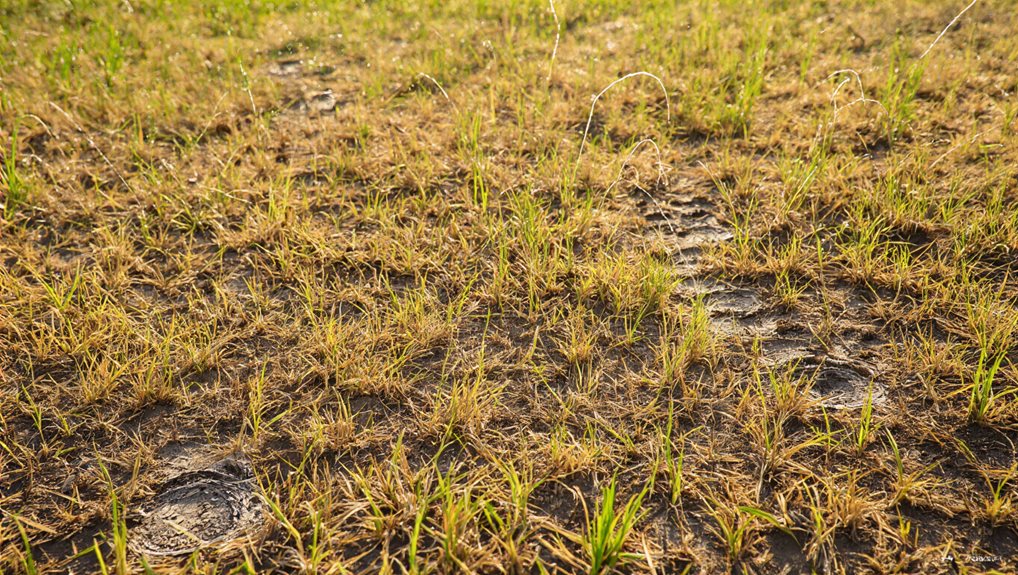
Why does your lawn look dead, and how can you be sure it’s not just a temporary brownout?
You can tug a blade; if it pulls clean with a white base, the grass is dead.
Check soil moisture—standing water or dry patches signal over‑ or underwatering.
Inspect for nutrient deficiency, compaction, thatch, pests, or fungal circles, and run a pH‑nutrient test to confirm underlying issues.
Dormancy can be caused by extreme heat, so a watering test may reveal if the grass is merely dormant. Soil moisture
Best Season & Temperature for Revitalizing a Dead Lawn
When should you start reviving a dead lawn, and what temperatures will give it the best chance to recover? For cool‑season grass, aim for early fall—late August through October—when soil sits at 50‑65 °F, providing ideal germination and avoiding summer stress. Ensure you also prepare the soil for uniform growth by checking that pH is in the 6.0–7.0 range to support nutrient uptake and seedling establishment. Soil pH range supports better nutrient availability and helps establish a uniform, healthy lawn. Warm‑season lawns thrive in late spring to early summer, April‑June, with soil consistently at 65‑70 °F, allowing roots to establish before winter.
Aerate a Dead Lawn to Restore Airflow and Water Penetration
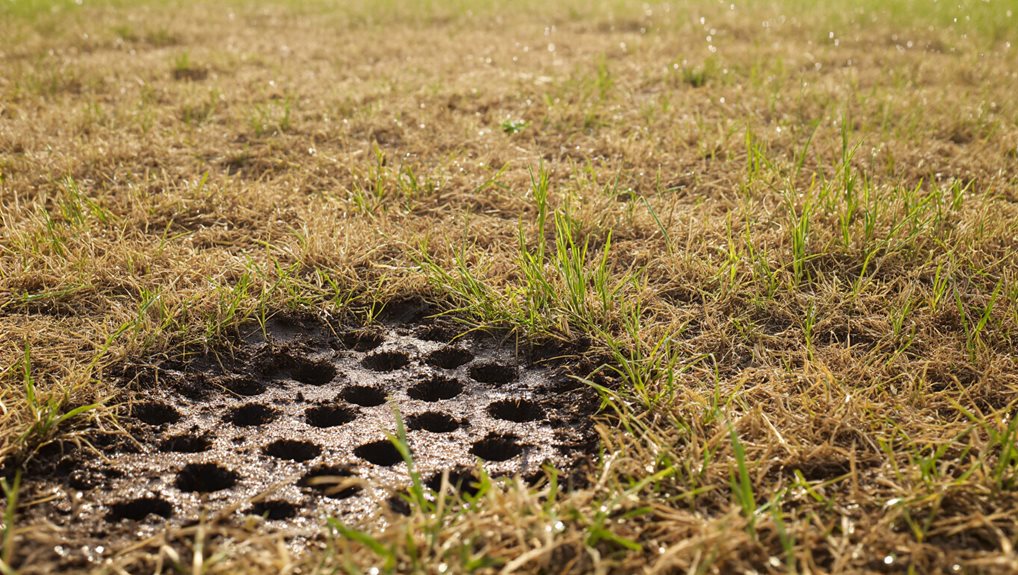
How can you restore airflow and water penetration to a dead lawn plagued by summer heat? By core‑aerating you break compacted layers, letting roots reach moisture and nutrients, while oxygen floods the soil, boosting microbial life.
The holes increase infiltration up to 50 % and reduce runoff, preventing thatch buildup and disease, ultimately giving your grass a resilient, communal foundation.
Overseed a Dead Lawn – Timing After Aeration
After you’ve loosened compacted soil with core‑aeration, the next step is to seed the lawn at the right time to let those new roots establish before the heat returns. For cool‑season grasses, aim for late summer through early fall, spreading 4‑6 lb per 1,000 ft² immediately after aeration, then lightly rake for contact. Public urination enforcement varies by jurisdiction and can carry fines up to $4,000 or more, depending on local laws and circumstances, so be sure to follow local regulations to avoid penalties. local regulations
Water a Dead Lawn Properly: Timing, Frequency, and Amount
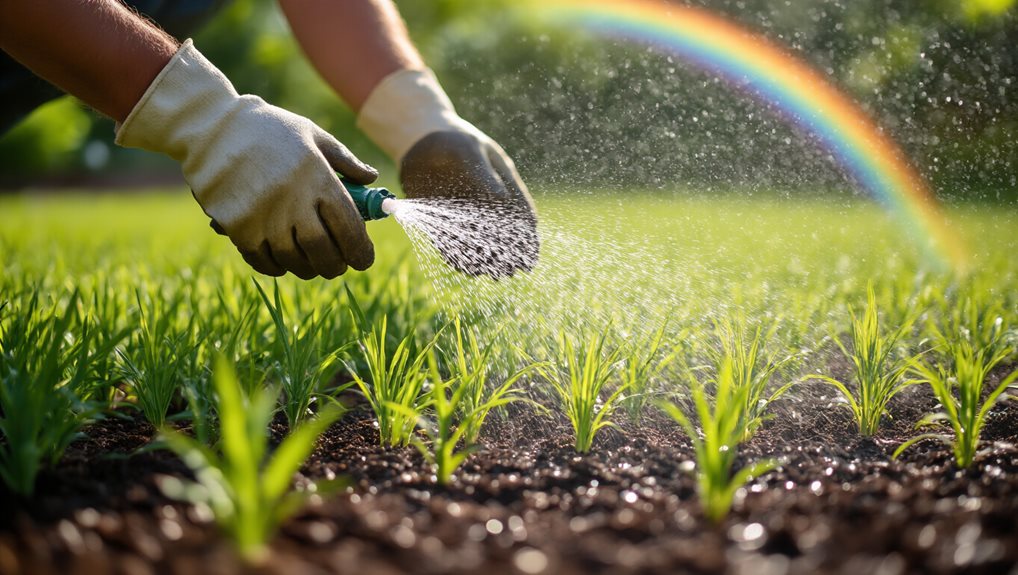
Ever wondered why a dead lawn stays brown despite your best efforts? Water early, preferably 5‑8 AM, so roots absorb before heat spikes; if mornings clash, aim for 6‑8 PM, allowing drying before night.
Apply deep irrigation 1 inch per session, totaling 1‑1.5 inches weekly, and water every other day in loamy soil, adjusting frequency for sandy or clay textures. This schedule promotes deep roots, reduces evaporation, and avoids overwatering. Aiming for open-base drainage helps prevent waterlogged soil and supports root extension as noted in durable bed designs.
Mow a Reviving Lawn: Height and Frequency Tips
When your lawn is trying to bounce back from summer stress, the way you mow can make or break its recovery. Keep grass 2.5‑3.5 inches tall, never cutting below 2.5 inches, and remove no more than one‑third of blade length each pass. Mow warm‑season grass every 3‑5 days, cool‑season every 5‑7 days, adjusting to growth. Sharp blades, dry conditions, and cooler times of day protect roots and promote healthy regrowth. Use a grid‑based planning mindset to track mowing intervals and adjust rotation to minimize soil compaction and maximize recovery. Square Foot Garden
Final Note
By following these steps—identifying the problem, choosing the right season, aerating, overseeding, watering correctly, and mowing at the proper height—you’ll restore your lawn’s health even under summer heat. Consistent care, proper timing, and balanced moisture will encourage strong root development and dense grass, turning a seemingly dead yard into a lively, resilient lawn that thrives throughout the season.