For fresh caulk stains, immediately blot excess material and scrape gently with a dull edge before rinsing water-based types under cold water. Dried latex or acrylic caulk requires manual removal of loose particles, followed by saturating the area with 70% isopropyl alcohol for thirty minutes. Silicone caulk needs stronger solvents like adhesive remover or turpentine to soften before scraping. Always pretest cleaning agents on hidden fabric areas and wash in the warmest water safe for your fabric type, avoiding the dryer until stains completely disappear. Understanding specific techniques for each caulk variety guarantees more effective removal results.
TLDR
- For fresh caulk spills, immediately blot excess material and gently scrape away wet caulk before it sets.
- Water-based caulks like latex and acrylic are easier to remove when wet using dish soap and warm water.
- Silicone caulk requires specialized adhesive removers or solvents like isopropyl alcohol, with 30-minute soaking for penetration.
- Always pretest cleaning agents on hidden fabric areas first to check for colorfastness or potential damage.
- Wash treated garments in appropriate temperature water and air dry to inspect for residual stains before machine drying.
Types of Caulk and Their Removal Challenges
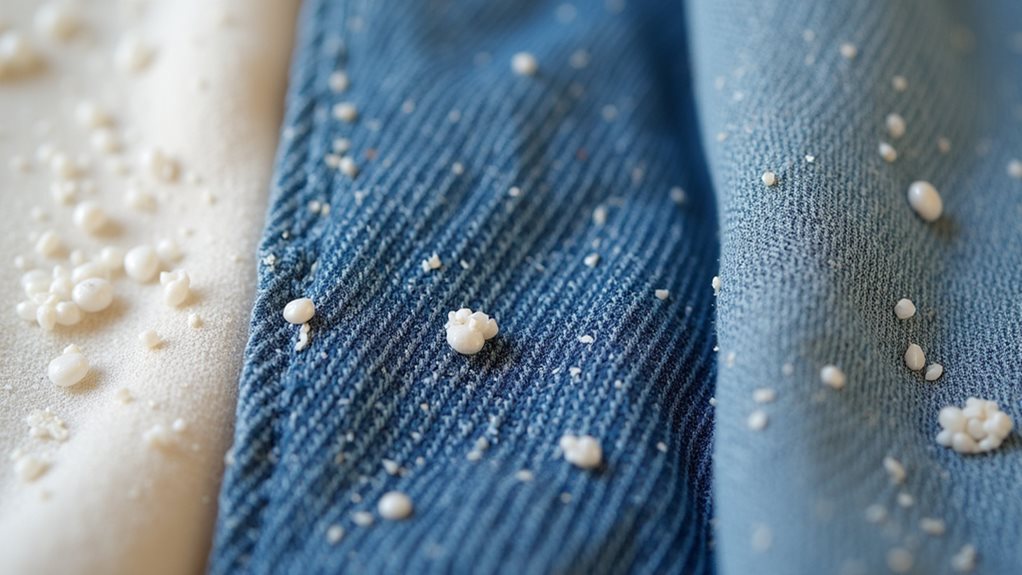
Before attempting any removal method, you’ll need to identify the type of caulk that’s stained your clothing, as each variety presents distinct challenges and requires specific approaches.
Silicone caulk resists most solvents and often leaves permanent stains. Acrylic and latex caulks wash out easier when wet but harden when dried. Polyurethane and specialty caulks typically require mechanical removal. Just like how security plugins can temporarily block access to websites, some caulk types create barriers that require specialized tools and techniques to overcome effectively. Regular maintenance and prompt treatment of fresh caulk stains can greatly improve removal success, especially for latex and acrylic caulks.
Essential Tools and Materials for Caulk Removal
Having the right tools and materials readily available will markedly improve your chances of successfully removing caulk stains from clothing without causing additional damage.
You’ll need white dishwashing detergent, warm water, plastic bottle lids for gentle scraping, dry absorbent towels, and soft clean cloths for final drying to guarantee complete stain removal. Always pretest cleaning agents on an inconspicuous area of the fabric to check for colorfastness before treating the visible stain. For tougher residues, consider using a commercial adhesive remover formulated for fabrics to avoid damage to the fibers and finish, and always test it first on a hidden area to ensure it won’t harm the material (see adhesive remover safety).
Safety Precautions and Fabric Testing
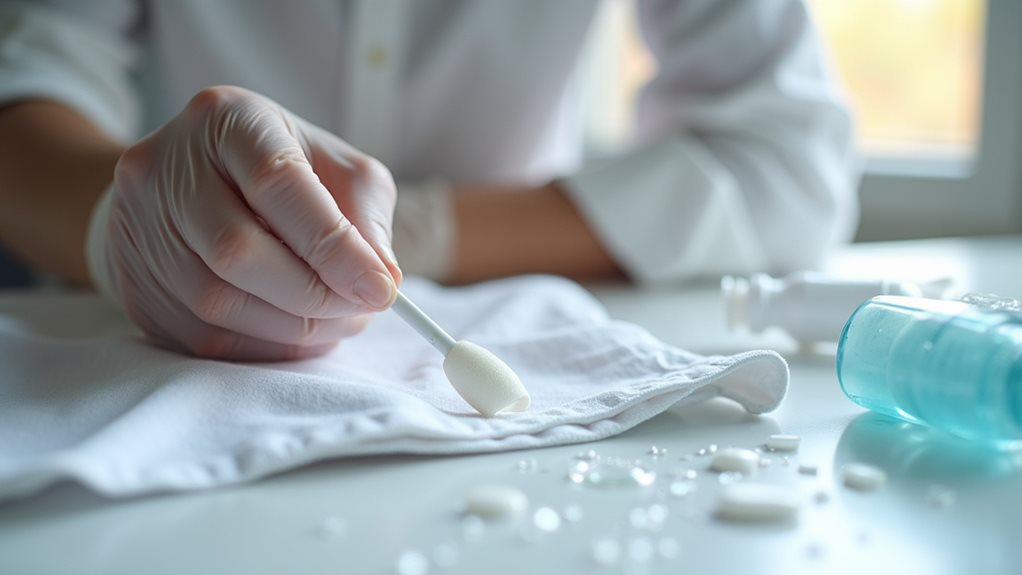
When attempting to remove caulk from clothing, protecting yourself and your garments requires careful preparation and testing procedures that can prevent both personal injury and irreversible fabric damage.
Wear nitrile gloves and safety goggles when handling solvents or chemical removers.
Always test cleaning agents on hidden fabric areas first to check for colorfastness or damage before proceeding.
Most silicone caulks can be touch-dry within an hour but may take up to 24 hours to fully cure, so avoid treating freshly applied caulk until it has had time to set.
Removing Fresh Water-Based Caulk Stains
When you find fresh water-based caulk on your clothing, you’ll need to act quickly using a three-step approach that maximizes your chances of complete removal.
You’ll start by rinsing and blotting the affected area immediately to remove as much wet caulk as possible, then apply rubbing alcohol treatment to target any remaining residue that water couldn’t eliminate.
Finally, you’ll wash the garment in your machine before drying, since heat from the dryer can permanently set any caulk traces that weren’t fully removed during the cleaning process.
Rinse and Blot Immediately
Fresh water-based caulk spills onto clothing call for swift action, as immediate treatment markedly increases your chances of complete stain removal.
Rinse the stained area under cold running water immediately, positioning fabric so water flows through the stain’s back side. Simultaneously, blot with clean cloths using dabbing motions, working from outside edges inward.
Apply Rubbing Alcohol Treatment
Saturate a cotton ball or makeup remover pad with isopropyl alcohol to create your primary treatment tool for dissolving the water-based caulk compounds embedded in the fabric fibers.
Gently blot the stained area using careful motions, avoiding rubbing actions that could spread the caulk deeper into the material.
Replace saturated applicators frequently to maintain effective alcohol concentration throughout the removal process.
Wash Before Drying
After applying the rubbing alcohol treatment, you’ll need to act quickly with proper washing techniques to prevent the water-based caulk from setting permanently into the fabric fibers.
Wash the garment using the warmest water safe for the fabric and quality detergent with effective surfactants. Avoid using the dryer until you’ve confirmed complete stain removal, as heat will set caulk permanently.
Tackling Dried Water-Based Caulk
When water-based caulk has dried completely on your clothing, you’ll need to approach the removal process systematically to avoid damaging the fabric or embedding the material deeper into the fibers.
First, inspect the garment and identify the fabric type through care label instructions.
Rinse the affected area under cool water, gently removing loose particles manually.
Special Techniques for Silicone Caulk Removal
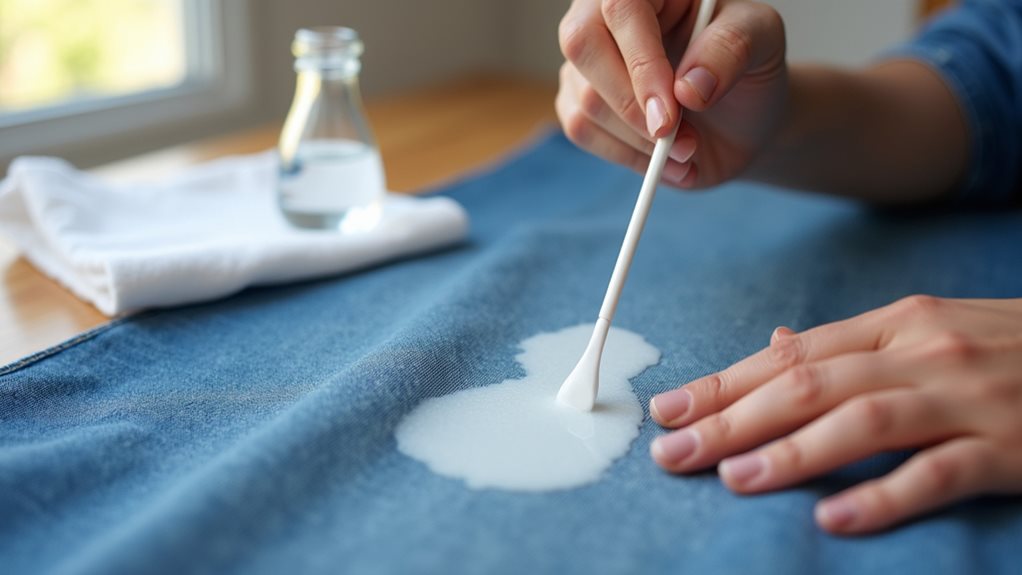
While water-based caulk responds well to basic removal methods, silicone caulk presents a more challenging situation due to its rubber-like properties and strong adhesive bonds.
You’ll need specialized adhesive removers that chemically break down silicone bonds, or apply gentle heat from a hair dryer to soften the caulk before scraping it away carefully.
Proper Rubbing Alcohol Application Methods
Rubbing alcohol consistently proves to be one of the most effective solvents for breaking down caulk residues on fabric, but proper application technique determines whether you’ll successfully remove the stain or potentially damage your garments.
Use 70% isopropyl alcohol with lint-free cloths, testing on inconspicuous areas first. Apply directly to stains, allowing penetration before gentle rubbing motions.
Washing and Drying Guidelines After Treatment
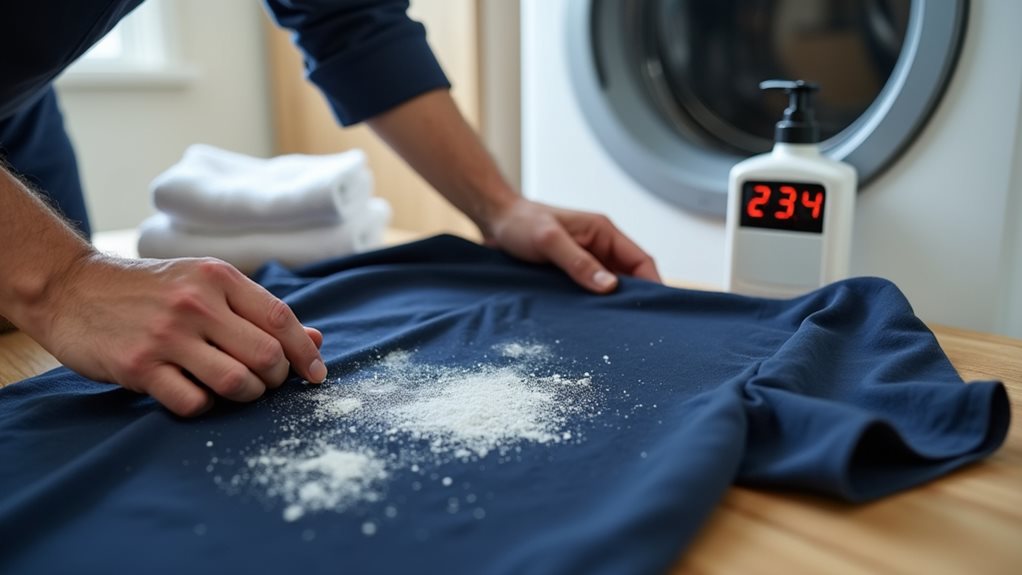
After you’ve treated caulk stains with rubbing alcohol or detergent solutions, proper washing and drying techniques become essential for complete removal without damaging your garments.
You’ll need to select appropriate water temperatures based on your fabric’s care instructions, inspect thoroughly for any remaining residue before drying, and choose safe drying methods that won’t set stubborn stains permanently.
Following these post-treatment guidelines guarantees you’ll achieve the best results while preserving your clothing’s integrity and appearance.
Temperature-Specific Washing Instructions
Once you’ve successfully treated caulk stains using removal techniques, selecting the appropriate washing temperature becomes essential for completely eliminating residues without damaging your fabric.
Use hot water for durable cotton fabrics to break down silicone-based residues effectively.
Choose cold water for delicate fabrics and synthetic blends to prevent caulk components from bonding more firmly to fibers.
Pre-Drying Stain Inspection
Before placing your treated garment in the dryer, you must conduct a thorough pre-drying inspection to verify complete caulk removal.
Examine the previously stained area for any remaining residue, discoloration, or texture changes.
Compare the fabric’s current appearance to your pre-treatment documentation.
If caulk particles persist or cleaning product residue remains, repeat the washing process before proceeding.
Safe Drying Methods
Proper drying techniques become critically important following caulk removal treatment, as incorrect methods can permanently set any remaining residue into fabric fibers.
You should air dry or line dry clothes initially, allowing you to inspect for residual stains before applying heat. Avoid heat-based dryers until you’ve confirmed complete stain removal through careful examination.
Troubleshooting Stubborn Caulk Residue
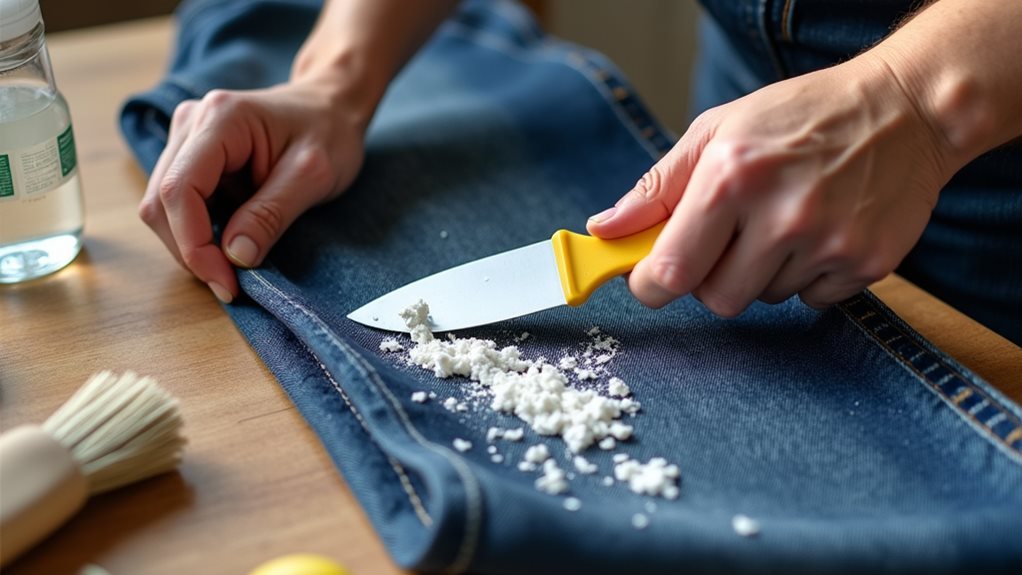
Although initial removal attempts often succeed with fresh caulk spills, you’ll encounter situations where stubborn residue refuses to budge from fabric fibers.
Cured silicone bonds more firmly than fresh applications, requiring stronger solvents like white gas or turpentine. Soak affected areas for thirty minutes, cover with plastic to prevent evaporation, then manually scrape away softened chunks before washing.
Preventing Future Caulk Stains on Clothing
The most effective approach to managing caulk stains involves preventing them from occurring in the first place through strategic preparation and mindful application practices.
You’ll want to focus on three key areas: selecting appropriate protective clothing that shields your garments while allowing freedom of movement, establishing a well-organized work area that minimizes splatter risks, and employing careful application techniques that reduce the likelihood of accidental contact.
Protective Clothing Options
Preventing caulk stains from reaching your clothing requires a proactive approach that combines protective barriers with smart fabric choices.
Consider wearing coveralls, overalls, or long-sleeve jumpsuits made from durable canvas, twill, or polyester fabrics that create physical barriers against caulk penetration. These protective garments come in various sizes and styles, including disposable options for single-use applications.
Work Area Setup
When you establish a well-organized work environment before starting your caulking project, you’ll noticeably reduce the likelihood of accidental spills and splatters that can stain your clothing.
Designate a specific, well-lit area and cover nearby surfaces with disposable drop cloths. Keep all tools organized within easy reach, place a trash bin nearby, and guarantee adequate ventilation throughout your workspace.
Application Technique Tips
Beyond creating an ideal workspace, proper caulking techniques and protective measures dramatically reduce your chances of getting caulk on your clothing in the first place.
Wear dedicated work clothes made from cotton or denim, which clean more easily than synthetic blends. Choose long sleeves and pants for skin protection, or use disposable coveralls during extensive projects for full coverage.
Final Note
You’ve now become proficient in the essential techniques for removing caulk from clothing, whether it’s fresh or dried. Remember to act quickly with water-based caulk, test cleaning methods on inconspicuous areas first, and use rubbing alcohol for stubborn residue. Always prioritize safety by working in ventilated areas and wearing protective gear. With proper prevention strategies and these proven removal methods, you’ll successfully restore your garments while avoiding future caulk-related clothing mishaps.