To keep water bugs out of your house, you’ll need to seal entry points like cracks in your foundation and gaps around pipes, control moisture by fixing leaks and maintaining humidity below 50%, and eliminate food sources by cleaning thoroughly and storing items in sealed containers. Apply targeted treatments like gel baits near sinks and boric acid in wall voids for effective control. The following exhaustive strategies will help you create an impenetrable defense system.
TLDR
- Seal cracks in foundation, gaps around pipes, and install door sweeps to block water bug entry points.
- Control moisture by fixing leaks immediately and maintaining indoor humidity below 50% with dehumidifiers.
- Remove food sources by cleaning thoroughly, using tight-fitting trash lids, and storing items properly.
- Apply targeted treatments like gel baits near drains and boric acid dust in wall voids.
- Clear outdoor debris, store firewood 20 feet away, and eliminate shelter sources around your home.
Seal All Entry Points Around Your Home
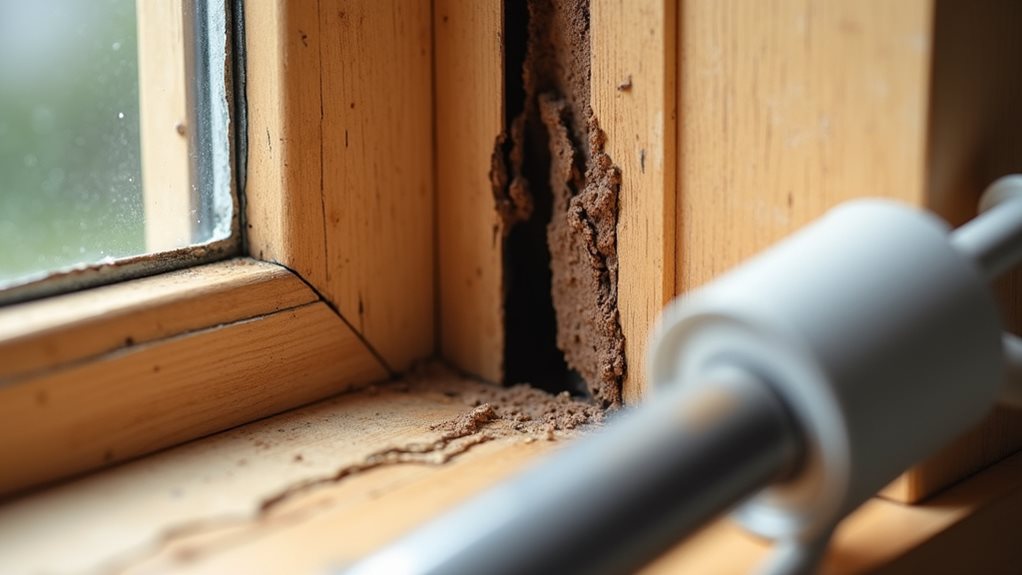
Before water bugs can establish themselves inside your home, they must first find a way through your exterior defenses, making thorough sealing of entry points your most effective prevention strategy.
Focus on small cracks in your foundation and siding, gaps around pipes and utility lines, spaces under doors, and openings around windows and vents. Install door sweeps and weatherstripping to create a complete barrier against these aquatic pests. Reduce indoor moisture and improve ventilation to make your home less inviting to water bugs and other pests by addressing moisture sources.
Control Moisture Levels Inside and Outside
Water bugs thrive in moist environments, making moisture control your most powerful weapon against these unwelcome invaders.
You’ll need to address both immediate water sources like plumbing leaks and long-term humidity issues that create the damp conditions these pests require for survival. Oriental cockroaches specifically favor environments with high humidity and will seek out moisture-rich areas like basements and utility rooms. If you live in a rental, notify your landlord promptly about leaks or hot water problems since landlord responsibility often requires them to repair conditions that attract pests.
Fix Plumbing Leaks Immediately
Plumbing leaks consistently rank among the most significant moisture sources that attract water bugs into residential and commercial structures.
You’ll need to detect leaks through visual inspection and smart detection systems, which achieve up to 99.79% accuracy rates.
Prompt repairs eliminate continuous moisture sources, restricting suitable breeding conditions and preventing structural damage from prolonged dampness.
Use Dehumidifiers Effectively
Beyond addressing immediate water sources, controlling ambient moisture levels throughout your home creates an inhospitable environment for water bugs and other moisture-dependent pests.
Install dehumidifiers in basements, crawl spaces, and poorly ventilated areas to maintain humidity below 50%. This disrupts pest lifecycles, slows reproduction rates, and increases mortality.
Regular maintenance guarantees peak performance within all-inclusive pest management strategies.
Eliminate Food Sources and Hiding Spots
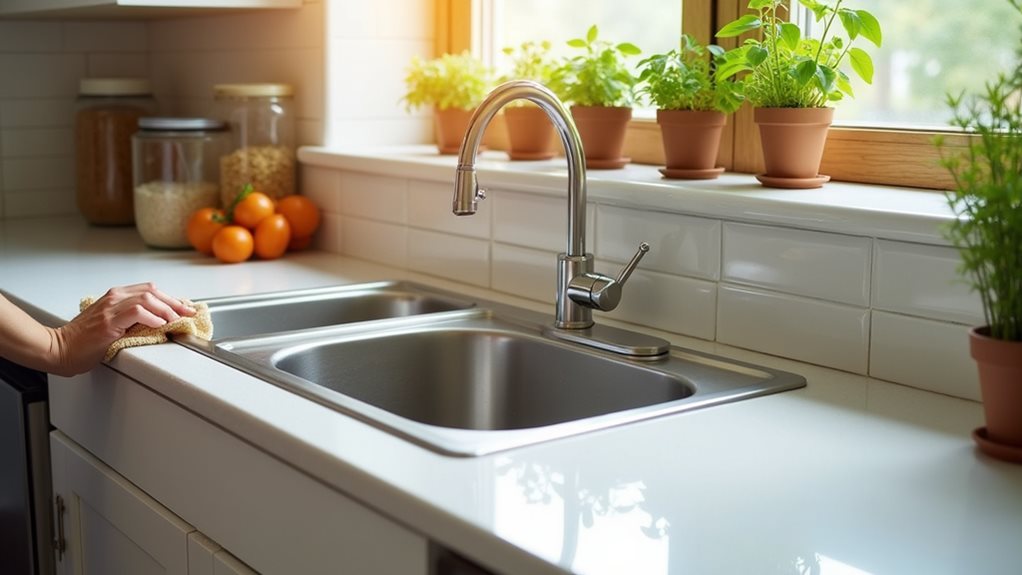
Water bugs aren’t just attracted to moisture—they’re also drawn to readily available food sources and secure hiding spots around your property. You’ll need to focus on removing food debris from both indoor and outdoor areas, maintaining clean trash storage spaces, and eliminating the shelter options that make your home appealing to these pests. Use a hand rake to tidy up outdoor debris and reduce hiding spots among landscaping materials.
Remove Food Debris
Eliminating food debris throughout your home creates an inhospitable environment for water bugs by removing their primary sustenance sources and preferred hiding locations.
Wash dishes immediately after meals, wipe counters after food preparation, and sweep floors regularly.
Vacuum carpets to capture scattered particles, clean kitchen appliances thoroughly, and remove crumbs from under furniture and behind refrigerators.
Clean Trash Areas
Trash areas consistently harbor the food sources, moisture, and shelter that water bugs need to thrive, making proper sanitation of these spaces critical to your pest prevention strategy.
Use tight-fitting lids and rinse containers regularly with mild detergent. Store cans on raised concrete surfaces rather than soil, and sweep collection areas frequently to eliminate crumbs and organic matter.
Reduce Outdoor Shelter
Beyond maintaining clean indoor waste areas, your yard’s scenery features and outdoor conditions play a significant role in determining whether water bugs establish themselves near your home.
Piles of wood, leaves, and debris create ideal hiding spots, so store firewood at least 20 feet away and clear yard waste weekly to eliminate shelter opportunities.
Apply Chemical Treatments and Baits Strategically
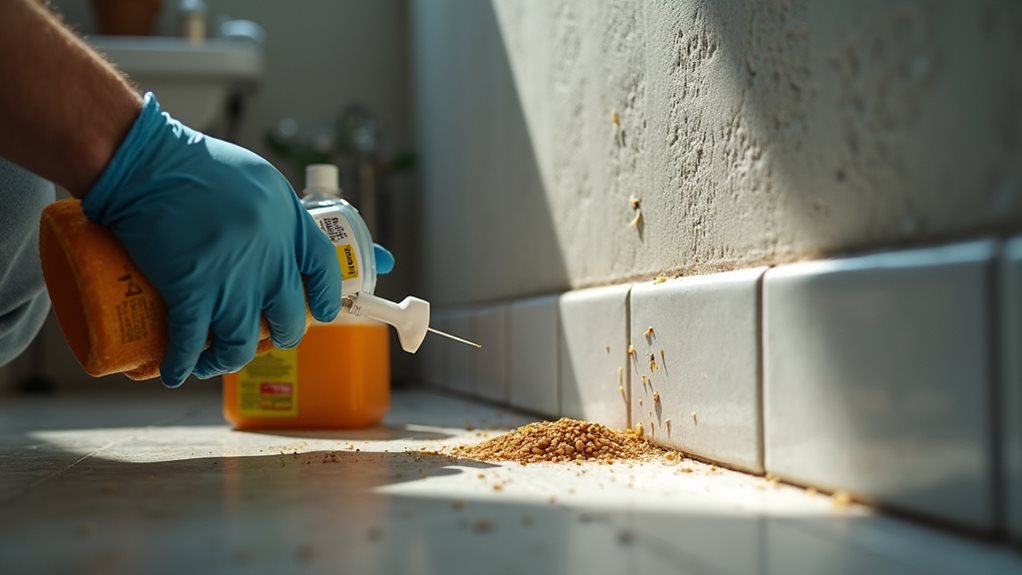
When water bugs have already established themselves in your home, strategically applied chemical treatments and baits become essential tools for eliminating existing populations and preventing future infestations.
Place gel baits containing fipronil near sinks, drains, and appliances where these pests forage.
Apply inorganic dusts like boric acid in wall voids and crevices for long-lasting control.
Use Natural and DIY Prevention Methods
While chemical treatments provide immediate results against water bug infestations, many homeowners prefer natural and DIY prevention methods that offer effective protection without introducing harsh chemicals into their living spaces.
You can sprinkle boric acid powder around windowsills and doorways, apply diatomaceous earth along your building’s perimeter, and create essential oil sprays using peppermint or tea tree oil mixed with water for regular application to entry points.
Establish Regular Maintenance and Monitoring Routines
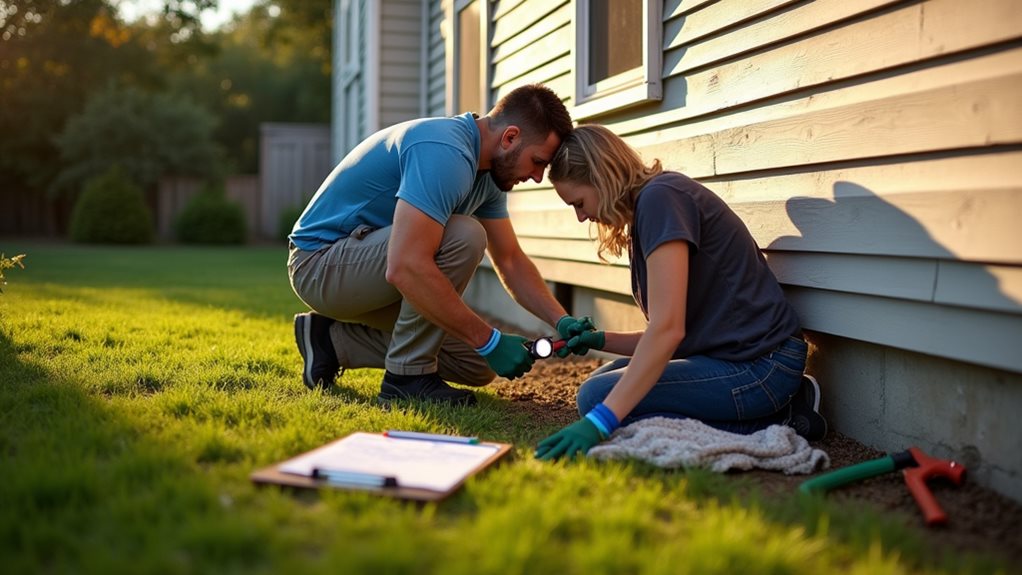
Successfully preventing water bugs from entering your home requires consistent maintenance and monitoring routines that address the root causes attracting these pests.
Schedule regular inspections of vulnerable areas like basements, crawl spaces, and drainage systems for leaks or moisture accumulation. Monitor treated zones and replace baits as needed while documenting patterns to inform future adjustments.
Focus on High-Risk Areas Like Basements and Utility Rooms
Although water bugs can infiltrate various parts of your home, basements and utility rooms present the highest risk due to their inherent moisture levels, abundant hiding spots, and direct connections to plumbing systems.
You’ll need targeted strategies for these vulnerable areas, including strategic bait placement, enhanced moisture control, thorough sanitation practices, and consistent monitoring to prevent established infestations.
Know When to Call Professional Pest Control Services
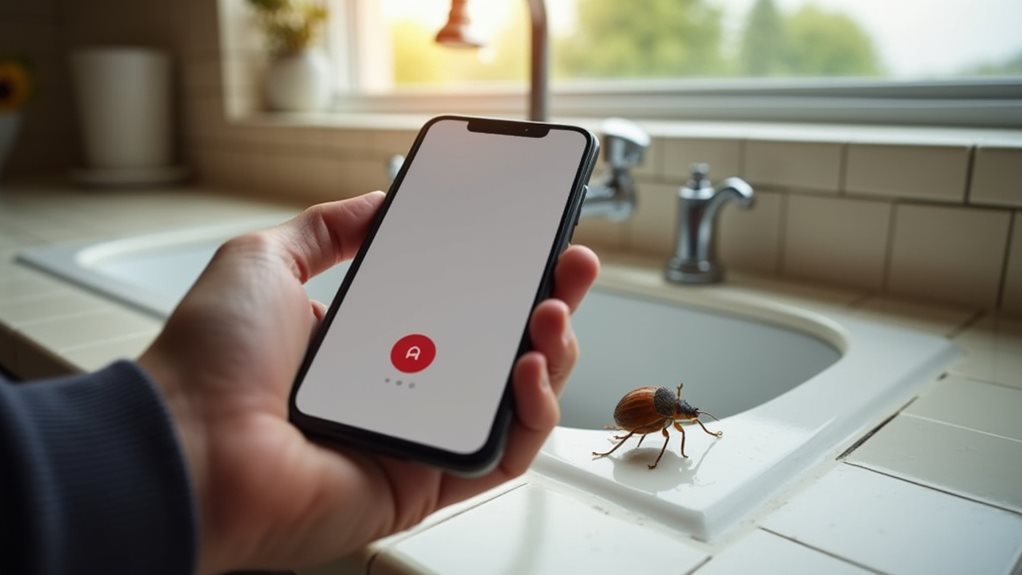
When water bug problems exceed your ability to manage them effectively, professional pest control services become essential for protecting your home’s health and safety.
Licensed technicians use EPA-approved treatments and specialized equipment that DIY methods can’t match. You’ll need professional intervention when infestations spread rapidly, affect multiple rooms, or pose health risks to vulnerable family members.
Final Note
You’ll effectively keep water bugs out by implementing these thorough strategies consistently. Seal entry points, control moisture, eliminate food sources, and apply treatments as needed. Focus your efforts on high-risk areas like basements, and don’t hesitate to contact professionals when infestations persist. Regular monitoring and maintenance guarantee long-term success, while combining chemical and natural methods provides the most resilient defense against these persistent pests in your home.