Add a 3–6 inch layer of compost, spread it evenly, and work it into the top 2–3 inches of your clay lawn each year to loosen compaction, improve drainage, and enhance nutrient availability. Follow with core aeration every fall or spring to create channels that relieve soil density and promote deeper roots. If a soil test shows sodic conditions, apply 40–50 lb of gypsum per 1,000 sq ft to flocculate particles and open pores. Mulch with shredded leaves or straw at about 0.5 kg/m² to retain moisture, add slow-release nutrients, and protect the root zone. Water early, deeply, and infrequently, keeping the soil moderately moist to prevent hardening. Continue exploring these steps for a healthier, more resilient lawn.
TLDR
- Add 3–6 inches of compost, work it into the top 2–3 inches, and repeat annually to break up compaction and boost nutrients.
- Perform core aeration each year to create drainage channels, improve root depth, and enhance moisture movement in clay.
- Test soil for sodium; if sodic, apply 40–50 lb of gypsum per 1,000 sq ft to promote flocculation and open pore spaces.
- After gypsum, spread 0.5 kg of shredded leaf, straw, or compost mulch per square meter to retain moisture, add organic matter, and support microbes.
- Water early, deeply, and infrequently, keeping the soil moderately moist to prevent hardening and encourage healthy root growth.
Add 3‑6 Inches of Compost to Improve Clay Soil
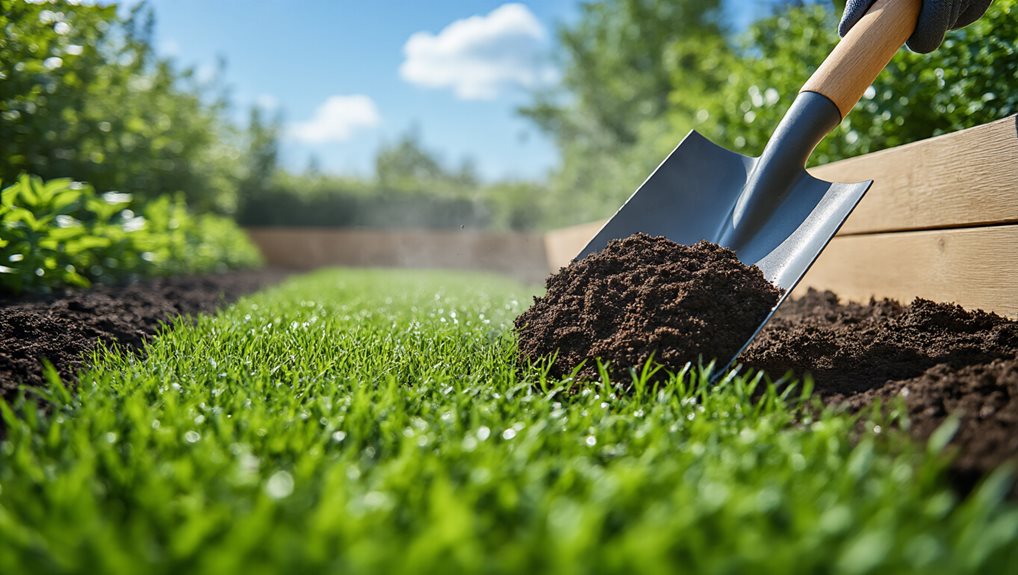
A layer of three to six inches of compost is a practical, high‑impact way to convert compacted clay into a looser, more breathable medium that supports a healthy lawn. You’ll see better drainage, slow‑release nutrients, and moisture retention while beneficial microbes soften the soil. Spread it evenly, work it in to a two‑to‑three‑inch depth, and repeat annually for lasting improvement. Adding organic matter further enhances soil structure and nutrient availability. Compost introduces diverse microbial life, which improves nutrient cycling and soil health in the long term.
Core‑Aerate Clay Lawn (How Often & Why)
Adding a few inches of compost softens the clay, but the soil still needs space to breathe and water to move freely; that’s where core‑aeration comes in. Regular core aeration, especially when combined with compost amendments, can further improve root depth and drought tolerance by promoting better soil structure and drainage. core aeration
Apply Gypsum to Boost Clay Soil Porosity and Root Growth
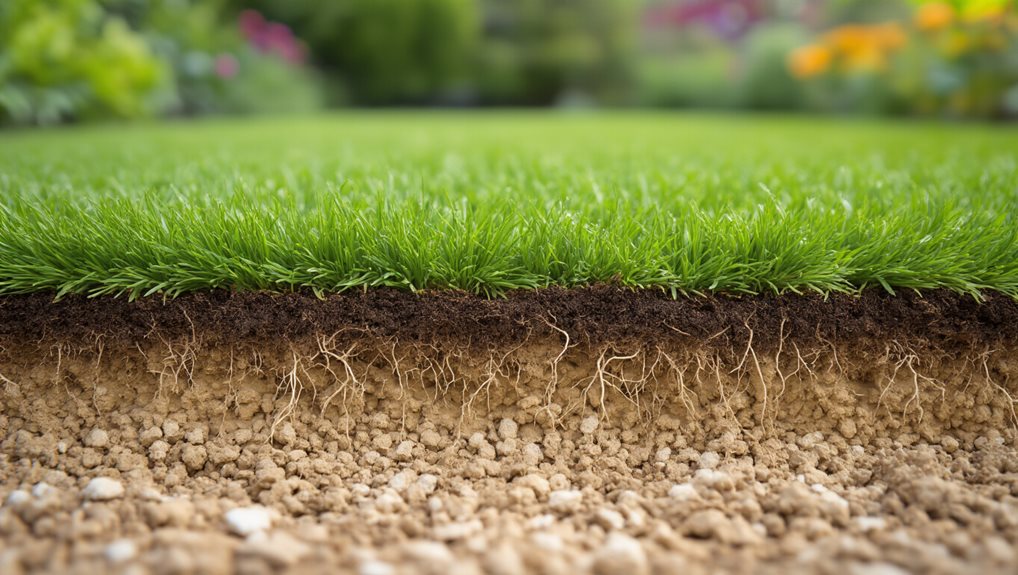
When gypsum reaches a sodic or dispersive clay lawn, its calcium ions replace sodium or bind particles, creating flocs that open up pores and let water and air move more freely; this short‑term structural change can improve root penetration and reduce compaction, but it only works if your soil actually contains the sodium‑driven dispersion that gypsum is designed to fix. Test your soil first, apply 40‑50 lb per 1,000 sq ft, water thoroughly, and re‑apply every few months if conditions remain sodic, remembering that non‑sodic clays won’t benefit and may waste resources. Soil testing guides you to confirm sodium‑driven dispersion before treatment, ensuring gypsum is a targeted and cost‑effective solution.
Mulch Clay Soil With Organic Materials for Moisture & Nutrition
Gypsum can clear up sodic clay, but once the soil’s structure is stabilized, adding organic mulch becomes the next step to enhance moisture retention and nutrient availability.
Spread a half‑kilogram per square meter of shredded leaves, straw, or compost; this creates aggregates that improve aeration, reduces compaction, and slowly releases nitrogen, phosphorus, potassium, and micronutrients, while insulating the root zone, moderating temperature, and supporting beneficial microbes for a thriving, cohesive lawn.
A square-foot gardening approach with a grid system can help organize and monitor mulch placement and plant spacing to maximize cover and soil health grid-based planning.
Keep Clay Soil Moist to Prevent Hardening and Support Roots
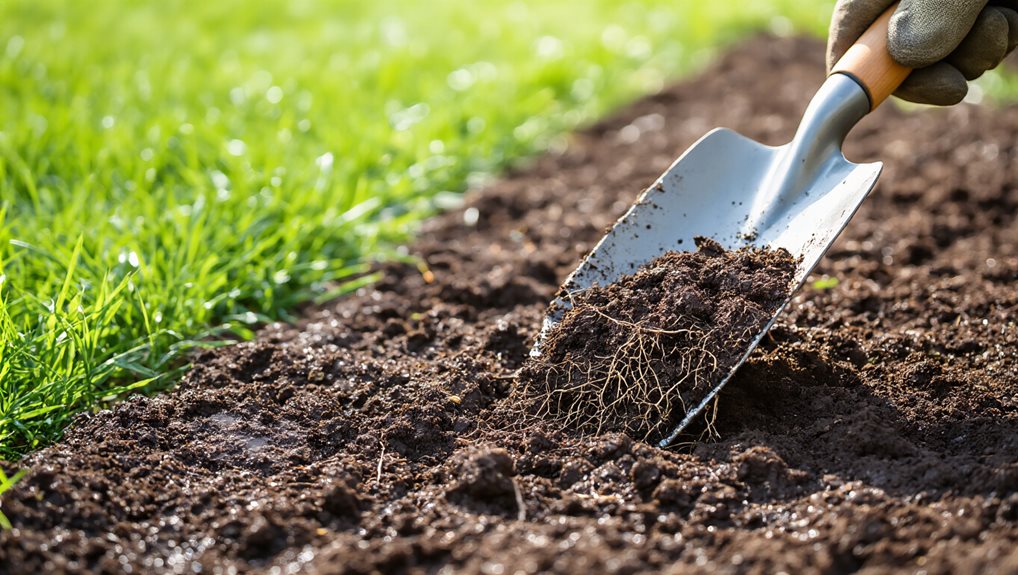
Clay soil’s tendency to harden like concrete when it dries makes consistent moisture essential for healthy root development and nutrient uptake.
Water early each morning, then water deeply but infrequently to encourage roots to grow through the compacted layer, while core‑aerate annually to create channels for water and nutrients.
Monitor surface dryness and puddles, adjusting irrigation to keep the soil moderately moist without waterlogging, ensuring your lawn feels like a thriving, shared community.
Amendments for drainage and periodically refresh with organic matter to maintain soil structure and aeration.
Avoid Counterproductive Amendments for Clay Soil (Sand, Peat Moss)
Why add sand or peat moss to clay soil? You might think they’ll loosen it, but sand creates a concrete‑like matrix that fills pore space, permanently blocking drainage, and the volume needed to make a difference is impractical. Peat moss decomposes quickly, adds acidity, and never breaks up tight clay layers. Instead, choose compost, shredded leaves, or cover crops, which improve aeration and structure without harming your lawn’s health.
Final Note
By adding compost, core‑aerating regularly, applying gypsum, and mulching with organic material, you’ll reform compact clay into a looser, more breathable medium that supports healthy root development and consistent moisture. Keep the soil evenly moist to prevent hardening, and avoid counterproductive amendments like sand or peat moss that can worsen compaction. Follow these steps consistently, and your lawn will become greener, more resilient, and easier to maintain.