First, measure the rut depth with a probe or ruler; shallow ruts (<1 in) need only a topsoil‑sand‑compost blend, while deeper ones (1‑3 in) require sod plugs or excavation. Clear debris, loosen the compacted soil, and over‑fill the depression with the blended material, tamp lightly, and level with a rake and a stick. Seed or place pre‑rooted sod plugs, water immediately, then keep the area moist for two weeks, watering lightly 2‑3 times daily before converging to deeper irrigation. Follow these steps and you’ll restore a smooth lawn, plus uncover more detailed techniques ahead.
TLDR
- Assess rut depth and compaction using a probe or penetrometer; classify as shallow (<1 in), moderate (1–3 in), or deep (>3 in).
- Remove debris, loosen the depressed area, and blend topsoil, sand, and compost to create a uniform, well‑draining fill.
- For shallow ruts, overfill with the soil‑sand‑compost mix, lightly compact, and replace sod plugs or sod pads; water immediately.
- For moderate to deep ruts, excavate to a firm grade, fill a few inches above surrounding level, seed or lay sod, and keep soil consistently moist.
- After repair, water 2–3 times daily for ten days, then deep‑water 2–3 times weekly; limit traffic until grass reaches 3–4 in and consider load‑spreading mats.
Identify What Causes Lawn Ruts (How to Fix Them)
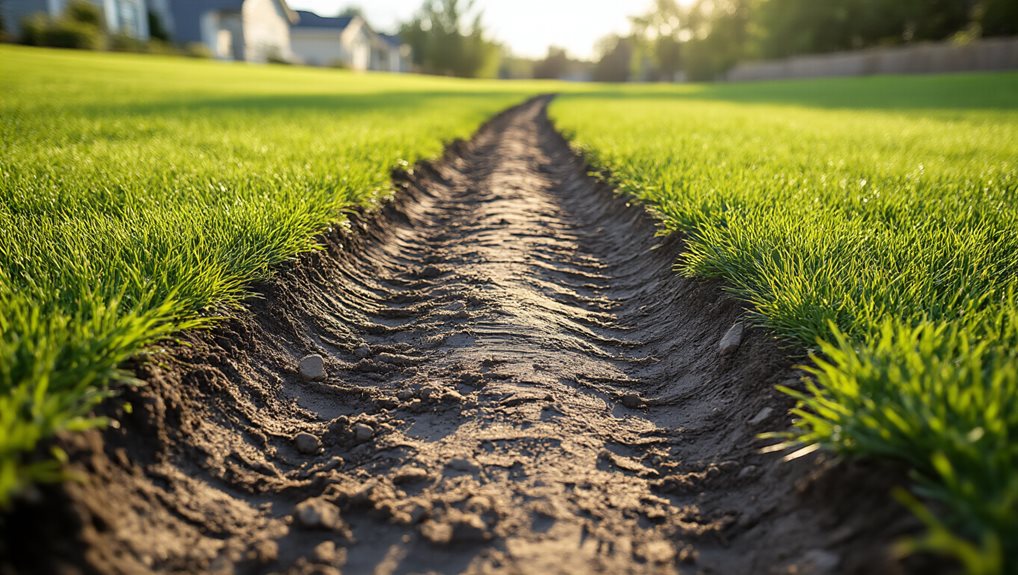
Why do lawn ruts appear after a truck or a mini‑excavator passes over your grass? Heavy weight compacts soil, squeezing out air and water, while wheels and tracks tear turf and carve deep grooves, especially on wet, soft ground. Compacted soil restricts root growth, and torn grass hampers recovery, leaving unsightly depressions that impede mowing and overall lawn health. Soil compaction also reduces water infiltration, leading to drought‑stress in surrounding grass. The erosion prevention techniques described for slopes, such as proper grading, mulch application, and vegetation, can help stabilize soils and improve recovery after heavy vehicle use by maintaining better water infiltration and root support soil stability.
Assess Rut Depth to Fix Lawn Ruts
You’ll first determine whether the rut is shallow—under an inch deep and likely fixable with just topsoil and a rake—or deep, exceeding a few inches and requiring soil replacement and compaction checks.
Measuring compaction with a wire‑flag probe, penetrometer, or manual depth estimation tells you if the soil is loose, fair, or overly compacted, guiding the repair method.
To ensure long‑term stability, incorporate a no‑dig approach by improving drainage and using mulch or organic matter to support soil structure and microbial activity no‑dig principles.
Shallow vs. Deep Depth
How deep is the rut in your lawn, and what does that depth mean for your repair plan? Shallow ruts under an inch need only topsoil and a rake, letting grass crowns naturally lift the surface, while ruts between one and three inches require sod pads, soil‑sand blends, and light compaction to prevent settling.
Deeper depressions over three inches demand excavation, regrading, and reseeding for lasting uniformity.
Measuring Soil Compaction Levels
Ruts that are shallow enough to be filled with topsoil often hide a hidden problem: compacted soil beneath the surface, which prevents grass roots from expanding and can cause the depression to reform after repair. Use a penetrometer or simple probe when soil is moist but not saturated, pushing at one inch per second until resistance reaches 300 psi; record the depth where resistance exceeds and falls below that threshold. Compare readings across trafficked and untouched zones, noting harder spots, water pooling, or thin grass as compaction cues, and repeat at least ten spots per acre for reliable data.
Prepare the Site to Fix Lawn Ruts

First, check the soil’s moisture level; if it’s dry, lightly water it so the new mix will bond properly.
Next, clear away any debris, loose stones, or obstacles, because even small objects can prevent the fill from settling evenly.
Finally, mark the repair zone with a margin of at least six inches on all sides, ensuring you have enough space to work and to blend the new soil with the existing lawn.
Soil Dryness
Why wait for the topsoil to dry before tackling lawn ruts? You’ll want the upper 2‑4 inches dry enough to prevent smearing or compaction, because wet soil clings and worsens rut depth. Check moisture by probing with a shovel, and let evaporation do its work after rain. Once dry, you can lightly till, lift sod, and fill with a balanced dry‑soil mix, ensuring a stable, level surface.
Clear Debris and Obstacles
After the soil has dried enough to prevent smearing, turn your attention to the surface of the rut and eliminate anything that could hinder a smooth repair. Rake away loose soil, rocks, and debris, break up clumped clay, and remove obstacles like broken bricks, dense roots, or wildlife burrows. Inspect for construction remnants, clear them, and ensure the area is free of all hindrances before proceeding.
Gather Tools to Fix Lawn Ruts Manually
How do you gather the right tools before tackling a lawn rut? Start with a D‑handled garden spade for edge lifting, a flat garden spade for perimeter cuts, and a flat shovel for prying at 45‑degree angles. Add an edger for deeper ruts, a bow rake or landscaper’s rake to level soil, and a level stick or straightedge to measure depth and profile. When prepping the area, use non-abrasive cleaning to remove debris and ensure the surface dries completely before making repairs, then lightly roughen the soil for better adhesion of fill materials prepare surface for repair.
Repair Shallow Ruts Manually
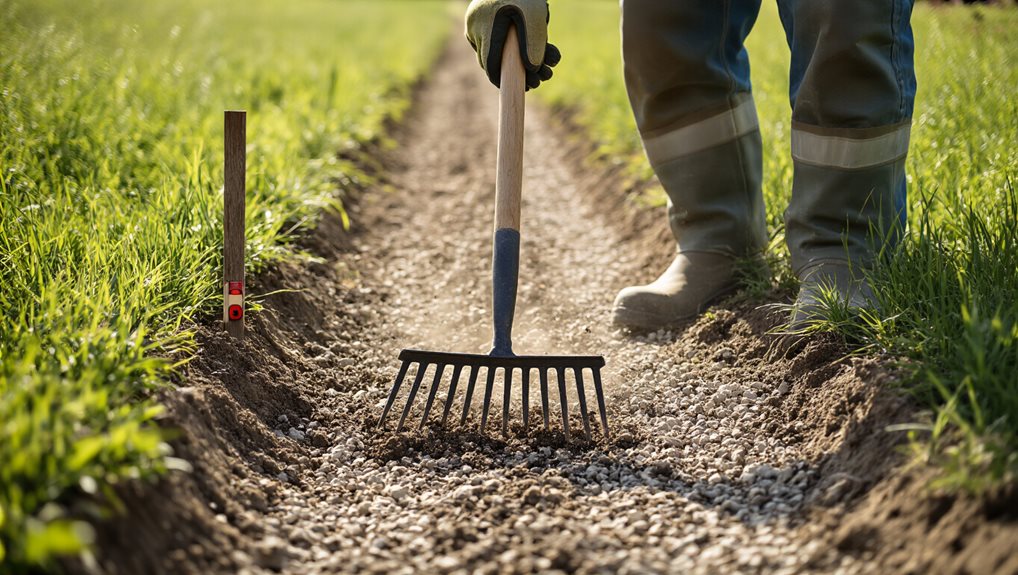
Gathering the right tools sets the stage for a smooth repair, and now you can move on to fixing the shallow ruts themselves. Measure each depression to confirm it’s under an inch, water the soil if it’s dry, then slice a 1‑2‑inch sod pad around the perimeter. Loosen the underlying earth with a fork, sprinkle a topsoil‑sand‑compost blend, overfill slightly, compact, and replace the sod, patting it flat and watering to settle.
Probing tight seams and checking for chew marks important
Smooth Ridges When Fixing Lawn Ruts With a Box Blade
Where do those stubborn ridges come from after you’ve filled a rut with a box blade?
You’ll notice them when scarifiers bust high spots, then the blade drags soil unevenly; to smooth them, raise the scarifiers, lower the blade, and pull straight, overlapping passes, letting the ripper teeth cut forward and backward for uniform contact.
Make three to four steady passes per section, adding fill as needed, and the surface will level evenly.
Fire-resistant bricks can also play a role in building resilience around equipment storage or workshop spaces, since their fire ratings and durable structure help slow fire spread and maintain integrity during incidents. fire ratings
Aerate Soil to Fix Lawn Ruts With a Ventrac Aera‑Vator
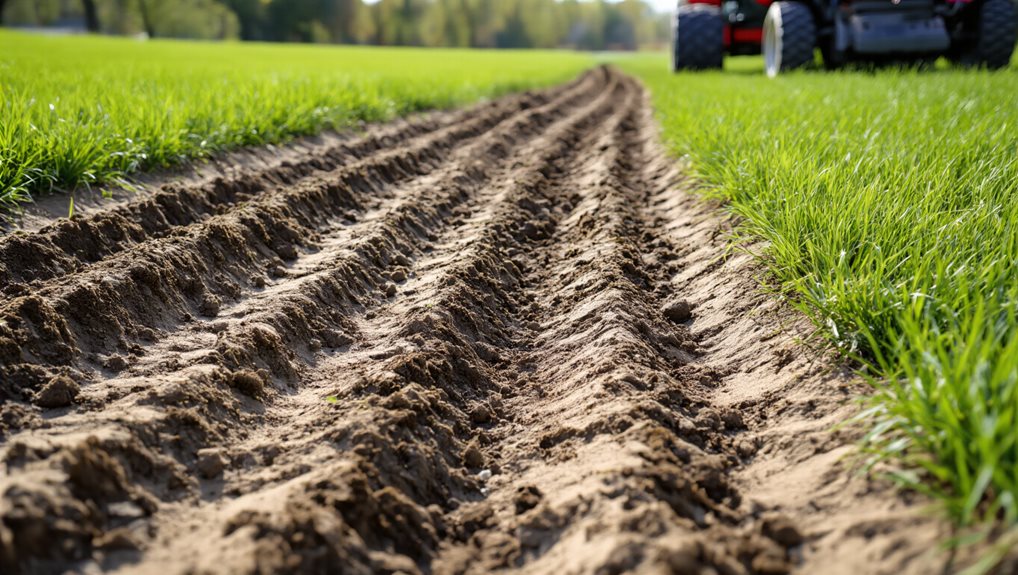
After smoothing ridges with a box blade, the next step is to break up compaction that still lurks beneath the surface, and a Ventrac Aera‑Vator does that efficiently. You’ll drive the 60‑inch, 420‑lb unit over dry turf, letting its 3,200 RPM vibrating tines create nine holes per square foot, loosening subsoil without pulling plugs.
Adjust speed to control hole size, then you can walk the lawn immediately, feeling the community’s healthier, more breathable ground beneath your feet.
Fill Deep Holes With Topsoil & Seed to Fix Lawn Ruts
You’ll start by picking a high‑quality topsoil mix that drains well and blends smoothly with the existing lawn, then spread it to fill the hole a couple of inches above the surrounding grade.
Next, sow the appropriate grass seed at the recommended rate, press it lightly into the soil, and water it consistently to keep the medium moist but not soggy.
Finally, monitor the sprouting progress, adjust watering as the seedlings establish, and apply a light fertilizer if needed to ensure a healthy, level repair.
Choose Appropriate Topsoil
What makes a rut disappear is the right topsoil, not just any fill material. Choose screened topsoil that matches your lawn’s existing soil composition, avoiding construction debris that could compact later. For deep ruts, blend topsoil with compost at a 70/30 ratio, then layer it two inches at a time, tamping lightly and leaving a half‑inch below grade so grass blades can still peek through.
Seed Properly and Water
Ever wondered how to turn a deep rut into a seamless lawn patch?
Fill the hole with topsoil a few inches above the surrounding level, compact it, then scatter 15‑25 g/m² of compatible seed, mixing half with Milorganite for nutrition. Lightly rake for contact, cover with a thin topsoil layer, and water gently with a fine‑rose can, keeping the surface consistently moist until germination.
Monitor and Maintain Growth
How do you keep a repaired rut from turning into a recurring weak spot? Monitor growth by limiting foot traffic until the new grass reaches three to four inches, then mow gently, removing no more than a third of the blade. Water consistently to keep the topsoil moist, cover seeded patches with peat or hay, and check daily for even germination, adjusting moisture as needed.
Water, Set & Fine‑Tune Repairs After Fixing Lawn Ruts
Why should you focus on watering, setting, and fine‑tuning right after repairing a lawn rut? Water immediately to keep the soil moist but not soggy, then lightly water 2–3 times daily for ten days, followed by daily watering until day twenty‑one, and later deep watering 2–3 times weekly. Firm the soil with feet, raise the area, compact topsoil, and use a level‑stick and rake to ensure evenness and proper root establishment.
Prevent Future Lawn Ruts From Vehicle Traffic
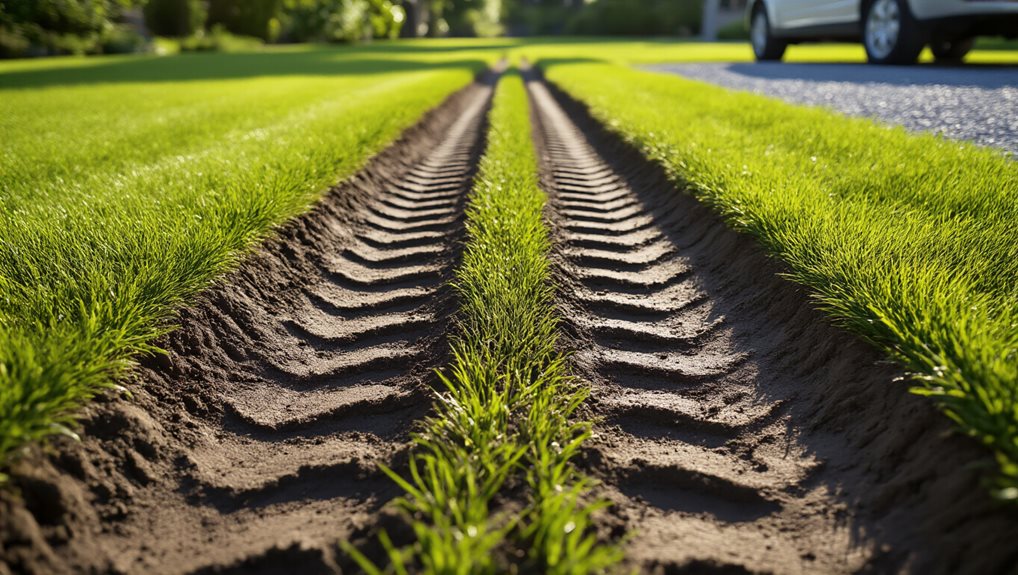
After you’ve watered, set, and fine‑tuned the repaired area, the next step is to stop new ruts from forming in the first place.
Install thick plastic mesh or TRUEGRID® ROOT® pavers to spread vehicle load, use metal U‑pins for quick placement, and add gravel mats or wooden spikes at lawn edges.
Designate protected parking zones, ensuring drainage, root health, and community cohesion.
Quick‑Fix Sod Plugs & Fill to Fix Lawn Ruts
Ever wondered how quickly a rut can disappear without re‑sodding the whole lawn? You’ll loosen the depression, blend soil‑sand‑compost, then drop pre‑rooted sod plugs matching your grass, plant NutriPod fertilizer (17‑1‑10), and water thoroughly. In late spring or early fall, plugs settle, root fast, and within three months the surface looks uniform, weeds stay down, and the lawn feels whole again.
Final Note
By identifying the cause, measuring depth, and preparing the site, you can restore a rutted lawn efficiently. Use the right tools to repair shallow depressions, and fill deeper holes with topsoil, seed, or sod plugs, then water and monitor growth. Consistent maintenance and traffic management will prevent future damage, ensuring a healthy, even turf. Follow these steps, and your lawn will recover quickly and stay resilient against heavy equipment.