You can grow plants that thrive in extreme heat without daily watering by choosing species with deep roots, water-storing tissues, or drought-avoidance strategies. Succulents like agave and yucca retain moisture in their leaves, while perennials such as coneflower and salvia use deep roots and efficient stomatal control to survive prolonged dry spells. Shrubs including creosote and palo verde access deep water and stabilize arid soils. These adaptations allow grounds to flourish with minimal irrigation—discover how to match the right plants to your hot, dry garden conditions.
TLDR
- Succulents like aloe and sedum store water in thick leaves and thrive in extreme heat with minimal watering.
- Deep-rooted plants such as mesquite and palo verde access underground moisture, surviving drought without daily irrigation.
- Drought-tolerant perennials including coneflower and yarrow bloom in heat and require little water once established.
- Native shrubs like creosote and brittlebush are adapted to arid soils and maintain resilience with infrequent watering.
- Use water-smart practices like drip irrigation, mulching, and proper plant grouping to reduce watering needs in hot climates.
How Drought-Tolerant Plants Adapt to Harsh Conditions
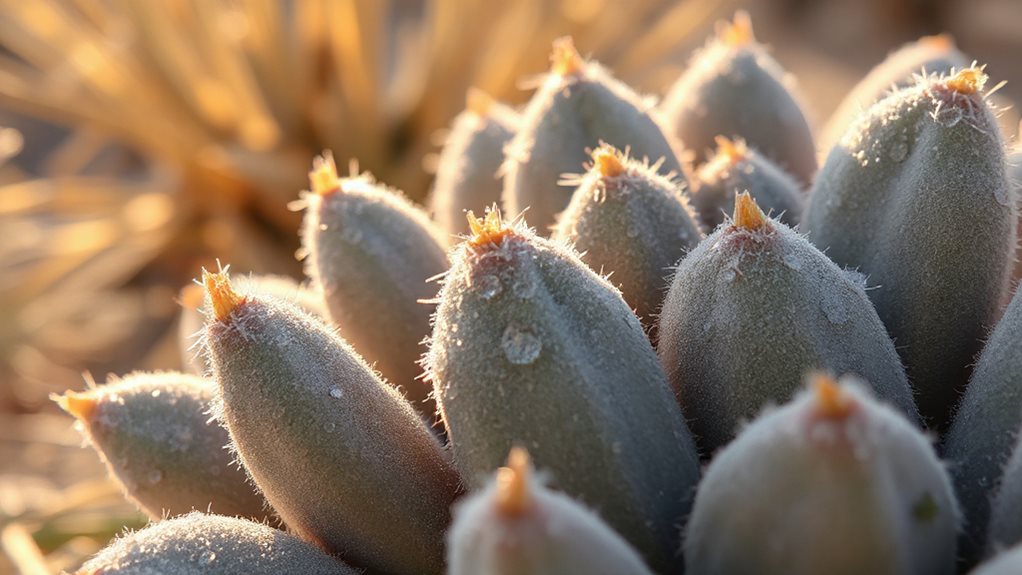
While drought may push most plants to their limits, drought-tolerant species thrive by relying on a suite of sophisticated adaptations that work together to conserve water, maintain cellular function, and recover efficiently when moisture returns.
You’ll find microbes enhancing resilience through biofilms and osmoprotectants, while deeper roots, leaf wax, and stomatal control reduce water loss.
These plants adjust physiology via CAM metabolism, hormonal signals, and metabolic shifts, then rebound with renewed growth, photosynthesis, and oxidative protection once rain returns.
Drought escape strategies allow certain plants to complete their life cycle before extreme conditions occur, minimizing exposure to prolonged stress.
Many heat-loving species also pair these drought adaptations with bright foliage and colorful flowers that tolerate full sun and high temperatures.
Top Perennial Flowers for Scorching Summers
You can count on hardy perennials like coreopsis, yarrow, and daylilies to deliver brilliant color all summer with little water once established.
These sun-loving flowers thrive in hot, dry conditions, and many, such as liatris and salvia, attract pollinators while needing minimal care.
Crotons also tolerate intense sunlight and provide colorful foliage for low-maintenance gardens with minimal watering once established, especially in full sun areas.
Hardy Blooms for Hot Climates
Beat the heat with tough, vivid perennials that thrive when the sun blazes—these hardy blooms are built for hot climates and deliver color season after season with minimal care.
You’ll love Helichrysum’s bright yellow, curry-scented flowers and long-lasting blooms. Coreopsis, coneflower, Kniphofia, and Pentas thrive in full sun, resist drought, and welcome pollinators, making your garden a resilient, lively haven.
Low-Water Perennials That Thrive
When summer heat presses down and rainfall grows scarce, your garden doesn’t have to fade into dormancy. You can rely on low-water perennials like echinacea, coreopsis, and yarrow, which thrive in full sun with minimal irrigation.
Pair them with Russian sage, lavender, or blanket flower to conserve moisture, attract pollinators, and maintain lively color even during the hottest, driest months.
Sun-Loving Flowers, Minimal Care
Often thriving with little more than sunlight and occasional rainfall, sun-loving perennials offer reliable beauty even in the most scorching summer conditions.
You’ll enjoy Prairie Coneflower’s bold red and yellow blooms, which self-seed easily, or Eaton’s Firecracker, whose scarlet trumpets draw hummingbirds.
Mojave Sage brings aromatic foliage and lasting color, while Coreopsis and Yarrow varieties deliver drought-tolerant, low-maintenance floral displays year after year with minimal care.
Shrubs That Thrive in Intense Heat and Dry Soil
Choose shrubs that stand up to scorching temperatures and survive on little water, and you’ll build a resilient environment even in the driest conditions.
Opt for Ligustrum, Loropetalum, or Podocarpus ‘Maki’—all thrive with minimal care, handle intense heat, and improve soil health.
Indian Hawthorn and Shrubby Cinquefoil add color and structure, tolerating drought, poor soils, and humidity once established.
Many of these plants also perform well in Zone 9 when given proper sun exposure and regular watering during extreme heat.
Trees Built to Withstand Prolonged Drought
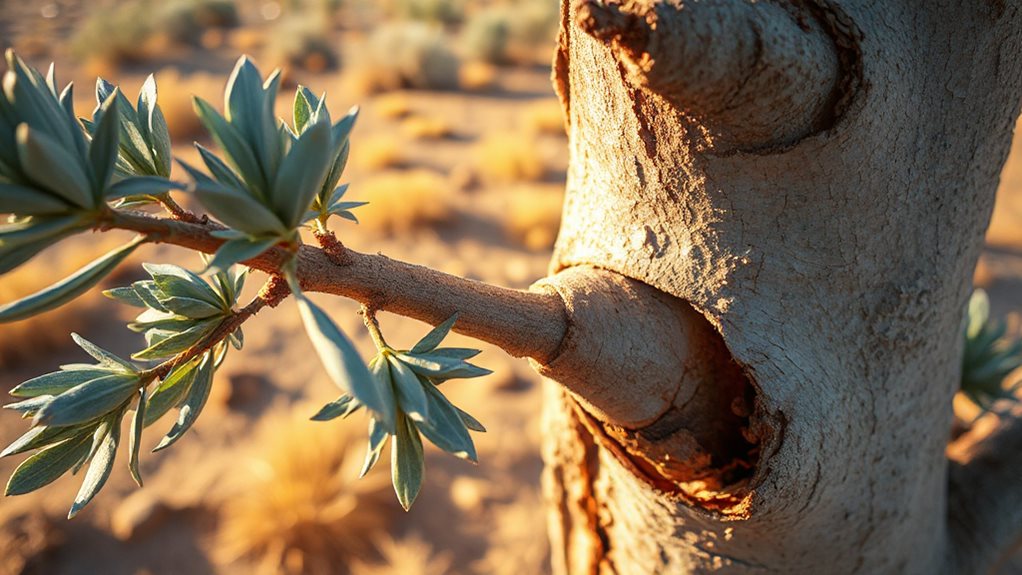
While many trees struggle under extended dry spells, selecting species naturally equipped to handle water scarcity guarantees your scenery remains strong and sustainable.
You can count on oaks like Quercus alba and Shumardii, pines such as rigida and banksiana, and hickories including ovata.
Add drought-tough ashes, elms, and natives like hackberry or black gum—they thrive with minimal water, support wildlife, and bring lasting beauty to your resilient grounds.
Mall vehicle placements require careful space management and timing to ensure safety and minimal disruption.
Groundcovers That Stay Green Without Constant Water
Let your scenery thrive between the trees by filling bare spaces with groundcovers that hold their color even when rainfall runs dry.
You’ll love Angelina sedum’s golden glow, creeping thyme’s fragrance, and hardy ice plant’s bright blooms.
Choose bearberry cotoneaster or kinnikinnick for wildlife appeal, Dymondia for silvery texture, or moss phlox for spring color.
All stay green with little water once established.
Angelina sedum is also an excellent groundcover for rocky, well-drained sites and tolerates drought once established.
Succulents and Water-Storage Champions
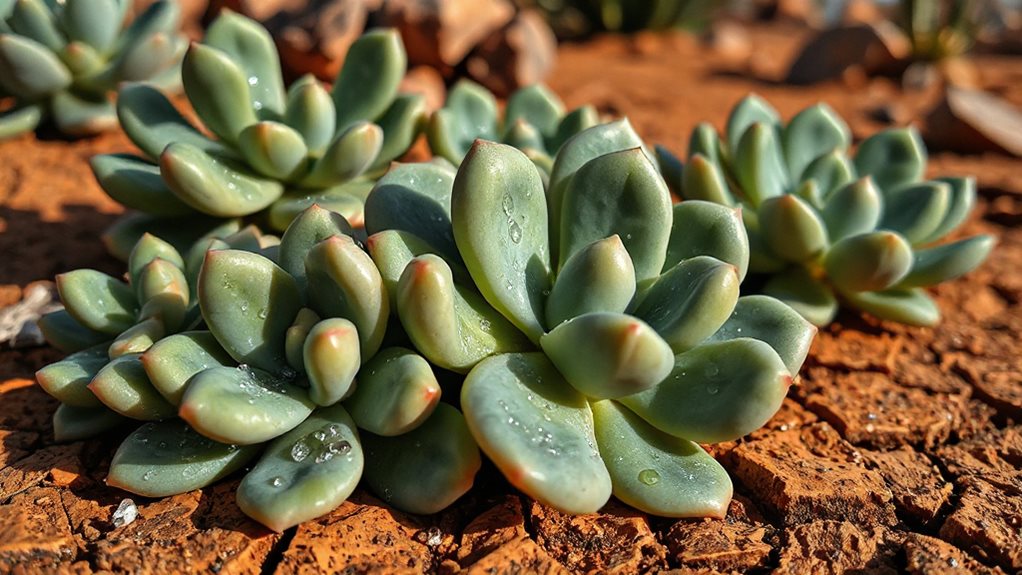
You’ll notice how succulents use thick leaves to store water, allowing them to thrive with minimal irrigation while still providing maximum visual impact in dry environs.
Their specialized hydrenchyma tissues hold large water reserves, which buffer against drought and support continued photosynthesis even when soil moisture is low.
Thick Leaves, Big Reserves
Store water like a desert survivor by tapping into the extraordinary biology of succulents, nature’s ultimate water-storage champions.
You’ll find thick leaves packed with parenchyma cells and massive vacuoles holding reserves, while thinner hydrenchyma walls release water to photosynthetic tissues when dry.
Mucilage cells and cuticles lock in moisture, and reduced stomata plus CAM metabolism cut losses, letting you thrive where others wilt.
Desert-Adapted Succulents
Succulents stand as nature’s most resilient water-storing designers, especially in the harshest desert environments where survival hinges on adaptation.
You’ll find chuparosa and saguaro thriving across the Sonoran Desert, while Baja California’s slopes host rich succulent diversity.
These plants store water in fleshy stems or leaves, use spines for protection, and bloom vividly when rains come, proving perfectly equipped for life where water is scarce.
Minimal Water, Maximum Impact
When it comes to thriving in scorching conditions with little water, certain plants don’t just survive—they excel, thanks to extraordinary adaptations that prioritize efficiency and resilience.
You’ll find succulents like aloe, sedum, and Scaevola storing water in thick leaves or tissues, reducing evaporation with waxy coatings, and using deep roots to access moisture, so they stay strong even when temperatures soar above 90°F and irrigation is minimal.
Low-Maintenance Blooms for Hot, Sunny Spots
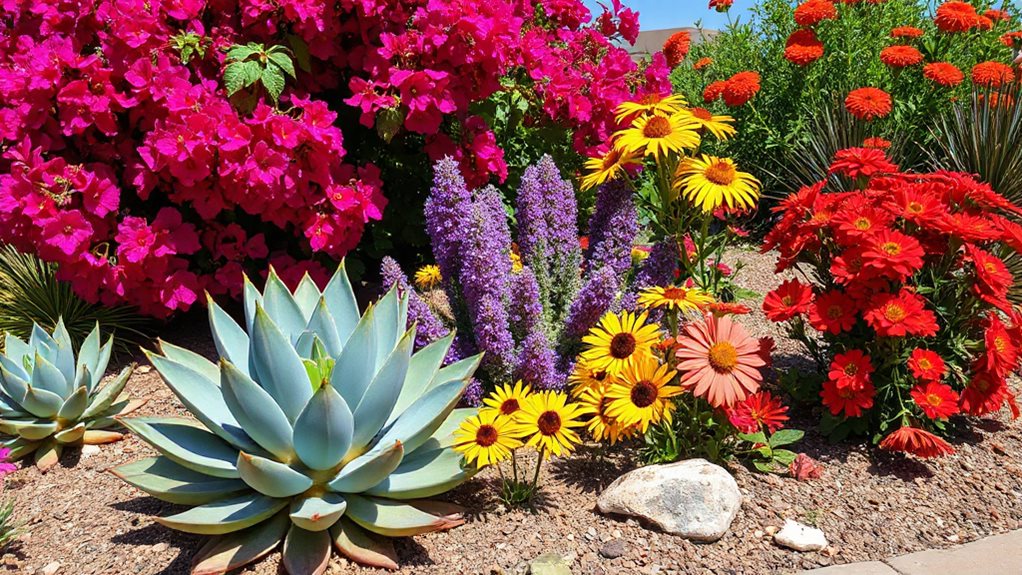
You’ll often find the most reliable color in your sunniest, driest garden spots by choosing flowering plants that not only endure heat but thrive in it, requiring minimal care once established.
Cosmos, zinnias, and marigolds bloom prolifically with little water, while pentas and petunias handle drought and humidity.
These low-maintenance annuals and perennials, like coneflower and coreopsis, deliver lively, long-lasting color with minimal effort.
Native Plants Perfect for Arid Climates
You’ll find that native plants are built for the arid Southwest, with deep root systems that tap into groundwater and help prevent soil erosion.
They’ve adapted over time to thrive in local climates, so they need less water and care once established.
Native Roots, Natural Resilience
Resilience begins where roots run deep—native plants, shaped by centuries of adaptation, offer a sustainable solution for thriving gardens in arid climates.
You’ll find Palo Verde and mesquite tap into groundwater, while yucca and agave store moisture in their tissues. These hardy species, from brittlebush to creosote, stabilize soil, support wildlife, and flourish with minimal irrigation, making your scenery both resilient and ecologically responsible.
Adapted to Arid Soils
While arid soils challenge many garden plants, native species have evolved specialized adaptations that allow them to thrive where water is scarce and temperatures soar.
You’ll find deep-rooted natives like creosote bush and mesquite access moisture far below the surface, while their extensive root systems improve soil structure and water infiltration.
These plants not only survive but enhance arid terrains, reducing erosion and supporting long-term resilience without relying on constant irrigation.
Thrive in Local Climates
Because they’re uniquely adapted to regional weather patterns and soil conditions, native plants offer a smart, sustainable choice for gardens in arid climates.
You’ll find California poppy, blackfoot daisy, and brittlebush thrive with little water once established.
Palo verde, creosote bush, and blue flax are tough performers, while native grasses like buffalograss provide resilient ground cover, all ensuring your garden flourishes naturally.
Water-Smart Techniques for Heat-Resilient Gardens
When the sun beats down and temperatures soar, your garden’s survival hinges on smart water practices that maximize efficiency and minimize waste. Water deeply two to three times weekly in the early morning, use soaker hoses or drip systems for targeted delivery, and apply mulch to cut evaporation.
Check soil moisture before watering, group containers to enhance humidity, and let ollas or spikes ease daily demands—all keeping your heat-resilient garden thriving with less.
Best Practices for Establishing Drought-Tolerant Plants
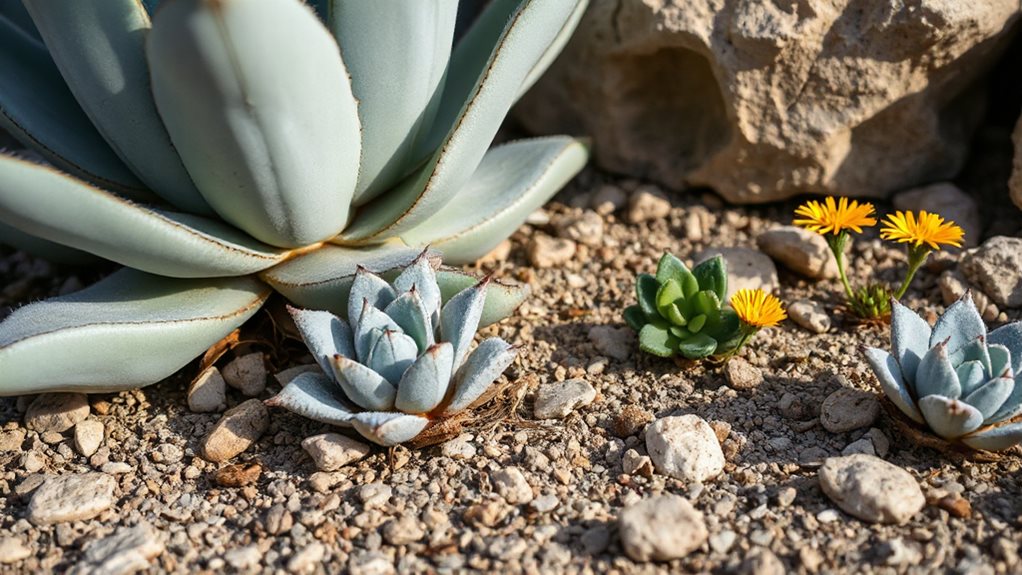
To get your drought-tolerant garden off to a strong start, focus on smart planning and proper planting techniques that set roots up for long-term success.
Choose native plants like lavender or coneflowers, group them by water needs, and plant in fall.
Prep soil with compost, use drip irrigation, apply mulch, and water deeply at first—then scale back as your resilient garden establishes itself.
Long-Blooming Flowers That Defy the Heat
Now that your drought-tolerant garden is off to a strong start with well-established natives and smart planting practices, you can focus on adding long-lasting color that thrives under intense summer conditions.
Choose pentas for their large, hydrangea-like blooms, salvia with its spires of violet-blue flowers, and gaillardia’s daisy-like bursts.
Echinacea and rudbeckia deliver summer-long color, attract pollinators, and endure heat, drought, and high sun with ease.
Final Note
You now have the tools to create a resilient, water-wise garden that thrives in extreme heat. By choosing drought-tolerant perennials, shrubs, and native plants, you reduce reliance on daily watering while maintaining beauty and function. Proper establishment and smart techniques like mulching and deep watering guarantee long-term success. With thoughtful planning, your scape can withstand prolonged drought, conserve resources, and bloom reliably, season after season, with minimal maintenance and maximum impact.