You need a tough, fast-recovering grass like Bermudagrass or Tall Fescue if you want a lawn that handles heavy foot traffic without thinning or wearing out. Bermudagrass thrives in heat, forms dense sod, and rebounds quickly from damage, while Tall Fescue offers deep roots, shade tolerance, and durability in cooler climates. Kentucky Bluegrass repairs itself via rhizomes, and Perennial Ryegrass establishes fast with strong wear resistance. Each type balances resilience, texture, and recovery—key traits for lasting performance under pressure. There’s more to weigh when matching grass to your climate and use patterns.

TLDR
- Bermudagrass and its hybrids, like Tifway 419 and TifTuf, excel in high-traffic areas due to rapid recovery and dense growth.
- Hybrid bermudagrasses form strong sod with high shoot density, reducing bare spots and withstanding heavy use.
- Zoysiagrass offers durable, soft turf with good traffic tolerance and forms thick sod over time.
- Tall fescue withstands foot traffic thanks to deep roots and performs well in blends for cool-season lawns.
- Perennial ryegrass establishes quickly and recovers fast from wear, making it ideal for high-traffic cool-season lawns.
Bermudagrass – Tough and Fast-Recovering for Hot Climates
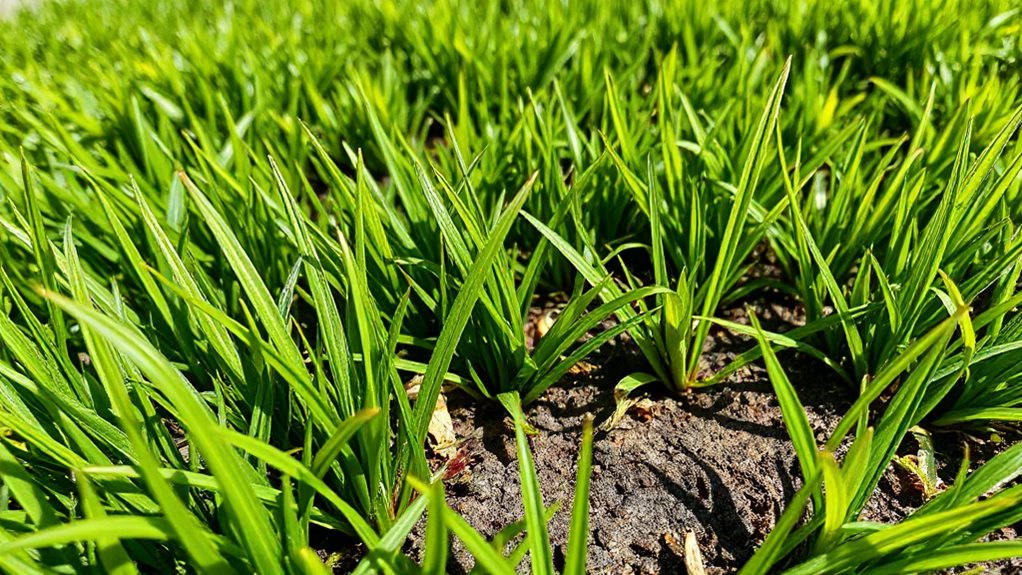
When it comes to handling the daily grind of kids running, pets playing, and frequent outdoor use, Bermudagrass stands out as a top performer in hot climates.
You’ll appreciate its dense, carpet-like growth that resists wear, recovers quickly from damage, and thrives in heat and drought.
With deep roots and aggressive spreading, it stays green and strong, even under heavy traffic.
This resilience is supported by its dense stolon and rhizome network, which enables rapid recovery and superior durability under stress.
Maintaining proper care like regular mowing and fertilization helps promote dense turf growth and lets bermudagrass outcompete many weeds.
Zoysiagrass – Dense and Durable With a Soft Feel
Step into a yard that combines toughness with comfort, and you’ll quickly see why Zoysiagrass is a standout choice for high-traffic areas.
You get a dense, carpet-like surface that handles foot traffic well, recovers fast from wear, and feels soft underfoot. Its deep roots save water, it needs less mowing and fertilizer, and it stays green in heat while surviving mild winters. Zoysiagrass establishes slowly from seed, often taking longer to fully mature than some other turfgrasses, so plan for a longer establishment period and consider soil temperature when timing your planting.
Tall Fescue – Resilient Cool-Season Grass for Versatile Use
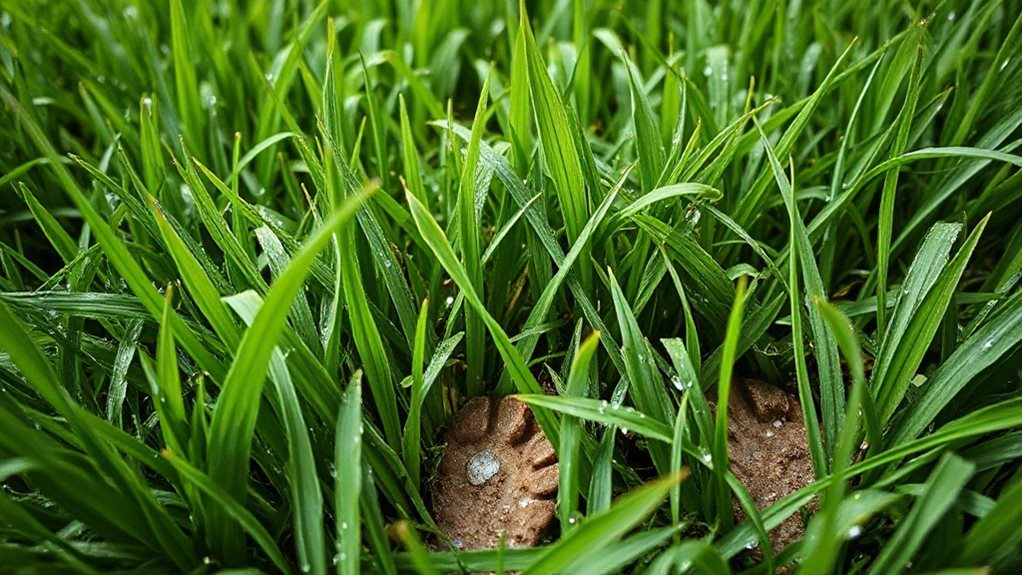
You’ll appreciate tall fescue’s deep roots, which reach up to 6 feet and help it stay green during dry spells without frequent watering.
It handles heavy foot traffic with ease, making it a smart choice for lawns, sports fields, or playgrounds where durability matters.
Plus, its adaptability to shade, variable climates, and low-maintenance needs means you can keep it healthy with less fertilizer, mowing, and care over time.
Edging after mowing often produces the cleanest borders, so consider doing your edging last to enhance curb appeal.
Deep Roots, Durable Performance
Tap into the resilience of tall fescue, a cool-season grass built to thrive where others struggle, thanks to its deep-reaching root system that plunges 2 to 3 feet into the soil—and sometimes beyond 6 feet—giving it unmatched access to moisture and stability.
You’ll appreciate its drought tolerance, disease resistance, and ability to stay green with less water and care, making it a reliable, low-maintenance choice for durable, attractive lawns in challenging climates.
Thrives in High Traffic
While many cool-season grasses falter under constant use, tall fescue stands out for its exceptional ability to thrive in high-traffic areas, thanks to its tough, fibrous blades and dense, upright growth habit that resists thinning even with regular foot traffic.
You’ll appreciate how it handles wear on sports fields and lawns alike, maintaining uniformity and recovering well, so your yard stays lush and functional all season long.
Adaptable to Climate Shifts
Because tall fescue develops a deep root system, it accesses moisture far below the surface, giving it a distinct advantage in periods of drought and making it a reliable choice for lawns facing increasingly unpredictable weather.
You’ll appreciate its resilience during heatwaves, reduced water needs, and adaptability to changing climates, especially when blended with species like Kentucky bluegrass for both durability and visual appeal.
Kentucky Bluegrass – Self-Repairing Turf for High-Traffic Zones
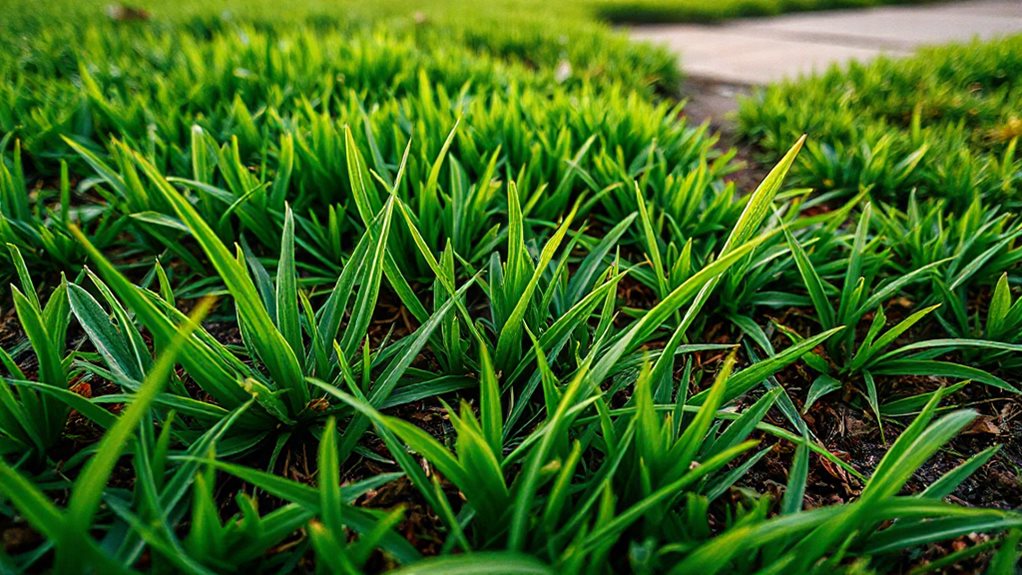
When you’re dealing with a yard that sees constant use, Kentucky bluegrass stands out with its unique ability to repair itself and maintain a lush appearance over time.
You’ll appreciate how it spreads through rhizomes, filling in damaged areas quickly, even under heavy foot traffic. Its dense, fine-textured growth resists wear, recovers well, and minimizes bare spots, making it ideal for active households and high-use grounds where durability and beauty matter. Core aeration can further improve its recovery by alleviating soil compaction and promoting deeper root growth, especially when done during the optimal season for cool-season grasses late summer/early fall.
Perennial Ryegrass – Rapid Establishment and Wear Resistance
You’ll see results fast with perennial ryegrass, as it germinates in just five days and quickly forms a dense, durable turf.
Its strong wear tolerance makes it ideal for high-traffic areas like playgrounds, sports fields, and family lawns, where it resists compaction and recovers quickly from damage.
With its fine texture, dark green color, and adaptability to various soils and light conditions, it’s a reliable choice for cool-season lawns that need to handle heavy use.
Fast Germination
Establishing a durable lawn quickly starts with choosing a grass that germinates fast, and perennial ryegrass delivers just that—sprouting in as little as 5 to 10 days under ideal conditions.
You’ll see reliable results within a week, especially at soil temperatures between 20–30°C.
With its rapid establishment and strong root development, you’re looking at light grazing or play in under 90 days—perfect for active households wanting quick, resilient results.
Durable Turf
Choose perennial ryegrass for a tough, long-lasting lawn that stands up to heavy use—this grass consistently ranks at the top for wear tolerance among cool-season species, outperforming tall fescue and Kentucky bluegrass in independent trials.
You’ll benefit from its high density and rapid establishment, while modern cultivars like SR 4700 and Mach Two offer superior turf quality, disease resistance, and resilience under traffic, especially with proper soil management and balanced nitrogen.
High Traffic
Perennial ryegrass stands out in high-traffic environments not just for its toughness, but for how quickly it gets to work—germinating in as little as five days and forming a dense, resilient turf that withstands heavy use.
You’ll appreciate its rapid growth, wear tolerance, and ability to recover fast, making it ideal for lawns, sports fields, and family spaces where durability and quick establishment matter most.
Seashore Paspalum – Salt-Tolerant Grass Built for Heavy Use
You’ll often find seashore paspalum thriving where few other grasses can survive, thanks to its notable ability to handle salt-laden soils, irrigation with saline water, and direct exposure to seawater—making it a top choice for coastal scenery and areas with poor water quality.
You’ll appreciate its deep roots, rapid recovery, and lush texture, especially when mowing low or dealing with heavy use and heat. It is especially valued in landscapes within USDA zones 5-9 for its adaptability and performance.
Hybrid Bermudagrass Varieties for Maximum Durability
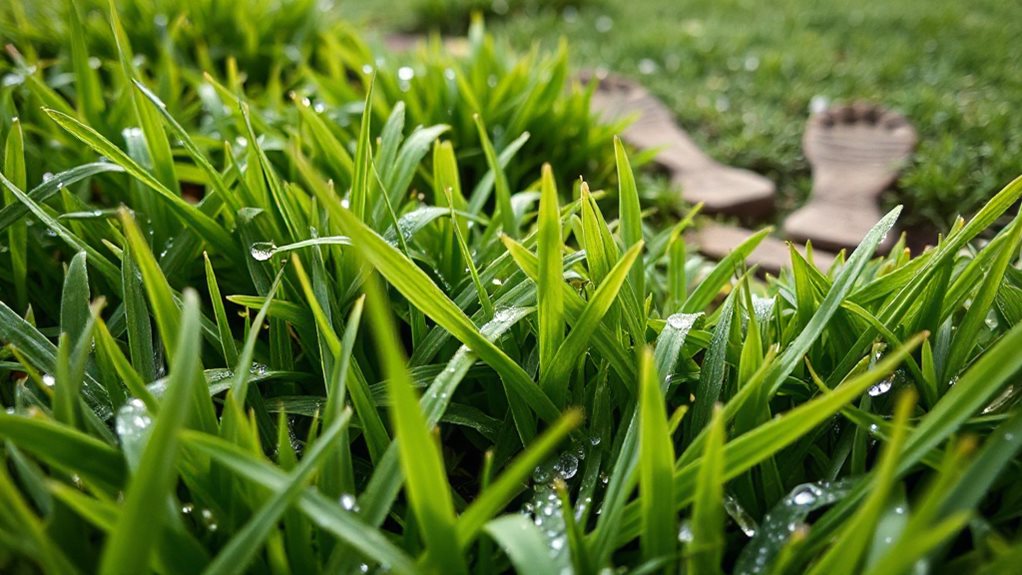
You’ll want a grass that stands up to heavy use, and hybrid bermudagrasses deliver superior wear resistance thanks to their dense growth and strong sod formation.
These varieties recover quickly from damage, so your lawn bounces back fast even with constant foot traffic.
With fine to medium textures and excellent durability, they’re built to perform in high-traffic areas without sacrificing appearance.
Superior Wear Resistance
When it comes to withstanding heavy foot traffic without sacrificing appearance or performance, hybrid bermudagrass varieties stand out as the top choice for durable lawns and athletic fields.
You’ll appreciate Tifway 419’s very good wear tolerance and dense growth, Celebration’s excellent durability and close mowing adaptability, and Latitude 36’s fine texture and resilience.
Tahoma 31 offers superior traffic tolerance and early green-up, while GN-1 delivers excellent wear resistance, high shoot density, and improved nematode resistance—ensuring your lawn stays strong, healthy, and attractive season after season.
Rapid Damage Recovery
Rebounding quickly from wear and tear is a hallmark of the most resilient hybrid bermudagrass varieties, making rapid damage recovery a key advantage for high-traffic lawns and athletic fields.
You’ll appreciate Tifway 419’s dense growth and TifTuf’s 90% survivability in cold, while Celebration and Riviera offer drought resilience and strong spring green-up.
Latitude 36’s fine texture and sod strength guarantee fast fill-in, so your lawn stays lush, durable, and consistently healthy.
Dense Sod Formation
Build a tough, long-lasting lawn by selecting hybrid bermudagrass varieties known for dense sod formation, a critical trait for withstanding heavy use and maintaining structural integrity under pressure.
You’ll love how Astro, Latitude 36, and Celebration develop thick, resilient turf through high shoot density and strong sod strength, ensuring your lawn stays intact, recovers well, and looks great even under constant foot traffic.
Zoysiagrass Cultivars With Enhanced Traffic Tolerance
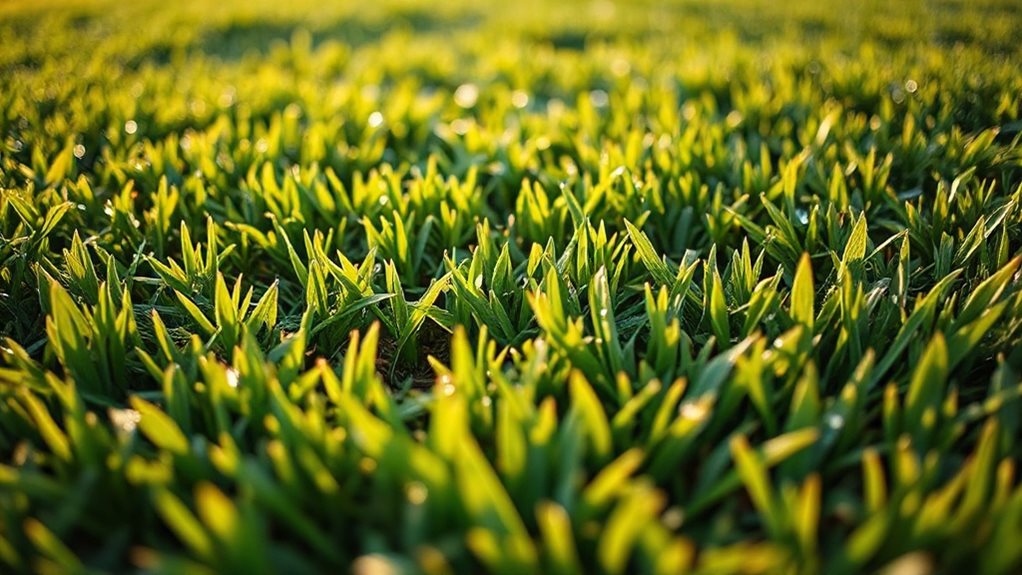
If you’re looking to toughen up your lawn or terrain in high-traffic areas, Zoysiagrass cultivars offer a resilient solution—especially the newer varieties bred for superior wear resistance.
You’ll appreciate Cavalier’s slender leaves and salt tolerance, Meyer’s dense growth on fairways, Zeon’s shade adaptability, Zorro’s disease resistance, and Lazer’s performance in shaded greens, all ensuring durability and quality under heavy use.
Tall Fescue Blends for Northern and Transitional Lawns
Choose tall fescue blends like T.L.C. for strong, self-repairing lawns in northern and transitional zones. You’ll benefit from rhizomes that increase density, fill bare spots, and resist weeds.
With deep roots up to six feet, it handles shade, sun, and temperatures from 10°F to 90°F.
Tough blades endure heavy foot and machinery traffic, while disease resistance and low water needs simplify care.
Kentucky Bluegrass Mixtures for Year-Round Resilience
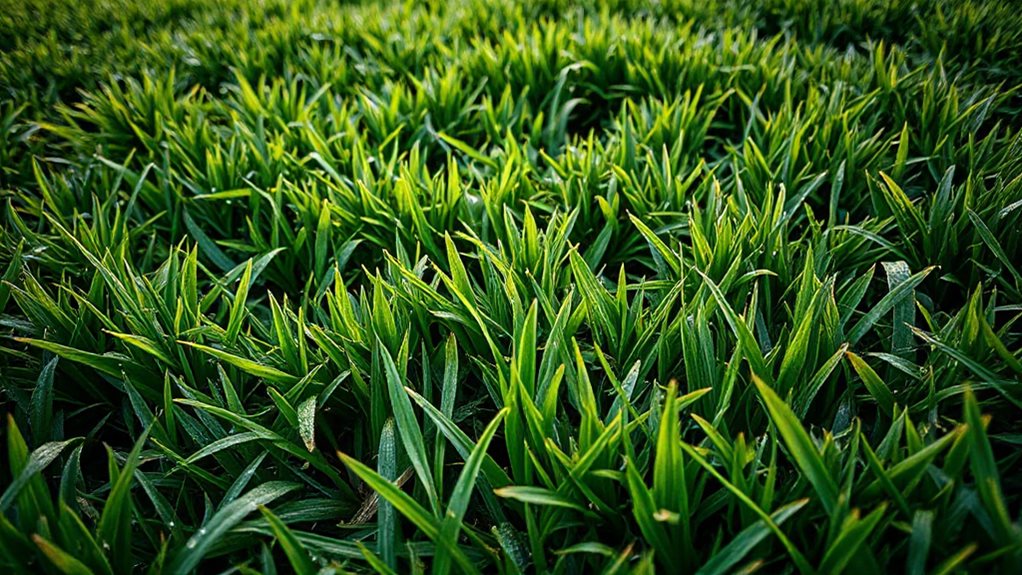
Revive your lawn’s resilience with Kentucky Bluegrass mixtures that thrive under pressure and deliver lasting beauty.
You’ll love how it recovers quickly from foot traffic and drought, thanks to its deep roots and rhizome spread.
Blended with Perennial Ryegrass or tall fescue, it forms dense, lush turf that withstands kids, pets, and play—perfect for families who want durability and curb appeal year after year.
Perennial Ryegrass in High-Traffic and Multi-Use Landscapes
Step into any well-used yard or sports field, and chances are you’re walking on perennial ryegrass—a standout performer where durability and speed matter most.
You’ll love its quick germination, dense growth, and ability to handle heavy foot traffic.
It thrives in cool, wet climates, recovers fast from wear, and blends well with other grasses, making it ideal for family lawns, playgrounds, and athletic fields.
Final Note
You’ve got options when choosing grass for heavy foot traffic, and selecting the right type depends on your climate and maintenance goals. Bermudagrass and zoysiagrass thrive in heat, while tall fescue and Kentucky bluegrass suit cooler regions. Perennial ryegrass establishes quickly, making it ideal for fast repairs. Blends and improved cultivars enhance durability, ensuring your lawn withstands wear without sacrificing appearance or function.

Nathan McPhail is a garden and home DIY expert who writes practical, easy-to-follow advice for homeowners and gardeners. Through Yardique, he shares hands-on tips covering gardening, lawn care, landscaping, home improvement, repairs, tools, and outdoor living. His focus is on helping readers solve everyday household and yard problems with straightforward guidance, useful techniques, and practical solutions.