High humidity in your house means indoor moisture levels consistently exceed 60%, creating conditions where mold thrives and your health suffers. You’ll notice condensation on windows, musty odors, and peeling paint as telltale signs. This excess moisture forces your heart to work 10-17% harder, impairs lung function, and causes building materials to emit up to 405% more harmful chemicals. Maintaining humidity between 30-60% prevents these problems, and understanding the full scope of impacts helps you protect both your home and well-being.
TLDR
- High humidity in a house is relative humidity levels exceeding 60%, above recommended indoor ranges of 30-60%.
- Common causes include poor ventilation, cooking, showering, water leaks, and inadequate drainage around foundations.
- Signs include window condensation, musty odors, peeling paint, wood warping, and sticky uncomfortable indoor air.
- High humidity promotes mold growth, dust mites, and increases VOC emissions from flooring and building materials.
- Health impacts include breathing difficulties, increased cardiac workload, and respiratory complications from mold exposure.
Understanding Excessive Indoor Moisture Levels
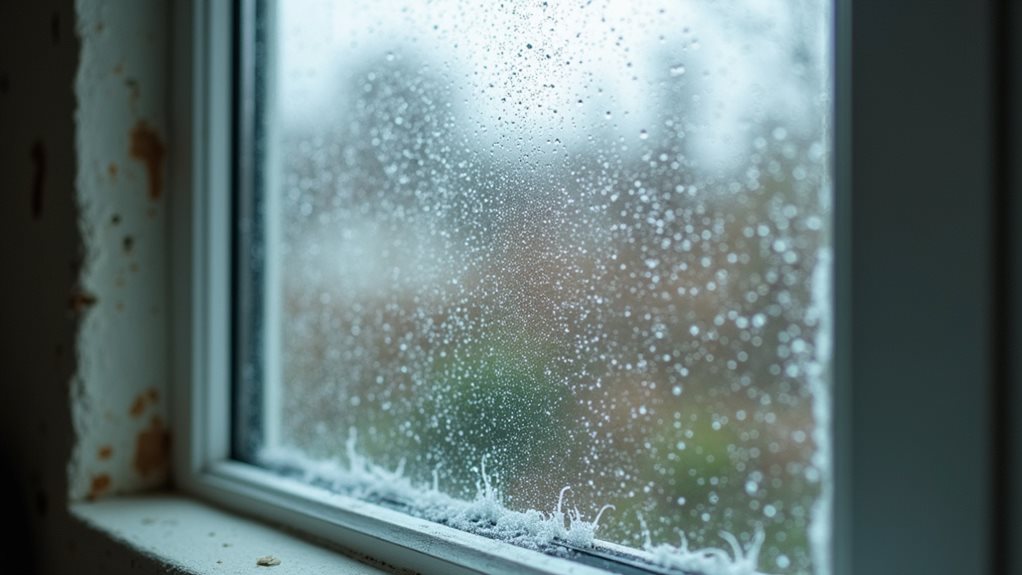
When moisture accumulates beyond normal levels in your home, it creates an environment where various problems can take root and flourish.
Several factors contribute to excessive indoor humidity, including poor ventilation that traps stagnant air, daily activities like cooking and showering, and moisture intrusion from nearby water sources. External climate conditions and leaks in your building’s envelope also raise indoor moisture levels markedly. Most fungal species cannot grow unless relative humidity exceeds 60%, making excessive moisture a critical factor in mold development. Proper ventilation and dehumidification can help maintain ideal indoor moisture levels and prevent damage from excess humidity.
Signs Your Home Has Elevated Humidity
Recognizing raised humidity in your home requires attention to several telltale indicators that manifest throughout your living space. You’ll notice condensation forming on windows, mirrors, and pipes, while musty odors signal mold growth. Paint may peel or bubble, wood warps, and rooms feel uncomfortably sticky. Additionally, you might experience increased pest activity and respiratory discomfort from heightened allergen levels. High moisture levels create ideal conditions for dust mites and other allergens to flourish, making breathing more difficult for those with asthma or respiratory sensitivities. Check your basement and foundation for signs of poor drainage that can contribute to elevated indoor humidity.
How High Humidity Affects Your Breathing
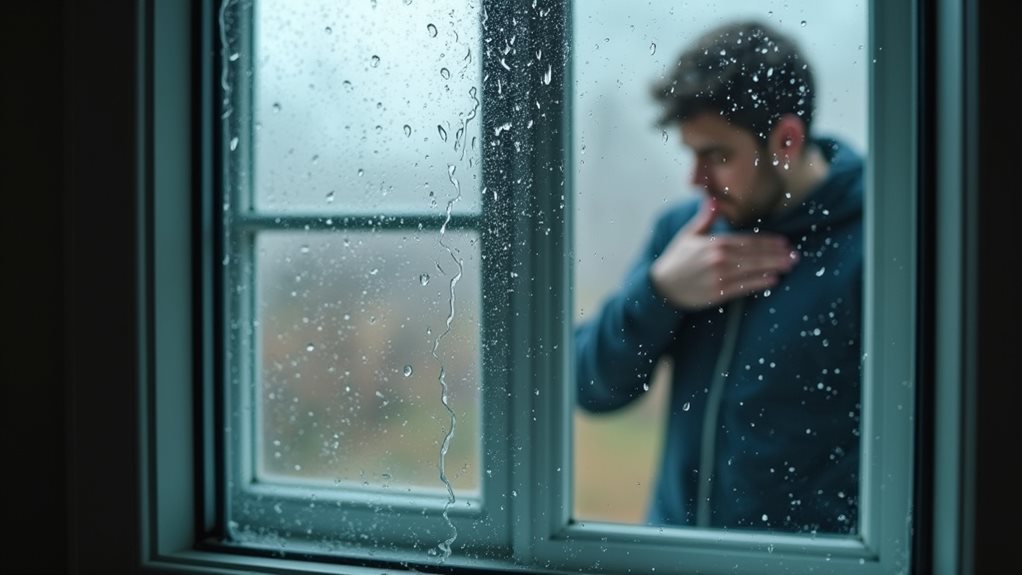
While your body naturally adapts to various environmental conditions, excessive humidity places significant strain on your respiratory system and can dramatically compromise your breathing efficiency.
High humidity reduces your FEV1/FVC ratio, indicating impaired lung function, particularly if you have obstructive diseases like asthma or COPD.
You’ll experience increased morning dyspnea, breathing difficulty during physical activity, and reduced exercise tolerance in humid conditions.
Regular use of a hygrometer can help you monitor indoor humidity levels and take steps to improve air quality.
Mold and Mildew: The Hidden Dangers
Although high humidity creates uncomfortable living conditions, the most insidious threat lurking in your damp home isn’t visible to the naked eye—it’s the silent proliferation of mold and mildew that can devastate your health and property.
Mold exposure triggers respiratory complications, with 93% of chronic sinus infections attributed to fungal contamination, while vulnerable populations face amplified risks.
Structural Damage Caused by Excess Moisture
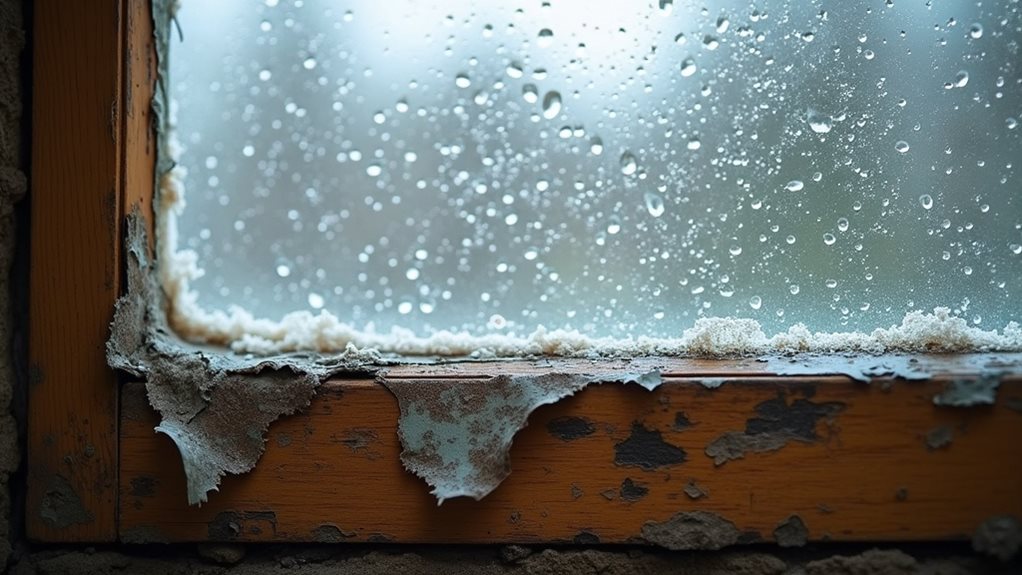
When high humidity persists in your home, it doesn’t just create discomfort—it systematically attacks the structural integrity of your property through multiple destructive pathways.
Excess moisture infiltrates wood components, causing them to warp and eventually rot, while simultaneously accelerating corrosion in metal fasteners, beams, and hardware that hold your home together.
You’ll also notice paint beginning to peel and bubble as moisture compromises the adhesion between surfaces and protective coatings, creating both aesthetic damage and exposing underlying materials to further deterioration.
Wood Warping and Rot
Excess moisture converts your home’s wooden structural elements into vulnerable targets for warping and rot, creating costly damage that compromises both aesthetics and safety.
High humidity causes uneven moisture absorption, pulling wood edges upward through cupping. Softer woods like pine prove more susceptible than hardwoods, while rapid humidity changes force constant dimensional adjustments that stress fibers.
Metal Corrosion and Rust
Metal’s vulnerability to moisture creates a silent but destructive force that systematically weakens your home’s structural integrity through corrosion and rust formation.
When humidity exceeds 45%, condensation forms on metal surfaces, initiating electrochemical reactions that cause rust.
You’ll notice pitting and cracking in steel components, reducing load-bearing capacity and requiring costly repairs or premature replacement.
Paint Damage and Peeling
Moisture infiltrates paint layers with devastating precision, systematically destroying the bond between your paint film and wall surfaces through a process that compromises both aesthetics and structural protection.
You’ll notice peeling, bubbling, and blistering as water vapor builds pressure underneath. Brown streaks indicate surfactant leaching, while cracking reveals complete adhesion failure requiring immediate remediation.
Impact on Heart Health and Circulation
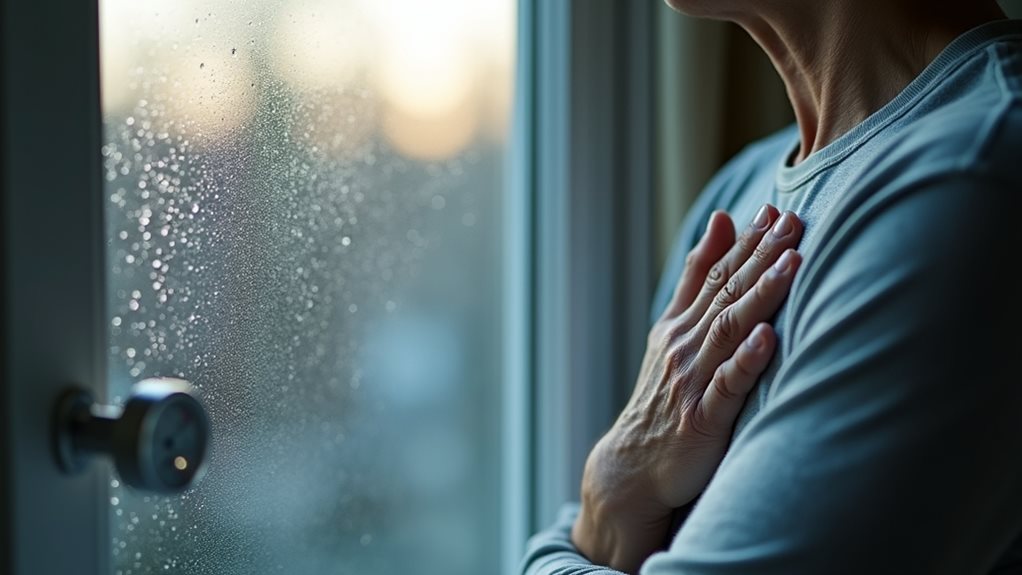
When you’re exposed to high humidity in your home, your cardiovascular system faces significant strain as your heart must work 10-17% harder to maintain normal body temperature through increased blood circulation.
This raised cardiac workload forces your blood vessels to constrict while simultaneously pushing twice as much blood toward your skin’s surface for cooling, creating a dangerous combination that raises your blood pressure substantially.
You’ll face heightened risks for heart attacks and strokes, particularly if you already have conditions like hypertension or coronary artery disease, as the stress on your circulatory system intensifies existing cardiovascular vulnerabilities.
Increased Cardiac Workload
As humidity levels climb in your home, your cardiovascular system faces mounting pressure that can markedly compromise heart health and circulation.
For each 1°F rise in core temperature, your heart rate increases by approximately 10 beats per minute, representing a 10–17% workload increase. Your heart must pump more blood to maintain thermoregulation, greatly elevating myocardial oxygen demand.
Blood Pressure Regulation Strain
While your heart works overtime to pump blood faster in humid conditions, your blood pressure regulation system simultaneously faces its own critical challenges that can compound cardiovascular risks.
High humidity above 70% combined with temperatures exceeding 70°F causes blood vessel constriction, forcing your heart to pump harder and elevating blood pressure markedly, particularly dangerous for those with preexisting hypertension.
Heart Attack Risk Factors
The unrelenting strain of high indoor humidity creates a perfect storm of cardiovascular risks that can trigger life-threatening heart attacks, especially when your home’s humidity levels climb above 70% and temperatures exceed the same threshold.
Your heart’s workload increases dramatically as it pumps two to four times normal blood flow, while dehydration reduces circulation capacity and electrolyte imbalances promote dangerous arrhythmias.
Dust Mites and Allergen Proliferation

When indoor humidity levels consistently exceed 50%, your home becomes an ideal breeding ground for dust mites, microscopic arachnids that feed on dead skin cells and thrive in warm, moist environments.
These pests proliferate in bedding, upholstered furniture, and carpets, producing allergens through their fecal particles that trigger respiratory symptoms in sensitized individuals year-round.
Chemical Emissions in Humid Environments
Beyond harboring dust mites, excessive moisture in your home triggers a less visible but equally concerning problem: dramatically increased chemical emissions from common building materials.
High humidity causes volatile organic compounds to release from flooring, drywall, and MDF at alarming rates. Wood flooring emissions can increase up to 405%, while vinyl flooring shows significant aldehyde spikes.
Optimal Humidity Ranges for Healthy Living
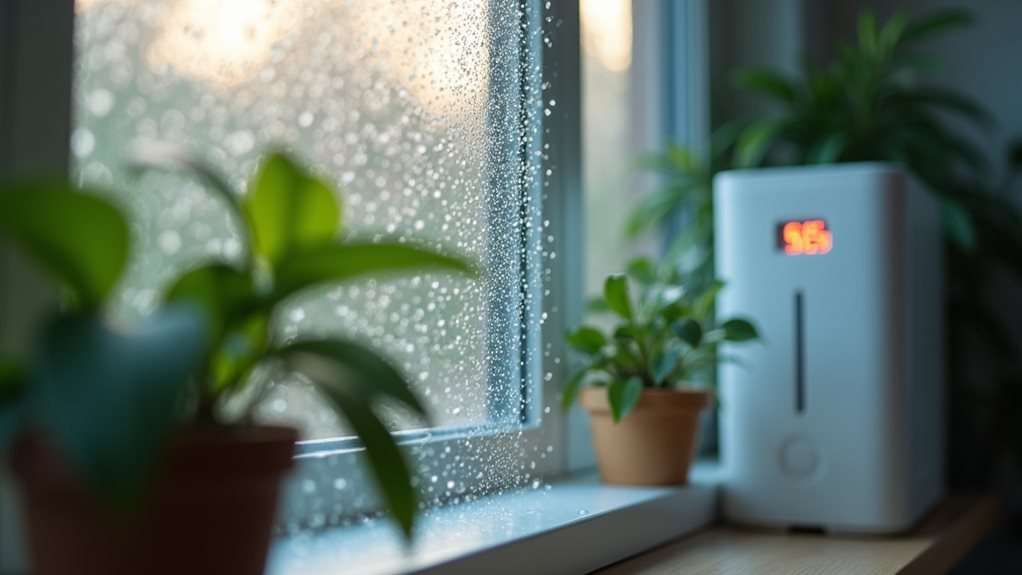
Maintaining proper indoor humidity isn’t just about comfort—it’s fundamentally about protecting your health and well-being.
Most authorities recommend keeping relative humidity between 40-60% year-round, though the EPA suggests 30-50% to minimize health risks.
You should aim for 30-40% during winter months and 50-60% in summer to prevent both dryness-related discomfort and mold growth.
Final Note
You’ve learned that high humidity levels above 60% create serious health and structural risks in your home. From respiratory complications and mold growth to dust mite proliferation and chemical emissions, excess moisture affects every aspect of your living environment. Maintaining humidity between 30-50% protects your health, preserves your home’s integrity, and guarantees peak indoor air quality. Monitor your levels regularly and take corrective action when necessary.