Assess your slope’s gradient and soil type to determine erosion risk, then act accordingly. Use mulch like straw or wood chips to protect the surface, and install erosion-control blankets on steeper areas for added stability. Plant deep-rooted vegetation or use hydroseeding for quick coverage, and maintain dense ground cover to reduce runoff. Install slash mats where erosion is active, and design proper drainage paths to redirect water. Protect the slope base with retaining structures or mulch barriers—smart, layered strategies keep your hillside secure and resilient over time.
TLDR
- Measure slope steepness and assess soil type to determine erosion risk and appropriate stabilization methods.
- Apply mulch like straw or wood chips to protect soil, retain moisture, and support seed germination on slopes.
- Use erosion-control blankets secured with stakes to stabilize soil and enhance vegetation establishment on steep areas.
- Plant deep-rooted native grasses, shrubs, or cover crops to bind soil and reduce runoff over time.
- Install structural features like terraces, retaining walls, or bioswales to slow water flow and protect vulnerable slopes.
Assess Your Slope’s Gradient and Risk Level
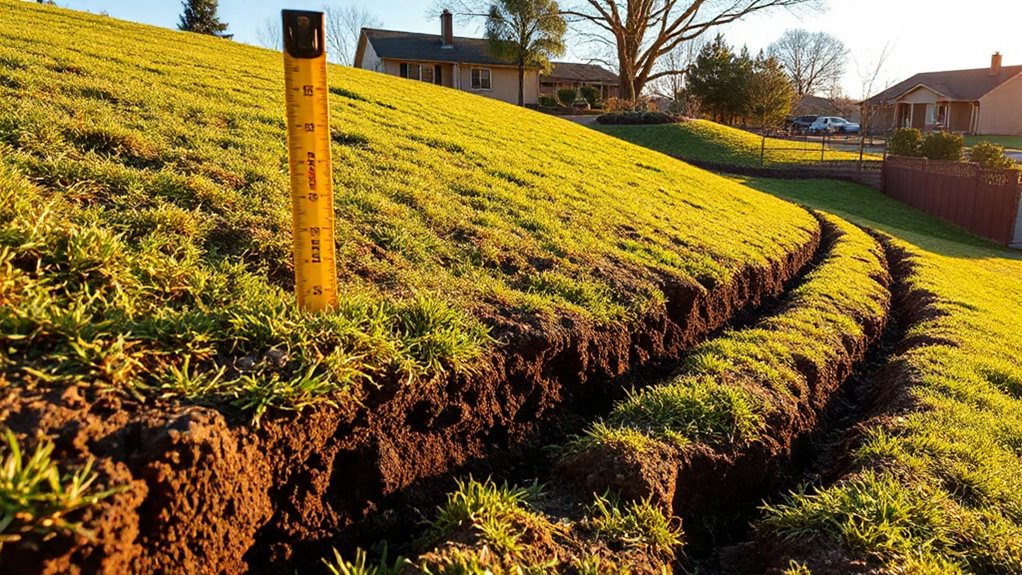
To get a clear image of your slope’s erosion risk, start by measuring its gradient using simple tools like stakes, a string line, and a tape measure to determine the rise (vertical change) and run (horizontal distance).
Divide rise by run, multiply by 100 to find the slope percentage, then classify it: under 33% is gentle, 33–50% moderate, and over 50% very steep.
Check soil type—silty or sandy soils erode easier—and look for rills, gullies, or past failures.
Use NRCS soil data and field observations to assess erodibility, and consider slope length, as longer slopes increase runoff. For steeper slopes, consider combining seeding methods with surface roughening techniques like directional tracking to enhance erosion control.
You may also consider installing a French drain or other sub-surface drainage to manage concentrated runoff on vulnerable slopes.
Choose the Right Mulch for Your Hillside
When it comes to stabilizing your hillside, picking the right mulch can make all the difference—especially since not every kind holds up under runoff or suits your slope’s angle and soil.
Use straw at 1.5–2.5 tons per acre on gentle slopes, or opt for wood chips at 5–8 tons for steeper areas.
Hydromulch works well on embankments, binding soil effectively.
Pine needles suit acid-loving plants, while shredded bark offers durability and moisture retention—ideal around trees and shrubs.
Coconut coir absorbs 4–6× its weight in water, making it an excellent choice for holding moisture on slopes without compacting.
Install Erosion-Control Blankets on Steep Areas
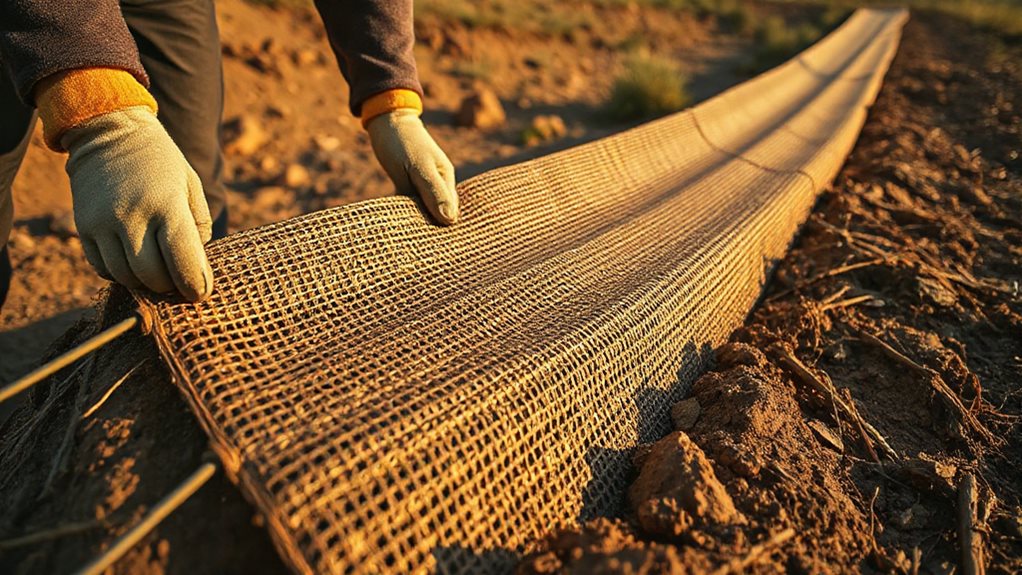
You’ve selected the right mulch to protect your hillside, but on steeper terrain, extra reinforcement is often necessary to keep soil in place.
Clear debris, grade the slope, and compact the soil before unrolling erosion-control blankets from the top down.
Secure with stakes every 2 feet, overlap rolls by at least 6 inches, and anchor edges in 6–8 inch trenches to guarantee stability and effective erosion protection.
Plant Deep-Rooted Vegetation for Long-Term Stability
Anchor your slope with deep-rooted vegetation to build lasting stability where erosion threatens.
You strengthen soil by planting grasses, shrubs, and trees—their roots bind particles, enhance infiltration, and resist shear forces.
Deep roots anchor embankments, while fibrous systems reduce sediment loss.
Choose native species for climate-smart, durable cover that protects your land and cultivates a resilient, connected environment.
Water regularly during establishment to help roots develop strong soil moisture and promote long-term plant stability.
Use Hydroseeding for Quick and Even Ground Cover
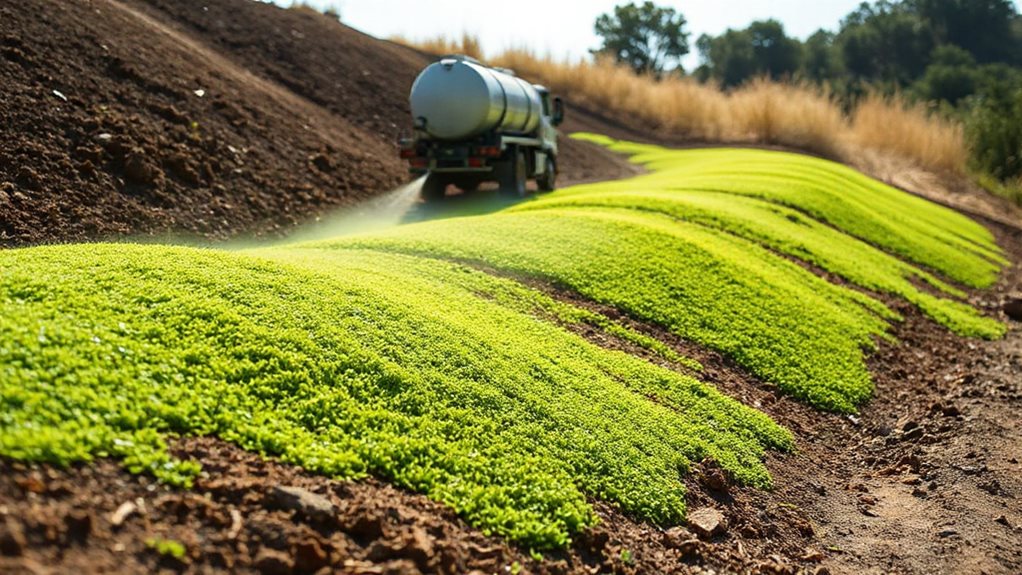
Establishing deep-rooted vegetation sets the foundation for long-term slope stability, but getting those plants established quickly and evenly requires an effective seeding method—enter hydroseeding.
You’ll spray a nutrient-rich slurry that bonds instantly, contours to terrain, and stays put during storms.
With wood fiber mulch and custom seed mixes, you get uniform coverage, faster germination, and reliable erosion control—even on steep, tricky slopes.
Hydroseeding is especially useful when you need to get uniform coverage quickly across challenging terrain.
Build Retaining Walls to Support Unstable Slopes
When slopes begin to shift and soil threatens to give way, building a retaining wall can stop erosion in its tracks and restore structural integrity to your terrain.
Measure slope and soil conditions, choose strong materials like interlocking blocks or poured concrete, and make certain proper drainage with gravel and perforated pipe.
Use geogrids for reinforcement, build with a slight backward angle, and cap securely—giving your yard lasting stability and peace of mind.
Also consider placing rip-rap or larger rocks at vulnerable outlets to stabilize slopes and reduce erosion.
Construct Terraces to Shorten and Level Long Slopes
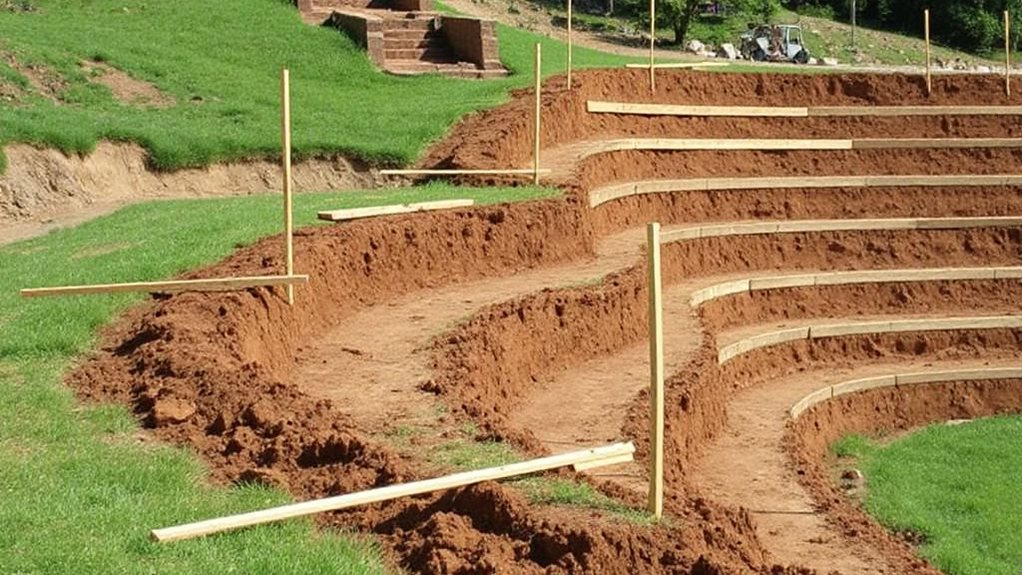
Break up long, vulnerable slopes into manageable sections by constructing terraces that reduce erosion and create usable outdoor space.
You slow runoff, retain soil, and gain flat areas for gardens or seating.
Use rocks, blocks, or timber to build retaining walls, backfill with topsoil, and compact in layers.
Add plants with deep roots and use mulch to stabilize each level.
Increase Seeding Rates With Cover Crops on Inclines
You can markedly reduce erosion on slopes by increasing your seeding rate when planting cover crops, since denser growth means better soil coverage and stronger root networks.
Choose fast-establishing species like winter rye, annual ryegrass, or crimson clover, and plant them at higher densities to quickly shield the soil from wind and water damage.
Boost Seed Density
Maximize your slope’s stability by increasing seed density with higher seeding rates and cover crops customized to inclined terrain. Loosen topsoil, incorporate soil-specific amendments, and seed before installing erosion control blankets.
Use mulch layers and hydroseeding for even coverage, improved moisture retention, and better germination. Pair these with drip irrigation and proper surface prep to guarantee dense, resilient vegetation that holds soil firmly in place.
Use Cover Crops
Establishing cover crops on slopes isn’t just about planting seed—it’s about building a living shield that anchors soil, improves structure, and stands up to runoff. Choose winter rye or annual ryegrass for dense roots, plant on time for strong growth, and combine with no-till to reduce erosion by up to 89%.
Keep ground covered year-round to protect inclines and enhance water infiltration.
Maintain Dense Ground Cover to Minimize Runoff
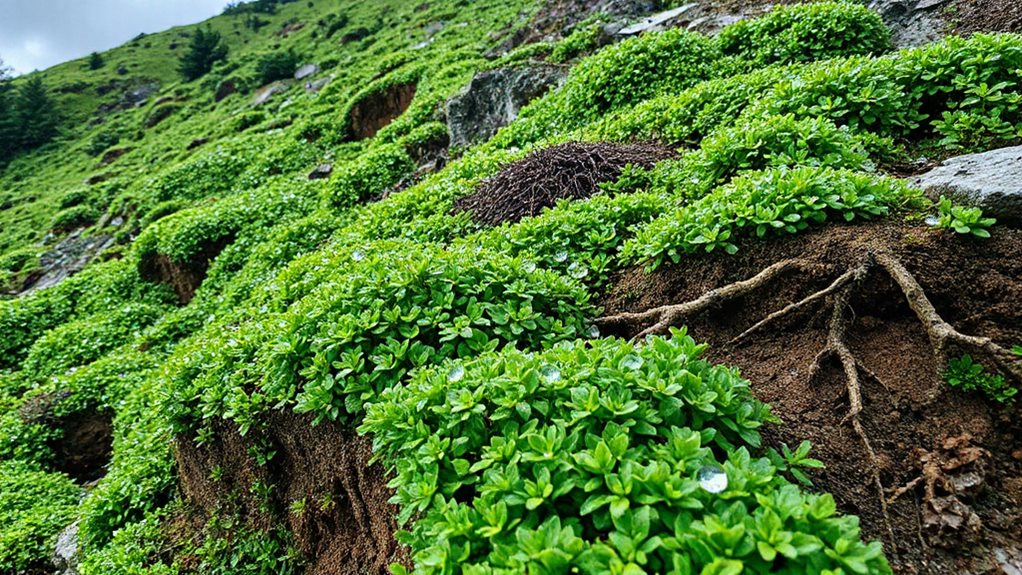
You can markedly reduce erosion by maintaining dense ground cover that slows runoff and holds soil in place.
Mulch your slopes with at least 20% coverage to cut soil loss by up to 90%, and pair it with fast-establishing grasses that reach 10,000 stems per square meter within a year.
Keep vegetation thick and uniform—ideally 15 inches tall—with mulch, proper fertilization, and layered plant types to maximize protection against water impact and surface flow.
Mulch for Soil Stability
Laying down mulch on a slope isn’t just about covering bare soil—it’s a proactive step toward taming runoff and shielding the ground from the full force of rain.
You slow erosion by reducing water speed and protecting soil structure, while mulch retains moisture and enhances root stability.
Use straw or wood chips at 1–2 tons per acre, anchor them properly, and combine with seeding for lasting protection.
Establish Dense Vegetation
Maximizing plant cover on slopes dramatically curbs erosion, turning vulnerable terrain into resilient ground.
You’ll reduce soil loss by up to 97% with 50% or more coverage, as roots stabilize soil and slow runoff.
Aim for at least 10,000 stems per square meter—dense grass or perennial plants work best.
Even 10% cover cuts erosion markedly, so act early and maintain consistent, sturdy growth.
Lay Slash Mats Where Erosion Is Already Evident
When erosion has already taken hold on a slope, acting quickly with slash mats can halt further soil loss and set the stage for recovery.
Pile pine or hardwood slash over water bars and exposed soil on skid trails or cut slopes.
Slash reduces runoff, traps sediment, and stabilizes soil immediately.
Anchor it securely, especially on steep ground, and combine with grass seeding for long-term cover and lasting protection.
Design Drainage Paths to Divert Stormwater Safely
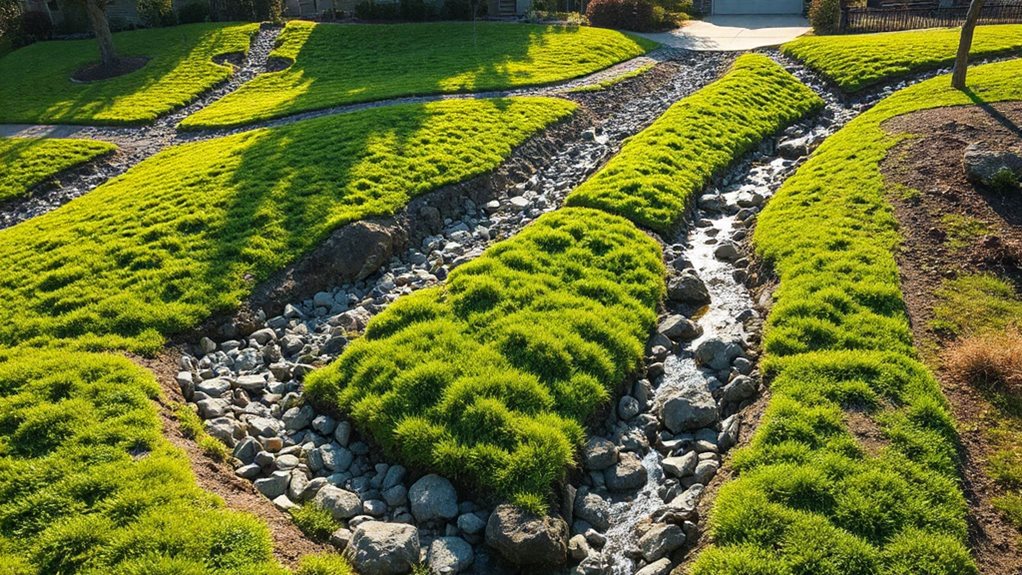
Now that you’ve stabilized exposed soil with slash mats, it’s time to address the source of erosion by managing water flow.
Design drainage paths using French drains or channel drains to redirect runoff from slopes.
Incorporate dry creek beds or bioswales to slow and absorb water, reducing erosion risk.
These solutions work together to guide stormwater safely, protecting your grounds while blending naturally into your yard’s design.
Prevent Damage by Protecting the Base of the Slope
At the foot of a sloping yard, unchecked water flow and soil movement can undermine even the most carefully installed erosion controls above.
You can stop this by building retaining walls or gabion baskets to hold soil, improve drainage, and reduce sediment.
Use terraces, geotextiles, or mulch barriers to stabilize the base, support plants, and prevent erosion where it matters most.
Final Note
You’ve assessed your slope and chosen the right erosion controls, now it’s time to act. Install blankets or mats on steep, vulnerable areas, then plant deep-rooted vegetation or use hydroseeding for fast coverage. Pair these with proper mulch and directed drainage paths to manage runoff effectively. By maintaining dense ground cover and protecting the slope’s base, you’ll stabilize the soil and prevent further damage, ensuring long-term, sustainable results.