Bury 1/4-inch hardware cloth 12–24 inches deep with an L-shaped apron to block diggers, and extend it 2 feet outward to prevent tunneling. Replace chicken wire with welded 19-gauge galvanized hardware cloth for strength. Secure all openings, vents, and seams with screws, washers, and hog rings. Raise the coop and install motion-activated lights or deterrents. Position it in an open area, away from brush. There’s more to optimizing every layer of defense effectively.
TLDR
- Install an L-shaped apron with buried hardware cloth to block digging predators like foxes and coyotes.
- Use 1/4-inch hardware cloth on all openings, including vents and windows, to exclude small predators.
- Secure mesh tightly with screws, washers, and hog rings, ensuring no gaps at seams or connections.
- Overlap and seal fence-to-roof gaps to eliminate entry points where predators can exploit weaknesses.
- Add overhead netting or solid roofing to protect against hawks, owls, and other aerial threats.
Install Underground Perimeter Barriers

While predators often target chicken coops by digging beneath the walls, you can stop them in their tracks with a properly installed underground perimeter barrier.
Attach 16-gauge PVC-coated welded wire to the coop’s base using stainless steel staples every 3–4 inches, then extend it 2 feet outward.
Overlap corners securely, trim excess, and let grass growth hold it in place—simple, effective, and trusted by backyard flock owners nationwide. You can also reinforce vulnerable spots with buried fencing to deter persistent diggers.
Use stainless-steel or galvanized hardware to prevent corrosion from pressure-treated lumber.
Use Hardware Cloth Instead of Chicken Wire
You should use hardware cloth instead of chicken wire because it’s made from stronger, thicker wire that resists bending and tearing from predators like raccoons and foxes.
Its smaller mesh openings, typically 1/2 inch or less, prevent animals from reaching through or squeezing in, making it ideal for securing vents, windows, and runs.
Unlike flimsy chicken wire, hardware cloth offers long-lasting protection when properly installed, especially in high-risk areas.
Consider adding a rooster or farm dog for additional protection rooster or farm dog to help deter cats and other predators.
Superior Strength and Durability
Choose hardware cloth over chicken wire to give your chicken run the strength it truly needs. You’ll get thicker, lower-gauge wires that resist bending and tearing from raccoons, foxes, and other predators.
Its welded, rigid grid stays intact under pressure, while galvanized or stainless steel options offer lasting durability and weather resistance, ensuring your flock stays safe and secure year after year.
Smaller Mesh Prevents Intruders
Often overlooked but critically important, the size of your mesh makes all the difference when keeping predators out of your chicken run.
Use 1/2-inch hardware cloth instead of chicken wire—its tight, sturdy squares block raccoons, weasels, and hawks.
Smaller openings prevent paw, talon, or nose penetration, while thicker wire resists chewing and tearing, ensuring your flock stays safe and secure where it belongs.
Essential for Vents and Windows
A tightly secured chicken run starts with strong perimeter defenses, and that same level of protection must extend to every opening in the coop structure—especially vents and windows.
You need hardware cloth here because its welded, half-inch mesh stops predators from reaching through or tearing in. Unlike flimsy chicken wire, it blocks hawks, raccoons, and weasels effectively, ensuring your flock stays safe where vulnerabilities often exist.
Choose the Right Mesh Size for Maximum Protection
Choose ¼-inch mesh to block even the smallest predators like weasels and mice, whose narrow bodies can slip through larger openings.
Make sure all seams, edges, and connections are secure, because gaps—even small ones—can let in animals that chew or claw their way in.
Pair this fine mesh with 19-gauge or thicker wire to stop determined predators from reaching through or tearing the barrier.
Roof rats are nimble climbers and can access elevated areas like attics and rooftops if you don’t seal entry points to the run.
Opt for 1/4-Inch Mesh
For ultimate protection against even the most determined and nimble predators, you’ll want to go with 1/4-inch mesh when securing your chicken run.
It blocks weasels, snakes, and rodents that squeeze through larger openings, while its rigid, galvanized steel construction resists claws and teeth from raccoons and foxes, ensuring your flock stays safe, secure, and truly protected where it matters most.
Block Predator Reach
You’ve secured your chicken run with 1/4-inch mesh to stop small intruders, but protecting your flock also means preventing predators from reaching through or tearing at the barrier.
Use 1/2-inch hardware cloth at the bottom to block raccoon paws and snakes, while pairing it with 1-inch welded wire above for visibility and strength.
Choose 19-gauge, galvanized-after-welding cloth for durability against claws, teeth, and rust, ensuring long-term, predator-proof protection your flock can rely on.
Secure All Openings
While predators may test every weak point in your chicken run, securing all openings with the right mesh size guarantees they won’t find a way in.
Use ¼-inch hardware cloth for vents, windows, and tops to block snakes and small predators, while ½-inch welded wire works well for larger sections.
Always choose galvanized-after-welding, 19-gauge mesh for durability and rust resistance.
Secure All Vents and Windows With Reinforced Mesh
Reinforce every vent and window in your chicken coop with 1/4-inch hardware cloth to create a durable barrier against determined predators.
Use screws and washers every few inches to secure the mesh tightly, preventing raccoons, snakes, and weasels from squeezing or reaching through.
Cover all openings completely, including roof vents and window screens, and pair with painted wood for long-lasting protection your flock can count on.
Also, regularly monitor for new entry points and seal gaps with caulk or weather stripping to keep out pests and maintain security for your flock, including preventing spider entry.
Bury Fencing to Prevent Digging Predators
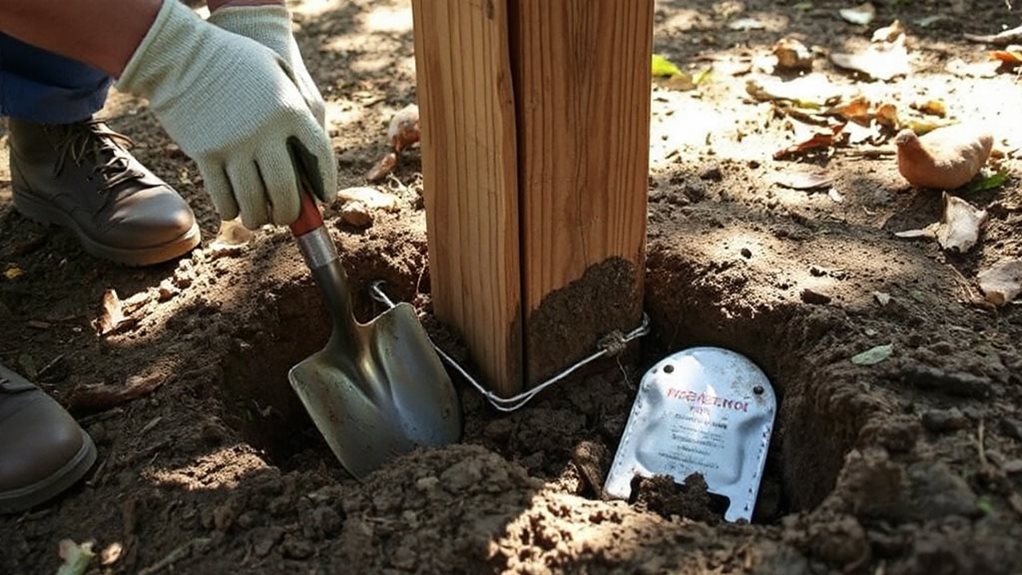
You’ll want to bury hardware cloth at least 12 inches deep around your run’s perimeter, bending the bottom edge outward to deter diggers like foxes and coyotes.
Installing a concrete block barrier or extending an L-shaped mesh fence underground adds extra protection, especially in soft or vulnerable soil.
Secure the cloth to the frame above ground and use ground staples to keep the apron flat, so predators can’t lift or tunnel underneath.
Providing at least 10 square feet of outdoor run space per chicken also helps reduce stress and fighting by allowing birds room to roam.
Bury Hardware Cloth Deep
Since digging predators like foxes and raccoons can undermine even the sturdiest aboveground fencing, burying hardware cloth deeply around your chicken run creates a critical underground barrier that stops them in their tracks.
Bury it 12 to 24 inches deep, use 1/2-inch galvanized or plastic-coated cloth, overlap seams, secure with hog rings, and extend it outward in an L-shape to block determined diggers effectively.
Use Concrete Block Barrier
Anchor your chicken run’s defense by installing a concrete block barrier around its perimeter, creating a durable and impenetrable base that stops digging predators in their tracks.
Set blocks at least 12 inches deep, extending 18–24 inches outward to prevent tunneling.
Use cinder blocks without gaps, pairing them with hardware cloth for full coverage.
This solid foundation supports larger coops, raises wood from moisture, and guarantees long-term protection with minimal maintenance—keeping your flock safe and your mind at ease.
Install Underground Mesh Fence
Start by digging a trench 15 to 30 cm deep along the entire perimeter of your chicken run, laying the groundwork for an underground barrier that stops determined diggers in their tracks.
Bury hardware cloth at least 12 inches down, extending 12–18 inches outward as an apron. Secure it with stakes and backfill firmly—this smart, proven setup blocks foxes, raccoons, and other diggers, giving your flock the safety they deserve.
Reinforce the Run With a Solid Roof Structure

While a chicken run may seem secure at ground level, reinforcing it with a solid roof structure is essential to defend against aerial and climbing predators. You’ll want to attach plywood sheets to a wooden frame, securing it directly to the coop for stability.
Use welded wire over the top to let snow fall through, and make sure the pitched roof sheds water and reduces load. This setup deters hawks and owls while supporting future upgrades like shingles, all with durable, weather-resistant materials built to last.
Add Overhead Netting for Aerial Defense
Often, a well-designed chicken run still leaves your flock vulnerable to hawks, owls, and other aerial threats—so adding overhead netting is an essential step in creating a fully predator-proof enclosure.
Choose durable nylon bird netting like PollyNet or K-Net HT, stretch it tightly over supports 7–9 feet high, and secure it firmly using appropriate fasteners, overlapping seams as specified.
Use a spiderweb-style tensioning method to prevent sagging, and make only small, precise cuts around obstructions like lights or branches to maintain coverage and integrity across the entire run.
Eliminate Gaps Between Fence and Roof

Since even the smallest openings can compromise your chicken run’s security, you’ll want to focus on sealing every gap where the fence meets the roof—these junctions are prime targets for clever predators like raccoons, weasels, and snakes.
Use hardware cloth secured with screws and washers, overlap seams, and reinforce with hog rings. Seal smaller gaps with expanding foam or steel wool, ensuring ventilation stays clear. Regular inspections prevent weather or shifting from reopening weak spots.
Upgrade Doors With Predator-Proof Latches
You’ve sealed the gaps between the fence and roof, but a secure perimeter means nothing if your doors give predators an easy way in.
Upgrade latches to multi-step or spring-lock designs raccoons can’t manipulate. Install self-locking kits and secure nest box lids separately.
Use screws, not staples, and lock every opening—your flock’s safety depends on it.
Build a Sturdy, Elevated Coop Structure
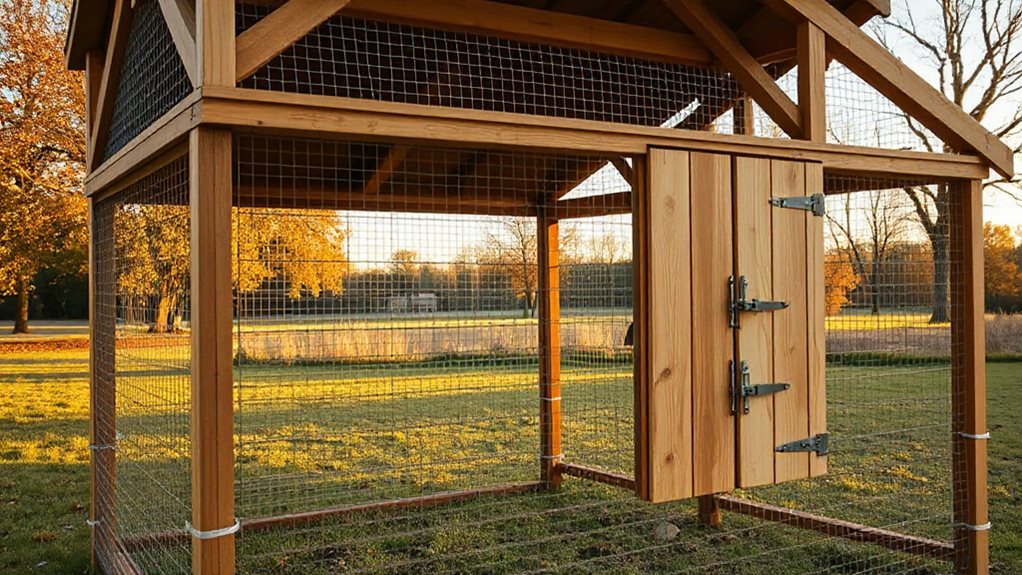
Lift your coop at least three feet off the ground using cinder blocks, pressure-treated lumber, or anchored 4×4 posts set in concrete to create a stable, predator-resistant foundation. Elevating deters diggers while allowing secure under-coop access.
Use hardware cloth skirts and concrete footings to block intruders, and stain wood to resist rot—building a durable, safe home where your flock thrives together.
Position the Coop in an Open, Visible Location
When positioning your chicken coop, choosing an open, visible location markedly reduces the risk of predator attacks by eliminating concealment and improving surveillance.
Place it away from dense brush and woods, opt for high ground to enhance drainage and visibility, guarantee clear sightlines from your home, and maintain trimmed surroundings to deter lurking threats—creating a safer, more secure environment for your flock.
Implement Motion-Activated Deterrents and Guards
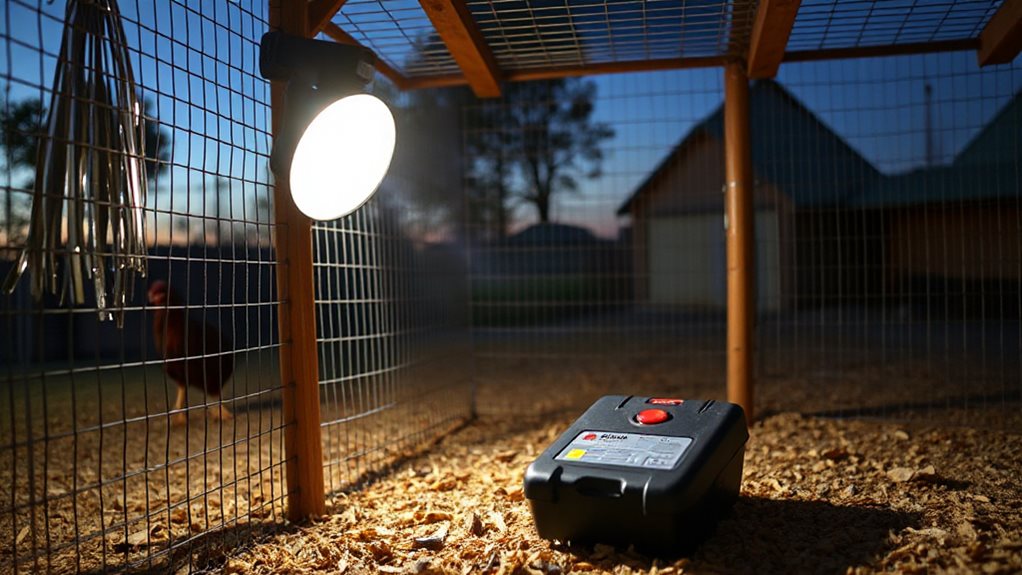
A well-placed coop sets the foundation for security, but adding adaptive defenses takes protection a step further.
Use motion-activated lights with 1000–2000 lumens and 30–40 ft detection to illuminate entry points and dark corners. Combine them with sirens, water sprayers, or alarms to startle predators. Position units strategically, test sensors regularly, and integrate red or blinking lights for maximum, multi-sensory deterrence your flock can rely on.
Final Note
You’ve secured the perimeter with buried hardware cloth, reinforced vents, and predator-proof latches—now maintain vigilance. Positioning your raised coop in an open area limits hiding spots, while motion-activated lights or guards add another layer of defense. Using the right mesh size and sturdy construction deters even persistent predators. Regularly inspect for wear, especially at ground level, and address gaps immediately. These proven steps, when consistently applied, markedly reduce risk and keep your flock safe.