Pests come back because hidden nests in walls or under floors survive surface treatments, and you might overlook entry points or clutter that harbor infestations. If you don’t clean thoroughly, residual food or droppings keep attracting pests. Incorrect pesticide use, resistance, or missing life stages like eggs also lead to resurgence. In multi-unit buildings, pests migrate from untreated areas. Environmental factors and cost concerns often limit control efforts—understanding these gaps reveals how to achieve lasting results.
TLDR
- Hidden nests in walls or floors survive surface treatments, allowing pests to repopulate after initial control.
- Pests reinfest from untreated neighboring units or common areas through shared walls and utility conduits.
- Clutter and unsealed entry points provide shelter and access, helping pests return despite prior treatment.
- Incomplete cleaning leaves food sources and eggs, enabling survival and rapid resurgence of pest populations.
- Incorrect pesticide use or single-life-stage targeting fails to kill eggs and resistant pests, leading to comeback.
Overlooking Hidden Infestation Sites
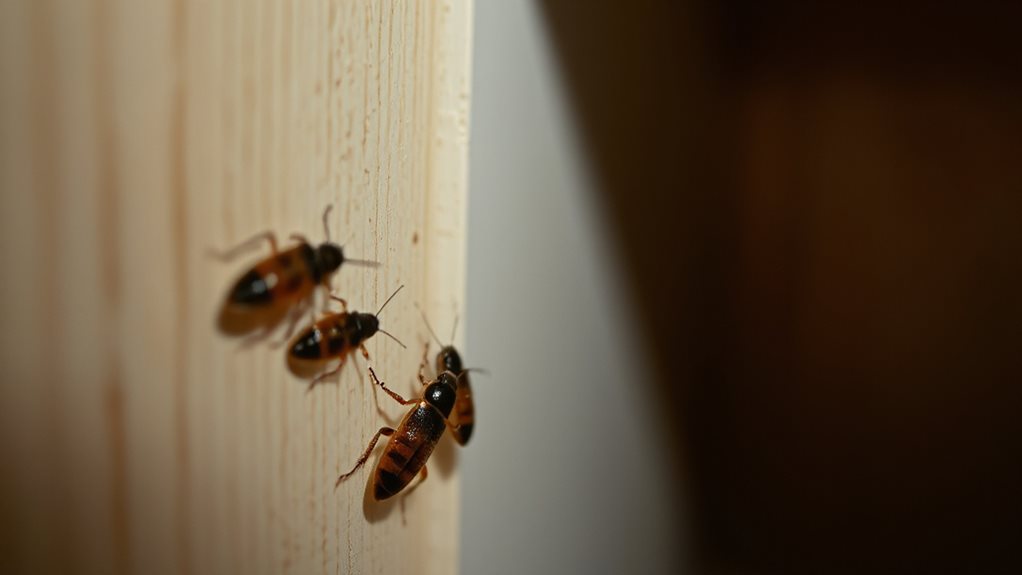
You might overlook hidden infestation sites, and that’s often why pests come back after treatment.
Check attics, basements, wall voids, and behind appliances where rodents, termites, and bedbugs hide.
Look for droppings, frass, grease marks, or damaged insulation.
Regular inspections in these overlooked areas help catch early signs, ensuring treatments work long-term.
Common hiding places like cracks and crevices in walls or behind baseboards provide ideal shelter for pests such as rodents and bedbugs.
Stay proactive—you’ve got this. Additional privacy concerns from neighbor surveillance can affect where you inspect and how you document evidence.
Clutter and Unsealed Entry Points
You mightn’t realize how clutter gives pests a place to hide and thrive, shielding them from treatments and making it harder to detect ongoing issues.
Piles of stuff near walls or doors can conceal gaps that let mice, cockroaches, and other invaders sneak back in after you’ve had treatment.
Sealing those entry points and clearing clutter aren’t just helpful—they’re essential steps to keep pests from returning.
Including measures like using sealed openings around structures and securing potential access points can greatly reduce re-infestation.
Clutter Harbors Hidden Pests
Pests often slip back into homes not because treatments fail, but because clutter provides the perfect cover for them to hide, feed, and multiply.
You mightn’t see cockroaches, rodents, or bed bugs, but they thrive in cardboard, paper, and fabric piles.
Clutter traps moisture, food debris, and nesting materials, making infestations harder to detect and treat effectively.
Gaps Invite Reinfestation
While clutter creates hidden sanctuaries for pests, unsealed gaps in your home’s exterior structure often serve as the main gateway for reinfestation.
You can prevent this by sealing cracks around doors, windows, and foundations, installing weatherstripping, repairing screens, and securing vent openings.
Keeping trash bins sealed and away from entry points also helps.
These proactive steps close off access, making your space less inviting to returning pests.
Sealing Blocks Pest Entry
Behind every successful pest exclusion stands a well-sealed home, where attention to detail closes off even the smallest pathways invaders rely on.
You can block pests by caulking gaps under 6mm, using expanding foam for larger voids—protected with copper mesh—and installing weatherstripping on doors.
Clear clutter to reveal entry points, then seal them with durable materials, ensuring long-term protection and peace of mind.
Incomplete Cleaning Before Treatment
Often, even after professional treatment, pests find their way back because the cleaning done beforehand wasn’t thorough enough to eliminate key attractants and hiding spots. You leave behind crumbs, droppings, or grease, and pests return quickly.
Hidden nests in walls or floors survive surface cleaning, while residual food and moisture sustain new infestations. Without a full, multi-step cleanup, you’re not fully protecting your space.
Regular maintenance like sealing entry points and using preventive measures helps reduce the chances of recurrence.
Incorrect Pesticide Application Methods

You might be using the wrong product for your specific pest, which means you’re not actually targeting the problem effectively.
If you’re missing key areas or applying too thinly—especially by mixing methods like perimeter and handheld sprays—you leave gaps where pests can survive.
And skipping label instructions, from timing to adjuvants, cuts the treatment’s strength and puts your home at risk.
Many gardeners find better results when they choose products based on pest type and application method, such as using long-residual perimeter granules for extended outdoor protection.
Wrong Product Used
When you fail to use the right pesticide for your specific pest problem, treatments are more likely to fall short, allowing infestations to rebound quickly.
Misidentifying pests or choosing the wrong product means you’re not targeting the actual threat, which wastes time and resources.
Always confirm pest identity and select a pesticide labeled for that pest to guarantee effective, lasting control.
Incomplete Coverage Areas
Because pest control depends on thoroughness, skipping even small areas during treatment can undermine the entire effort, leaving hidden populations untouched and ready to rebound.
You might miss crawl spaces or baseboards where pests hide, and incomplete spray coverage lets survivors repopulate quickly.
Poor technique, like low pressure or untrained application, creates gaps.
That’s why professional, systematic treatment with proper replication guarantees complete control, reducing reinfestation risks effectively.
Ignored Label Instructions
While following pesticide label instructions may seem routine, skipping or misunderstanding these guidelines can undermine even the carefully planned treatments.
You risk improper dosing, incorrect timing, or unsafe application, leading to pest survival and reinfestation.
Ignoring directions on mixing, rates, or methods reduces efficacy.
Development of Pesticide Resistance
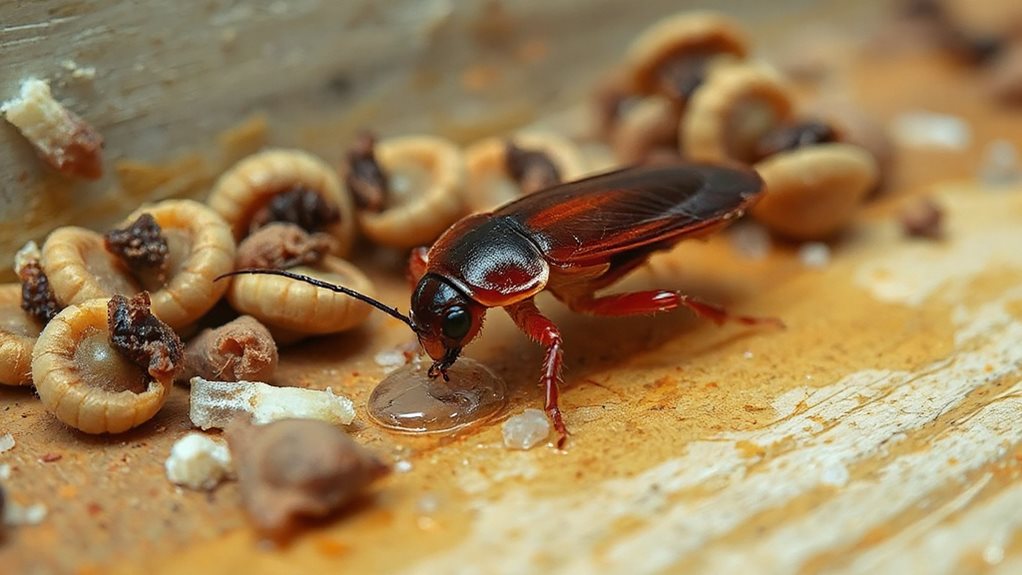
Though you may see immediate results after pesticide application, the battle against pests is far from over—especially as repeated treatments can accelerate the development of resistance.
You’re up against changing insects: some detoxify chemicals faster, others alter target sites or slow pesticide entry. Over time, surviving pests pass on these traits, making future control harder, so rotating modes of action helps you stay ahead.
Applying herbicides like glyphosate at the wrong time or in suboptimal conditions can reduce effectiveness and contribute to resistance, so follow label directions and apply during active growth for best results.
Survival of Pest Eggs Post-Treatment
You might think one treatment wipes out all pests, but many eggs survive and later hatch, restarting the infestation.
Heat, moisture, and developmental stage all influence whether eggs make it through, with some species showing strong resistance to even extreme conditions.
That’s why repeat treatments are essential—they catch the next generation before they spread.
Eggs Survive Initial Treatment
Pests often stage a comeback after treatment because their eggs are built to survive.
You’re not alone—roach oothecae shield 75% of eggs from pesticides, while bed bug and flea eggs resist sprays, heat, and cold.
These resilient eggs hatch weeks later, restarting infestations.
Even DIY efforts fail to penetrate hidden crevices or tough shells, leaving the next generation intact.
Repeat Treatments Essential
Because pest eggs are naturally shielded from many treatments, a single application rarely eliminates an infestation completely—making repeat interventions essential for long-term control.
You’ll need follow-ups since eggs resist heat, moisture stress, and IGRs, often hatching later. Even if adults die, new pests emerge.
Targeting multiple life stages guarantees fewer survivors, reducing rebound.
Stay consistent—your efforts build toward lasting results.
Skipping Essential Follow-Up Procedures
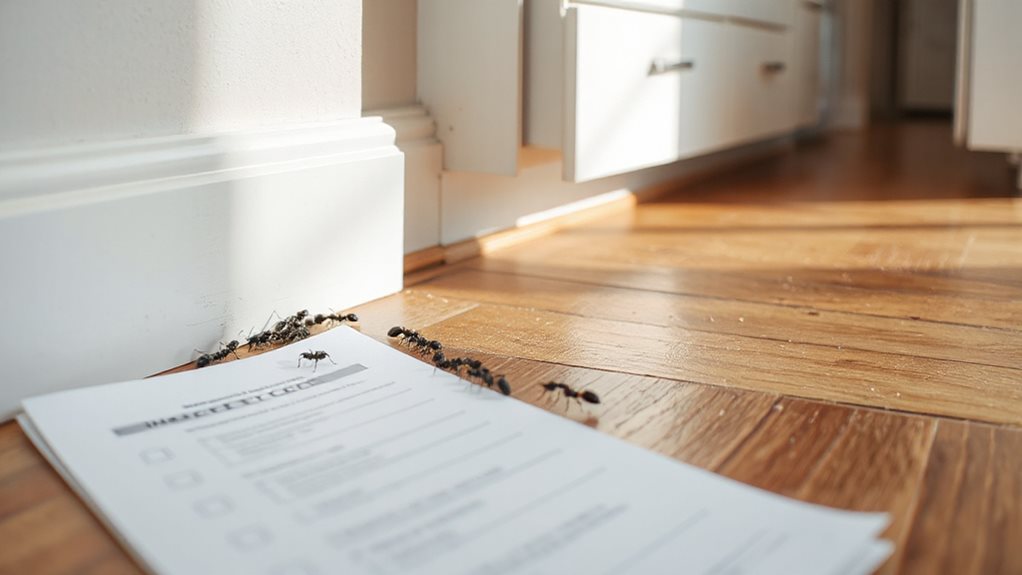
Even when the initial treatment appears successful, skipping essential follow-up procedures can undo progress and leave your property vulnerable to recurring infestations.
You miss signs of lingering pests without checking traps or monitoring bait stations, allowing hidden eggs to hatch and repopulate.
Skipping re-treatments, preventive advice, and scheduled inspections breaks the cycle needed to fully eliminate resilient pests like fleas, termites, or rodents—putting your long-term protection at risk.
Pest Migration in Multi-Unit Buildings
You’ve taken steps to treat your unit, followed up on inspections, and stuck to the recommended schedule—yet pests still show up. That’s because they travel through electrical conduits, plumbing chases, and ventilation ducts, moving easily between units.
Shared walls and baseboard cracks let them spread, while untreated common areas act as reservoirs, reinfecting your space despite your best efforts.
Environmental Conditions Favoring Resurgence

While you may have successfully treated your home for pests, environmental conditions can quickly undo your progress by creating ideal circumstances for infestations to rebound. Warmer temperatures, high humidity, and excessive rainfall increase pest activity, reproduction, and indoor migration.
Climate shifts extend breeding seasons and expand habitats, while disrupted natural enemies reduce control. You’re not alone—many face these challenges as changing conditions favor pest resurgence year-round.
Financial and Logistical Barriers to Effective Control
Treating pests isn’t just a matter of applying chemicals or setting traps—it’s a financial and logistical commitment that many homeowners and businesses struggle to maintain.
You face high initial costs, ongoing service expenses, and tight budgets, while fuel prices and seasonal dips strain operations.
Skipping preventive care to save money often leads to costlier repairs down the line.
Final Note
You can prevent pests from returning by addressing hidden infestations and sealing entry points pests exploit. Clutter reduction, thorough cleaning, and proper pesticide use improve treatment effectiveness, while skipping follow-ups often leads to resurgence. In multi-unit buildings, coordinated efforts help block migrating pests. Environmental factors and resistance development also play key roles, so integrated pest management is essential. Overcoming financial or logistical barriers guarantees long-term success and sustained control.